Special Issues of Thinking and Reasoning – serie
Visar alla böcker i serien Special Issues of Thinking and Reasoning. Handla med fri frakt och snabb leverans.
4 produkter
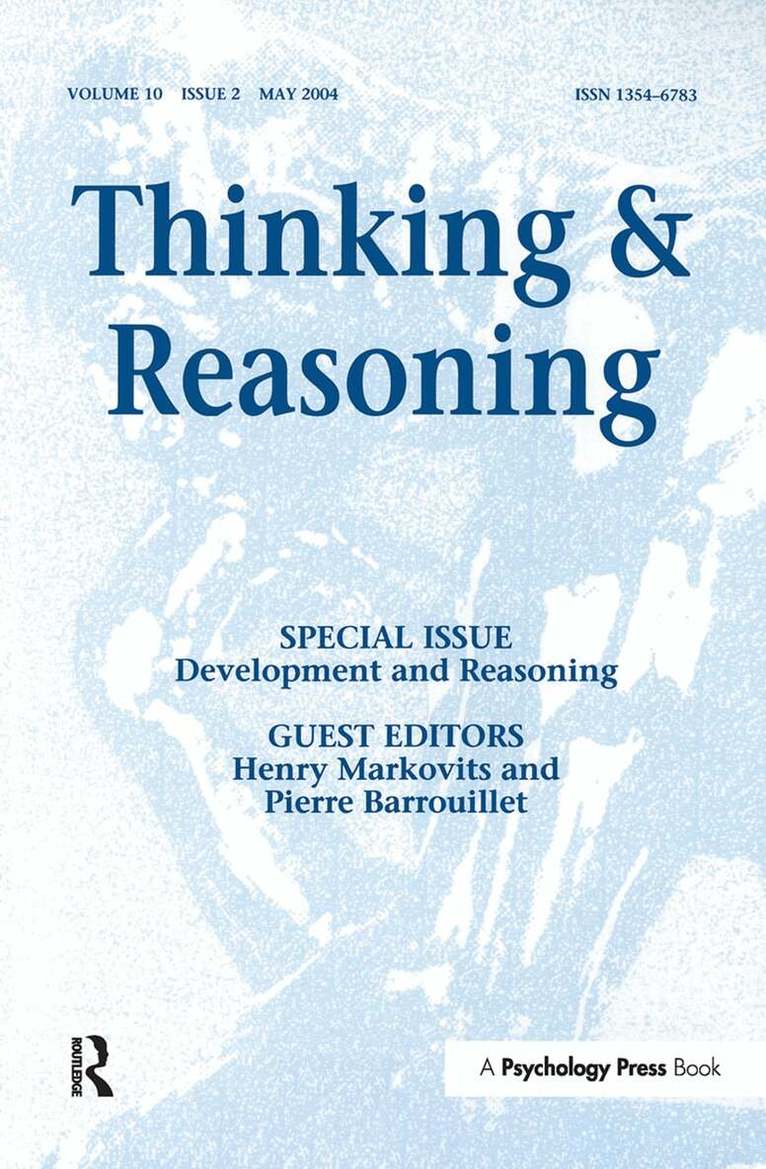
Development and Reasoning
A Special Issue of Thinking and Reasoning
Av Pierre Barrouillet, Henry Markovits
Inbunden, 2019
1474 kr
Lägg i varukorg
The study of deductive reasoning is one of the key areas in cognitive psychology. Much of the initial impetus for studies in this field came from a developmental perspective, in particular as a consequence of Piaget's theory of formal operations. Subsequent research that examined some of the …
Judgement and Choice: Perspectives on the Work of Daniel Kahneman
A Special Issue of Thinking and Reasoning
Av Daniel Kahneman, David Lagnado m. fl.
Häftad, 2007
980 kr
Lägg i varukorg
The work of Daniel Kahneman and Amos Tversky has transformed the study of judgment and decision-making, and penetrated related disciplines such as economics, finance, marketing, law and medicine. In recognition of these achievements, Kahneman was awarded the Nobel Prize for Economics in 2003. This …
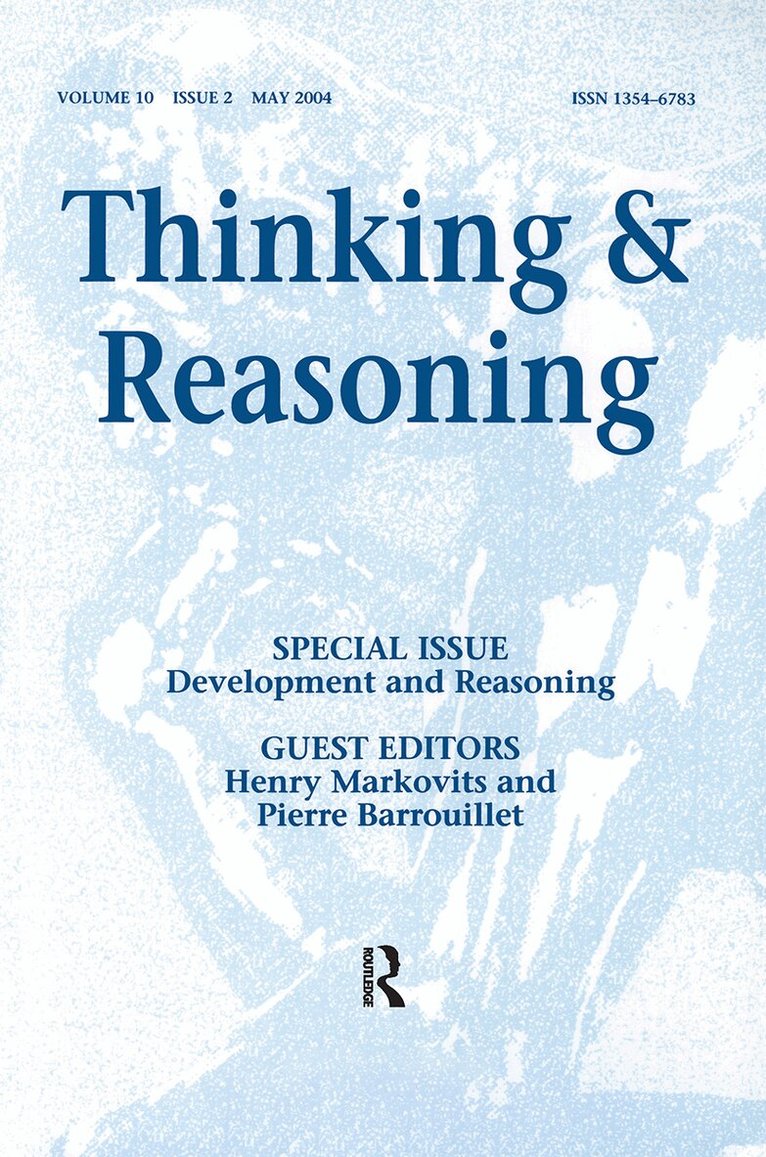
Development and Reasoning
A Special Issue of Thinking and Reasoning
Av Pierre Barrouillet, Henry Markovits
Häftad, 2004
472 kr
Lägg i varukorg
The study of deductive reasoning is one of the key areas in cognitive psychology. Much of the initial impetus for studies in this field came from a developmental perspective, in particular as a consequence of Piaget's theory of formal operations. Subsequent research that examined some of the …
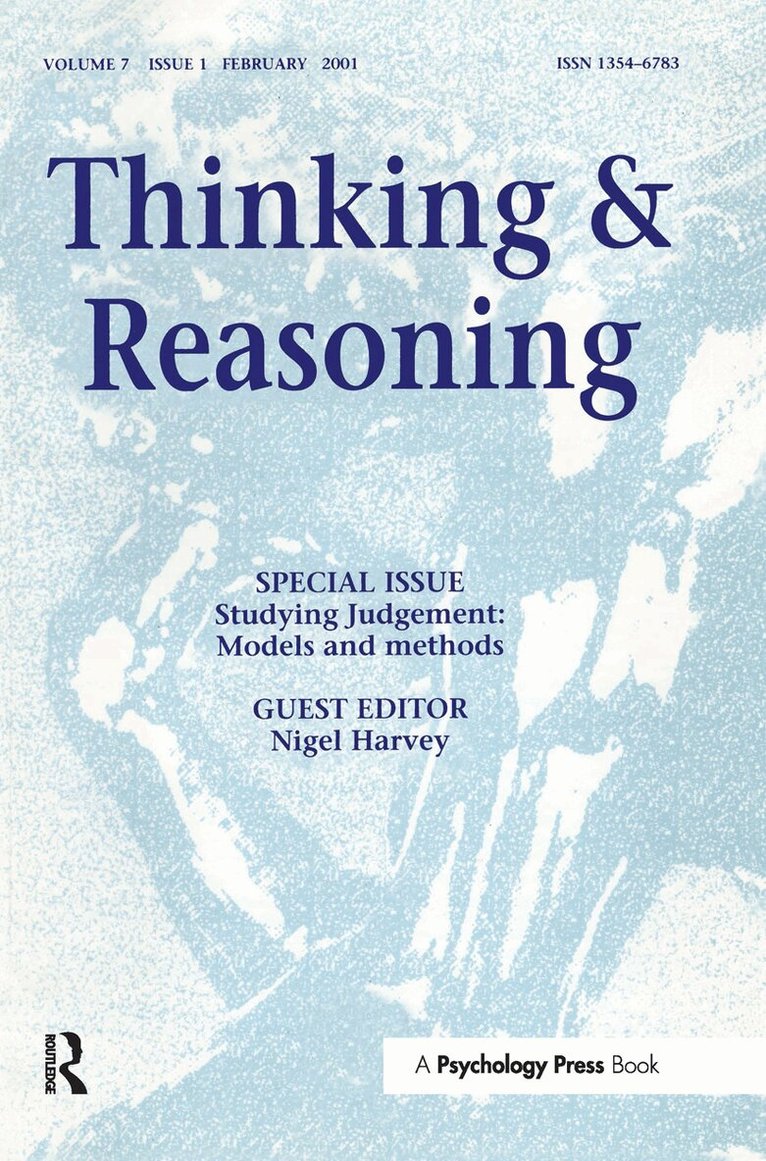
Studying Judgment: Models and Methods
A Special Issue of Thinking and Reasoning
Av Nigel Harvey
Häftad, 2001
596 kr
Tillfälligt slut
There are many different ways of studying human judgement. Individual researchers into the subject tend to focus on just one or two of them and to neglect others. As a result, a number of different literatures have developed somewhat independently of one another. Those publishing in one are well …