Special Publication of the Society for Geology Applied to Mineral Deposits – serie
Visar alla böcker i serien Special Publication of the Society for Geology Applied to Mineral Deposits. Handla med fri frakt och snabb leverans.
10 produkter
10 produkter
Häftad, Tyska, 1976
559 kr
Skickas inom 10-15 vardagar
Häftad, Engelska, 2012
1 082 kr
Skickas inom 10-15 vardagar
Results of selected projects on Exploration R & D, one of the major research areas implemented by the Commission of European Communities in Brussels on the subject of mineral raw materials, are presented on an international basis. All aspects of the geology and geochemistry of ore deposits and their host rocks are covered. Main headings are according to commodity, i.e. tungsten, chromite, and base metals, rather than by scientific criteria. The scope and subject matter varies from the metallogenic province to the individual deposit. The question of possible application to exploration methodology is explored in several papers. Particularly structural and geochemical techniques are discussed.
Häftad, Engelska, 2011
1 082 kr
Skickas inom 10-15 vardagar
Häftad, Engelska, 2012
1 082 kr
Skickas inom 10-15 vardagar
The research on mineral deposits and the exploration of new vast resources made exceptional progress worldwide during the last decades. At the same time, mining activity has shifted from the historical European centres to other continents. Even though the mineral pro- duction of the Alpine province has lost its significance as compared with other areas of the world in this century, striking ideas and theo- ries on the formation of mineral deposits originating from this domain have stimulated lively international discussion. This may be explained by the proximity of different peoples with varying geographical and intellectual backgrounds meeting in the Alpine region. Realizing this development some Italian colleagues, above all Remo Albertini and Guiliano Perna, initiated the (first) International Sym- posium on Mineral Deposits of the Alps in 1966. When I. ISMIDA won favorable attention, it was resolved to call further meetings at regular intervals. A different Alpine country was host and organizer each time. As a first summary of the historical development, we give a short record of previous meetings: I. ISMIDA Sept. 11-18,1966, held at Passo della Mendola/Italy II. ISM IDA Oct.4-6, 1971,heldatBled/Yugoslavia III. ISMIDA Oct. 3-7, 1977, held at Leoben/ Austria IV. ISMIDA Oct. 5-10,1981, held at Berchtesgaden/Bavaria, FRG The present volume contains the greater number of papers pre- sented at the Fourth International Symposium on Mineral Deposits of the Alps, held at Berchtesgaden (Bavaria), Federal Republic of Ger- many, in 1981.
Häftad, Engelska, 2011
1 619 kr
Skickas inom 10-15 vardagar
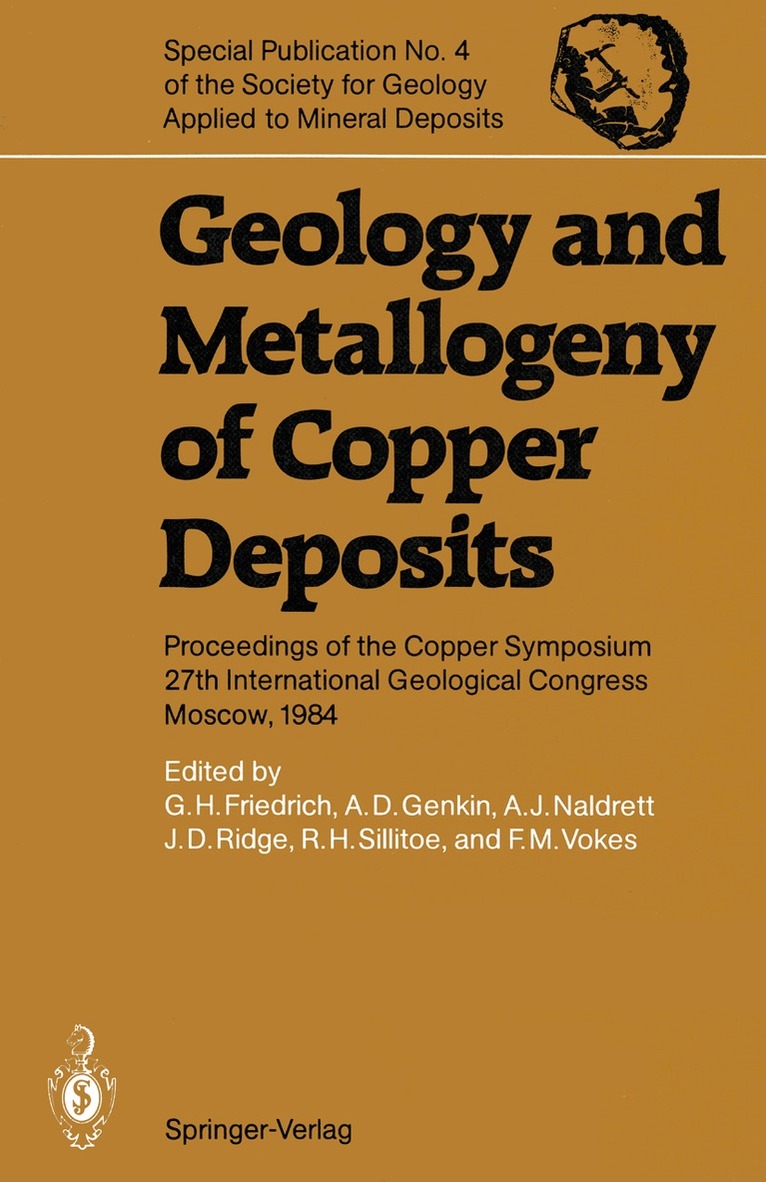
Copper belongs to those metals whose concentrations in nature arise from a broad diversity of endogeneous and exogeneous pro- cesses, which applies to essentially all genetic classes of ore deposits. This is the first proceedings volume on copper metallogeny to cover the worldwide distribution of the four main groups of cop- per deposits, including in Part I: copper-nickel deposits with cobalt and platinum group elements; Part II: copper-molybde- num-gold deposits with silver, zinc, and lead; Part III/IV: copper- zinc-lead deposits (with silver etc.). On the occasion of the 27th International Geological Congress in Moscow, USSR, a symposium on copper metallogeny was held, dealing with metallogenesis and mineral deposits. The symposium was organized and sponsored by three international societies en- gaged in the field of ore deposits: The Society of Economic Geol- ogy (SEG), the Society of Geology Applied to Mineral Deposits (SGA) and the International Association on the Genesis of Ore Deposits (IAGOD).Invited papers were presented in four ses- sions: (1) Copper deposits in mafic and ultramafic complexes, (2) Porphyry copper deposits, (3) Copper deposits of volcanic-hydro- thermal association, and (4) Sediment-hosted copper deposits. The sessions were chaired by A. D. Genkin, A. J. Naldrett, J. D. Ridge and G. I. Gorbunov; V.1. Sotnikov, A. Soregaroli, R. H. Sillitoe and V. A. Evstrakhin; F. M. Vokes, A.1. Krivtsov, M. Solomon and N. I. Eremin; G. H. Friedrich, Yu. V. Bogdanov, A.C. Brown and F.P. Krendelev.
Häftad, Engelska, 2012
1 082 kr
Skickas inom 10-15 vardagar
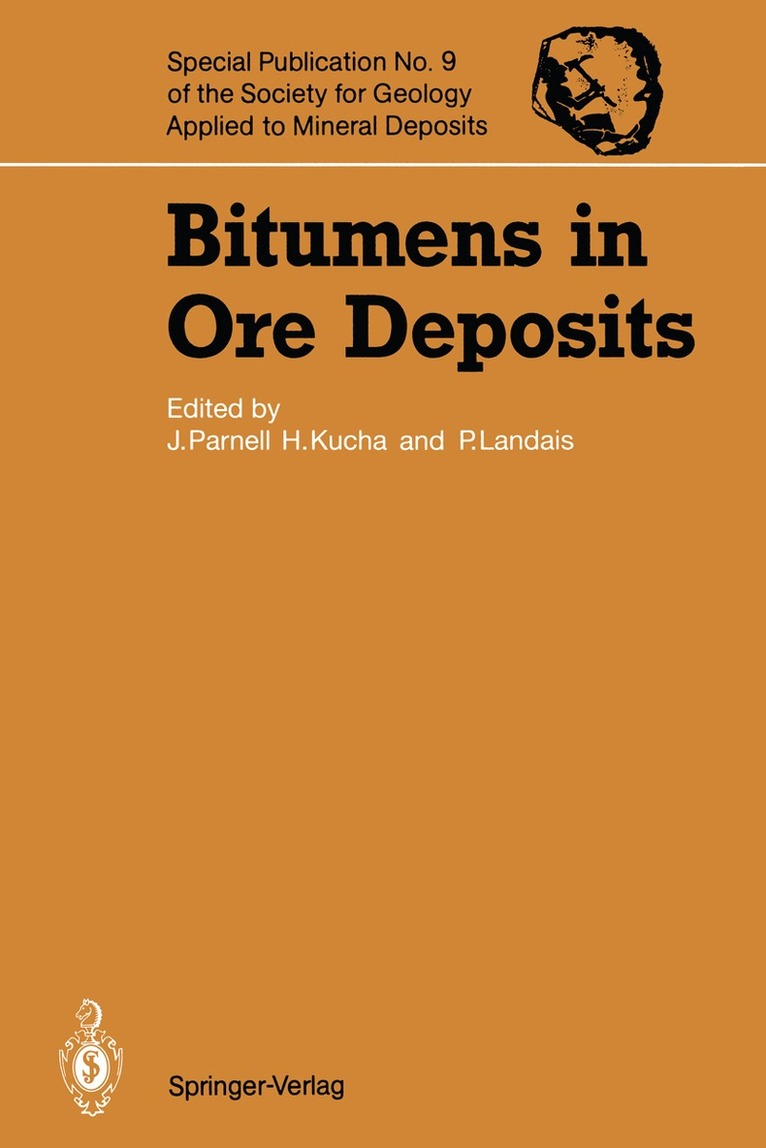
l J. Parnell It is widely documented that concentrations of metal may be associated with diverse organic materials, from living plants and animals through organic-rich sediments to crude oil, solid bitumen/pyrobitumen, and graphite. The signifi- cance of organic matter in mineralizing processes has been the subject of several special publications, including the proceedings of symposia on Oil and Ore (Garrard 1977), Organics in Ore Deposits (Dean 1986), the Role of Organisms and Organic Matter in Ore Deposition (MacQueen 1985), and Organic Matter in Hydrothermal Systems (Simoneit 1990). Recent research has made notable advances in the use of organic geochemical/pyrolysis data to assess the thermal maturity of ore deposits (e. g. , MacQueen and Powell 1983), the transport of metals in fluids which contain organic compounds (e. g. , Manning 1986), the role of microbiota in fixing metals (e. g. , Morton and Changkakoti 1987) and the nature of sulphate reduction in sulphide ores associated with hydrocarbons (e. g. , Leventhal 1990).The roles of fluid hydro- carbons in ore metal transport and solid hydrocarbons (bitumens) in ore metal deposition have been reviewed by Manning (1986) and Parnell (1988) respectively. This Volume places emphasis on bitumens; either bitumens which occur in ore deposits, or are enriched in or otherwise associated with metals. Inevitably some accounts describe cases where metals are associated with both bitumens and autochthonous organic matter (kerogen).
Häftad, Engelska, 2014
1 619 kr
Skickas inom 10-15 vardagar
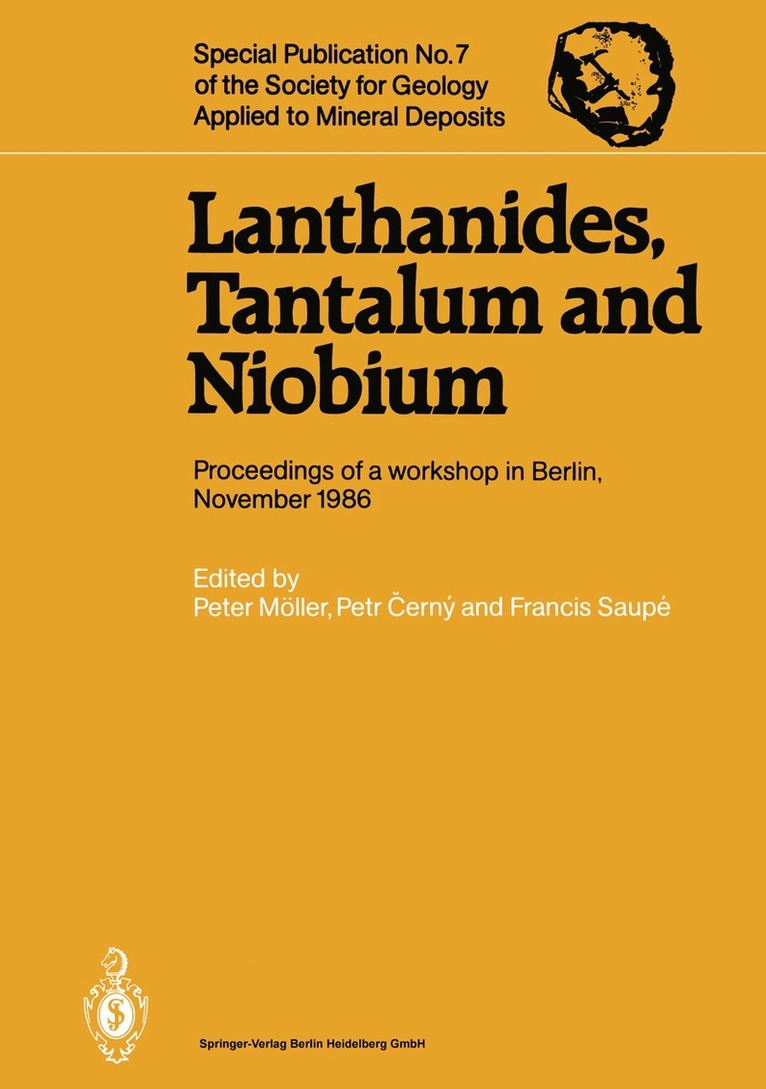
Rare Earth Elements (REE) as well as tantalum and niobium are of tremendous importance because of their specific high-technology applications. The contributions gathered in this volume give an up-to-date survey on the mineralogy, primary ore deposits, prospecting, processing and applications of REE, Ta, and Nd, making this volume a useful handbook for practitioners and students. Finally, the comprehensive coverage of the fundamental aspects, especially as regards REE as tracers of geological phenomena, will prove extremely helpful.
Häftad, Engelska, 2014
1 082 kr
Skickas inom 10-15 vardagar
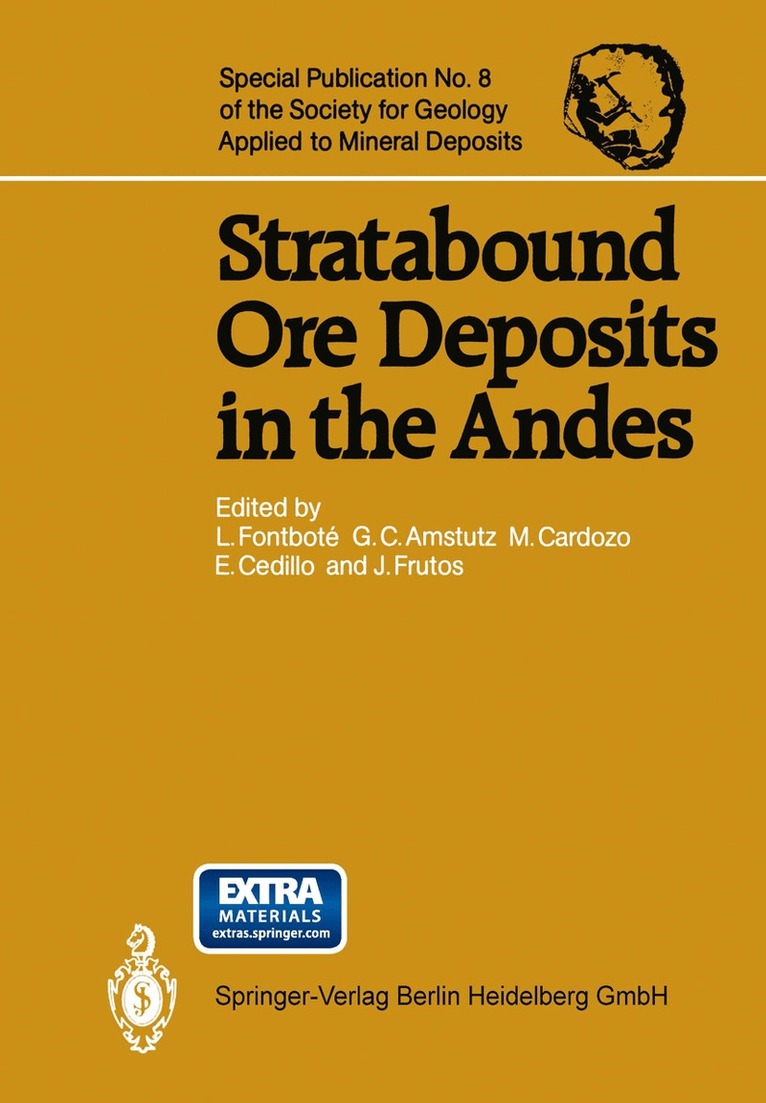
The present volume Stratabound Ore Deposits in the Andes has its roots in an international seminar on stratabound ore deposits which took place in September 1986 in Cusco, Peru, sponsored by Multi ciencias (Peru) and UNESCO. During this seminar it became clear that the amount and quality of research done on stratabound ore deposits in the Andes required a synthesis. Researchers in industry and government as well as in academia, including many which had participated at the Cusco Seminar, were invited to contribute. The answer was extremely positive, confirming the idea that a book expressing the state of the art of the study of stratabound ore deposits in the Andes was long overdue. As editors we sought to give maximum coverage to the present knowledge, yet keeping the length, and thereby the price, within rea sonable limits. The book contains three types of contributions. In the first part the reader will find review papers focusing on ( 1) the geologic framework (Frutos), (2) the metallogenesis in Andean countries including also types of deposits differing from those of stratabound nature (Cardozo and Cedillo, Oyarzun), and (3) an in troductory overview of the stratabound ore deposits in the Andes, emphasizing their geotectonic position as a classification tool (Font bote).
Häftad, Engelska, 2012
544 kr
Skickas inom 10-15 vardagar
Research on base metal sulfide deposits is among the oldest and best-documented subjects of economic geologists worldwide, c- sidering that copper was first mined about 3000 years ago on the island of Cyprus. During the past 10 years, after the exciting discovery of active sulfide formation on the modem ocean floor, a considerable flow of new ideas has stimulated and influenced the discussion of o- forming processes for copper-zinc-Iead sulfides in sedimentary and volcanic environments. The development of new genetic concepts consequently led to reinterpretation of some apparently well-est- lished formation models. This Proceedings Volume contains a collection of carefully selected papers on current research on the geology and metallogeny of base metal sulfide deposits presented as oral or poster contri- tions at the DMG (Deutsche Mineralogische Gesellschaft) - GDMB (Gesellschaft Deutscher Metallhiitten- und Bergleute - Fachsektion Lagerstiittenforschung) - SGA (Society of Geology Applied to Mineral Deposits) Joint Meeting on Ore Deposits in Aachen, Federal Republic of Germany, September 16-19, 1985.Base metal sulfide deposits with different ore compositions occur in a wide variety of geological and lithological settings of almost any age. This has been taken into account in organizing this volume along the lines of classical host-rock classification. The first group of contributions focuses on sediment-hosted base metal sulfide deposits including examples of Kupferschiefer and Copperbelt-type, as well as lead-zinc mineralization in car- nate host rocks.
Häftad, Engelska, 2012
1 082 kr
Skickas inom 10-15 vardagar
Sediment-hosted deposits are the main source of zinc and lead. In this volume, the reader will find the most recent developments in research including: - Fluid migration leading to formation of Zn-Pb ores in sedimentary basins. Relationships to orogenic events and to geothermic anomalies - Transport of metals and precipitation mechanisms. The role played by fluid mixing, fluid-rock reaction, organic matter, and thiosulfates - Paleomagnetic dating of ore deposits - The association of Mississippi Valley-type ore deposits to diapiric salt structures - Geochemical investigations applied to exploration for sediment-hosted Zn-Pb deposits - Economic aspects. The broad geographical coverage is an additional aspect which will interest both researchers and explorationists.