Studies in Musical Genesis, Structure & Interpretation - Böcker
Visar alla böcker i serien Studies in Musical Genesis, Structure & Interpretation. Handla med fri frakt och snabb leverans.
12 produkter
12 produkter
2 528 kr
Skickas inom 5-8 vardagar
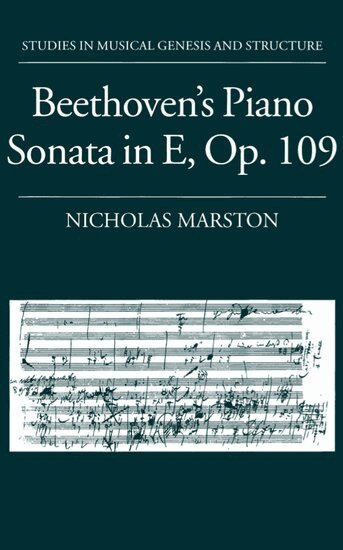
In his thorough analytical study of Beethoven's Piano Sonata in E, Op. 109, Nicholas Marston suggests a unique way of understanding this important work. The book provides an exhaustive study of its sources and an analytical approach to the structure of the sonata itself. The source study is based on a complete transcritpion of all the surviving manuscript sources for the work; the book includes a large majority of the sketches, and parts of the autograph score.The introductory chapter reivews Heinrich Schenker's work on Op. 109. In Chapter 2 Beethoven's letters, conversation books, sketchbooks and other sources are used to build up a detailed picture of the progess of his work on the sonata. The middle chapters form the core of the analytical study in which the sketches for each part of the three movements are analysed in detail, and the relevance of the sketches to the final version is explored. The final chapter extends the notion of 'sketch' beyond Op. 109 and summarizes the results of the study. No stone is left unturned: even Beethoven's previously misunderstood notation of final barlines in the autograph score is shown to be of structural significance.The book is important in several respects. The attitude adopted towards the sketches is postive , approaching them as valid compositional acts and not wrong turnings en route to a perfect final version. As an analytical study the book provides perhaps the most extended Schenkerian analysis of a Beethoven sonata yet published, and offers a rare Schenkerian analysis of a variation movement. It may equally be read as a extension or critique of Schenkerian thinking: it goes beyond Schenker both in its espousal of unconventional 'background' strucures and in its suggestion of a single structural plan for the entire three-movement work.
1 128 kr
Skickas inom 5-8 vardagar
Tells the intriguing story of Béla Bartók's Viola Concerto, a work left unfinished at his death in 1945. Drawing on interviews and documents that reveal previously unavailable information, it discusses the commission, the reconstruction by Tibór Sérly, events leading up to the premiere, its reception over the second half of the twentieth century, the revisions, and future possibilities.
956 kr
Skickas inom 5-8 vardagar
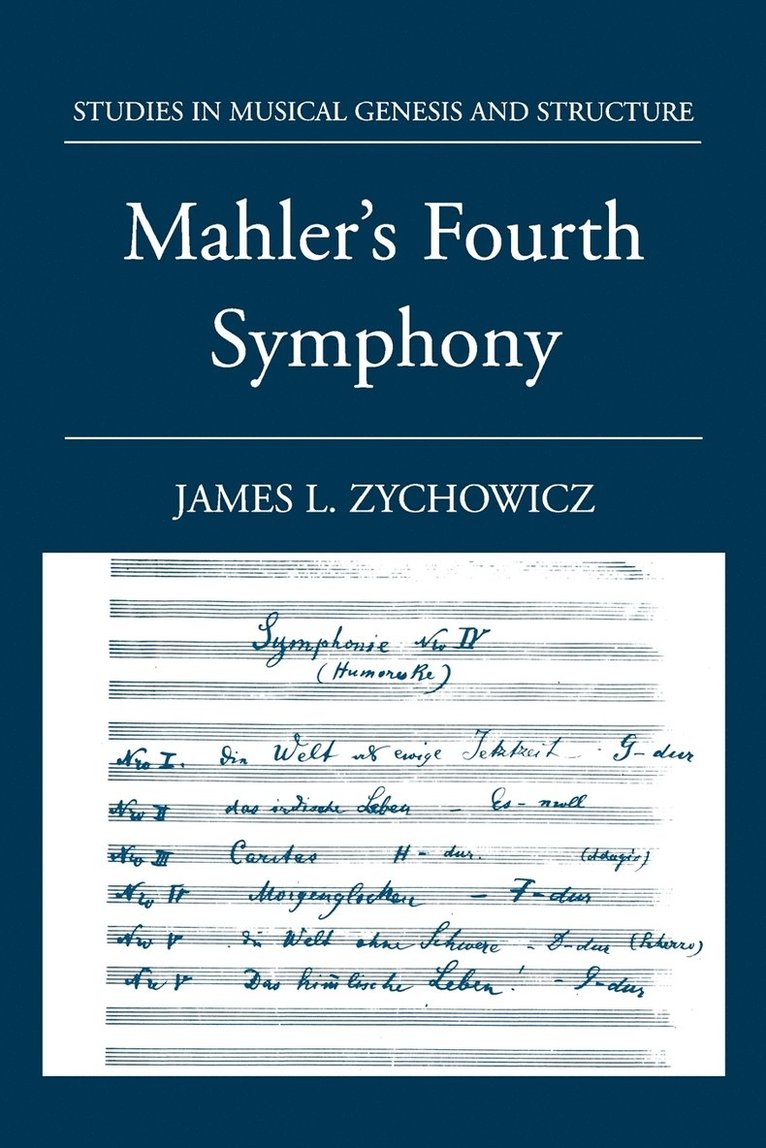
Following the earlier volumes in the Studies in Musical Genesis and Structure series, Mahler's Fourth Symphony is a study of origins of one of Mahler's most popular and accessible works. James Zychowicz examines how the composition evolved from the earliest ideas to the finished score, and in doing so sheds new light on Mahler's working process.
1 397 kr
Skickas inom 5-8 vardagar
Unquestionably the founding work of minimalism in musical composition, Terry Riley's In C (1964) challenges the standards of imagination, intellect, and musical ingenuity to which "classical" music is held. Only one page of score in length, it contains neither specified instrumentation nor parts. Its fifty-three motives are compact, presented without any counterpoint or evident form. The composer gave only spare instructions and no tempo. And he assigned the work a title that's laconic in the extreme. At the same moment of its composition, Elliott Carter was working on his Concerto for Piano, a work Stravinsky was to hail as a masterpiece. Having almost completed Laborinthus II, Luciano Berio would soon start the Sinfonia. Karlheinz Stockhausen had just finished Momente. In context of these other works, and of the myriad of compositional styles and trends which preceded them, In C stands the whole idea of musical "progress" on its head. Forty years later, In C continues to receive regular performances every year by professionals, students, and amateurs, and has had numerous recordings since its 1968 LP premiere. Welcoming performers from a vast range of practices and traditions, from classical to rock to jazz to non-Western, these recordings range from the Chinese Film Orchestra of Shanghai - on traditional Chinese instruments - to the Hungarian 'European Music Project' group, joined by two electronica DJs manipulating the Pulse. In C rouses audiences while all the while projecting an inner serenity that suggests Cage's definition of music's purpose -- "to sober and quiet the mind, thus making it susceptible to divine influence." Setting the stage for a most intriguing journey into the world of minimalism, Robert Carl's Terry Riley's In C argues that the work holds its place in the canon because of the very challenges it presents to "classical" music. He examines In C in the context of its era, its grounding in aesthetic practices and assumptions, its process of composition, presentation, recording, and dissemination. By examining the work's significance through discussion with performers, composers, theorists, and critics, Robert Carl explores how the work's emerging performance practice has influenced our very ideas of what constitutes art music in the 21st century.
454 kr
Skickas inom 5-8 vardagar
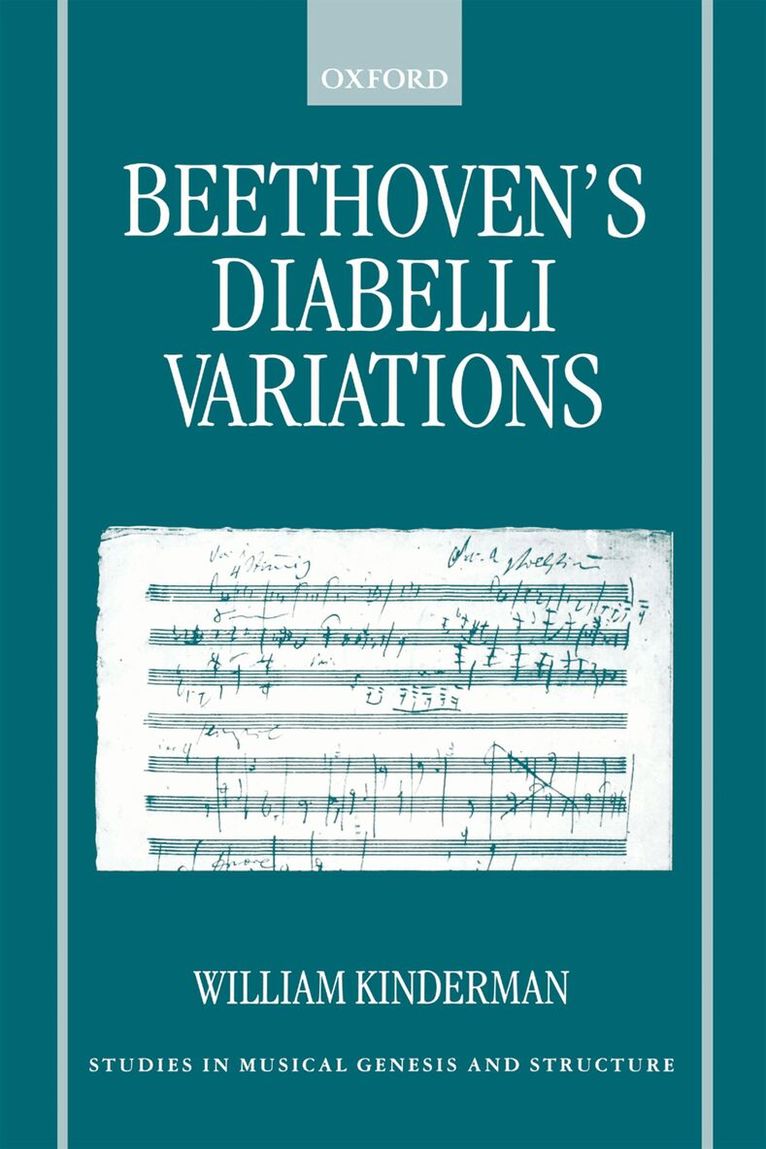
The Thirty-three Variations on a Waltz by Diabelli, Op. 120, represent Beethoven's most extraordinary achievement in the art of variation-writing. In their originality and power of invention, they stand beside other late Beethoven masterpieces such as the Ninth Symphony, the Missa Solemnis, and the last quartets. William Kinderman's study of the compositional history of the work includes the first extended investigation and reconstruction of the sketches and drafts, and reveals, contrary to earlier views of its chronology, that it was actually begun in 1819, then put aside, and completed in 1822-3. Kinderman also provides an analytical discussion of the complete work, and he demonstrates how insights derived from a close study of the sketches can illuminate Beethoven's compositional ideas and attitudes and contribute substantially to a better understanding of this massive and complex set of variations. The book includes complete transcriptions of the two central documents in the genesis of the Diabelli variations - the reconstructed Wittgenstein Sketchbook and the Paris - Landsberg - Montauban Draft.
2 572 kr
Skickas inom 5-8 vardagar
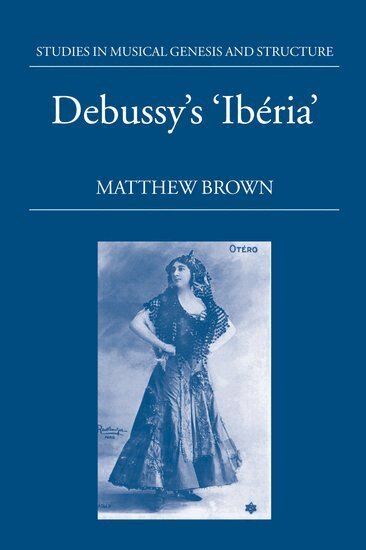
For well over a century musicologists have been fascinated by composers' manuscripts and by the insights they might reveal about the nature of musical composition. This book suggests ways in which Debussy's sketches and drafts may be used to explain how he composed one of his last great symphonic scores: Ibéria (from Images for orchestra, 1903-10). Part 1 shows how we might understand the process of musical composition as a form of expert problem solving; it describes the compositional history of the work, the various intentional goals and historical constraints that guided Debussy's thinking, and some of the technical problems Debussy faced while composing this remarkable score. Part 2 reconstructs the genesis of each of the three movements in turn.
2 169 kr
Skickas inom 5-8 vardagar
Following the earlier volumes in the Studies in Musical Genesis and Structure series, Mahler's Fourth Symphony is a study of the origins of the work as well as a thorough examination of Mahler's compositional process. The source of the Fourth Symphony was the song Das himmlische Leben, which Mahler completed in 1892 and later wished to include in a large-scale work. Originally part of a collection of settings from Des Knaben Wunderhorn, the song became, for a time, part of the Third Symphony (1896). Eventually Mahler made Das himmlische Leben the source and goal of the Fourth Symphony, which he completed in 1901. In this book, James Zychowicz explores how Mahler's compositional process for the Fourth, from the early movement plans to preliminary sketches, short score, draft score, and fair copy. At each stage of the process, Mahler added details, decided on textures, and explored tonalities until he arrived at the finished score. This is the first comprehensive study of Mahler's compositional method, concerning a pivotal work in his oeuvre. The Fourth Symphony looks back toward the earlier Wunderhorn period and simultaneously forward to the less programmatic style of his middle symphonies.
1 268 kr
Skickas inom 7-10 vardagar
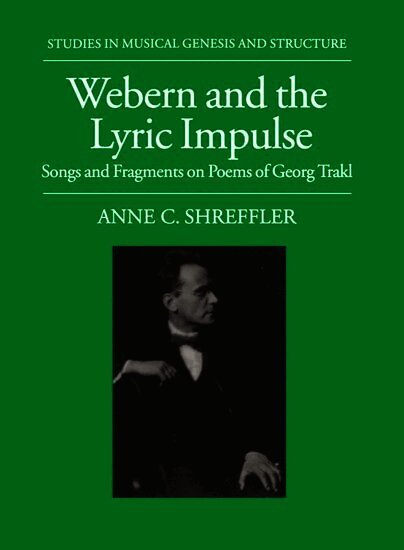
This study provides a new view of a composer long considered to be one of the century's most rigorously intellectual creators, Anton Webern. By examining a central pre-twelve-tone work, the Trakl cycle, Op 14, in the context of the Viennese intellectual and artistic climate, Professor Shreffler shows how Webern's responses to Trakl's complex verse enabled him to expand his musical vocabulary. The author's emphasis on Webern's compositional process is of particular importance: whether because of the anxiety of creating a new musical language, or because of an innate hyper-perfectionism (or both), Webern rejected most of what he composed. A close examination of the manuscript sources - fragments, sketches, and fair copies - of Webern's comparatively neglected middle-period lieder enables her to shed light on Webern's musical language and his working methods. A focus on the sources also helps to modify the view that his music progressed steadily in the direction of the twelve-tone technique. The works reveal instead a concern with expressing the essence of the text; this lyricism, rather than articulating a substantially different aesthetic from the later works, provides a better understanding of the consummate lyricism of all his music, however compressed or fragmented its utterance in the `classic' twelve-tone works.
3 425 kr
Skickas inom 5-8 vardagar
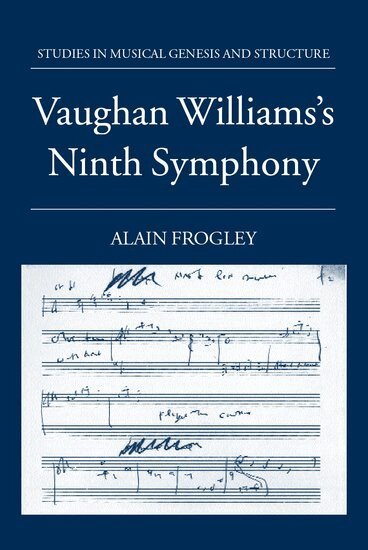
Ever since its première just before the composer's death, Vaughan Williams's Ninth Symphony has divided critical opinion and remained something of an enigma. Yet the composer thought highly of the work, and went against his usual practice by preserving all the sketches. This study, the first of its kind on a work of Vaughan Williams, analyses the symphony and traces its genesis through hundreds of pages of sketches and drafts; it also offers a general introduction to the composer's working methods. The manuscripts show how the composer worked meticulously to create the complex expressive ambivalence of the finished work, transforming in the process simpler conceptions redolent of his earlier music. Most crucially, however, the sketches reveal an underlying programme, centred on the theme of innocent sacrifice and drawing on Hardy's Tess of the D'Urbervilles, Stonehenge, and Salisbury Cathedral. Vaughan Williams's new musical path in the symphony, it emerges, was closely allied to the continuing evolution of his visionary agnosticism.
1 056 kr
Skickas inom 5-8 vardagar
Elektra was the fourth of fifteen operas by Strauss and opened his successful partnership with the librettist Hugo von Hofmannsthal. It is one of the most important operas of the early twentieth century and it solidified Strauss's status as the leading German opera-composer of his day.Bryan Gilliam's study of this major work examines its musical-historical context and also provides a detailed analysis of some of its musical features. He establishes a chronology of the evolution of the opera and places it in the larger framework of German opera of the time. His detailed examination of the sketch-books enables him to offer fresh insight into Strauss's use of motifs and overall tonal structure. In so doing he shows how the work's arresting dissonance and chromaticism has hidden its similarities to his later, seemingly more tonally conservative opera, Der Rosenkavalier - not only does Strauss in both operas exploit a variety of musical styles to express irony, parody, and other emotions, but both are in fact thoroughly tonal.
1 002 kr
Skickas inom 5-8 vardagar
Richard Wagner's opera Das Rheingold is a milestone in the composer's outlput and in the history of music in general. It marked Wagner's return to operatic composition after a hiatus of five years, and signified his definitive break with earlier operatic conventions. it also represents a reconsideration of the whole question of dramatic-musical form, and the role of tonality in articulating this form.Warren Darcy traces here the genesis of Das Rheingold through the various textual and musical sketches and drafts to the full score, and also develops a theoretical framework within which the opera may be meaningfully analysed. Using Wagner's manuscripts as a point of departure, Darcy discusses the formal, harmonic, and linear structure of the work. In so doing, he challenges a number of contemporary views about the opera, including those of Curt von Westernhagen and Carl Dahlhaus.
3 066 kr
Skickas inom 5-8 vardagar
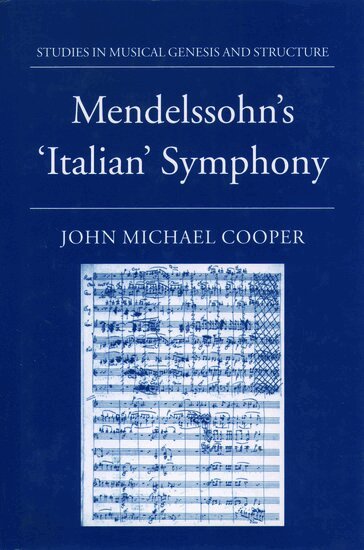
Mendelssohn's posthumously published Symphony in A Major has become one of the staples of the nineteenth-century symphonic canon, and is often considered emblematic of Mendelssohn's stylistic strengths and weaknesses - yet the version by which the work has always been known is the first complete version (1833), which was rejected by the composer and rewritten by him the following year. This study documents the Symphony's complicated genesis, examines the reception history of that version, and explores the far-reaching changes incorporated in the 1834 reworking. The book concludes with chapters about the validity and implications of the traditional 'Italian' epithet and the ways in which the music of the two principal versions can shape our understanding of Mendelssohn, his music, and his significance as a cultural figure in the musical culture of the nineteenth century.