Studies in Funerary Archaeology – serie
Visar alla böcker i serien Studies in Funerary Archaeology. Handla med fri frakt och snabb leverans.
2 produkter
2 produkter
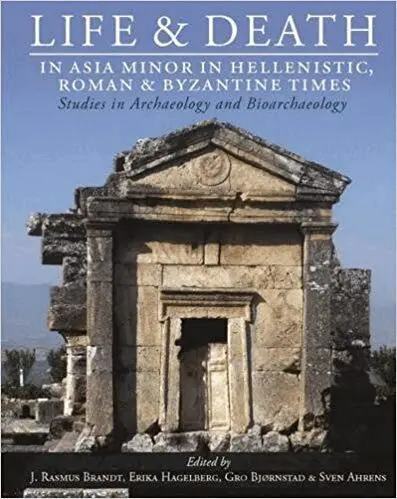
Life and Death in Asia Minor in Hellenistic, Roman and Byzantine Times
Studies in Archaeology and Bioarchaeology
Inbunden, Engelska, 2017
953 kr
Skickas
Life and Death in Asia Minor combines contributions in both archaeology and bioarchaeology in Asia Minor in the period ca. 200 BC – AD 1300 for the first time. The archaeology topics are wide-ranging including death and territory, death and landscape perception, death and urban transformations from pagan to Christian topography, changing tomb typologies, funerary costs, family organization, funerary rights, rituals and practices among pagans, Jews, and Christians, inhumation and Early Byzantine cremations and use and reuse of tombs. The bioarchaeology chapters use DNA, isotope and osteological analyses to discuss, both among children and adults, questions such as demography and death rates, pathology and nutrition, body actions, genetics, osteobiography, and mobility patterns and diet. The areas covered in Asia Minor include the sites of Hierapolis, Laodikeia, Aphrodisias, Tlos, Ephesos, Priene, Kyme, Pergamon, Amorion, Gordion, Boğazkale, and Arslantepe. The theoretical and methodological approaches used make it highly relevant for people working in other geographical areas and time periods. Many of the articles could be used as case studies in teaching at schools and universities. An important objective of the publication has been to see how the different types of results emerging from archaeological and natural science studies respectively could be integrated with each other and pose new questions on ancient societies, which were far more complex than historical and social studies of the past often manage to transmit.
441 kr
Tillfälligt slut
Henri Duday is Director of Research for CNRS at the University of Bordeaux. The Archaeology of the Dead is based on an intensive specialist course in burial archaeology given by Duday in Rome in November 2004. The primary aim of the project was to contribute to the development of common procedures for excavation, data collection and study of Roman cemeteries of the imperial period. Translated into English by Anna Maria Cipriani and John Pearce, this book looks at the way in which the analysis of skeletons can allow us to re-discover the lives of people who came before us and inform us of their view of death. Duday throughly examines the means at our disposal to allow the dead to speak, as well as identifying the pitfalls that may deceive us.