
Studies in Iconology – serie
Visar alla böcker i serien Studies in Iconology. Handla med fri frakt och snabb leverans.
4 produkter
4 produkter
Del 1 - Studies in Iconology
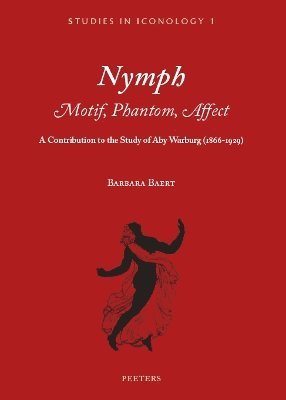
Nymph. Motif, Phantom, Affect
A Contribution to the Study of Aby Warburg (1866-1929)
Häftad, Engelska, 2014
712 kr
Skickas inom 3-6 vardagar
Behind them, close to the open door, there runs - no, that is not the word, there flies, or rather there hovers - the object of my dreams, which slowly assumes the proportion of a harming nightmare. A fantastic figure - should I call her a servant girl, or rather a classical nymph? (...) This lively, light-footed and rapid gait, this striding step, which contrasts with the aloof distance of all other figures, what is the meaning of it all? (...) My condition varied between a bad dream and a fairy tale (...). I lost my reason. It was always she who brought life and movement into an otherwise calm scene. Indeed, she appeared to be the embodiment of movement (...) but is it very unpleasant to be her lover? (...) Who is she? Where does she come from? Have I encountered her before? I mean one and a half millennia earlier? Does she come from a noble Greek lineage, and did her great-grandmother have an affair with people from Asia Minor, Egypt or Mesopotamia? pAby Warburg (1866-1929)
Del 2 - Studies in Iconology
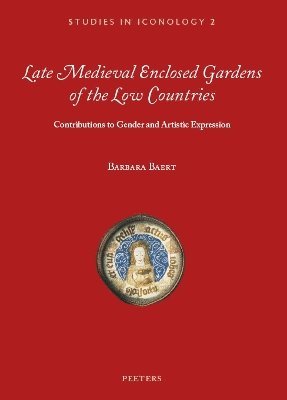
Late Medieval Enclosed Gardens of the Low Countries
Contributions to Gender and Artistic Expression
Häftad, Engelska, 2016
742 kr
Tillfälligt slut
During the Late Middle Ages a unique type of 'mixed media' recycled and remnant art arose in houses of religious women in the Low Countries: Enclosed Gardens. These are retables, sometimes with painted side panels, the central section filled not only with narrative sculpture, but also with all sorts of trinkets and hand-worked textiles. Adornments include relics, wax medallions, gemstones set in silver, pilgrimage souvenirs, parchment banderoles, flowers made from textiles with silk thread, semi-precious stones, pearls and quilling (a decorative technique using rolled paper). The ensemble is an impressive and one-of-a-kind display and presents as an intoxicating garden. In this essay the exceptional heritage of such Enclosed Gardens is interpreted from a range of approaches. The Enclosed Garden is studied as a symbol of paradise and mystical union, as the sanctuary of interiority, as the sublimation of the sensorium (in particular the sense of smell), as a typical gendered product, and as a centre of psycho-energetic creative processes.
Del 4 - Studies in Iconology
Nymph. Motif, Phantom, Affect. Part II
Aby Warburg's (1866-1929) Butterflies as Art Historical Paradigms
Häftad, Engelska, 2016
742 kr
Tillfälligt slut
This essay, a meditation on the butterfly and its resonance in art history, is organized in three parts. I begin with Aby Warburg's fascination with moths and butterflies as documented by (1) his letters to André Jolles (e.g. the letter from 1900 known as 'But such high-flown movements are not for me'), (2) the Kreuzlingen pathological report and archives by Ludwig Binswanger (1881-1966) preserved in Tübingen, and (3) the Ninfa fiorentina file in the Warburg Institute. As Seelentierchen - soul animals, psychè - butterflies are archetypically connected to deep cultural affects regarding the soul, resurrection and immortality. Part 2 of the paper considers the butterfly as paradigm for the visual medium and the oculocentric paradigms in art history. Indeed, the butterfly has a specific visual (and sensory) impact on humankind with its flashy, quick, vibrant and hypnotic wings, its medusian eyes and its capability to camouflage itself (cf. 'Sciences diagonales' by Roger Caillois (1913-1978)). Hypnosis, Medusa and camouflage are three important paradigms with which to consider the essence of the image as a dis/appearing, enchanting, and deceiving medium. In Part 3, the three paradigms become the basis for new reflections about art history (and the history of art history) as a study of the butterfly, in short, as 'lepidopterology'.
Del 12 - Studies in Iconology
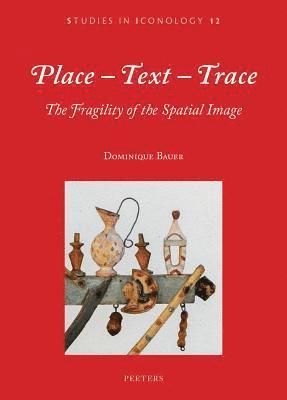
Place-Text-Trace
The Fragility of the Spatial Image
Häftad, Engelska, 2018
785 kr
Tillfälligt slut
The past was over, the future was not there yet and the present was a future past. Throughout the long nineteenth century, past and present had become traces and layers, burdened with an inescapable dimension of absence. Writers, scholars and architects, political theorists, artists, visitors of museums and exhibitions, the miller in Provence and the shepherd in the Landes, were facing a rapidly changing world. The present had become elusive and fragile. The past was irrevocably gone and other. In an initial context of loss, of dispersion and disconnection of lands, people, professions and things, new frameworks of meaning and imagination, of ‘presentification’, had to be found, tools of preservation, of restoration, of (re)establishment and vivification. Place and text become such tools. Against a concise background of comparative literature and contemporary philosophy on absence and presentification, this essay explores spatial images in French and Belgian nineteenth-century literature, especially in the work of Chateaubriand, Balzac, Rodenbach and Mistral. It is argued that the spatial image, as textual space and spatial text, and in the built environment, operates as a cultural subtext of presentification. Its disruptive nature, its own fragility and eventual self-fragmentation reveal the cultural ambiguities of the century’s tragic and grand strife to make the elusive present eternal, timeless, fixed, absenceless and complete in the age of traces.