
B. Baert – författare
Visar alla böcker från författaren B. Baert. Handla med fri frakt och snabb leverans.
4 produkter
4 produkter
Del 32 - Documenta Libraria
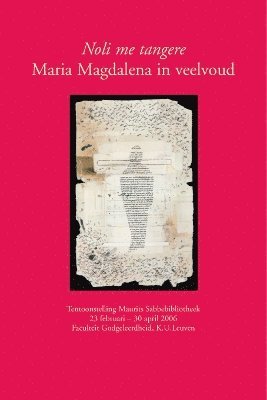
«Noli me tangere». Maria Magdalena in veelvoud
Tentoonstelling Maurits Sabbebibliotheek, 23 februari - 30 april 2006, Faculteit Godgeleerdheid, K.U.Leuven
Häftad, Nederländska, 2006
365 kr
Skickas inom 3-6 vardagar
Noli me tangere', zegt de verrezen Christus tegen Maria Magdalena volgens de Latijnse bijbelvertaling van Johannes 20,17. Weinig bijbelse uitspraken hebben zoveel interesse gewekt van zowel kunstenaars als theologen als deze drie intrigerende woorden. Het «Noli me tangere»-motief ligt aan de basis van het door het Fonds voor Wetenschappelijk Onderzoek - Vlaanderen gefinancierde interdisciplinaire onderzoeksproject 'Maria Magdalena en het aanraken van Jezus. Een intra- en interdisciplinair onderzoek naar de interpretatie van Johannes 20,17 in exegese, iconografie en pastorale begeleiding'. In samenwerking met het Centrum Vrouwenstudies Theologie van de Faculteit Godgeleerdheid van de Katholieke Universiteit Leuven organiseerde de onderzoeksgroep in de Maurits Sabbebibliotheek een tentoonstelling onder de titel '«Noli me tangere». Maria Magdalena in veelvoud' (23 februari tot 30 april 2006). In het eerste deel van deze tentoonstellingscatalogus exploreren de vier promotoren van dit project, Sabine Van den Eynde, Raimund Bieringer, Karlijn Demasure en Barbara Baert de betekenis van het «Noli me tangere»-motief elk vanuit de eigen discipline. In het tweede deel van de catalogus worden de bijna dertig tentoongestelde stukken telkens met een kleurenafbeelding geïllustreerd en besproken. De kunstwerken zijn afkomstig uit diverse periodes, gaande van de vijftiende tot de eenentwintigste eeuw. Diversiteit is ook troef als men de genres en de artistieke media bekijkt: grafiek, schilderkunst, beeldhouwkunst en miniatuurkunst naast volkse reproducties. De onderzoeksgroep heeft ook hedendaagse kunstenaars uitgenodigd om hun visie weer te geven op het «Noli me tangere»-motief. De Indiase kunstenares Lucy D'Souza maakte een schilderij op het snijpunt van christendom en hindoeïsme. De fotografe Malou Swinnen portretteert een Filippijns model, terwijl de kalligraaf Brody Neuenschwander een sculptuur gemaakt heeft bedekt met een sluier met letters. De schilderes Claire Vanden Abbeele en de schilder Jan Vanriet waren bereid om hun reeds bestaande «Noli me tangere» ter beschikking te stellen. Op deze manier verbindt de tentoonstelling artistieke periodes, artistieke media en diverse werelddelen. «Noli me tangere: Maria Magdalena in veelvoud» wil u een Maria Magdalena aanbieden die verleden en heden verbindt.
Del 1 - Studies in Iconology
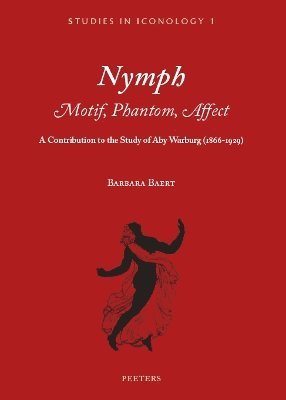
Nymph. Motif, Phantom, Affect
A Contribution to the Study of Aby Warburg (1866-1929)
Häftad, Engelska, 2014
712 kr
Skickas inom 3-6 vardagar
Behind them, close to the open door, there runs - no, that is not the word, there flies, or rather there hovers - the object of my dreams, which slowly assumes the proportion of a harming nightmare. A fantastic figure - should I call her a servant girl, or rather a classical nymph? (...) This lively, light-footed and rapid gait, this striding step, which contrasts with the aloof distance of all other figures, what is the meaning of it all? (...) My condition varied between a bad dream and a fairy tale (...). I lost my reason. It was always she who brought life and movement into an otherwise calm scene. Indeed, she appeared to be the embodiment of movement (...) but is it very unpleasant to be her lover? (...) Who is she? Where does she come from? Have I encountered her before? I mean one and a half millennia earlier? Does she come from a noble Greek lineage, and did her great-grandmother have an affair with people from Asia Minor, Egypt or Mesopotamia? pAby Warburg (1866-1929)
Del 2 - Studies in Iconology
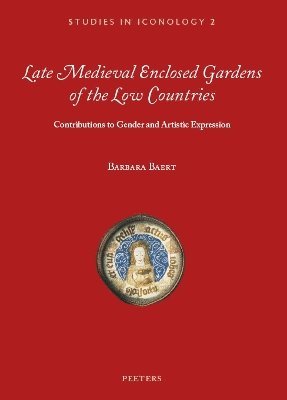
Late Medieval Enclosed Gardens of the Low Countries
Contributions to Gender and Artistic Expression
Häftad, Engelska, 2016
742 kr
Tillfälligt slut
During the Late Middle Ages a unique type of 'mixed media' recycled and remnant art arose in houses of religious women in the Low Countries: Enclosed Gardens. These are retables, sometimes with painted side panels, the central section filled not only with narrative sculpture, but also with all sorts of trinkets and hand-worked textiles. Adornments include relics, wax medallions, gemstones set in silver, pilgrimage souvenirs, parchment banderoles, flowers made from textiles with silk thread, semi-precious stones, pearls and quilling (a decorative technique using rolled paper). The ensemble is an impressive and one-of-a-kind display and presents as an intoxicating garden. In this essay the exceptional heritage of such Enclosed Gardens is interpreted from a range of approaches. The Enclosed Garden is studied as a symbol of paradise and mystical union, as the sanctuary of interiority, as the sublimation of the sensorium (in particular the sense of smell), as a typical gendered product, and as a centre of psycho-energetic creative processes.
Del 4 - Studies in Iconology
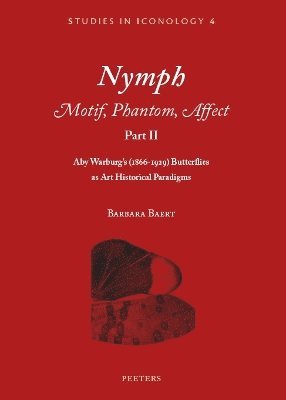
Nymph. Motif, Phantom, Affect. Part II
Aby Warburg's (1866-1929) Butterflies as Art Historical Paradigms
Häftad, Engelska, 2016
742 kr
Tillfälligt slut
This essay, a meditation on the butterfly and its resonance in art history, is organized in three parts. I begin with Aby Warburg's fascination with moths and butterflies as documented by (1) his letters to André Jolles (e.g. the letter from 1900 known as 'But such high-flown movements are not for me'), (2) the Kreuzlingen pathological report and archives by Ludwig Binswanger (1881-1966) preserved in Tübingen, and (3) the Ninfa fiorentina file in the Warburg Institute. As Seelentierchen - soul animals, psychè - butterflies are archetypically connected to deep cultural affects regarding the soul, resurrection and immortality. Part 2 of the paper considers the butterfly as paradigm for the visual medium and the oculocentric paradigms in art history. Indeed, the butterfly has a specific visual (and sensory) impact on humankind with its flashy, quick, vibrant and hypnotic wings, its medusian eyes and its capability to camouflage itself (cf. 'Sciences diagonales' by Roger Caillois (1913-1978)). Hypnosis, Medusa and camouflage are three important paradigms with which to consider the essence of the image as a dis/appearing, enchanting, and deceiving medium. In Part 3, the three paradigms become the basis for new reflections about art history (and the history of art history) as a study of the butterfly, in short, as 'lepidopterology'.