Studies in Medieval and Early Modern Canon Law – serie
Visar alla böcker i serien Studies in Medieval and Early Modern Canon Law. Handla med fri frakt och snabb leverans.
16 produkter
16 produkter
Inbunden, Engelska, 2005
670 kr
Skickas inom 10-15 vardagar
Whether they were secular canonesses or beguines, tertiaries or Sisters of the Common Life, quasi-religious women in the later Middle Ages lived their lives against a backdrop of struggle and insecurity resulting, in large measure, from their ambivalent legal status. Because they lacked one or more of the canonical earmarks of religious women strictly speaking, they had to justify their unauthorized way of life and to defend themselves against association with those who had been branded unorthodox, unruly, or even heretical. Ambiguous legal status within the organized Church and the contests to which it gave rise are a constant theme in the historiography of quasi-religious women, yet there has been no full-scale study of what it meant at law to be a mulier religiosa. This book provides a thorough examination of the writings of canon lawyers in the late Middle Ages as they come to terms, both in their academic work and also in their roles as judges and advisers, with women who were not, strictly speaking, religious, but who were popularly thought of as such. It studies the ways in which jurists strove to categorize these women and to clarify the sometimes ambivalent canons relating to their lives in the community. It assesses, among other things, the extent to which lawyers proved responsive to popular as well as learned notions of what constituted religious life for women when the interests of particular clients were at stake. ""A Pernicious Sort of Woman"" will be a useful supplement to books devoted to individual quasi-religious women or to specific manifestations of female lay piety. It will be of interest to historians of Christianity and specialists in the law and women's studies as well as anyone interested in the history of religious women.
Häftad, Engelska, 2009
334 kr
Skickas inom 10-15 vardagar
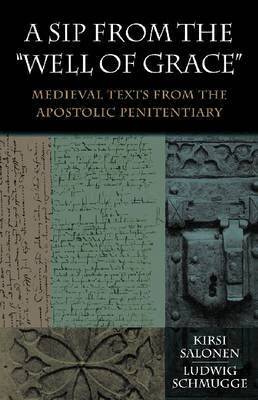
This is the first book to include full texts and photographs from the Apostolic Penitentiary, ""A Sip from the 'Well of Grace'"", which is groundbreaking in its analysis of one of the most important papal offices of the Middle Ages. The Penitentiary alone was responsible for granting absolutions, dispensations, licenses, and special declarations in various matters such as marriage, illegitimacy, murder and violence, confession, and clerical ordination. With access to archival records long sealed by the Vatican, Kirsi Salonen and Ludwig Schmugge offer historians many new insights for interpreting an important structure of medieval life.The book begins with an introduction to the functions of the Apostolic Penitentiary and considers its role among the various papal offices. Also examined are the various circumstances for which Christians turned to its authority. Procedures for cases as well as the canon law regulations behind the cases are discussed, along with an overview of various documents that were produced during the handling of a case in the Penitentiary.The second part of the book introduces several case studies. Each case is illustrated with the help of original documents preserved both in the Vatican Secret Archives and in numerous local archives in Germany, Italy, and Scandinavia. The original Latin documents are fully edited and accompanied by English translation. Each document is also available in the form of a digital photo, which allows readers to learn concretely what the documents and writing looked like and to exercise palaeographic skills.""A Sip from the 'Well of Grace'"" will be an important addition to any collection on the social and religious history of the later Middle Ages. It is the seventh volume in the ongoing ""Studies in Medieval and Early Modern Canon Law"" series.
Inbunden, Engelska, 2012
744 kr
Skickas inom 11-20 vardagar
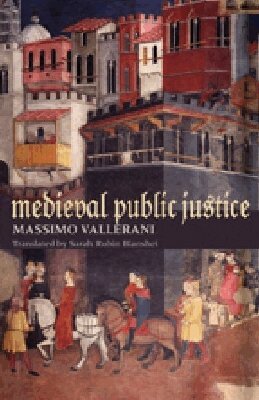
In a series of essays based on surviving documents of actual court practices from Perugia and Bologna, as well as laws, statutes, and theoretical works from the 12th and 13th centuries, Massimo Vallerani offers important historical insights into the establishment of a trial-based public justice system. Challenging the long-standing evolutionary paradigm of medieval legal procedures, Vallerani argues that public justice was not the triumph of strong inquisitorial procedure over weak accusatory procedure, but rather a process in which the two procedures developed in tandem. He demonstrates that inquisition and accusation shared many features in their intertwining goals of punishment and reconciliation. The grand narrative of the evolution of criminal justice is dismantled in this work, originally published in Italian and widely cited as a ground breaking study of legal procedure. Vallerani contends that accusatio and inquisitio were formed simultaneously to address different needs: to seek and construct different “truths”—the truth of the fact that occurred outside the courtroom as revealed by the probing of the judge, and the truth that emerges inside the triadic model of the courtroom as a result of negotiations between the disputing parties under the guidance of the judge. Vallerani’s rich approach to his sources includes statistical analysis of the court records, revealing the functioning of the courts in terms of the incidence of torture, the proportions of trials initiated by accusatio and inquisitio, and the percentage of trials suspended at different stages of litigation. Furthermore, he sets legal procedures within the context of a society and political world immersed in violence and conflict and shows how the supplica, or petition for pardon, played a major role in the transformation from communal to signorial government in the early fourteenth century.
Häftad, Engelska, 2014
435 kr
Skickas inom 10-15 vardagar
Liberty and Law examines a previously underappreciated theme in legal history - the idea of permissive natural law. The idea is mentioned only peripherally, if at all, in modern histories of natural law. Yet it engaged the attention of jurists, philosophers, and theologians over a long period and formed an integral part of their teachings. This ensured that natural law was not conceived of as merely a set of commands and prohibitions that restricted human conduct, but also as affirming a realm of human freedom, understood as both freedom from subjection and freedom of choice. Freedom can be used in many ways, and throughout the whole period from 1100 to 1800 the idea of permissive natural law was deployed for various purposes in response to different problems that arose. It was frequently invoked to explain the origin of private property and the beginnings of civil government.Several kinds of permissive natural law were identified. Permission could be positive or negative, depending on whether it was specifically conceded by a legislator or only tacitly allowed. It could free from sin or merely remit some temporal punishment that was due. It could commend some conduct without commanding it or permit some evil without condoning it. Medieval canonists used the concept of permissive natural law to harmonize the discordant texts that they found in their sources; William of Ockham found it a powerful tool in his defense of Franciscan poverty against papal criticisms; for Richard Hooker it justified both the constitutional structure and the ritual practices of the Anglican church; John Selden used it to uphold the inviolability of contracts, most importantly the contract of government; Hugo Grotius made it a central theme in his treatment of the conduct permissible in waging war; in the eighteenth century Jean Barbeyrac and Jean-Jacques Burlamaqui associated the idea with the emerging doctrine of natural rights. In Liberty and Law, Tierney has presented us with a magisterial and provocative way of interpreting legal history.
Häftad, Engelska, 2015
403 kr
Skickas inom 10-15 vardagar
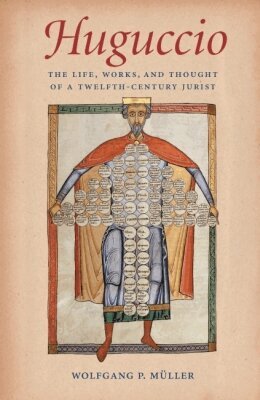
Huguccio was an important lawyer of the medieval church, bishop of Ferrara, and one of the greatest representatives of twelfth-century scholasticism. In this book-length study of this influential figure, Wolfgang P. Müller provides a critical account of the biographical information on the man and his writings. He discusses the various aspects of Huguccio’s career and thought as well as the manuscript tradition of some of his works. The author’s scholarship rests on direct consultation and painstaking analysis of enormous quantities of manuscript material.This book provides the point of departure for anyone wishing to study Huguccio first-hand. It will be worthy reading for students of medieval canon law and an essential addition to all libraries supportingresearch in medieval studies.
Häftad, Engelska, 2017
380 kr
Skickas inom 10-15 vardagar
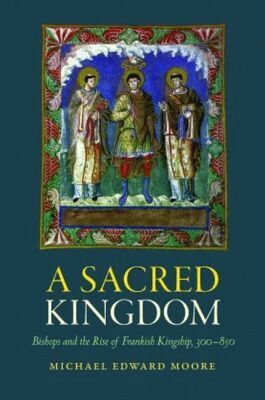
Over a period of some five centuries, Europe was transformed by the emergence of barbarian kingdoms in the regions of the former Roman Empire. In the turbulent post-Roman world, the Christian church and its bishops had considerable sway, as these kingdoms developed new institutions such as Christian kingship. Warlike kingdoms competed with each other and took on projects of political consolidation, religious accommodation, and conversion. Religious imperatives shaped the understanding of political culture, alongside aristocratic consensus and cooperation. The Franks ultimately dominated Europe and built a great empire, pursuing a doctrine of missionary warfare. Carolingian kings and nobles were mobilized by a religiously saturated ideology and by the appeal of an aggressive and expansionist political order.Throughout these changes, bishops played a guiding role. Their special garments, liturgies, and hairstyle indicated their character as a priestly brotherhood, set apart from the rest of society, whose task was to regulate the affairs of men and ensure the benevolence of God. The function of bishops as a cohesive religious order, and their collaboration with kings, meant that their ideas had a special prestige. By their blessings bishops could protect crops, houses, and even the kingdom and its warriors. By their mastery of laws--canon, Roman, and barbarian--the bishops grasped the right nature of the social order and indicated to others God's plan for the world.Drawing on the records of nearly 100 bishops' councils spanning the centuries, alongside royal law, edicts, and capitularies of the same period, this study details how royal law and the very character of kingship among the Franks were profoundly affected by episcopal traditions of law and social order.
Inbunden, Engelska, 2019
859 kr
Skickas inom 5-8 vardagar
The Hibernensis is the longest and most comprehensive canon-law text to have circulated in Carolingian Europe. Compiled in Ireland in the late seventh or early eight century, it exerted a strong and long-lasting influence on the development of European canon law. The present edition offers—for the first time—a complete text of the Hibernensis combining the two main branches of its manuscript transmission. This is accompanied by an English translation and a commentary that is both historical and philological. The Hibernensis is an invaluable source for those interested in church history, the history of canon law, social-economic history, as well as intellectual history, and the history of the book. Widely recognized as the single most important source for the history of the church in early medieval Ireland, the Hibernensis is also our best index for knowing what books were available in Ireland at the time of its compilation: it consists of excerpted material from the Bible, Church Fathers and doctors, hagiography, church histories, chronicles, wisdom texts, and insular normative material unattested elsewhere. This in addition to the staple sources of canonical collections, comprising the acta of church councils and papal letters. Altogether there are forty-two cited authors and 135 cited texts. But unlike previous canonical collections, the contents of the Hibernensis are not simply derivative: they have been modified and systematically organised, offering an important insight into the manner in which contemporary clerical scholars attempted to define, interpret, and codify law for the use of a growing Christian society.
Häftad, Engelska, 2019
406 kr
Skickas inom 11-20 vardagar
The Hibernensis is the longest and most comprehensive canon-law text to have circulated in Carolingian Europe. Compiled in Ireland in the late seventh or early eight century, it exerted a strong and long-lasting influence on the development of European canon law. The present edition offers—for the first time—a complete text of the Hibernensis combining the two main branches of its manuscript transmission. This is accompanied by an English translation and a commentary that is both historical and philological. The Hibernensis is an invaluable source for those interested in church history, the history of canon law, social-economic history, as well as intellectual history, and the history of the book. Widely recognized as the single most important source for the history of the church in early medieval Ireland, the Hibernensis is also our best index for knowing what books were available in Ireland at the time of its compilation: it consists of excerpted material from the Bible, Church Fathers and doctors, hagiography, church histories, chronicles, wisdom texts, and insular normative material unattested elsewhere. This in addition to the staple sources of canonical collections, comprising the acta of church councils and papal letters. Altogether there are forty-two cited authors and 135 cited texts. But unlike previous canonical collections, the contents of the Hibernensis are not simply derivative: they have been modified and systematically organised, offering an important insight into the manner in which contemporary clerical scholars attempted to define, interpret, and codify law for the use of a growing Christian society.
Häftad, Engelska, 2020
429 kr
Skickas inom 5-8 vardagar
An updated and expanded version of the original edition, published in 1998. That original edition went up through 1245. This new version extends to 1317 and adds two important prefaces.
Häftad, Engelska, 2020
380 kr
Skickas inom 10-15 vardagar
In the pallium the medieval papacy created a mechanism of control over the far-flung bishops of the Latin church, a prerogative by which the popes shared honor and power with local prelates—and simultaneously wielded power over them. Contributing to the sway and oversight of the Roman church, this vestment became part of the machinery of centralization that helped produce the high medieval papal monarchy.The pallium was effective because it was a giŸft with strings attached. This band of white wool encircling the shoulders had been a papal insigne and liturgical vestment since late antiquity. It grew in prominence when the popes began to bestow it regularly on other bishops as a mark of distinction and a sign of their bond to the Roman church. Bonds ofWool analyzes how, through adroit manipulation, this giftŸ came to function as an instrument of papal influence. It explores an abundant array of evidence from diverse genres—including chronicles and letters, saints’ lives and canonical collections, polemical treatises and liturgical commentaries, and hundreds of papal privileges—stretching from the eighth century to the thirteenth and representing nearly every region of Western Europe. These sources reveal that the papal conferral of the pallium was an occasion for intervening in local churches throughout the West and a means of examining, approving, and even disciplining key bishops, who were eventually required to request the pallium from Rome.The history of the pallium provides an enlightening window on medieval culture. Through it one can perceive how medieval society expressed beliefs and relationships through artifacts and customs, and one can retrieve the aims and attitudes underlying medieval rituals and symbols. Following the story of this simple material object sheds light on some of the ways medieval people structured their society, exercised authority, and communicated ideas and values.
Häftad, Engelska, 2020
380 kr
Skickas inom 10-15 vardagar
Inbunden, Engelska, 2023
824 kr
Skickas inom 5-8 vardagar
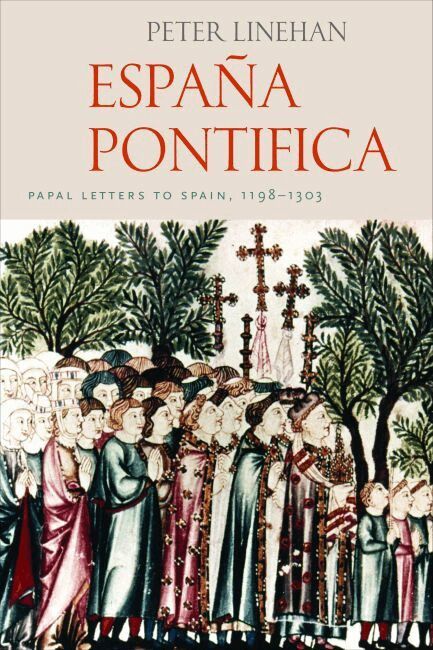
Peter Linehan (+2020) followed his survey of original papal letters in Portugal, Portugalia pontifica 1198-1417 (2013) with the present volume. España Pontifica, that covers papal letters to Spanish recipients from Pope Innocent II (1198-1216) to Pope Boniface VIII (+1303). This volume will provide students of the medieval papacy and the Spanish church with an invaluable research tool to explore the relationship between Rome and Spain during the crucial period of the Spanish Reconquistà after the battles of Navas de Tolosa (1212) to the capture of Seville (1248).Linehan spent his career cataloguing papal letters from more than sixty Spanish repositories. For the past sixty years the Vatican has also been engaged in publishing surveys of original papal letters preserved from various European archives. However, this volume includes material that has not been included in these surveys.
Häftad, Engelska, 2022
391 kr
Skickas inom 10-15 vardagar
Häftad, Engelska, 2022
380 kr
Skickas inom 10-15 vardagar
Inbunden, Engelska, 2023
824 kr
Skickas inom 5-8 vardagar
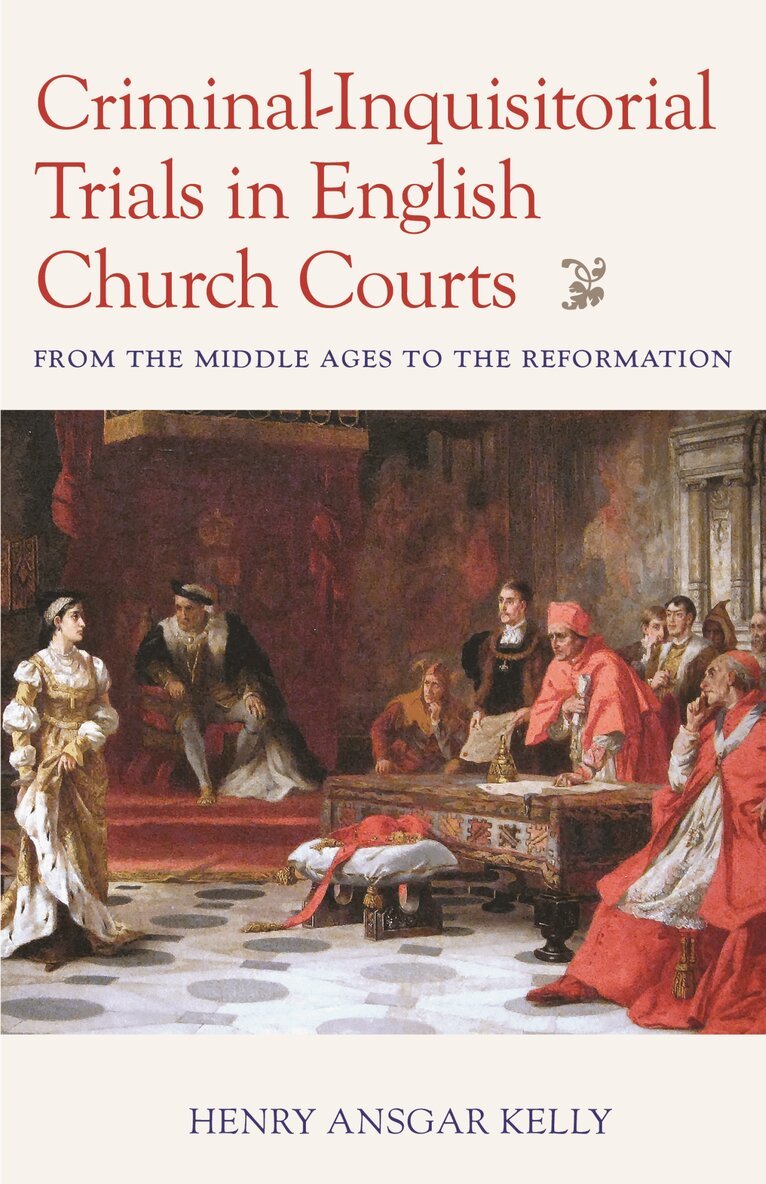
After inquisitorial procedure was introduced at the Fourth Lateran Council in Rome in 1215 (the same year as England's first Magna Carta), virtually all court trials initiated by bishops and their subordinates were inquisitions. That meant that accusers were no longer needed. Rather, the judges themselves leveled charges against persons when they were publicly suspected of specific offenses--like fornication, or witchcraft, or simony. Secret crimes were off limits, including sins of thought (like holding a heretical belief). Defendants were allowed full defenses if they denied charges. These canonical rules were systematically violated by heresy inquisitors in France and elsewhere, especially by forcing self-incrimination. But in England, due process was generally honored and the rights of defendants preserved, though with notable exceptions.In this book, Henry Ansgar Kelly, a noted forensic historian, describes the reception and application of inquisition in England from the thirteenth century onwards and analyzes all levels of trial proceedings, both minor and major, from accusations of sexual offenses and cheating on tithes to matters of religious dissent. He covers the trials of the Knights Templar early in the fourteenth century and the prosecutions of followers of John Wyclif at the end of the century. He details how the alleged crimes of ""criminous clerics"" were handled, and demonstrates that the judicial actions concerning Henry VIII's marriages were inquisitions in which the king himself and his queens were defendants. Trials of Alice Kyteler, Margery Kempe, Eleanor Cobham, and Anne Askew are explained, as are the unjust trials condemning Bishop Reginald Pecock of error and heresy (1457-59) and Richard Hunne for defending English Bibles (1514). He deals with the trials of Lutheran dissidents at the time of Thomas More's chancellorship, and trials of bishops under Edward VI and Queen Mary, including those against Stephen Gardiner and Thomas Cranmer. Under Queen Elizabeth, Kelly shows, there was a return to the letter of papal canon law (which was not true of the papal curia). In his conclusion he responds to the strictures of Sir John Baker against inquisitorial procedure, and argues that it compares favorably to the common-law trial by jury.
Häftad, Engelska, 2023
391 kr
Skickas inom 10-15 vardagar
Although several other scholars have attempted editions of parts of the earlier recension of the Decretum, no edition has been produced that is as long, as complete, or as fully sourced as this one. It is a milestone of canonical scholarship and deserves to be pondered and celebrated."" - Ecclesiastical Law Journal