Wolfgang P. Muller - Böcker
Visar alla böcker från författaren Wolfgang P. Muller. Handla med fri frakt och snabb leverans.
5 produkter
5 produkter
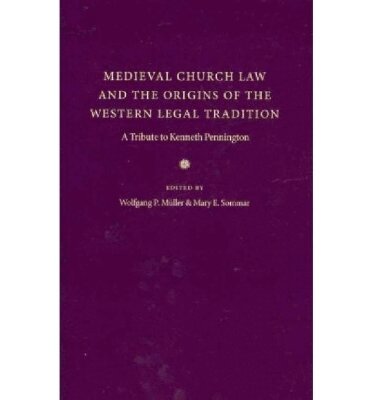
Medieval Church Law and the Origins of the Western Legal Tradition
A Tribute to Kenneth Pennington
Häftad, Engelska, 2011
239 kr
Skickas inom 10-15 vardagar
In this volume dedicated to medieval canon law expert Kenneth Pennington, leading scholars from around the world discuss the contribution of medieval church law to the origins of the western legal tradition. The stellar cast assembled by editors Wolfgang P. Müller and Mary E. Sommar includes younger scholars as well as long-established specialists in the field. Müller's introduction provides the first comprehensive survey of investigative trends in the field in more than twenty years.Subdivided into four topical categories, the essays cover the entire range of the history of medieval canon law from the sixth to the sixteenth century. The first section concentrates on the canonical tradition before the advent of academic legal studies in the twelfth century. The second addresses the formation of canonistic theory. The third and fourth sections consider the intellectual exchanges between canon law and other fields of study, as well as the practical application of canons in day-to-day court proceedings.Though the twenty-seven essays included in this volume are quite diverse, taken together they provide an outstanding overview of the latest research and cutting-edge scholarship on the topic.
388 kr
Skickas inom 10-15 vardagar
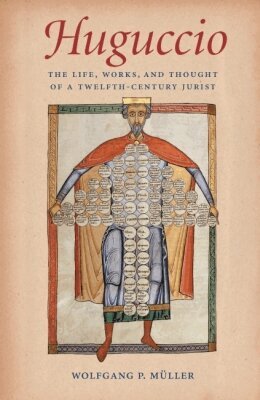
Huguccio was an important lawyer of the medieval church, bishop of Ferrara, and one of the greatest representatives of twelfth-century scholasticism. In this book-length study of this influential figure, Wolfgang P. Müller provides a critical account of the biographical information on the man and his writings. He discusses the various aspects of Huguccio’s career and thought as well as the manuscript tradition of some of his works. The author’s scholarship rests on direct consultation and painstaking analysis of enormous quantities of manuscript material.This book provides the point of departure for anyone wishing to study Huguccio first-hand. It will be worthy reading for students of medieval canon law and an essential addition to all libraries supportingresearch in medieval studies.
336 kr
Skickas inom 10-15 vardagar
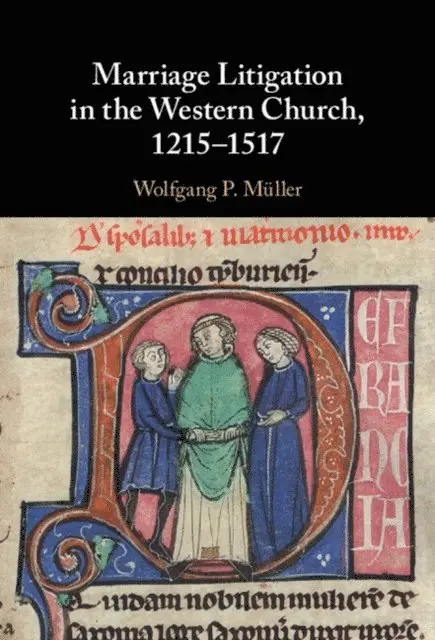
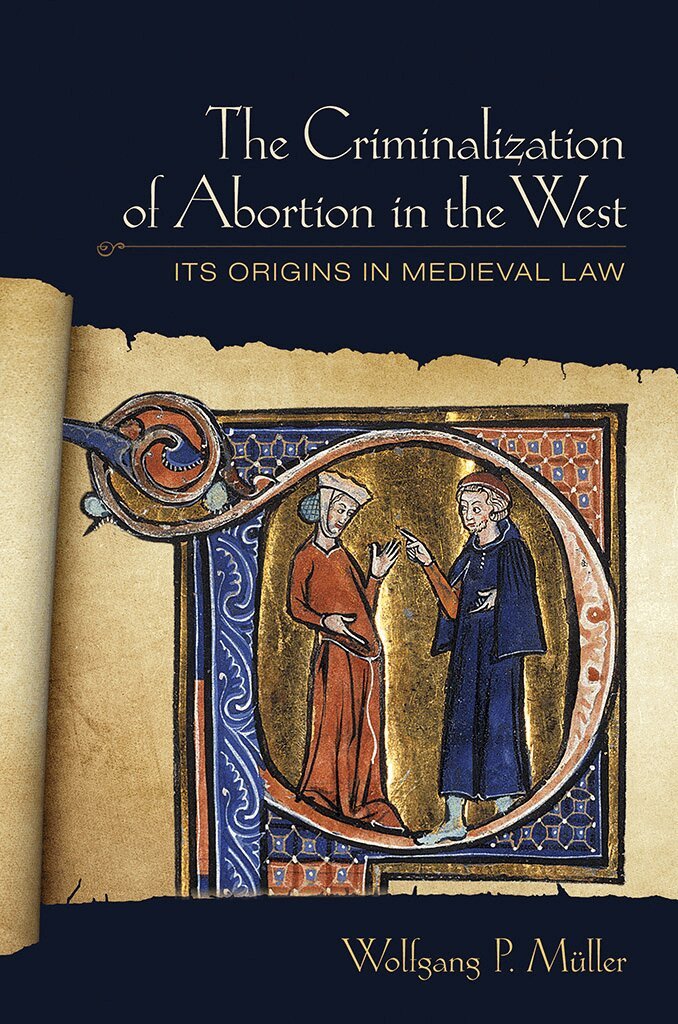
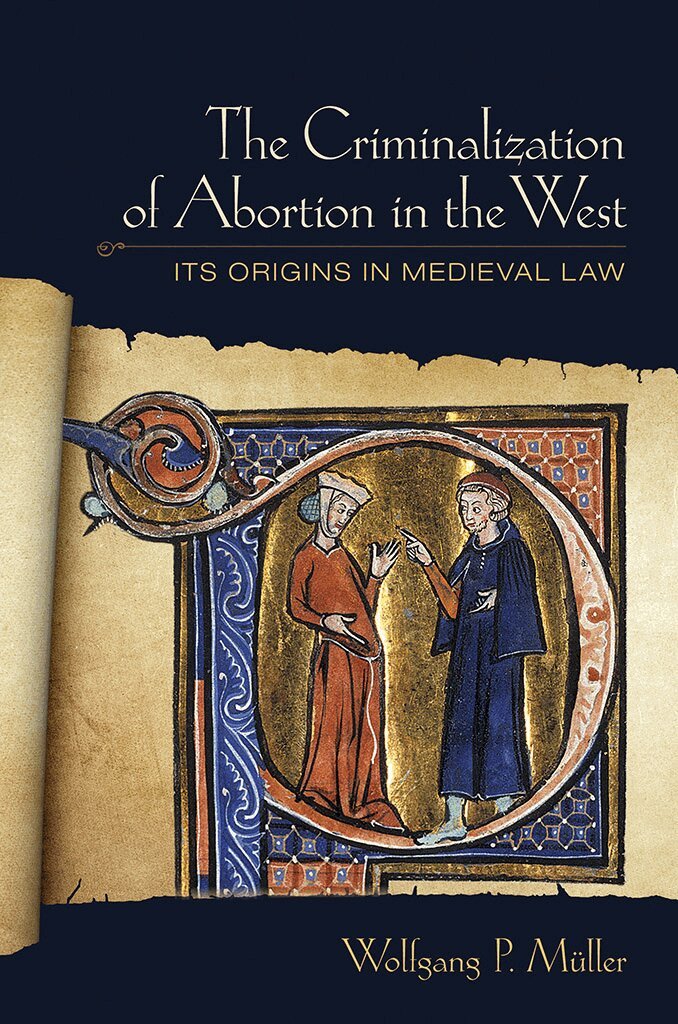
Anyone who wants to understand how abortion has been treated historically in the Western legal tradition must first come to terms with two quite different but interrelated historical trajectories. On one hand, there is the ancient Judeo-Christian condemnation of prenatal homicide as a wrong warranting retribution; on the other, there is the juristic definition of "crime" in the modern sense of the word, which distinguished the term sharply from "sin" and "tort" and was tied to the rise of Western jurisprudence. To find the act of abortion first identified as a crime in the West, one has to go back to the twelfth century, to the schools of ecclesiastical and Roman law in medieval Europe.In this book, Wolfgang P. Müller tells the story of how abortion came to be criminalized in the West. As he shows, criminalization as a distinct phenomenon and abortion as a self-standing criminal category developed in tandem with each other, first being formulated coherently in the twelfth century at schools of law and theology in Bologna and Paris. Over the ensuing centuries, medieval prosecutors struggled to widen the range of criminal cases involving women accused of ending their unwanted pregnancies. In the process, punishment for abortion went from the realm of carefully crafted rhetoric by ecclesiastical authorities to eventual implementation in practice by clerical and lay judges across Latin Christendom. Informed by legal history, moral theology, literature, and the history of medicine, Müller's book is written with the concerns of modern readers in mind, thus bridging the gap that might otherwise divide modern and medieval sensibilities.
555 kr
Skickas inom 10-15 vardagar
Anyone who wants to understand how abortion has been treated historically in the Western legal tradition must first come to terms with two quite different but interrelated historical trajectories. On one hand, there is the ancient Judeo-Christian condemnation of prenatal homicide as a wrong warranting retribution; on the other, there is the juristic definition of "crime" in the modern sense of the word, which distinguished the term sharply from "sin" and "tort" and was tied to the rise of Western jurisprudence. To find the act of abortion first identified as a crime in the West, one has to go back to the twelfth century, to the schools of ecclesiastical and Roman law in medieval Europe.In this book, Wolfgang P. Müller tells the story of how abortion came to be criminalized in the West. As he shows, criminalization as a distinct phenomenon and abortion as a self-standing criminal category developed in tandem with each other, first being formulated coherently in the twelfth century at schools of law and theology in Bologna and Paris. Over the ensuing centuries, medieval prosecutors struggled to widen the range of criminal cases involving women accused of ending their unwanted pregnancies. In the process, punishment for abortion went from the realm of carefully crafted rhetoric by ecclesiastical authorities to eventual implementation in practice by clerical and lay judges across Latin Christendom. Informed by legal history, moral theology, literature, and the history of medicine, Müller's book is written with the concerns of modern readers in mind, thus bridging the gap that might otherwise divide modern and medieval sensibilities.
1 648 kr
Tillfälligt slut
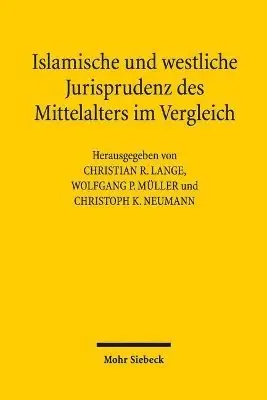
Der vorliegende Band vereinigt zwölf Aufsätze, deren Ausarbeitung ursprünglich auf ein im April 2015 an der Münchner Carl Friedrich von Siemens Stiftung abgehaltenes Werkstattgespräch zurückgeht. Zu ihren Verfassern zählen jeweils sechs Experten der islamischen und der westlichen Rechtswissenschaft des Mittelalters. Ihre Beiträge setzen sich nicht zuletzt mit der Frage auseinander, ob anstelle älterer Forschungsansätze, denen zufolge die islamische Scharia vor allem als unterentwickeltes Gegenstück zur westlichen Jurisprudenz (hier in Gestalt des Ius commune) aufzufassen wäre, nicht eher von auffälligen Ähnlichkeiten die Rede sein müsste, die die Entwicklung beider Jurisprudenzen in vormoderner Zeit geprägt haben.