Kirsi Salonen - Böcker
Visar alla böcker från författaren Kirsi Salonen. Handla med fri frakt och snabb leverans.
11 produkter
11 produkter
524 kr
Skickas inom 10-15 vardagar
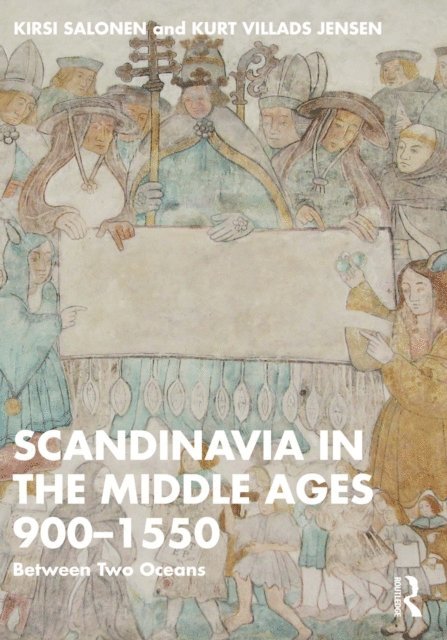
Medieval Scandinavia went through momentous changes. Regional power centres merged and gave birth to the three strong kingdoms of Denmark, Norway, and Sweden. At the end of the Middle Ages, they together formed the enormous Kalmar Union comprising almost all lands around the North Atlantic and the Baltic Sea. In the Middle Ages, Scandinavia became part of a common Europe, yet preserved its own distinct cultural markers. Scandinavia in the Middle Ages 900–1550 covers the entire Middle Ages into an engaging narrative. The book gives a chronological overview of political, ecclesiastical, cultural, and economic developments. It integrates to this narrative climatic changes, energy crises, devastating epidemies, family life and livelihood, arts, education, technology and literature, and much else. The book shows how different groups had an important role in shaping society: kings and peasants, pious priests, nuns and crusaders, merchants, and students, without forgetting minorities such as Sámi and Jews. The book is divided into three chronological parts 900–1200, 1200–1400, and 1400–1550, where analyses of general trends are illustrated by the acts of individual men and women.This book is essential reading for students of, as well as all those interested in, medieval Scandinavia and Europe more broadly.
1 943 kr
Skickas inom 10-15 vardagar
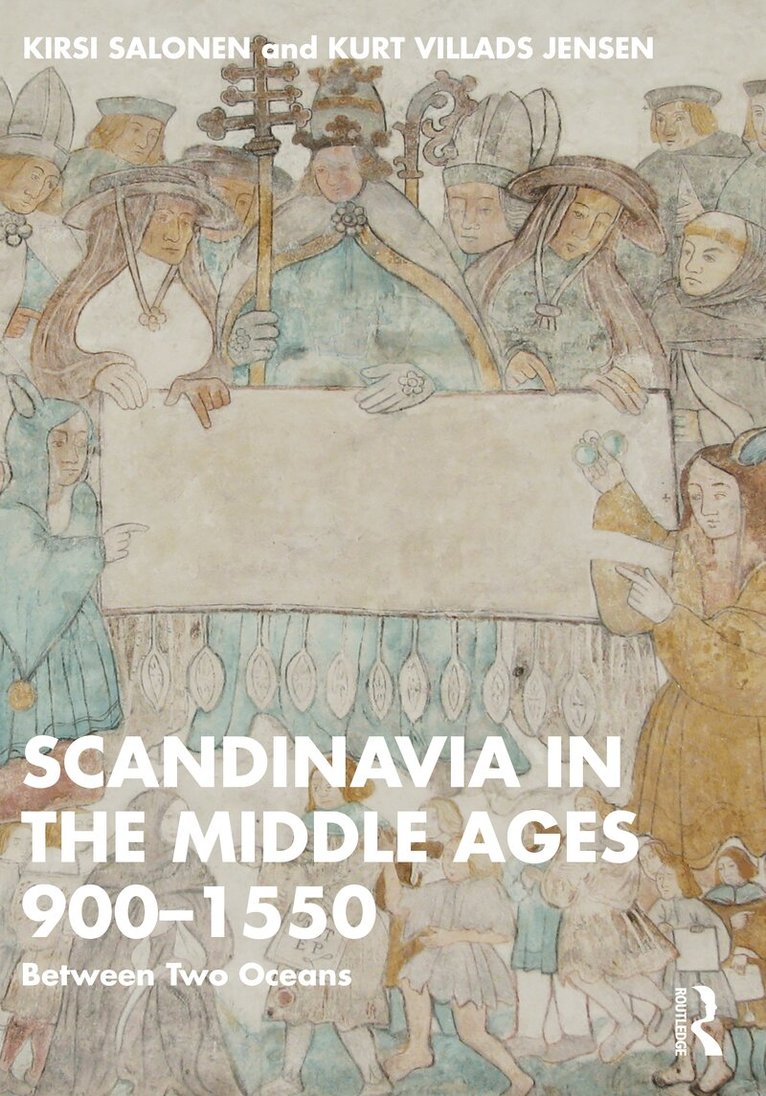
Medieval Scandinavia went through momentous changes. Regional power centres merged and gave birth to the three strong kingdoms of Denmark, Norway, and Sweden. At the end of the Middle Ages, they together formed the enormous Kalmar Union comprising almost all lands around the North Atlantic and the Baltic Sea. In the Middle Ages, Scandinavia became part of a common Europe, yet preserved its own distinct cultural markers. Scandinavia in the Middle Ages 900–1550 covers the entire Middle Ages into an engaging narrative. The book gives a chronological overview of political, ecclesiastical, cultural, and economic developments. It integrates to this narrative climatic changes, energy crises, devastating epidemies, family life and livelihood, arts, education, technology and literature, and much else. The book shows how different groups had an important role in shaping society: kings and peasants, pious priests, nuns and crusaders, merchants, and students, without forgetting minorities such as Sámi and Jews. The book is divided into three chronological parts 900–1200, 1200–1400, and 1400–1550, where analyses of general trends are illustrated by the acts of individual men and women.This book is essential reading for students of, as well as all those interested in, medieval Scandinavia and Europe more broadly.
630 kr
Skickas inom 10-15 vardagar
This is a study of the history and function of the highest ecclesiastical tribunal, the Sacra Romana Rota, from the twelfth to the sixteenth centuries. Despite its importance for Christendom and in contrast with other important papal offices, the activity of the Rota has never been thoroughly investigated on the basis of archival sources, in large part due to the vast source material and the perceived "difficulty" of the subject. This book fills this significant gap by explaining how the Rota functioned-its organization, the phases of a Rota process, everyday practices at the tribunal-and the kinds of issues it handled, where the processes originated from and how long they lasted. The study demonstrates that the Rota dealt with a range of cases much broader than has previously been acknowledged, whilst also confirming that the tribunal mainly oversaw litigation over benefices. The results of this research reveal the true role of the Rota and its significance for Christians from the middle ages to the dawn of the Reformation.
323 kr
Skickas inom 10-15 vardagar
This is the first book to include full texts and photographs from the Apostolic Penitentiary, ""A Sip from the 'Well of Grace'"", which is groundbreaking in its analysis of one of the most important papal offices of the Middle Ages. The Penitentiary alone was responsible for granting absolutions, dispensations, licenses, and special declarations in various matters such as marriage, illegitimacy, murder and violence, confession, and clerical ordination. With access to archival records long sealed by the Vatican, Kirsi Salonen and Ludwig Schmugge offer historians many new insights for interpreting an important structure of medieval life.The book begins with an introduction to the functions of the Apostolic Penitentiary and considers its role among the various papal offices. Also examined are the various circumstances for which Christians turned to its authority. Procedures for cases as well as the canon law regulations behind the cases are discussed, along with an overview of various documents that were produced during the handling of a case in the Penitentiary.The second part of the book introduces several case studies. Each case is illustrated with the help of original documents preserved both in the Vatican Secret Archives and in numerous local archives in Germany, Italy, and Scandinavia. The original Latin documents are fully edited and accompanied by English translation. Each document is also available in the form of a digital photo, which allows readers to learn concretely what the documents and writing looked like and to exercise palaeographic skills.""A Sip from the 'Well of Grace'"" will be an important addition to any collection on the social and religious history of the later Middle Ages. It is the seventh volume in the ongoing ""Studies in Medieval and Early Modern Canon Law"" series.
630 kr
Skickas inom 10-15 vardagar
The roles of popes, saints, and crusaders were inextricably intertwined in the Middle Ages: papal administration was fundamental in the making and promulgating of new saints and in financing crusades, while crusaders used saints as propaganda to back up the authority of popes, and even occasionally ended up being sanctified themselves. Yet, current scholarship rarely treats these three components of medieval faith together. This book remedies that by bringing together scholars to consider the links among the three and the ways that understanding them can help us build a more complete picture of the working of the church and Christianity in the Middle Ages.|This book brings together scholars to consider the links among the roles of popes, saints, and crusaders and the ways that understanding them can help us build a more complete picture of the working of the church and Christianity in the Middle Ages.
820 kr
Skickas inom 10-15 vardagar
Building on recent revisionist histories of the quality and ability of the late medieval clergy, this is a comprehensive survey of the ordinations of priests at the Roman curia during the pontificates of Pius II (1458-1464) and Paul II (1464-1471). This period has often been presented as one of stasis within the Catholic Church, falling between the conciliar movement of the first half of the fifteenth century and the Protestant Reformation and counter-reformation of the sixteenth century. However the authors argue that this period was one of gradual reform, whereby the Church attempted to define and control the quality of the clergy. The study analyses archival documentation to reconstruct exactly how young men entered a clerical career, and also what influence practices at the curia had on wider clerical ordinations. The book concentrates especially on the role of the Apostolic Penitentiary in controlling the quality of priest candidates and on the role of Camera Apostolica in carrying out ecclesiastical ordinations in the papal curia. In considering the rules of who could enter the clerical career, and also why and how these rules might be circumvented, this book sheds new light on the late medieval clergy.
2 289 kr
Skickas inom 10-15 vardagar
Building on recent revisionist histories of the quality and ability of the late medieval clergy, this is a comprehensive survey of the ordinations of priests at the Roman curia during the pontificates of Pius II (1458-1464) and Paul II (1464-1471). This period has often been presented as one of stasis within the Catholic Church, falling between the conciliar movement of the first half of the fifteenth century and the Protestant Reformation and counter-reformation of the sixteenth century. However the authors argue that this period was one of gradual reform, whereby the Church attempted to define and control the quality of the clergy. The study analyses archival documentation to reconstruct exactly how young men entered a clerical career, and also what influence practices at the curia had on wider clerical ordinations. The book concentrates especially on the role of the Apostolic Penitentiary in controlling the quality of priest candidates and on the role of Camera Apostolica in carrying out ecclesiastical ordinations in the papal curia. In considering the rules of who could enter the clerical career, and also why and how these rules might be circumvented, this book sheds new light on the late medieval clergy.
2 222 kr
Skickas inom 10-15 vardagar
This is a study of the history and function of the highest ecclesiastical tribunal, the Sacra Romana Rota, from the twelfth to the sixteenth centuries. Despite its importance for Christendom and in contrast with other important papal offices, the activity of the Rota has never been thoroughly investigated on the basis of archival sources, in large part due to the vast source material and the perceived "difficulty" of the subject. This book fills this significant gap by explaining how the Rota functioned-its organization, the phases of a Rota process, everyday practices at the tribunal-and the kinds of issues it handled, where the processes originated from and how long they lasted. The study demonstrates that the Rota dealt with a range of cases much broader than has previously been acknowledged, whilst also confirming that the tribunal mainly oversaw litigation over benefices. The results of this research reveal the true role of the Rota and its significance for Christians from the middle ages to the dawn of the Reformation.
Rome and the Great Western Schism, 1378-1417
The History and Aftermath of a Medieval Religious Conflict
Inbunden, Engelska, 2026
1 886 kr
Kommande
The first comprehensive study of the Roman papacy during the Great Western Schism.The Great Western Schism (1378-1417) stands as one of the most profound ruptures in the history of the medieval Catholic Church, a crisis that fractured Christendom. This book offers the first comprehensive study of the Roman papacy during this era, a perspective often neglected in existing scholarship. Bringing together political, administrative and religious history, it serves both as an introduction to the Schism and as a detailed study of papal governance in Rome. It explores how the Roman curia, monastic houses and ecclesiastical institutions navigated decades of uncertainty, and how lay devotion in the Eternal City adapted to prolonged turmoil.Challenging the notion that the Roman popes pursued a clear strategy, this book argues that their actions were shaped by pragmatic, often improvised responses to shifting political and ecclesiastical situations; but that despite these constraints, the Roman papal administration proved remarkably resilient in reconstituting itself after 1378, providing those who had remained loyal with opportunities to advance their ecclesiastical careers.
1 752 kr
Skickas inom 10-15 vardagar
This book brings together scholars to consider the links among the roles of popes, saints, and crusaders and the ways that understanding them can help us build a more complete picture of the working of the church and Christianity in the Middle Ages.
521 kr
Skickas inom 10-15 vardagar
The volume investigates the registers of fifteenth-century supplications to the Apostolic Penitentiary of the Holy See and presents an analysis of a multiplicity of issues in which a context of the local needs of Western Christians and the central power of the Pope occurred. The contributions make it clear that local and individual factors and the Christian faith and religion in practice must not be seen as separate from the global power of the Roman curia. The latter's influence could become directly important for any individual in any local space, even ...et usque ad ultimum terrae (Acts 1:8), in the utmost peripheries of the Christian world. It is shown that the assistance of the Apostolic Penitentiary was indispensable in a large variety of cases. Such cases were dealt with both in the local, regional space and in the globalized centre of the Holy See.