Sari Katajala-Peltomaa - Böcker
Visar alla böcker från författaren Sari Katajala-Peltomaa. Handla med fri frakt och snabb leverans.
9 produkter
9 produkter
1 227 kr
Skickas inom 7-10 vardagar
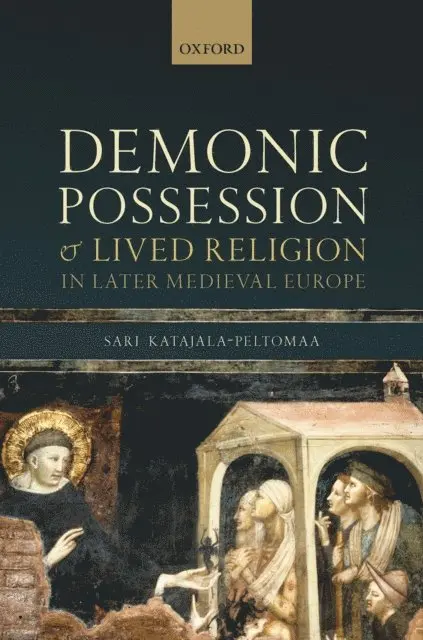
Demonic possession was a spiritual state that often had physical symptoms; however, in Demonic Possession and Lived Religion in Later Medieval Europe, Sari Katajala-Peltomaa argues that demonic possession was a social phenomenon which should be understood with regard to the community and culture. She focuses on significant case studies from canonization processes (c. 1240-1450) which show how each set of sources formed its own specific context, in which demonic presence derived from different motivations, reasonings, and methods of categorization. The chosen perspective is that of lived religion, which is both a thematic approach and a methodology: a focus on rituals, symbols, and gestures, as well as sensitivity to nuances and careful contextualizing of the cases are constitutive elements of the argumentation. The analysis contests the hierarchy between the 'learned' and the 'popular' within religion, as well as the existence of a strict polarity between individual and collective religious participation. Demonic presence disclosed negotiations over authority and agency; it shows how the personal affected the communal, and vice versa, and how they were eventually transformed into discourses and institutions of the Church; that is, definitions of the miraculous and the diabolical. Geographically, the volume covers Western Europe, comparing Northern and Southern material and customs. The structure follows the logic of the phenomenon, beginning with the background reasons offered as a cause of demonic possession, continuing with communities' responses and emotions, including construction of sacred caregiving methods. Finally, the ways in which demonic presence contributed to wider societal debates in the fields of politics and spirituality are discussed. Alterity and inversion of identity, gender, and various forms of corporeality and the interplay between the sacred and diabolical are themes that run all through the volume.
2 325 kr
Kommande
This book analyses the interconnection of space and experience in Roman antiquity, Byzantium, and the Middle Ages, ca. 100 BCE–1500 CE.The joint analysis of these two conceptual spearheads enables a novel analysis of how space affected social frameworks and how experiences built communities and shaped individual lives over the longue durée. The volume manifests the richness and innovativeness of analysing individual and shared experiences together with space as cultural, political, and social constructions, bridging micro and macro levels. Ten high-quality case studies explore experiencing domestic, urban, political, and sacred space. An in-depth introduction explains the main concepts, and an epilogue binds the themes and chapters together. The volume utilizes a wide array of source material and has comprehensive coverage chronologically, geographically, and disciplinarily, including several branches of classical, Byzantine, and medieval studies.The volume serves graduate students and scholars of several disciplines and fields: classics and ancient history, medieval history, Byzantine studies, archaeology, and art history. It will also be fruitful to scholars of the modern period whose work touches upon the field of the history of experiences.
629 kr
Skickas inom 10-15 vardagar
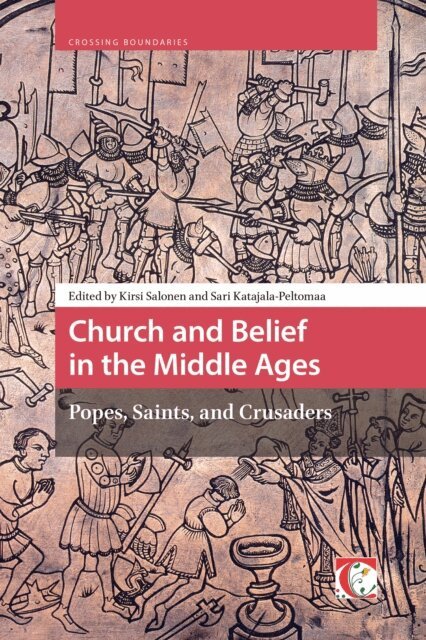
The roles of popes, saints, and crusaders were inextricably intertwined in the Middle Ages: papal administration was fundamental in the making and promulgating of new saints and in financing crusades, while crusaders used saints as propaganda to back up the authority of popes, and even occasionally ended up being sanctified themselves. Yet, current scholarship rarely treats these three components of medieval faith together. This book remedies that by bringing together scholars to consider the links among the three and the ways that understanding them can help us build a more complete picture of the working of the church and Christianity in the Middle Ages.|This book brings together scholars to consider the links among the roles of popes, saints, and crusaders and the ways that understanding them can help us build a more complete picture of the working of the church and Christianity in the Middle Ages.
2 162 kr
Skickas inom 10-15 vardagar
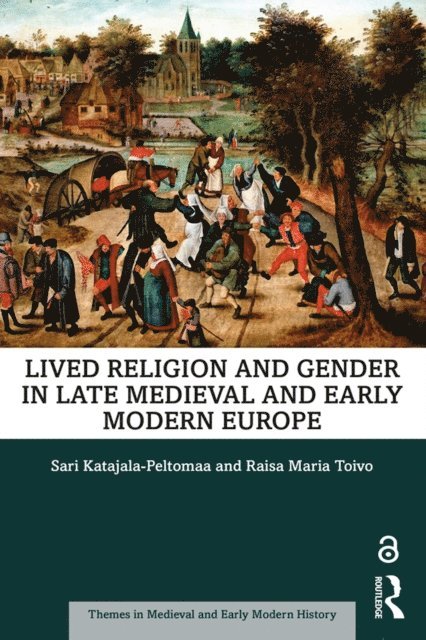
This study is an exploration of lived religion and gender across the Reformation, from the 14th–18th centuries. Combining conceptual development with empirical history, the authors explore these two topics via themes of power, agency, work, family, sainthood and witchcraft.By advancing the theoretical category of ‘experience’, Lived Religion and Gender reveals multiple femininities and masculinities in the intersectional context of lived religion. The authors analyse specific case studies from both medieval and early modern sources, such as secular court records, to tell the stories of both individuals and large social groups. By exploring lived religion and gender on a range of social levels including the domestic sphere, public devotion and spirituality, this study explains how late medieval and early modern people performed both religion and gender in ways that were vastly different from what ideologists have prescribed.Lived Religion and Gender covers a wide geographical area in western Europe including Italy, Scandinavia and Finland, making this study an invaluable resource for scholars and students concerned with the history of religion, the history of gender, the history of the family, as well as medieval and early modern European history.The Open Access version of this book, available at http://www.taylorfrancis.com, has been made available under a Creative Commons Attribution-Non Commercial-No Derivatives (CC-BY-NC-ND) 4.0 license.
591 kr
Skickas inom 10-15 vardagar
This study is an exploration of lived religion and gender across the Reformation, from the 14th–18th centuries. Combining conceptual development with empirical history, the authors explore these two topics via themes of power, agency, work, family, sainthood and witchcraft.By advancing the theoretical category of ‘experience’, Lived Religion and Gender reveals multiple femininities and masculinities in the intersectional context of lived religion. The authors analyse specific case studies from both medieval and early modern sources, such as secular court records, to tell the stories of both individuals and large social groups. By exploring lived religion and gender on a range of social levels including the domestic sphere, public devotion and spirituality, this study explains how late medieval and early modern people performed both religion and gender in ways that were vastly different from what ideologists have prescribed.Lived Religion and Gender covers a wide geographical area in western Europe including Italy, Scandinavia and Finland, making this study an invaluable resource for scholars and students concerned with the history of religion, the history of gender, the history of the family, as well as medieval and early modern European history.The Open Access version of this book, available at http://www.taylorfrancis.com, has been made available under a Creative Commons Attribution-Non Commercial-No Derivatives (CC-BY-NC-ND) 4.0 license.
534 kr
Skickas inom 10-15 vardagar
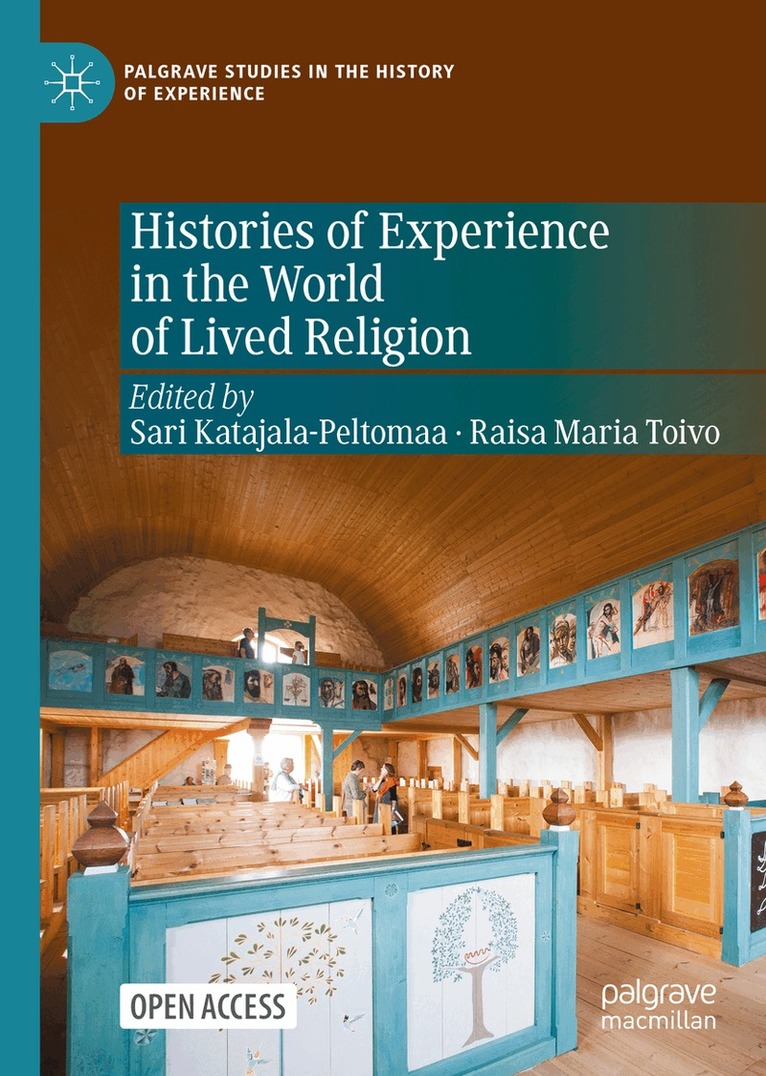
'At a historic moment, when religion shows all its social and political strength in various post-modern societies around our globe, this fascinating collection of studies from the Middle Ages to twentieth-century Europe demonstrates all the richness and innovative force of investigating individual and shared experiences when questioning the cultural, political and social place of religion in society. It also makes known in English the work of a series of Finnish historians elaborating together a pioneering vision of the notion of experience in the discipline of history.'- Piroska Nagy, Université du Québec à Montréal, Canada This open access book offers a theoretical introduction to the history of experience on three conceptual levels: everyday experience, experience as process, and experience as structure. Chapters apply 'experience' to empirical case studies, exploring how people have made and shared theirreligion through experience in history. This book understands experience as a simultaneously socially constructed and intimately personal process that connects individuals to communities and past to future, thereby forming structures that create and direct societies. It represents the crossroads of a new field of the history of experience, and an established tradition of the history of lived religion. Chapters offer a longue durée view from the fourteenth-century heretics, via experiences of miracle, madness, sickness, suffering, prayer, conversion and death, to the religious artisanship of soldiers in the Second World War frontlines. It concentrates on Northern Europe, but includes materials from Italy, France and United Kingdom.
429 kr
Skickas inom 10-15 vardagar
'At a historic moment, when religion shows all its social and political strength in various post-modern societies around our globe, this fascinating collection of studies from the Middle Ages to twentieth-century Europe demonstrates all the richness and innovative force of investigating individual and shared experiences when questioning the cultural, political and social place of religion in society. It also makes known in English the work of a series of Finnish historians elaborating together a pioneering vision of the notion of experience in the discipline of history.'- Piroska Nagy, Université du Québec à Montréal, Canada This open access book offers a theoretical introduction to the history of experience on three conceptual levels: everyday experience, experience as process, and experience as structure. Chapters apply 'experience' to empirical case studies, exploring how people have made and shared theirreligion through experience in history. This book understands experience as a simultaneously socially constructed and intimately personal process that connects individuals to communities and past to future, thereby forming structures that create and direct societies. It represents the crossroads of a new field of the history of experience, and an established tradition of the history of lived religion. Chapters offer a longue durée view from the fourteenth-century heretics, via experiences of miracle, madness, sickness, suffering, prayer, conversion and death, to the religious artisanship of soldiers in the Second World War frontlines. It concentrates on Northern Europe, but includes materials from Italy, France and United Kingdom.
2 478 kr
Skickas inom 5-8 vardagar
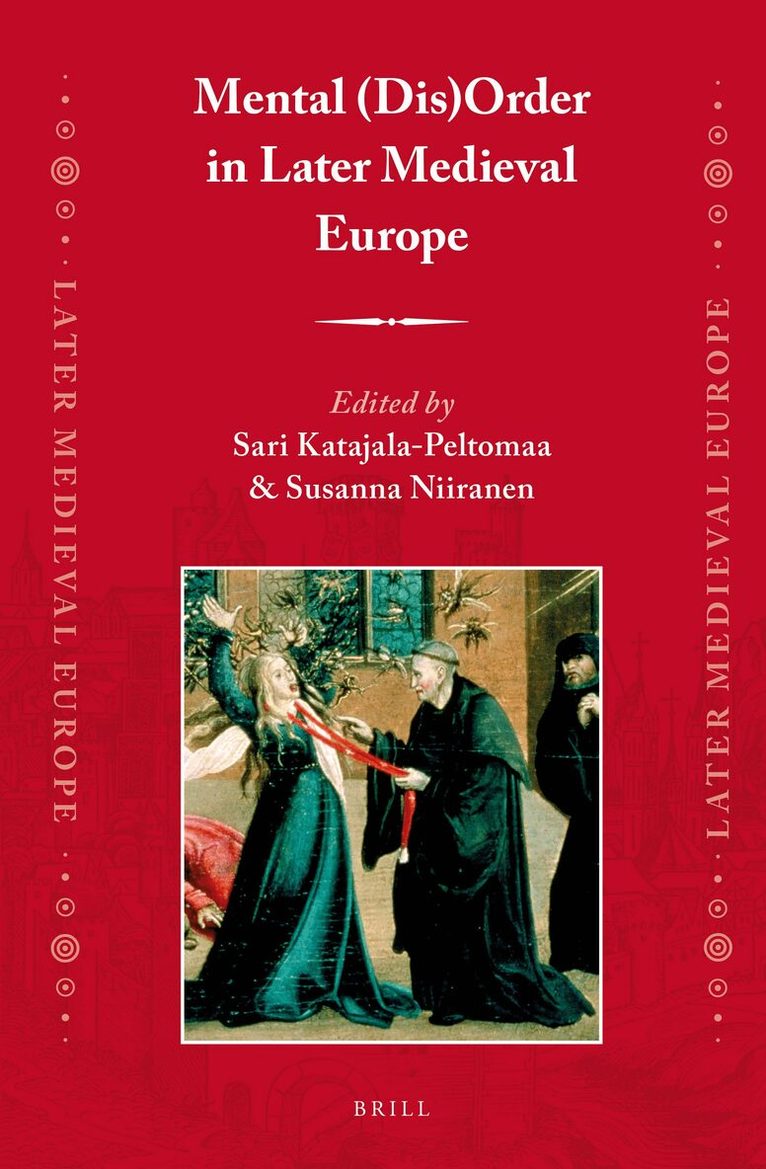
The boundaries between mental, social and physical order and various states of disorder – unexpected mood swings, fury, melancholy, stress, insomnia, and demonic influence – form the core of this compilation. For medieval men and women, religious rituals, magic, herbs, dietary requirements as well as to scholastic medicine were a way to cope with the vagaries of mental wellbeing; the focus of the articles is on the interaction and osmosis between lay and elite cultures as well as medical, theological and political theories and practical experiences of daily life.Time span of the volume is the later Middle Ages, c. 1300-1500. Geographically it covers Western Europe and the comparison between Mediterranean world and Northern Europe is an important constituent.Contributors are Jussi Hanska, Gerhard Jaritz, Timo Joutsivuo, Kirsi Kanerva, Sari Katajala-Peltomaa, Marko Lamberg, Iona McCleery, Susanna Niiranen, Sophie Oosterwijk, and Catherine Rider.
1 762 kr
Skickas inom 10-15 vardagar
This book brings together scholars to consider the links among the roles of popes, saints, and crusaders and the ways that understanding them can help us build a more complete picture of the working of the church and Christianity in the Middle Ages.