Studies in Rural Culture - Böcker
Visar alla böcker i serien Studies in Rural Culture. Handla med fri frakt och snabb leverans.
13 produkter
13 produkter
528 kr
Skickas inom 10-15 vardagar
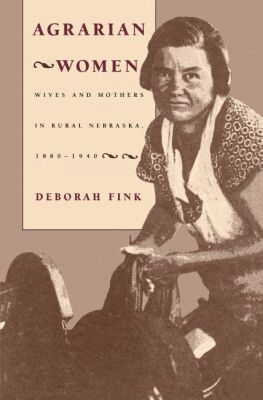
Agrarian Women challenges the widely held assumption that frontier farm life in the United States made it easier for women to achieve rough equality with men. Using as her example the family farm in rural Nebraska from the 1880s until the eve of World War II, Deborah Fink contends instead that agrarianism reinforced the belief that a woman's place was in the home, her predestined role that of wife and mother. Drawing on court records, wills, deeds, and census data as well as memoirs and interviews, Fink develops a nuanced, persuasive picture of the hardships -- and the occasional pleasures -- of farm life on the plains. Herself the great-granddaughters of Nebraska settlers, she vividly conveys the isolation, environmental rigors, marital tensions, and psychological stresses of child-rearing experienced by many women who nevertheless paid dutiful homage to the agrarian ideal. Even after farms had become well established in the area, the lives of rural women were not significantly eased, and rarely were they able to effect major changes in their own lives. When the agricultural boom collapsed during the 1920s, more women began to supplement farm income with earnings from jobs in local towns. But the cultural assumptions about women's domestic roles remained unchanged. Even if they worked outside the home and outside the farm, wives were still responsible for raising the children and maintaining the household. Although sparse population, political marginality, and the agricultural economy have created a unique rural culture in the United States, Fink shows that gender contradictions have not been confined to urban life. Agrarian Women will spark fresh debate about the nature of the family farm and the ideology that has sanctified it. Originally published in 1992. A UNC Press Enduring Edition -- UNC Press Enduring Editions use the latest in digital technology to make available again books from our distinguished backlist that were previously out of print. These editions are published unaltered from the original, and are presented in affordable paperback formats, bringing readers both historical and cultural value.
566 kr
Skickas inom 10-15 vardagar
Using Dodge County, Georgia, as a case study, Peggy Barlett reveals consumerism, individualism, and short-term decision making as the greatest threats to the family farm. ""This book is of value not only to students of agriculture and rural sociology but also to city dwellers attempting to understand the lure and frustration of family farming.""-- Choice ""An excellent, well-written study that substantially expands our understanding of connections between the micro level of households and the macro level of cultural trends.""-- American Journal of Sociology |Covering the period from January 1820 to December 1823, this volume continues the annotated edition of the papers of Chief Justice John Marshall.
566 kr
Skickas inom 10-15 vardagar
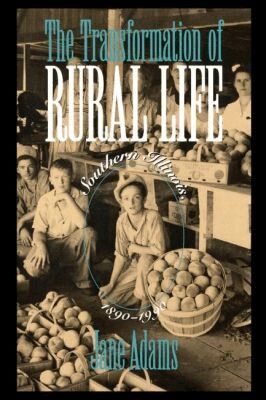
Jane Adams focuses on the transformation of rural life in Union County, Illinois, as she explores the ways in which American farming has been experienced and understood in the twentieth century. Reconstructing the histories of seven farms, she places the details of daily life within the context of political and economic change. Adams identifies contradictions that, on a personal level, influenced relations between children and parents, men and women, and bosses and laborers, and that, more generally, changed structures of power within the larger rural community. In this historical ethnography, Adams traces two contradictory narratives: one stresses plenitude--rich networks of neighbors and kin, the ability to supply families from the farm, the generosity shown to those in need--while the other stresses the acute hardships and oppressive class, gender, and age inequities that characterized farm life. The New Deal and World War II disrupted both patterns, as the increased capital necessary for successful farming forced many to move from agriculture to higher-paid nonfarm work. This shift also changed the structure of the farm household, as homes modernized and women found work off the farm. Adams concludes that large-scale bureaucracies leveled existing class distinctions and that community networks eroded as farmers came to realize an improved standard of living.
460 kr
Skickas inom 10-15 vardagar
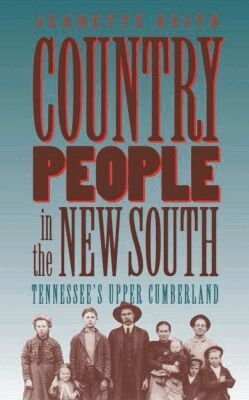
Using the Tennessee antievolution 'Monkey Law,' authored by a local legislator, as a measure of how conservatives successfully resisted, co-opted, or ignored reform efforts, Jeanette Keith explores conflicts over the meaning and cost of progress in Tennessee's hill country from 1890 to 1925. Until the 1890s, the Upper Cumberland was dominated by small farmers who favored limited government and firm local control of churches and schools. Farm men controlled their families' labor and opposed economic risk taking; farm women married young, had large families, and produced much of the family's sustenance. But the arrival of the railroad in 1890 transformed the local economy. Farmers battled town dwellers for control of community institutions, while Progressives called for cultural, political, and economic modernization. Keith demonstrates how these conflicts affected the region's mobilization for World War I, and she argues that by the 1920s shifting gender roles and employment patterns threatened traditionalists' cultural hegemony. According to Keith, religion played a major role in the adjustment to modernity, and local people united to support the 'Monkey Law' as a way of confirming their traditional religious values. |For fifty years, Interpreting Our Heritage has been an indispensable sourcebook for those who are responsible for and who respond to interpretive materials at national parks and monuments. This anniversary edition includes an entirely new selection of photographs, six additional essays by Freeman Tilden, and a new foreword and introduction that put this classic work into perspective for present and future generations. Whether the problem is to make a prehistoric site come to life or to explain the geological theory behind a particular rock formation, Tilden provides helpful principles to follow.
460 kr
Skickas inom 10-15 vardagar
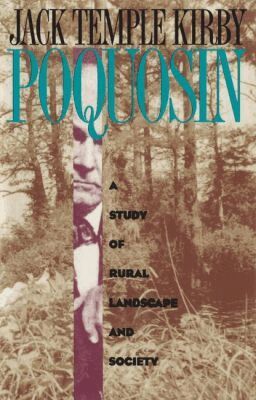
Jack Temple Kirby charts the history of the low country between the James River in Virginia and Albemarle Sound in North Carolina. The Algonquian word for this country, which means 'swamp-on-a-hill,' was transliterated as 'poquosin' by seventeenth-century English settlers. Interweaving social, political, economic, and military history with the story of the landscape, Kirby shows how Native American, African, and European peoples have adapted to and modified this Tidewater area in the nearly four hundred years since the arrival of Europeans. Kirby argues that European settlement created a lasting division of the region into two distinct zones often in conflict with each other: the cosmopolitan coastal area, open to markets, wealth, and power because of its proximity to navigable rivers and sounds, and a more isolated hinterland, whose people and their way of life were gradually--and grudgingly--subjugated by railroads, canals, and war. Kirby's wide-ranging analysis of the evolving interaction between humans and the landscape offers a unique perspective on familiar historical subjects, including slavery, Nat Turner's rebellion, the Civil War, agricultural modernization, and urbanization.
515 kr
Skickas inom 10-15 vardagar
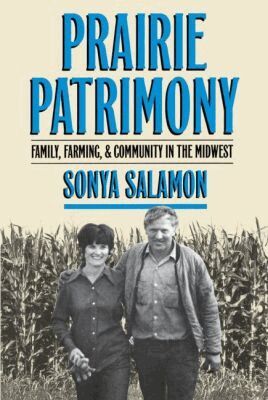
Prairie Patrimony consolidates, refines, advances and grounds recent scholarship that challenges familiar platitudes about family farming and rural life in the United States. . . . No one should doubt the great contribution that Salamon has made to our understanding of American rural life.""-- American Studies ""[Salamon's] approach yields a depth of information about farming culture not usually found in the literature on rural America.""-- Choice ""Takes the reader on a cultural tour of a cherished American institution and landscape--midwestern farm families and their farms. With perceptive attention to detail and knowledge borne of first-hand study over many years, [Salamon] skillfully reveals the pervasive imprint of ethnicity. . . . Prairie Patrimony represents one of those rare studies that enrich our social vision and understanding in extraordinary ways.""--Glen H. Elder, Jr., University of North Carolina at Chapel Hill ""Salamon's book is a remarkable contribution to the study of agriculture and culture, and its cross-disciplinary approach will engage scholars in many areas. For historians, it is a splendid illustration that different behaviors between American and immigrant farmers, planted over a century ago in the Middle West, have endured to the present.""--Jon Gjerde, University of California, Berkeley
460 kr
Skickas inom 10-15 vardagar
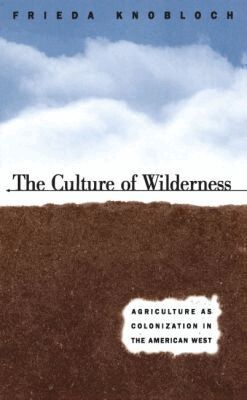
In this innovative work of cultural and technological history, Frieda Knobloch describes how agriculture functioned as a colonizing force in the American West between 1862 and 1945. Using agricultural textbooks, USDA documents, and historical accounts of western settlement, she explores the implications of the premise that civilization progresses by bringing agriculture to wilderness. Her analysis is the first to place the trans-Mississippi West in the broad context of European and classical Roman agricultural history. Knobloch shows how western land, plants, animals, and people were subjugated in the name of cultivation and improvement. Illuminating the cultural significance of plows, livestock, trees, grasses, and even weeds, she demonstrates that discourse about agriculture portrays civilization as the emergence of a colonial, socially stratified, and bureaucratic culture from a primitive, feminine, and unruly wilderness. Specifically, Knobloch highlights the displacement of women from their historical role as food gatherers and producers and reveals how Native American land-use patterns functioned as a form of cultural resistance. Describing the professionalization of knowledge, Knobloch concludes that both social and biological diversity have suffered as a result of agricultural 'progress.'
515 kr
Skickas inom 10-15 vardagar
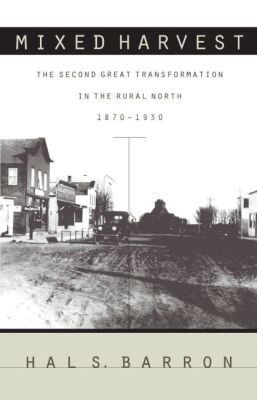
Mixed Harvest explores rural responses to the transformation of the northern United States from an agricultural society into an urban and industrial one. According to Hal S. Barron, country people from New England to North Dakota negotiated the rise of large-scale organizational society and consumer culture in ways marked by both resistance and accommodation, change and continuity. Between 1870 and 1930, communities in the rural North faced a number of challenges. Reformers and professionals sought to centralize authority and diminish local control over such important aspects of rural society as schools and roads; large-scale business corporations wielded increasing market power, to the detriment of independent family farmers; and an encroaching urban-based consumer culture threatened rural beliefs in the primacy of their local communities and the superiority of country life. But, Barron argues, by reconfiguring traditional rural values of localism, independence, republicanism, and agrarian fundamentalism, country people successfully created a distinct rural subculture. Consequently, agrarian society continued to provide a counterpoint to the dominant trends in American society well into the twentieth century.
583 kr
Skickas inom 10-15 vardagar
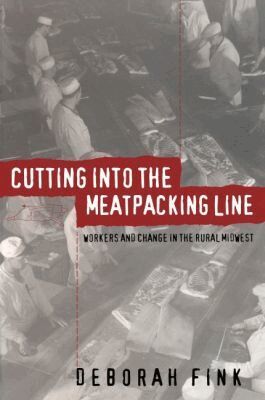
The nostalgic vision of a rural Midwest populated by independent family farmers hides the reality that rural wage labor has been integral to the region's development, says Deborah Fink. Focusing on the porkpacking industry in Iowa, Fink investigates the experience of the rural working class and highlights its significance in shaping the state's economic, political, and social contours. Fink draws both on interviews and on her own firsthand experience working on the production floor of a pork-processing plant. She weaves a fascinating account of the meatpacking industry's history in Iowa--a history, she notes, that has been experienced differently by male and female, immigrant and native-born, white and black workers. Indeed, argues Fink, these differences are a key factor in the ongoing creation of the rural working class. Other writers have denounced the new meatpacking companies for their ruthless destruction of both workers and communities. Fink sustains this criticism, which she augments with a discussion of union action, but also goes beyond it. She looks within rural midwestern culture itself to examine the class, gender, and ethnic contradictions that allowed--indeed welcomed--the meatpacking industry's development. |Drawing on firsthand experience working in an Iowa pork-processing plant, Fink looks at the differing experience of male and female, immigrant and native-born, black and white workers in the meatpacking industry.
460 kr
Skickas inom 10-15 vardagar
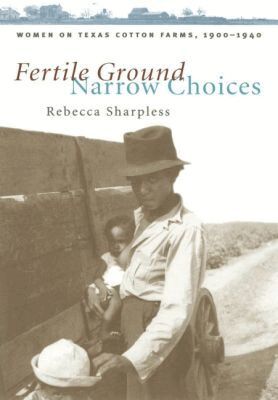
Rural women comprised the largest part of the adult population of Texas until 1940 and in the American South until 1960. On the cotton farms of Central Texas, women's labor was essential. In addition to working untold hours in the fields, women shouldered most family responsibilities: keeping house, sewing clothing, cultivating and cooking food, and bearing and raising children. But despite their contributions to the southern agricultural economy, rural women's stories have remained largely untold. Using oral history interviews and written memoirs, Rebecca Sharpless weaves a moving account of women's lives on Texas cotton farms. She examines how women from varying ethnic backgrounds--German, Czech, African American, Mexican, and Anglo-American--coped with difficult circumstances. The food they cooked, the houses they kept, the ways in which they balanced field work with housework, all yield insights into the twentieth-century South. And though rural women's lives were filled with routines, many of which were undone almost as soon as they were done, each of their actions was laden with importance, says Sharpless, for the welfare of a woman's entire family depended heavily upon her efforts. |A moving account of women's lives on Texas cotton farms during the first half of the 20th-century, this book reveals their substantial contributions to the southern agricultural economy and to family life.
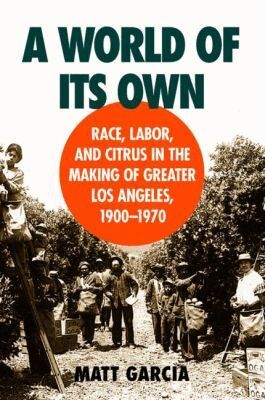
World of Its Own
Race, Labor, and Citrus in the Making of Greater Los Angeles, 1900-1970
Häftad, Engelska, 2002
460 kr
Skickas inom 10-15 vardagar
Tracing the history of intercultural struggle and cooperation in the citrus belt of Greater Los Angeles, Matt Garcia explores the social and cultural forces that helped make the city the expansive and diverse metropolis that it is today. As the citrus-growing regions of the San Gabriel and Pomona Valleys in eastern Los Angeles County expanded during the early twentieth century, the agricultural industry there developed along segregated lines, primarily between white landowners and Mexican and Asian laborers. Initially, these communities were sharply divided. But Los Angeles, unlike other agricultural regions, saw important opportunities for intercultural exchange develop around the arts and within multiethnic community groups. Whether fostered in such informal settings as dance halls and theaters or in such formal organizations as the Intercultural Council of Claremont or the Southern California Unity Leagues, these interethnic encounters formed the basis for political cooperation to address labor discrimination and solve problems of residential and educational segregation. Though intercultural collaborations were not always successful, Garcia argues that they constitute an important chapter not only in Southern California's social and cultural development but also in the larger history of American race relations.
513 kr
Skickas inom 10-15 vardagar
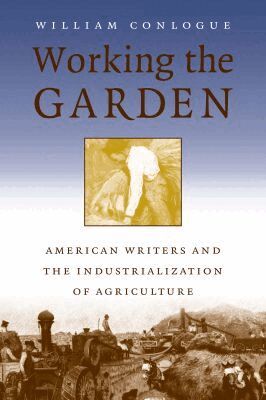
In 1860 farmers accounted for 60 percent of the American workforce; in 1910, 30.5 percent; by 1994, there were too few to warrant a separate census category. The changes wrought by the decline of family farming and the rise of industrial agribusiness typically have been viewed through historical, economic, and political lenses. But as William Conlogue demonstrates, some of the most vital and incisive debates on the subject have occurred in a site that is perhaps less obvious - literature. Conlogue refutes the critical tendency to treat farm-centered texts as pastorals, arguing that such an approach overlooks the diverse ways these works explore human relationships to the land. His readings of works by Willa Cather, Ruth Comfort Mitchell, John Steinbeck, Luis Valdez, Ernest Gaines, Jane Smiley, Wendell Berry, and others reveal that, through agricultural narratives, authors have addressed such wide-ranging subjects as the impact of technology on people and land, changing gender roles, environmental destruction, and the exploitation of migrant workers. In short, Conlogue offers fresh perspectives on how writers confront issues whose site is the farm but whose impact reaches every corner of American society.
460 kr
Skickas inom 10-15 vardagar
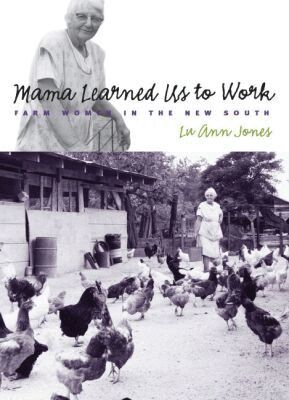
Black and white farm women as consumers, producers, and agents of change; Farm women of the twentieth-century South have been portrayed as oppressed, worn out, and isolated. Lu Ann Jones tells quite a different story in Mama Learned Us to Work. Building upon evocative oral histories, she encourages us to understand these women as consumers, producers, and agents of economic and cultural change. As consumers, farm women bargained with peddlers at their backdoors. A key business for many farm women was the ""butter and egg trade"" - small-scale dairying and raising chickens. Their earnings provided a crucial margin of economic safety for many families during the 1920s and 1930s and offered women some independence from their men folks. These innovative women showed that poultry production paid off and laid the foundation for the agribusiness poultry industry that emerged after World War II. Jones also examines the relationships between farm women and home demonstration agents and the effect of government-sponsored rural reform. She discusses the professional culture that developed among white agents as they reconciled new and old ideas about women's roles and shows that black agents, despite prejudice, linked their clients to valuable government resources and gave new meanings to traditions of self-help, mutual aid, and racial uplift.