Jeanette Keith – författare
Visar alla böcker från författaren Jeanette Keith. Handla med fri frakt och snabb leverans.
7 produkter
Country People in the New South
Tennessee's Upper Cumberland
Häftad, 1995
516 kr
Lägg i varukorg
Using the Tennessee antievolution 'Monkey Law,' authored by a local legislator, as a measure of how conservatives successfully resisted, co-opted, or ignored reform efforts, Jeanette Keith explores conflicts over the meaning and cost of progress in Tennessee's hill country from 1890 to 1925. Until …
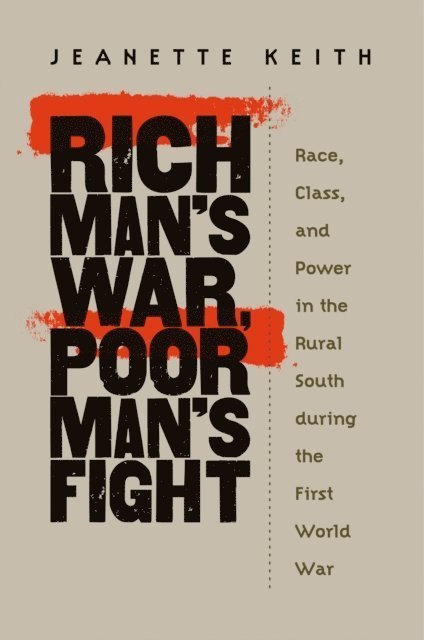
Rich Man's War, Poor Man's Fight
Race, Class, and Power in the Rural South During the First World War
Häftad, 2004
487 kr
Lägg i varukorg
During World War I, thousands of rural southern men, black and white, refused to serve in the military. Some failed to register for the draft, while others deserted after being inducted. In the countryside, armed bands of deserters defied local authorities; capturing them required the dispatch of …
Country People in the New South
Tennessee''s Upper Cumberland
E-bok, 2000
410 kr
Lägg i varukorg
Using the Tennessee antievolution ''Monkey Law,'' authored by a local legislator, as a measure of how conservatives successfully resisted, co-opted, or ignored reform efforts, Jeanette Keith explores conflicts over the meaning and cost of progress in Tennessee’s hill country from 1890 to 1925. …
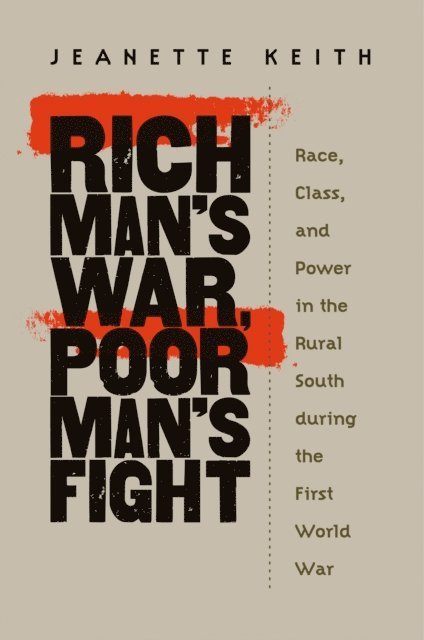
Rich Man's War, Poor Man's Fight
Race, Class, and Power in the Rural South during the First World War
E-bok, 2005
520 kr
Lägg i varukorg
During World War I, thousands of rural southern men, black and white, refused to serve in the military. Some failed to register for the draft, while others deserted after being inducted. In the countryside, armed bands of deserters defied local authorities; capturing them required the dispatch of …
Fever Season
The Story of a Terrifying Epidemic and the People Who Saved a City
E-bok, 2012
254 kr
Lägg i varukorg
While the American South had grown to expect a yellow fever breakout almost annually, the 1878 epidemic was without question the worst ever. Moving up the Mississippi River in the late summer, in the span of just a few months the fever killed more than eighteen thousand people. The city of Memphis, …
Rich Man's War, Poor Man's Fight
Race, Class, and Power in the Rural South during the First World War
E-bok, 2005
535 kr
Lägg i varukorg
During World War I, thousands of rural southern men, black and white, refused to serve in the military. Some failed to register for the draft, while others deserted after being inducted. In the countryside, armed bands of deserters defied local authorities; capturing them required the dispatch of …
Country People in the New South
Tennessee''s Upper Cumberland
E-bok, 2000
410 kr
Lägg i varukorg
Using the Tennessee antievolution ''Monkey Law,'' authored by a local legislator, as a measure of how conservatives successfully resisted, co-opted, or ignored reform efforts, Jeanette Keith explores conflicts over the meaning and cost of progress in Tennessee’s hill country from 1890 to 1925. …