Deborah Fink - Böcker
Visar alla böcker från författaren Deborah Fink. Handla med fri frakt och snabb leverans.
3 produkter
3 produkter
528 kr
Skickas inom 10-15 vardagar
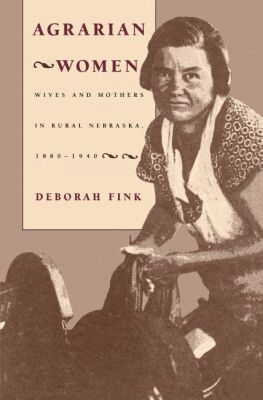
Agrarian Women challenges the widely held assumption that frontier farm life in the United States made it easier for women to achieve rough equality with men. Using as her example the family farm in rural Nebraska from the 1880s until the eve of World War II, Deborah Fink contends instead that agrarianism reinforced the belief that a woman's place was in the home, her predestined role that of wife and mother. Drawing on court records, wills, deeds, and census data as well as memoirs and interviews, Fink develops a nuanced, persuasive picture of the hardships -- and the occasional pleasures -- of farm life on the plains. Herself the great-granddaughters of Nebraska settlers, she vividly conveys the isolation, environmental rigors, marital tensions, and psychological stresses of child-rearing experienced by many women who nevertheless paid dutiful homage to the agrarian ideal. Even after farms had become well established in the area, the lives of rural women were not significantly eased, and rarely were they able to effect major changes in their own lives. When the agricultural boom collapsed during the 1920s, more women began to supplement farm income with earnings from jobs in local towns. But the cultural assumptions about women's domestic roles remained unchanged. Even if they worked outside the home and outside the farm, wives were still responsible for raising the children and maintaining the household. Although sparse population, political marginality, and the agricultural economy have created a unique rural culture in the United States, Fink shows that gender contradictions have not been confined to urban life. Agrarian Women will spark fresh debate about the nature of the family farm and the ideology that has sanctified it. Originally published in 1992. A UNC Press Enduring Edition -- UNC Press Enduring Editions use the latest in digital technology to make available again books from our distinguished backlist that were previously out of print. These editions are published unaltered from the original, and are presented in affordable paperback formats, bringing readers both historical and cultural value.
583 kr
Skickas inom 10-15 vardagar
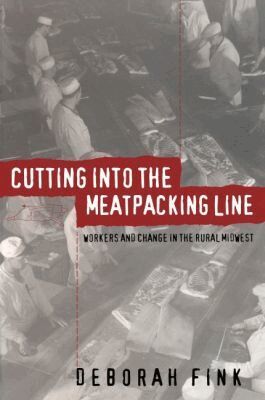
The nostalgic vision of a rural Midwest populated by independent family farmers hides the reality that rural wage labor has been integral to the region's development, says Deborah Fink. Focusing on the porkpacking industry in Iowa, Fink investigates the experience of the rural working class and highlights its significance in shaping the state's economic, political, and social contours. Fink draws both on interviews and on her own firsthand experience working on the production floor of a pork-processing plant. She weaves a fascinating account of the meatpacking industry's history in Iowa--a history, she notes, that has been experienced differently by male and female, immigrant and native-born, white and black workers. Indeed, argues Fink, these differences are a key factor in the ongoing creation of the rural working class. Other writers have denounced the new meatpacking companies for their ruthless destruction of both workers and communities. Fink sustains this criticism, which she augments with a discussion of union action, but also goes beyond it. She looks within rural midwestern culture itself to examine the class, gender, and ethnic contradictions that allowed--indeed welcomed--the meatpacking industry's development. |Drawing on firsthand experience working in an Iowa pork-processing plant, Fink looks at the differing experience of male and female, immigrant and native-born, black and white workers in the meatpacking industry.
489 kr
Tillfälligt slut
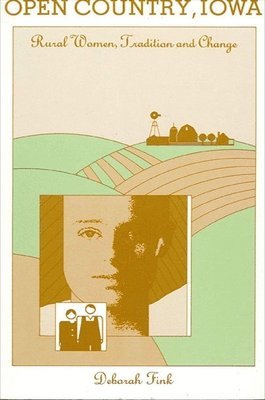
Open Country, Iowa links anthropology and history in a woman's perspective on the changing social patterns of rural Iowa communities. Using life stories which she has collected, Deborah Fink explores the experiences of today's women. She traces them to past influences, beginning with the time of the first settlers, and shows how family, religion, and work have changed over the years. Her interpretation of social patterns as determined by the history of national politics, economics, kinship, and community culture, call into question some common understandings about the traditional role of women and about changes initiated by World War II.