The Political Philosophy of the American Founders – serie
Visar alla böcker i serien The Political Philosophy of the American Founders. Handla med fri frakt och snabb leverans.
8 produkter
8 produkter
256 kr
Tillfälligt slut
Among the founders, James Madison wielded the greatest influence in drafting the Constitution of 1789. In this book, Garrett Ward Sheldon offers a concise synthesis of Madison's political philosophy in the context of the social and political history of his day. Tracing the history of Madison's thought to his early education in Protestant theology, Sheldon argues that it was a fear of the potential "tyranny of the majority" over individual rights, along with a firmly Calvinist suspicion of the motives of sinful men, that led him to support a constitution creating a strong central government with power over state laws. In this way, Madison aimed to protect individual liberties and provide checks to "spiteful" human interests and selfish parochial prejudices. Among the topics Sheldon covers are Madison's Princeton education, his contributions to the Federalist Papers, his arguments in defense of states' rights on behalf of Virginia, his views on federal power during his terms as secretary of state and president, and, in his later years, his defense of the Union against those Southerners who advocated nullification.
398 kr
Tillfälligt slut
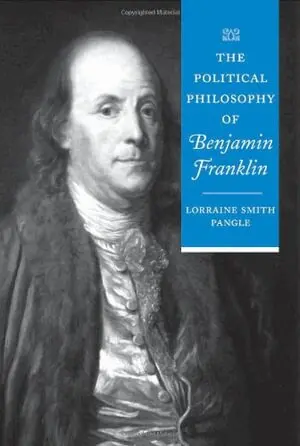
The most famous man of his age, Benjamin Franklin was an individual of many talents and accomplishments. He invented the wood-burning stove and the lightning rod, he wrote Poor Richard's Almanac and The Way to Wealth, and he traveled the world as a diplomat. But it was in politics that Franklin made his greatest impact. Franklin's political writings are full of fascinating reflections on human nature, on the character of good leadership, and on why government is such a messy and problematic business. Drawing together threads in Franklin's writings, Lorraine Smith Pangle illuminates his thoughts on citizenship, federalism, constitutional government, the role of civil associations, and religious freedom. Of the American Founders, Franklin had an unrivaled understanding of the individual human soul. At the heart of his political vision is a view of democratic citizenship, a rich understanding of the qualities of the heart and mind necessary to support liberty and sustain happiness. This concise introduction reflects Franklin's valuable insight into political issues that continue to be relevant today.
312 kr
Skickas inom 7-10 vardagar
The most famous man of his age, Benjamin Franklin was an individual of many talents and accomplishments. He invented the wood-burning stove and the lightning rod, he wrote Poor Richard's Almanac and The Way to Wealth, and he traveled the world as a diplomat. But it was in politics that Franklin made his greatest impact. Franklin's political writings are full of fascinating reflections on human nature, on the character of good leadership, and on why government is such a messy and problematic business. Drawing together threads in Franklin's writings, Lorraine Smith Pangle illuminates his thoughts on citizenship, federalism, constitutional government, the role of civil associations, and religious freedom. Of the American Founders, Franklin had an unrivaled understanding of the individual human soul. At the heart of his political vision is a view of democratic citizenship, a rich understanding of the qualities of the heart and mind necessary to support liberty and sustain happiness. This concise introduction reflects Franklin's valuable insight into political issues that continue to be relevant today.
588 kr
Skickas inom 5-8 vardagar
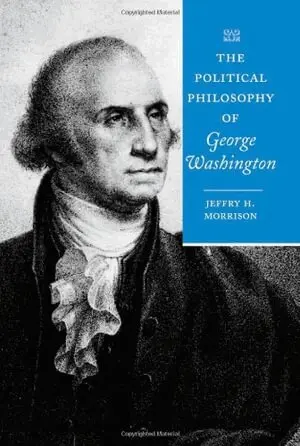
George Washington is revered as the father of his country, a clever and skilled general, and a man of restrained principle-but not as a political thinker. This short introduction to Washington's political philosophy reveals him as a thoughtful public intellectual who was well equipped to lead the young United States. Though Washington left little explicit writing on political philosophy, Jeffry Morrison examines his key writings, actions, education, and political and professional lives. He finds that Washington held closely to a trinity of foundational principles-classical republicanism, British liberalism, and Protestant Christianity-with greater fidelity than many of the other founding fathers. In unearthing Washington's ideological growth, Morrison reveals the intellectual heritage of his political thought and shows how these beliefs motivated him to action. This insightful, concise story makes clearer the complexities of the revolutionary era and shows how the first president's political ideas shaped governmental institutions and instantiated the nation's foundational principles.
565 kr
Skickas inom 7-10 vardagar
This concise, insightful study explores the sources and impact of one of the early republic's most influential minds. An Englishman by birth, an American by choice and necessity, Thomas Paine advocated ideas about rights, equality, democracy, and liberty that were far advanced beyond those of his American compatriots. His seminal works, Common Sense and the Rights of Man, were rallying cries for the American and French Revolutions. More than any other eighteenth-century political writer and activist, Paine defies easy categorization. A man of contrasts and contradictions, Paine was as much a believer in the power of reason as he was in a benevolent deity. He was at once liberal and conservative, a Quaker who was not a pacifist, and an inherently gifted writer who was convinced he was always right. Jack Fruchtman Jr. analyzes Paine's radical thought both in the context of his time and as a blueprint for the future development of republican government. His systematic approach identifies the themes of signal importance to Paine's political thought, demonstrating especially how crucial religion and God were to the development and expression of his political ideals.
333 kr
Skickas inom 7-10 vardagar
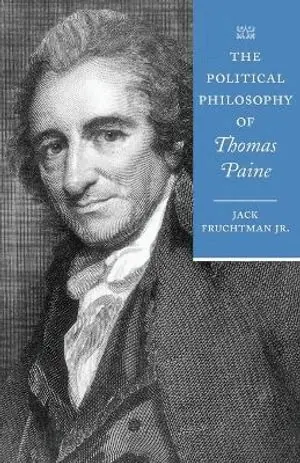
This concise, thoughtful introduction to the work of Thomas Paine, author of Common Sense and Rights of Man, explores the impact of one of the most influential minds of the American and French Revolutions and the sources from which his thinking evolved. In Jack Fruchtman Jr.'s helpful interpretation, Paine built his argument for radical revolution in 1776 on a study of nature and Providence and a belief in natural rights. Men and women owed it to themselves to break the chains of rank, hierarchy, and even organized religion in order to live freely, embracing the possibilities of invention, progress, and equality that lay ahead. In 1793, at the height of the French Revolution and its secularizing fury, Paine reminded readers that it was nature's God who created natural rights. The rights of man thus held out both the great potential of freedom and the requirement that human beings be responsible for those who were the least fortunate in society. On balance we may think of Paine as a secular preacher for the rule of reason.
522 kr
Skickas
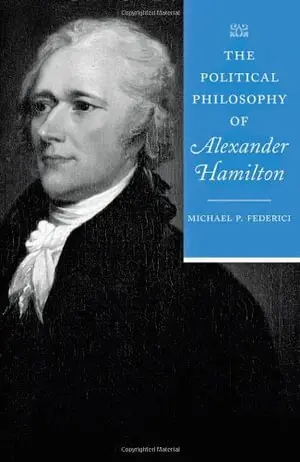
America's first treasury secretary and one of the three authors of the "Federalist Papers", Alexander Hamilton stands as one of the nation's important early statesmen. Michael P. Federici places this Founding Father among the country's original political philosophers as well. Hamilton remains something of an enigma. Conservatives and liberals both claim him, and in his writings one can find material to support the positions of either camp. Taking a balanced and objective approach, Federici sorts through the written and historical record to reveal Hamilton's philosophy as the synthetic product of a well-read and pragmatic figure whose intellectual genealogy drew on Classical thinkers such as Cicero and Plutarch, Christian theologians, and Enlightenment philosophers, including Hume and Montesquieu.In evaluating the thought of this republican and would-be empire builder, Federici explains that the apparent contradictions found in the "Federalist Papers" and other examples of Hamilton's writings reflect both his practical engagement with debates over the French Revolution, capital expansion, commercialism, and other large issues of his time, and his search for a balance between central authority and federalism in the embryonic American government. This book challenges the view of Hamilton as a monarchist and shows him instead to be a strong advocate of American constitutionalism. Devoted to the whole of Hamilton's political writing, this accessible and teachable analysis makes clear the enormous influence Hamilton had on the development of American political and economic institutions and policies.
274 kr
Tillfälligt slut
America's first treasury secretary and one of the three authors of the "Federalist Papers", Alexander Hamilton stands as one of the nation's important early statesmen. Michael P. Federici places this Founding Father among the country's original political philosophers as well. Hamilton remains something of an enigma. Conservatives and liberals both claim him, and in his writings one can find material to support the positions of either camp. Taking a balanced and objective approach, Federici sorts through the written and historical record to reveal Hamilton's philosophy as the synthetic product of a well-read and pragmatic figure whose intellectual genealogy drew on Classical thinkers such as Cicero and Plutarch, Christian theologians, and Enlightenment philosophers, including Hume and Montesquieu.In evaluating the thought of this republican and would-be empire builder, Federici explains that the apparent contradictions found in the "Federalist Papers" and other examples of Hamilton's writings reflect both his practical engagement with debates over the French Revolution, capital expansion, commercialism, and other large issues of his time, and his search for a balance between central authority and federalism in the embryonic American government. This book challenges the view of Hamilton as a monarchist and shows him instead to be a strong advocate of American constitutionalism. Devoted to the whole of Hamilton's political writing, this accessible and teachable analysis makes clear the enormous influence Hamilton had on the development of American political and economic institutions and policies.