The Princeton Economic History of the Western World – serie
Visar alla böcker i serien The Princeton Economic History of the Western World. Handla med fri frakt och snabb leverans.
4 produkter
4 produkter
Häftad, Engelska, 2012
340 kr
Skickas inom 5-8 vardagar
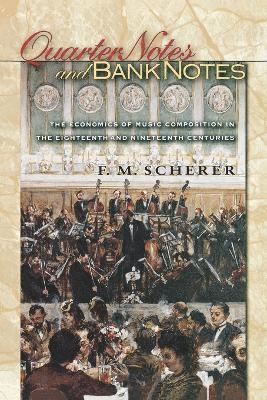
In 1700, most composers were employees of noble courts or the church. But by the nineteenth century, Chopin, Schumann, Brahms, Verdi, and many others functioned as freelance artists teaching, performing, and selling their compositions in the private marketplace. While some believe that Mozart's career marks a clean break between these two periods, this book tells the story of a more complex and interesting transition. F. M. Scherer first examines the political, intellectual, and economic roots of the shift from patronage to a freelance market. He describes the eighteenth-century cultural "arms race" among noble courts, the spread of private concert halls and opera houses, the increasing attendance of middle-class music lovers, and the founding of conservatories. He analyzes changing trends in how composers acquired their skills and earned their living, examining such impacts as demographic developments and new modes of transportation. The book offers insight into the diversity of composers' economic aspirations, the strategies through which they pursued success, the burgeoning music publishing industry, and the emergence of copyright protection.Scherer concludes by drawing some parallels to the economic state of music composition in our own times. Written by a leading economist with an unusually broad knowledge of music, this fascinating account is directed toward individuals intrigued by the world of classical composers as well as those interested in economic history or the role of money in art.
Inbunden, Engelska, 2023
447 kr
Skickas inom 5-8 vardagar
A definitive reframing of the economic, institutional, and intellectual history of the managerial eraThe twentieth century was the managerial century in the United States. An organizational transformation, from entrepreneurial to managerial capitalism, brought forth what became a dominant narrative: that administrative coordination by trained professional managers is essential to the efficient running of organizations both public and private. And yet if managerialism was the apotheosis of administrative efficiency, why did both its practice and the accompanying narrative lie in ruins by the end of the century? In The Corporation and the Twentieth Century, Richard Langlois offers an alternative version: a comprehensive and nuanced reframing and reassessment of the economic, institutional, and intellectual history of the managerial era.Langlois argues that managerialism rose to prominence not because of its inherent superiority but because of its contingent value in a young and rapidly developing American economy. The structures of managerialism solidified their dominance only because the century’s great catastrophes of war, depression, and war again superseded markets, scrambled relative prices, and weakened market-supporting institutions. By the end of the twentieth century, Langlois writes, these market-supporting institutions had reemerged to shift advantage toward entrepreneurial and market-driven modes of organization.This magisterial new account of the rise and fall of managerialism holds significant implications for contemporary debates about industrial and antitrust policies and the role of the corporation in the twenty-first century.
Häftad, Engelska, 2025
255 kr
Skickas inom 5-8 vardagar
A definitive reframing of the economic, institutional, and intellectual history of the managerial eraThe twentieth century was the managerial century in the United States. An organizational transformation, from entrepreneurial to managerial capitalism, brought forth what became a dominant narrative: that administrative coordination by trained professional managers is essential to the efficient running of organizations both public and private. And yet if managerialism was the apotheosis of administrative efficiency, why did both its practice and the accompanying narrative lie in ruins by the end of the century? In The Corporation and the Twentieth Century, Richard Langlois offers an alternative version: a comprehensive and nuanced reframing and reassessment of the economic, institutional, and intellectual history of the managerial era.Langlois argues that managerialism rose to prominence not because of its inherent superiority but because of its contingent value in a young and rapidly developing American economy. The structures of managerialism solidified their dominance only because the century’s great catastrophes of war, depression, and war again superseded markets, scrambled relative prices, and weakened market-supporting institutions. By the end of the twentieth century, Langlois writes, these market-supporting institutions had reemerged to shift advantage toward entrepreneurial and market-driven modes of organization.This magisterial new account of the rise and fall of managerialism holds significant implications for contemporary debates about industrial and antitrust policies and the role of the corporation in the twenty-first century.
Inbunden, Engelska, 2025
392 kr
Skickas inom 5-8 vardagar
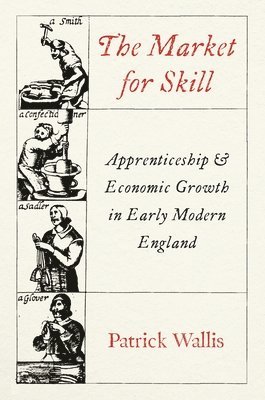
How apprenticeship shaped the English economy Apprenticeship dominated training and skill formation in early modern Europe. Years spent learning from a skilled master were a nearly universal experience for young workers in crafts and trade. In England, when apprenticeship reached its peak, as many as a third of all teenage males would serve and learn as apprentices. In The Market for Skill, Patrick Wallis shows how apprenticeship helped reshape the English economy.Some historians see apprenticeship as a key ingredient in the industrial revolution; others agree with Adam Smith in seeing it as wasteful and conservative. Wallis shows that neither of these perspectives is entirely accurate. He offers a new account of apprenticeship and the market for skill in England, analyzing the records of hundreds of thousands of individual apprentices to tell the story of how apprenticeship worked and how it contributed to the transformation of England. Wallis details the activities of apprentices and masters, the strategies of ambitious parents, the interventions of guilds and the decisions of town officials. He shows how the system of early modern apprenticeship contributed to the growth of cities, the movement of workers from farms to manufacturing and the spread of new technologies and productive knowledge.In this groundbreaking study, Wallis argues that apprenticeship succeeded precisely because it was a flexible institution which allowed apprentices to change their minds and exit contracts early. Apprenticeship provided a vital channel for training that families could trust and that was accessible to most young people, whatever their background.