Richard N. Langlois – författare
Visar alla böcker från författaren Richard N. Langlois. Handla med fri frakt och snabb leverans.
15 produkter
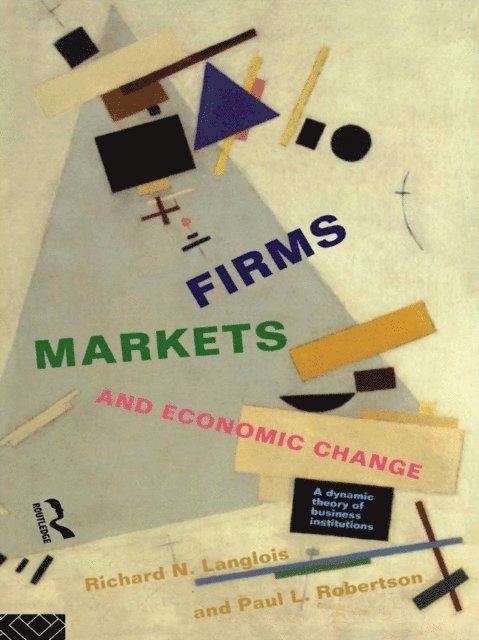
Firms, Markets and Economic Change
A dynamic Theory of Business Institutions
Av Richard N. Langlois, Paul L. Robertson
Inbunden, 1995
3149 kr
Lägg i varukorg
Traditonal western forms of corporate organization have been called into question by the success of Japanese keiretsu. Firms, Markets and Economic Change draws on industrial economics, business strategy, and economic history to develop an evolutionary model to show when innovation is best …
Firms, Markets and Economic Change
A dynamic Theory of Business Institutions
Av Richard N. Langlois, Paul L. Robertson
Häftad, 1995
1040 kr
Lägg i varukorg
Traditonal western forms of corporate organization have been called into question by the success of Japanese keiretsu. Firms, Markets and Economic Change draws on industrial economics, business strategy, and economic history to develop an evolutionary model to show when innovation is best …
Dynamics of Industrial Capitalism
Schumpeter, Chandler, and the New Economy
Inbunden, 2007
2581 kr
Lägg i varukorg
Co-winner of the 2006 Schumpeter Prize of the International Joseph A. Schumpeter Society.This book explains the shift of the organizational landscape away from vertically integrated firms and towards more specialized entities connected by markets and networks. In doing so, it places in a larger …
Economics as a Process
Essays in the New Institutional Economics
Av Richard Langlois, Richard N. Langlois
Häftad, 1989
586 kr
Lägg i varukorg
The essays in Economics as a Process are all concerned with exploring theoretical approaches alternative to the conventional or 'neoclassical' paradigm. Among the schools of thought represented are transaction-cost economics: evolutionary theories: modern 'Austrian' economies: law and economics: …
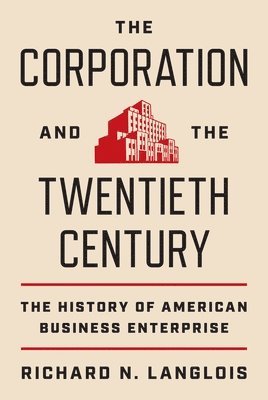
Corporation and the Twentieth Century
The History of American Business Enterprise
Inbunden, 2023
457 kr
Lägg i varukorg
A definitive reframing of the economic, institutional, and intellectual history of the managerial eraThe twentieth century was the managerial century in the United States. An organizational transformation, from entrepreneurial to managerial capitalism, brought forth what became a dominant …
Corporation and the Twentieth Century
The History of American Business Enterprise
E-bok, 2023
357 kr
Lägg i varukorg
A definitive reframing of the economic, institutional, and intellectual history of the managerial era The twentieth century was the managerial century in the United States. An organizational transformation, from entrepreneurial to managerial capitalism, brought forth what became a dominant …
Corporation and the Twentieth Century
The History of American Business Enterprise
Häftad, 2025
261 kr
Lägg i varukorg
A definitive reframing of the economic, institutional, and intellectual history of the managerial eraThe twentieth century was the managerial century in the United States. An organizational transformation, from entrepreneurial to managerial capitalism, brought forth what became a dominant …
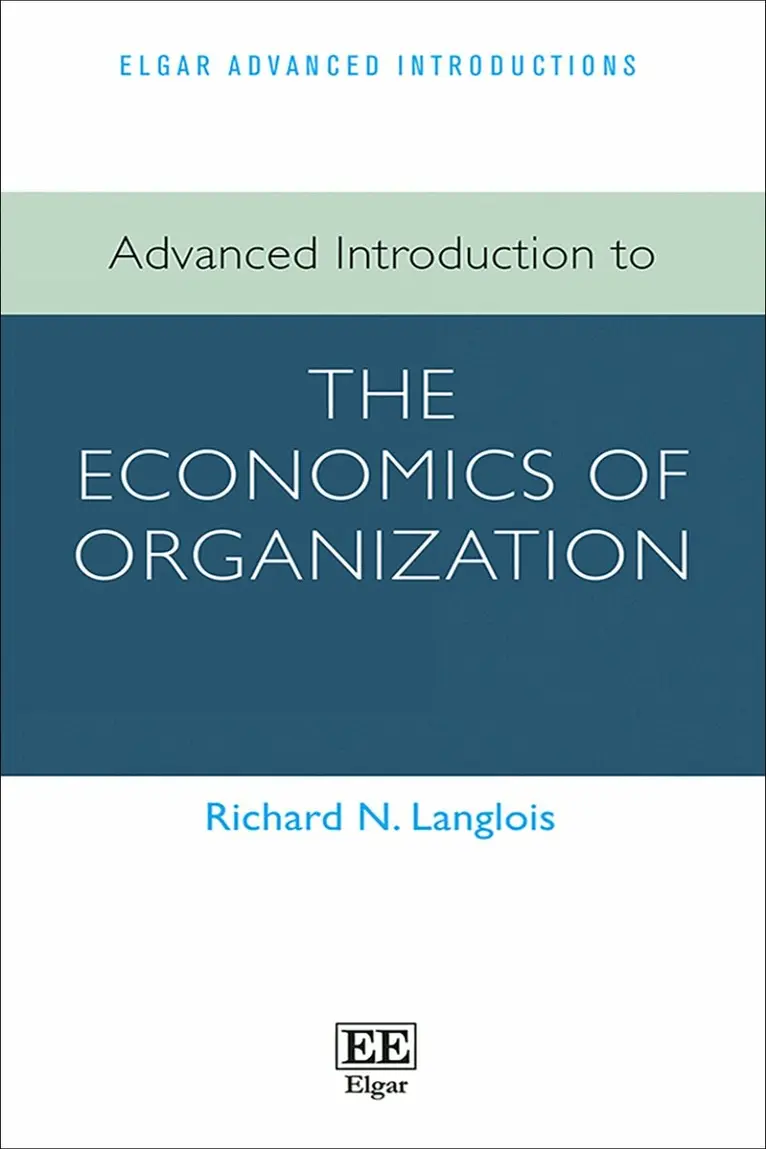
Advanced Introduction to the Economics of Organization
E-bok, 2025
265 kr
Lägg i varukorg
Elgar Advanced Introductions are stimulating and thoughtful introductions to major fields in the social sciences, business and law, expertly written by the world's leading scholars. Designed to be accessible yet rigorous, they offer concise and lucid surveys of the substantive and policy issues …
Firms, Markets and Economic Change
A dynamic Theory of Business Institutions
Av Paul L. Robertson, Richard N. Langlois
E-bok, 1995
1231 kr
Lägg i varukorg
Traditonal western forms of corporate organization have been called into question by the success of Japanese keiretsu. Firms, Markets and Economic Change draws on industrial economics, business strategy, and economic history to develop an evolutionary model to show when innovation is best …
Dynamics of Industrial Capitalism
Schumpeter, Chandler, and the New Economy
E-bok, 2007
910 kr
Lägg i varukorg
Co-winner of the 2006 Schumpeter Prize of the International Joseph A. Schumpeter Society.This book explains the shift of the organizational landscape away from vertically integrated firms and towards more specialized entities connected by markets and networks. In doing so, it places in a larger …
Dynamics of Industrial Capitalism
Schumpeter, Chandler, and the New Economy
Häftad, 2014
770 kr
Lägg i varukorg
Co-winner of the 2006 Schumpeter Prize of the International Joseph A. Schumpeter Society.This book explains the shift of the organizational landscape away from vertically integrated firms and towards more specialized entities connected by markets and networks. In doing so, it places in a larger …
Advanced Introduction to the Economics of Organization
Inbunden, 2025
1512 kr
Lägg i varukorg
Elgar Advanced Introductions are stimulating and thoughtful introductions to major fields in the social sciences, business and law, expertly written by the world’s leading scholars. Designed to be accessible yet rigorous, they offer concise and lucid surveys of the substantive and policy issues …
Advanced Introduction to the Economics of Organization
E-bok, 2025
265 kr
Lägg i varukorg
Elgar Advanced Introductions are stimulating and thoughtful introductions to major fields in the social sciences, business and law, expertly written by the world’s leading scholars. Designed to be accessible yet rigorous, they offer concise and lucid surveys of the substantive and policy issues …
Advanced Introduction to the Economics of Organization
Häftad, 2025
270 kr
Lägg i varukorg
Elgar Advanced Introductions are stimulating and thoughtful introductions to major fields in the social sciences, business and law, expertly written by the world’s leading scholars. Designed to be accessible yet rigorous, they offer concise and lucid surveys of the substantive and policy issues …
Alternative Theories of the Firm
Av Richard N. Langlois, Fu-Lai T. Yu m. fl.
Inbunden, 2002
17377 kr
Lägg i varukorg
Alternative Theories of the Firm provides a range of fundamental readings embracing the economics of firm behaviour from a non-neoclassical perspective. The collection covers several basic topics including: the importance of transaction costs and agency theory for the analysis of firm behaviour; …