The SIOP Organizational Frontiers Series - Böcker
Visar alla böcker i serien The SIOP Organizational Frontiers Series. Handla med fri frakt och snabb leverans.
8 produkter
8 produkter
2 372 kr
Skickas inom 3-6 vardagar
As a discipline, industrial-organizational (I-O) psychology has long embraced its role as both a science and a practice; the field is a personification of the scientist-practitioner model. However, the translation of new science into accepted practice can be challenging, and the field often wrestles with the best way to motivate a rich dialogue across the breadth of the field, from science to practice. The editors of this book believe that case studies are an underutilized resource for enriching this dialogue. In this volume are assembled 20 cases that show how I-O psychologists created programs backed by theory and research to address real-world issues in organizations. The cases are diverse and cover several areas of this discipline: how we select people to fill jobs, develop leaders, and facilitate inclusion and belongingness; as well as cases that show how technology is being deployed in our work, and how we can promote safe and healthy workplaces. This book is an important tool in educating future I-O psychologists in the application of science in our practice. It is also a useful guide for practitioners, providing insight into how various interventions have been implemented successfully and the lessons that were learned along the way. Throughout the book, the underlying premise is that science and practice are interdependent parts of a cycle, where each piece informs the other - a cycle that, when balanced, leads to more effective organizational programs and triggers new questions to be answered by our research.
649 kr
Skickas inom 5-8 vardagar
As a discipline, industrial-organizational (I-O) psychology has long embraced its role as both a science and a practice; the field is a personification of the scientist-practitioner model. However, the translation of new science into accepted practice can be challenging, and the field often wrestles with the best way to motivate a rich dialogue across the breadth of the field, from science to practice. The editors of this book believe that case studies are an underutilized resource for enriching this dialogue. In this volume are assembled 20 cases that show how I-O psychologists created programs backed by theory and research to address real-world issues in organizations. The cases are diverse and cover several areas of this discipline: how we select people to fill jobs, develop leaders, and facilitate inclusion and belongingness; as well as cases that show how technology is being deployed in our work, and how we can promote safe and healthy workplaces. This book is an important tool in educating future I-O psychologists in the application of science in our practice. It is also a useful guide for practitioners, providing insight into how various interventions have been implemented successfully and the lessons that were learned along the way. Throughout the book, the underlying premise is that science and practice are interdependent parts of a cycle, where each piece informs the other - a cycle that, when balanced, leads to more effective organizational programs and triggers new questions to be answered by our research.
1 390 kr
Skickas inom 7-10 vardagar
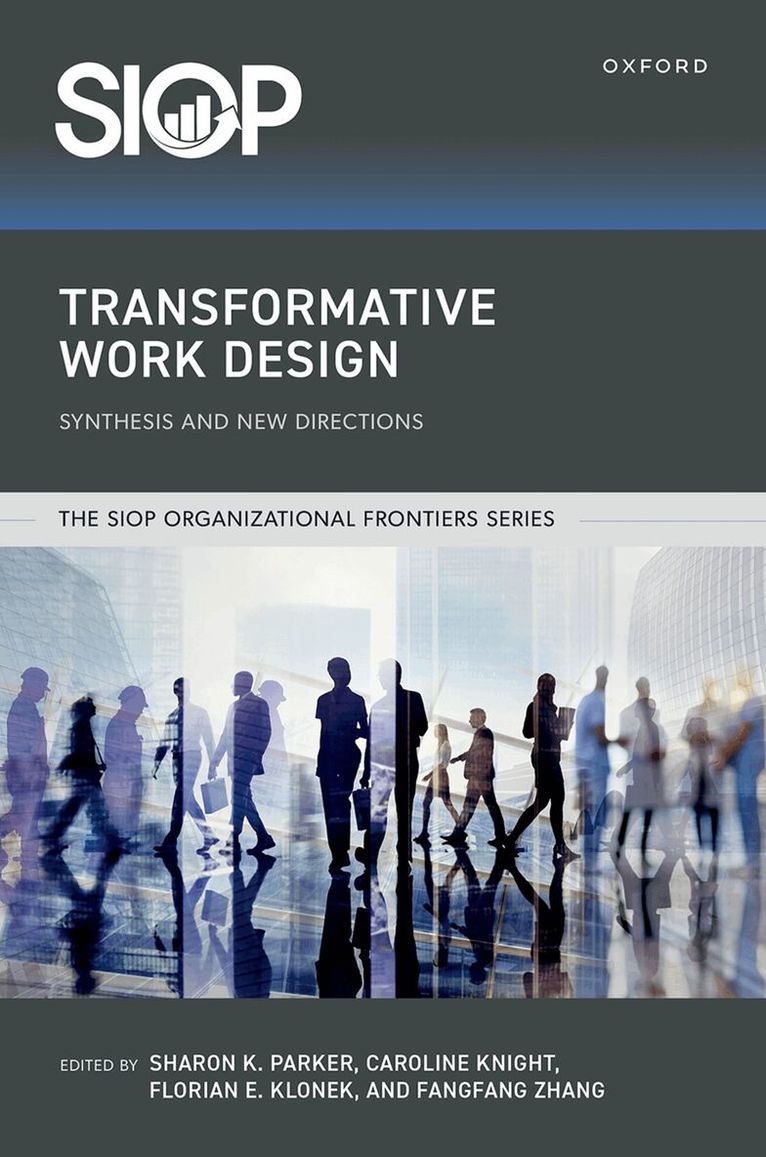
How do we create healthy, meaningful, and productive work in the face of hybrid work models, shifting careers, technological advances, an aging workforce, and other such major contemporary changes? Transformative Work Design explores this crucial question by presenting a thorough, evidence-based view of work design. With contributions from 49 highly eminent authors in the field across 25 chapters, it synthesizes research on how work design influences critical outcomes like worker motivation, mental health, well-being, and job performance for individuals and teams.The book also covers key methodologies for studying work design and explores new areas of research. For instance, authors explore how work design can shape identity and personality development, moving beyond the usual focus on wellbeing and performance outcomes. Additionally, the book shifts the traditional emphasis from understanding the outcomes of work design to unpacking the antecedents of work design. Chapters explore how various individual, team, organizational, and global factors shape the way people's work is designed, laying the foundation for understanding how to successfully redesign work.Picking up this perspective, several chapters focus on how to change work design. By discussing 'top down' work redesigns, such as self-managing teams, and 'bottom up' approaches like playful work design and job crafting, pathways to creating better work are identified. A final section highlights critical issues raised by large-scale technological and demographic shifts, such as remote working trends, population aging, and rapid digitalization.
521 kr
Tillfälligt slut
How do we create healthy, meaningful, and productive work in the face of hybrid work models, shifting careers, technological advances, an aging workforce, and other such major contemporary changes? Transformative Work Design explores this crucial question by presenting a thorough, evidence-based view of work design. With contributions from 49 highly eminent authors in the field across 25 chapters, it synthesizes research on how work design influences critical outcomes like worker motivation, mental health, well-being, and job performance for individuals and teams.The book also covers key methodologies for studying work design and explores new areas of research. For instance, authors explore how work design can shape identity and personality development, moving beyond the usual focus on wellbeing and performance outcomes. Additionally, the book shifts the traditional emphasis from understanding the outcomes of work design to unpacking the antecedents of work design. Chapters explore how various individual, team, organizational, and global factors shape the way people's work is designed, laying the foundation for understanding how to successfully redesign work.Picking up this perspective, several chapters focus on how to change work design. By discussing 'top down' work redesigns, such as self-managing teams, and 'bottom up' approaches like playful work design and job crafting, pathways to creating better work are identified. A final section highlights critical issues raised by large-scale technological and demographic shifts, such as remote working trends, population aging, and rapid digitalization.
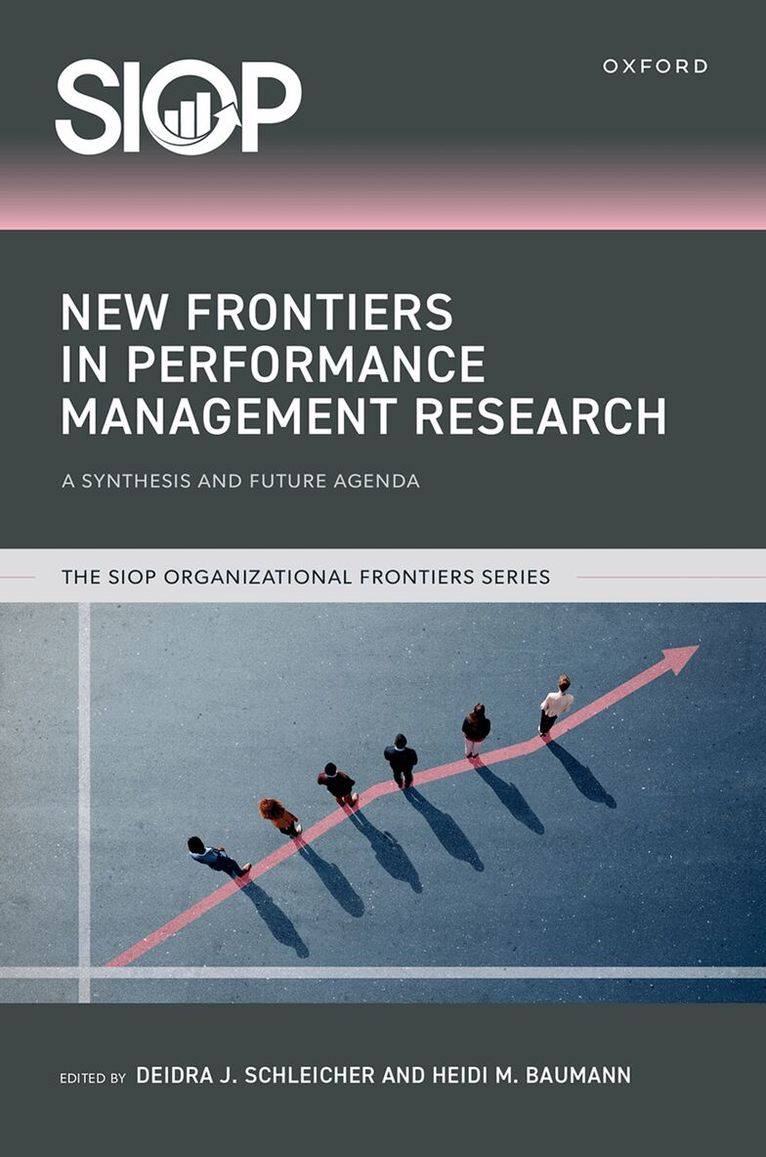
New Frontiers in Performance Management Research
A Synthesis and Future Agenda
Inbunden, Engelska, 2026
1 430 kr
Kommande
New Frontiers in Performance Management Research offers a comprehensive exploration of the complexities, current evidence-based knowledge, and future research opportunities relating to performance management (PM) systems. The book is organized according to the tasks, people, context, and evaluation components of PM, across 18 different chapters written by experts with deep content knowledge in this area. In addition to these specific content chapters, the book begins with an introductory chapter that includes principles from the editors "PM belief system" that guide the book's overall approach and tone. Among others, these include the need to build a stronger evidence base regarding PM effectiveness and the important goal of integrating extant PM research with relevant ancillary literatures to advance understanding and future work in this area. The concluding chapter of the book synthesizes key contributions from various chapters, highlighting integrative themes such as recognizing the constructed nature of performance, prioritizing PM's strategic purpose, switching up the independent and dependent variables of PM research, and understanding managers' multiple roles within PM. The book aims to propel PM research forward by proposing new ideas, summarizing current scholarly knowledge, and providing evidence-based practices for managers and organizations. Through collaboration with a diverse group of authors, the book offers valuable insights and sets a future research agenda to build a cumulative and conclusive scientific knowledge base about PM, ultimately informing practice and enhancing organizational effectiveness.
536 kr
Kommande
New Frontiers in Performance Management Research offers a comprehensive exploration of the complexities, current evidence-based knowledge, and future research opportunities relating to performance management (PM) systems. The book is organized according to the tasks, people, context, and evaluation components of PM, across 18 different chapters written by experts with deep content knowledge in this area. In addition to these specific content chapters, the book begins with an introductory chapter that includes principles from the editors "PM belief system" that guide the book's overall approach and tone. Among others, these include the need to build a stronger evidence base regarding PM effectiveness and the important goal of integrating extant PM research with relevant ancillary literatures to advance understanding and future work in this area. The concluding chapter of the book synthesizes key contributions from various chapters, highlighting integrative themes such as recognizing the constructed nature of performance, prioritizing PM's strategic purpose, switching up the independent and dependent variables of PM research, and understanding managers' multiple roles within PM. The book aims to propel PM research forward by proposing new ideas, summarizing current scholarly knowledge, and providing evidence-based practices for managers and organizations. Through collaboration with a diverse group of authors, the book offers valuable insights and sets a future research agenda to build a cumulative and conclusive scientific knowledge base about PM, ultimately informing practice and enhancing organizational effectiveness.
1 316 kr
Kommande
It is still a common assumption that labour-management relations are about trade unions, collective bargaining, and strikes. While these issues remain crucial, today's conceptual terrain is much broader. New Frontiers and Trajectories in Labour-Management Relations goes beyond a focus on the outcomes of work and employment, to elaborate how different actors' roles at multiple levels of analysis shape labour-management relationships and workplace behaviours. It explores the political economy of work and labour-management relationships by considering the role of different labour market institutions in the governance of work and employment, as well as how these institutions shape and are shaped by power and conflict in work and labour-management relationships. Approaching the subject as a broad multidisciplinary social science field, the volume features contributions from leading international experts on work, employment, and labour-management relations, encompassing thinking from economics, sociology, and law, to history, political science, and industrial-organizational (I-O) psychology. With this diversity of perspectives, the volume provides an eclectic framing of how work and employment relationships are formed and coordinated across time, space, and place.
493 kr
Kommande
It is still a common assumption that labour-management relations are about trade unions, collective bargaining, and strikes. While these issues remain crucial, today's conceptual terrain is much broader. New Frontiers and Trajectories in Labour-Management Relations goes beyond a focus on the outcomes of work and employment, to elaborate how different actors' roles at multiple levels of analysis shape labour-management relationships and workplace behaviours. It explores the political economy of work and labour-management relationships by considering the role of different labour market institutions in the governance of work and employment, as well as how these institutions shape and are shaped by power and conflict in work and labour-management relationships. Approaching the subject as a broad multidisciplinary social science field, the volume features contributions from leading international experts on work, employment, and labour-management relations, encompassing thinking from economics, sociology, and law, to history, political science, and industrial-organizational (I-O) psychology. With this diversity of perspectives, the volume provides an eclectic framing of how work and employment relationships are formed and coordinated across time, space, and place.