Theoretical Chemistry and Computational Modelling - Böcker
Visar alla böcker i serien Theoretical Chemistry and Computational Modelling. Handla med fri frakt och snabb leverans.
11 produkter
11 produkter
607 kr
Skickas inom 10-15 vardagar
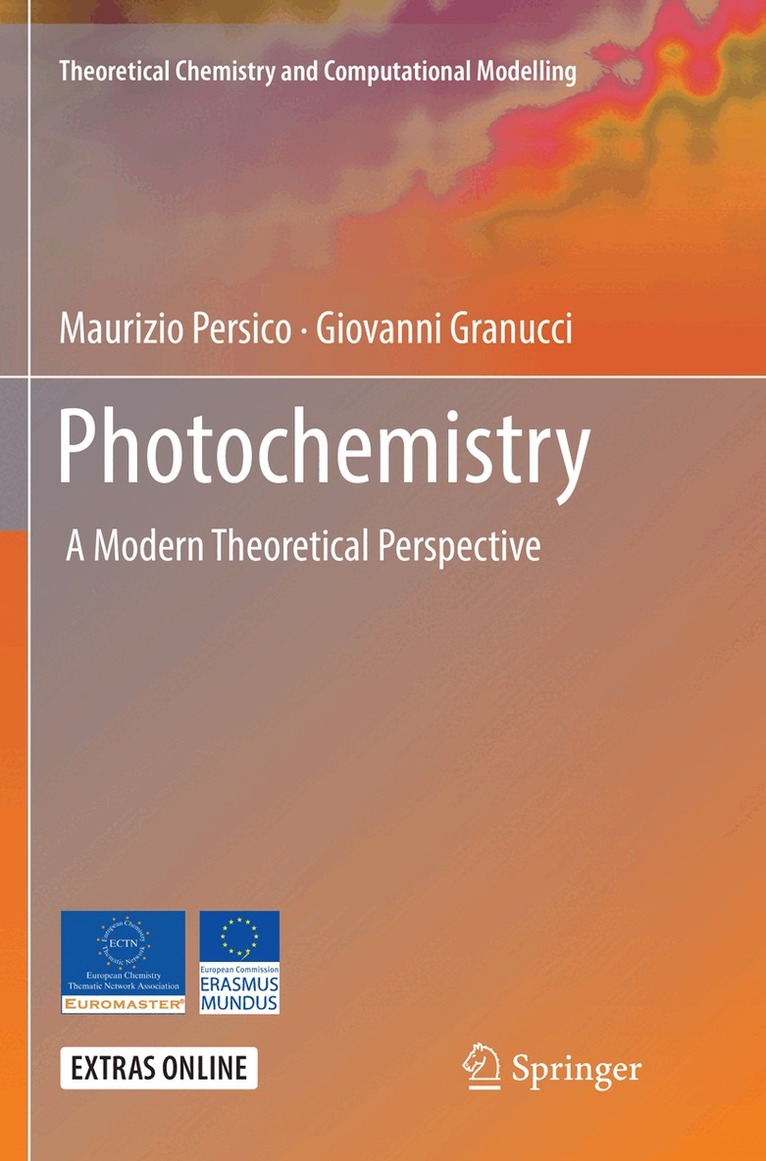
This book offers an introduction to photochemistry for students with a minimal background in physical chemistry and molecular quantum mechanics. The focus is from a theoretical perspective and highlights excited state dynamics. The authors, experienced lecturers, describe the main concepts in photochemical and photophysical processes that are used as a basis to interpret classical steady-state experimental results (essentially product branching ratios and quantum yields) and the most advanced time-resolved techniques. A significant portion of the content is devoted to the computational techniques present in quantum chemistry and molecular dynamics.With its short summaries, questions and exercises, this book is aimed at graduate students, while its theoretical focus differentiates it from most introductory textbooks on photochemistry.
1 059 kr
Skickas inom 7-10 vardagar
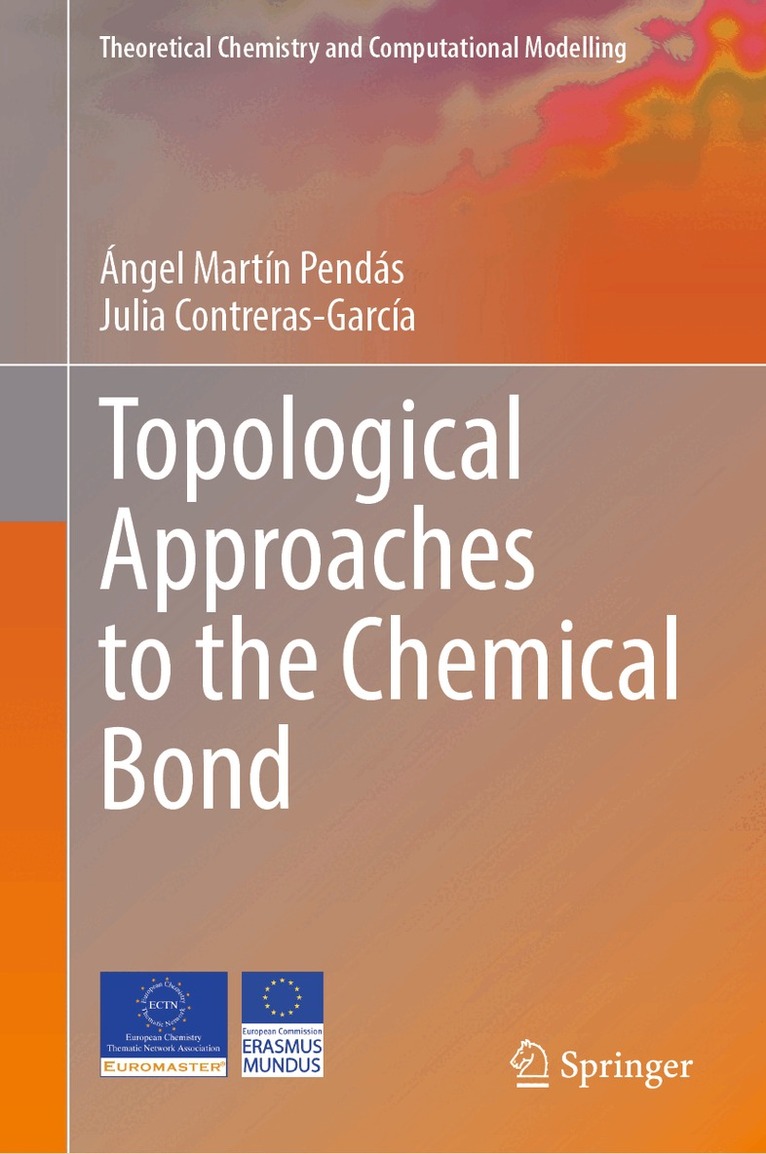
This graduate textbook provides comprehensive information on topological analysis in real space of the electronic structure.
743 kr
Skickas inom 10-15 vardagar
This graduate textbook provides comprehensive information on topological analysis in real space of the electronic structure.
533 kr
Skickas inom 10-15 vardagar
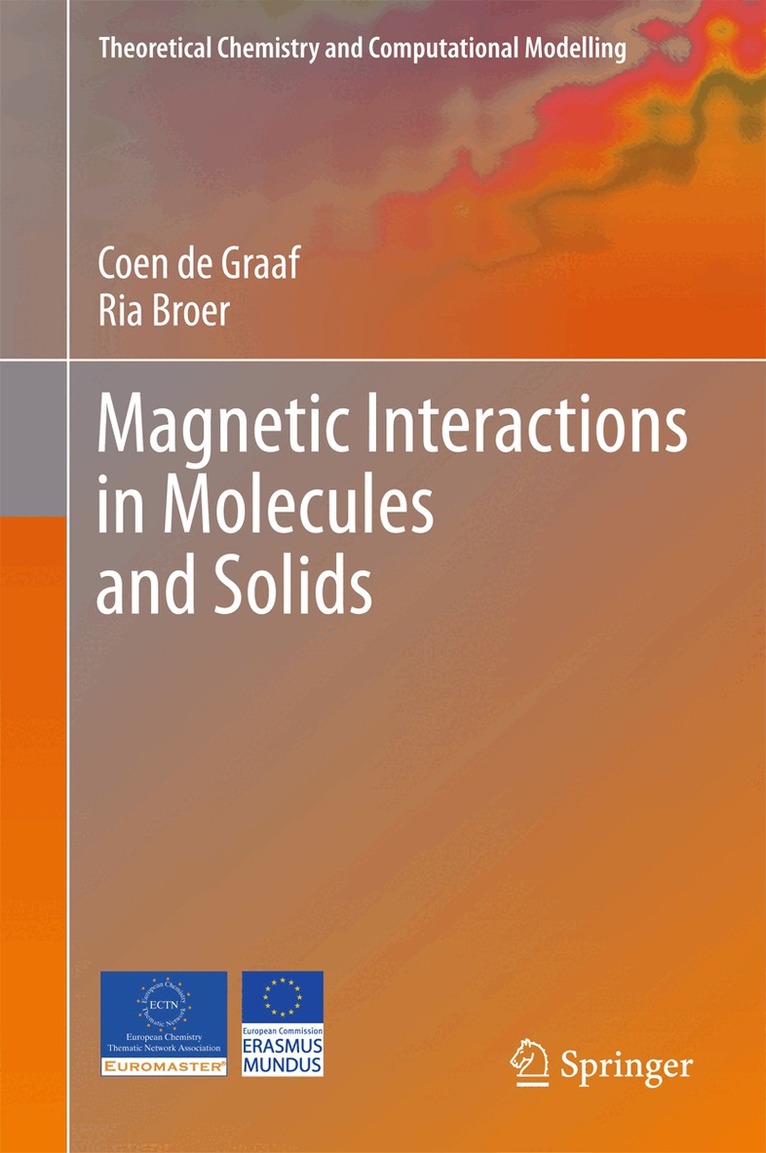
This textbook is the second volume in the Theoretical Chemistry and Computational Modeling series and aims to explain the theoretical basis of magnetic interactions at a level that will be useful for master students in physical, inorganic and organic chemistry.The book gives a treatment of magnetic interactions in terms of the phenomenological spin Hamiltonians that have been such powerful tools for chemistry and physics in the past half century, starting from the simple Heisenberg and Ising Hamiltonians and ending with Hamiltonians that include biquadratic, cyclic or anisotropic exchange. On the other hand, it also explains how quantum chemical methods, reaching from simple mean field methods to accurate models that include the effects of electron correlation and spin-orbit coupling, can help to understand the magnetic properties. Connecting the two perspectives is an essential aspect of the book, since it leads to a deeper understanding of the relation between physical phenomena and basic properties. It also makes clear that in many cases one can derive magnetic coupling parameters not only from experiment, but also from accurate ab initio calculations.The book starts with introducing a selection of basic concepts and tools. Throughout the book the text is interlarded with exercises, stimulating the students to not only read but also verify the assertions and perform (parts of) the derivations by themselves. In addition, each chapter ends with a number of problems that can be used to check whether the material has been understood.
533 kr
Skickas inom 10-15 vardagar
This textbook is the second volume in the Theoretical Chemistry and Computational Modeling series and aims to explain the theoretical basis of magnetic interactions at a level that will be useful for master students in physical, inorganic and organic chemistry.The book gives a treatment of magnetic interactions in terms of the phenomenological spin Hamiltonians that have been such powerful tools for chemistry and physics in the past half century, starting from the simple Heisenberg and Ising Hamiltonians and ending with Hamiltonians that include biquadratic, cyclic or anisotropic exchange. On the other hand, it also explains how quantum chemical methods, reaching from simple mean field methods to accurate models that include the effects of electron correlation and spin-orbit coupling, can help to understand the magnetic properties. Connecting the two perspectives is an essential aspect of the book, since it leads to a deeper understanding of the relation between physical phenomena and basic properties. It also makes clear that in many cases one can derive magnetic coupling parameters not only from experiment, but also from accurate ab initio calculations.The book starts with introducing a selection of basic concepts and tools. Throughout the book the text is interlarded with exercises, stimulating the students to not only read but also verify the assertions and perform (parts of) the derivations by themselves. In addition, each chapter ends with a number of problems that can be used to check whether the material has been understood.
1 059 kr
Skickas inom 10-15 vardagar
This graduate textbook, written by experienced lecturers, features the study and computation of efficient reactive processes. Methods for computing quantum, classical, and semi-classical reactive probabilities based on the already discussed concepts and tools are also featured and the resulting main typical reactive behaviors are analyzed.
691 kr
Skickas inom 10-15 vardagar
This graduate textbook, written by experienced lecturers, features the study and computation of efficient reactive processes. Methods for computing quantum, classical, and semi-classical reactive probabilities based on the already discussed concepts and tools are also featured and the resulting main typical reactive behaviors are analyzed.
661 kr
Skickas
This book offers an introduction to photochemistry for students with a minimal background in physical chemistry and molecular quantum mechanics.
695 kr
Skickas inom 10-15 vardagar
Chemists are used to the operational definition of symmetry, which crystallographers introduced long before the advent of quantum mechanics. The ball-and-stick models of molecules naturally exhibit the symmetrical properties of macroscopic objects. However, the practitioner of quantum chemistry and molecular modeling is not concerned with balls and sticks, but with subatomic particles: nuclei and electrons. This textbook introduces the subtle metaphors which relate our macroscopic understanding of symmetry to the molecular world. It gradually explains how bodily rotations and reflections, which leave all inter-particle distances unaltered, affect the study of molecular phenomena that depend only on these internal distances. It helps readers to acquire the skills to make use of the mathematical tools of group theory for whatever chemical problems they are confronted with in the course of their own research.
954 kr
Skickas inom 10-15 vardagar
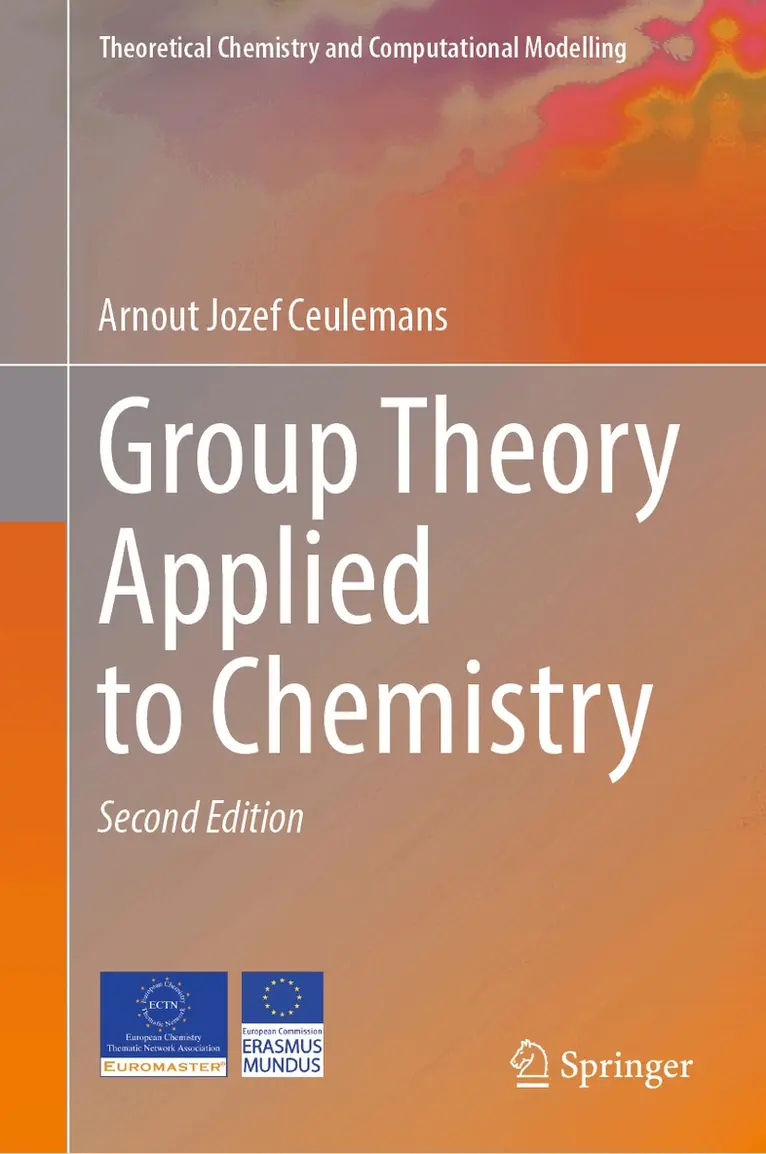
The second edition of this textbook provides a more elaborate explanation of several important group-theoretical concepts in quantum chemistry, such as: the bra-ket conjugation relation, the connection between point groups and isometries, the practical use of subduction tables, the eigenvalues of Cayley graphs, and the symmetry of Slater determinants. A new chapter introduces the application of line and plane groups to the properties of nanostructured low-dimensional molecular systems. In addition, several extra study problems are inserted to illustrate group theory at work in molecular science. The book is of great interest to advanced undergraduate and graduate students, enabling them to put the tools of group theory into practice when studying chemical problems of their own research. More experienced researchers will find in this book useful leads to the mathematical aspects of their subject.
954 kr
Skickas inom 10-15 vardagar
The second edition of this textbook provides a more elaborate explanation of several important group-theoretical concepts in quantum chemistry, such as: the bra-ket conjugation relation, the connection between point groups and isometries, the practical use of subduction tables, the eigenvalues of Cayley graphs, and the symmetry of Slater determinants. A new chapter introduces the application of line and plane groups to the properties of nanostructured low-dimensional molecular systems. In addition, several extra study problems are inserted to illustrate group theory at work in molecular science. The book is of great interest to advanced undergraduate and graduate students, enabling them to put the tools of group theory into practice when studying chemical problems of their own research. More experienced researchers will find in this book useful leads to the mathematical aspects of their subject.