Feminist Issues: Practice, Politics, Theory – serie
Visar alla böcker i serien Feminist Issues: Practice, Politics, Theory. Handla med fri frakt och snabb leverans.
13 produkter
Aging and Gender in Literature
Studies in Creativity
Av Anne M. Wyatt-Brown, Janice Rossen
Inbunden, 1993
1045 kr
Lägg i varukorg
By adding consideration of age to that of race, gender, and class, this volume seeks to show how growing older affects literary creativity and psychological development and to examine how individual writing careers begin to change in middle age. The editors have brought together original work by a …
Aging and Gender in Literature
Studies in Creativity
Av Anne M. Wyatt-Brown, Janice Rossen
Häftad, 1993
380 kr
Lägg i varukorg
By adding consideration of age to that of race, gender, and class, this volume seeks to show how growing older affects literary creativity and psychological development and to examine how individual writing careers begin to change in middle age. The editors have brought together original work by a …
Famous Last Words
Changes in Gender and Narrative Closure
Av Alison Booth
Häftad, 1993
429 kr
Lägg i varukorg
This collection of original essays on women's relations to novelistic endings demonstrates the versatility and range of feminist criticism today. The authors, widely known in their fields, offer insights into the study of narrative, the changes in gender roles and cultural traditions since the …
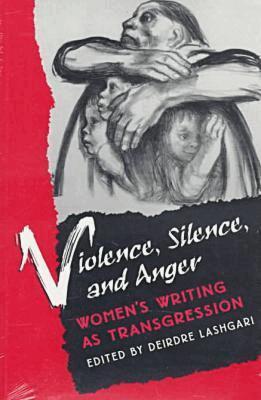
Violence, Silence and Anger
Women's Writing As Transgression
Inbunden, 1995
1045 kr
Lägg i varukorg
The contributors to this volume consider the place of violence in the works of acclaimed writers like Adrienne Rich, Harriet Jacobs, Virginia Woolf and Audre Lord, as well as in the works of less-well-known writers like Senegal's Mariama Ba, Lebanon's Etel Adnan, and Jamaica's Sistren Collective.
Violence, Silence and Anger
Women's Writing As Transgression
Häftad, 1995
364 kr
Lägg i varukorg
The contributors to this volume consider the place of violence in the works of acclaimed writers like Adrienne Rich, Harriet Jacobs, Virginia Woolf and Audre Lord, as well as in the works of less-well-known writers like Senegal's Mariama Ba, Lebanon's Etel Adnan, and Jamaica's Sistren Collective.
Women As Subjects
South Asian Histories
Av Nita Kumar
Häftad, 1994
309 kr
Lägg i varukorg
Women as Subjects considers the changing identity and status of women in India today - how they view themselves and how they are viewed - through the current work of seven scholars: anthropologists, historians and sociologists from India, the United Kingdom and the United States. These essays, …
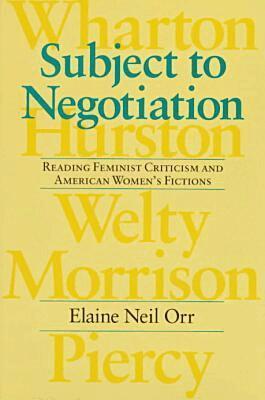
Subject to Negotiation
Reading Feminist Criticism and American Women's Fictions
Inbunden, 1997
688 kr
Lägg i varukorg
This study argues for the importance of negotiation for feminist practice within a plurality of critical positions and identities. It suggests that feminist critics are necessarily operating between scenes of power, negotiating their interests across uneven fields.
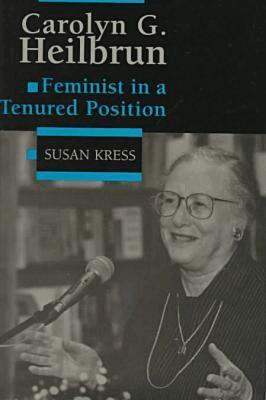
Carolyn G.Heilbrun
Feminist in a Tenured Position
Av Susan Kress
Inbunden, 1997
591 kr
Lägg i varukorg
Carolyn G. Heilbrun achieved recognition as a feminist critic of culture and (as Amanda Cross) a writer of witty, detective novels. This biography offers a narrative of her journey from traditional academic to outspoken feminist and evaluates her contributions to feminist conversation.
Engaging Feminism
Students Speak Up and Speak Out
Häftad, 1992
264 kr
Tillfälligt slut
During recent years the field of women's studies has emphasized the growth of new scholarship on women as scholars began to recover women's history, women's literature, and both qualitative and quantitative data about women's lives in disciplines as diverse as classics and psychology, religion and …
Unheard Voices
First Historians of Southern Women
Häftad, 1993
289 kr
Tillfälligt slut
In this collective biography, the editor retrieves the work and lives of the few who preceded her in writing the history of women in the South, like Virginia Gearhart Gray, Marjorie Mendenhall, Julia Cherry Spruill, Guion Griffis Johnson and Eleanor Boatwright.
Elizabeth Bishop
The Geography of Gender
Av Marilyn May Lombardi, Marilyn May Lombardi
Inbunden, 1993
890 kr
Tillfälligt slut
These essays on Pulitzer Prize winner, Elizabeth Bishop, argue that her ""sense of difference"" as an orphan, a woman artist and a lesbian, play a significant role in the questioning of aesthetic, ethical and sexual boundaries that is so much part of her poetic practice.
Nietzsche and the Feminine
Häftad, 1994
377 kr
Tillfälligt slut
You are going to women? do not forget the whip! This admonition, from ""Thus Spoke Zarathustra"", may be the most notoriously misogynistic line in all literature and philosophy. It is also only one of the many denigrations of women in the work of the philosopher who has most influenced our century: …