Tumor Microenvironment – serie
Visar alla böcker i serien Tumor Microenvironment. Handla med fri frakt och snabb leverans.
10 produkter
10 produkter
Del 1 - Tumor Microenvironment
Innate and Adaptive Immunity in the Tumor Microenvironment
Inbunden, Engelska, 2007
1 105 kr
Skickas inom 10-15 vardagar
Cancer cells are continuously interacting with the immune system of the host. These interactions can be regarded as a double edged sword. On the one hand, innate and adaptive immune responses act to protect the host by attempting rejection of the tumor. On the other hand, inflammatory cells and proteins stimulate multiplication and dissemination of cancer cells, thereby accelerating the progression of the disease. Traditionally, the interplay between cancer cells and host immunity has been studied systemically, with no particular attention to the site at which a given tumor develops. Recent studies, however, indicate that the tumor microenvironment is unique in providing both supportive and inhibitory factors that determine the fate of the tumor and its host. Accordingly, microenvironmental immunity that operates inside and around a tumor plays a crucial role in cancer development and progression. The aim of the present volume is to compile reviews on innate and adaptive immune responses at the tumor microenvironment with emphasis on positive and negative outcomes that affect the progression of the disease. These reviews have been solicited from experts in the field who published original research studies focusing on these issues.
Inbunden, Engelska, 2008
1 653 kr
Skickas inom 10-15 vardagar
It is now becoming very clear that the development and progression of tumor towards the malignant (metastatic) phenotype depends tightly on the interaction between the tumor cells and the tumor microenvironment. Tumor cells respond to stimuli generated within the tumor microenvironment for their growth advantage while the tumor cell themselves reshape and remodel the architecture and function of their extracellular matrices. The term tumor microenvironment is a wide umbrella consisting of stromal cells such as fibroblasts and endothelial cells and infiltration immune cells including T and B cells, macrophages, and other inflammatory cells (PMNs). These different components of the tumor microenvironment could have stimulatory and inhibitory effects on tumor progression by regulating the gene expression repertoire within the tumor cells on one hand and the stroma cells on the other. In this volume we have seven contributors who will discuss several different aspects on the cross talk within the tumor microenvironment components leading to the acquisition of the metastatic phenotype. It is our hope that these state-of-the-art studies will shed further light on our understanding of these complicated processes.
Del 1 - Tumor Microenvironment
Innate and Adaptive Immunity in the Tumor Microenvironment
Häftad, Engelska, 2010
1 105 kr
Skickas inom 10-15 vardagar
Cancer cells are continuously interacting with the immune system of the host. These interactions can be regarded as a double edged sword. On the one hand, innate and adaptive immune responses act to protect the host by attempting rejection of the tumor. On the other hand, inflammatory cells and proteins stimulate multiplication and dissemination of cancer cells, thereby accelerating the progression of the disease. Traditionally, the interplay between cancer cells and host immunity has been studied systemically, with no particular attention to the site at which a given tumor develops. Recent studies, however, indicate that the tumor microenvironment is unique in providing both supportive and inhibitory factors that determine the fate of the tumor and its host. Accordingly, microenvironmental immunity that operates inside and around a tumor plays a crucial role in cancer development and progression. The aim of the present volume is to compile reviews on innate and adaptive immune responses at the tumor microenvironment with emphasis on positive and negative outcomes that affect the progression of the disease. These reviews have been solicited from experts in the field who published original research studies focusing on these issues.
Häftad, Engelska, 2010
1 653 kr
Skickas inom 10-15 vardagar
It is now becoming very clear that the development and progression of tumor towards the malignant (metastatic) phenotype depends tightly on the interaction between the tumor cells and the tumor microenvironment. Tumor cells respond to stimuli generated within the tumor microenvironment for their growth advantage while the tumor cell themselves reshape and remodel the architecture and function of their extracellular matrices. The term tumor microenvironment is a wide umbrella consisting of stromal cells such as fibroblasts and endothelial cells and infiltration immune cells including T and B cells, macrophages, and other inflammatory cells (PMNs). These different components of the tumor microenvironment could have stimulatory and inhibitory effects on tumor progression by regulating the gene expression repertoire within the tumor cells on one hand and the stroma cells on the other. In this volume we have seven contributors who will discuss several different aspects on the cross talk within the tumor microenvironment components leading to the acquisition of the metastatic phenotype. It is our hope that these state-of-the-art studies will shed further light on our understanding of these complicated processes.
Del 3 - Tumor Microenvironment
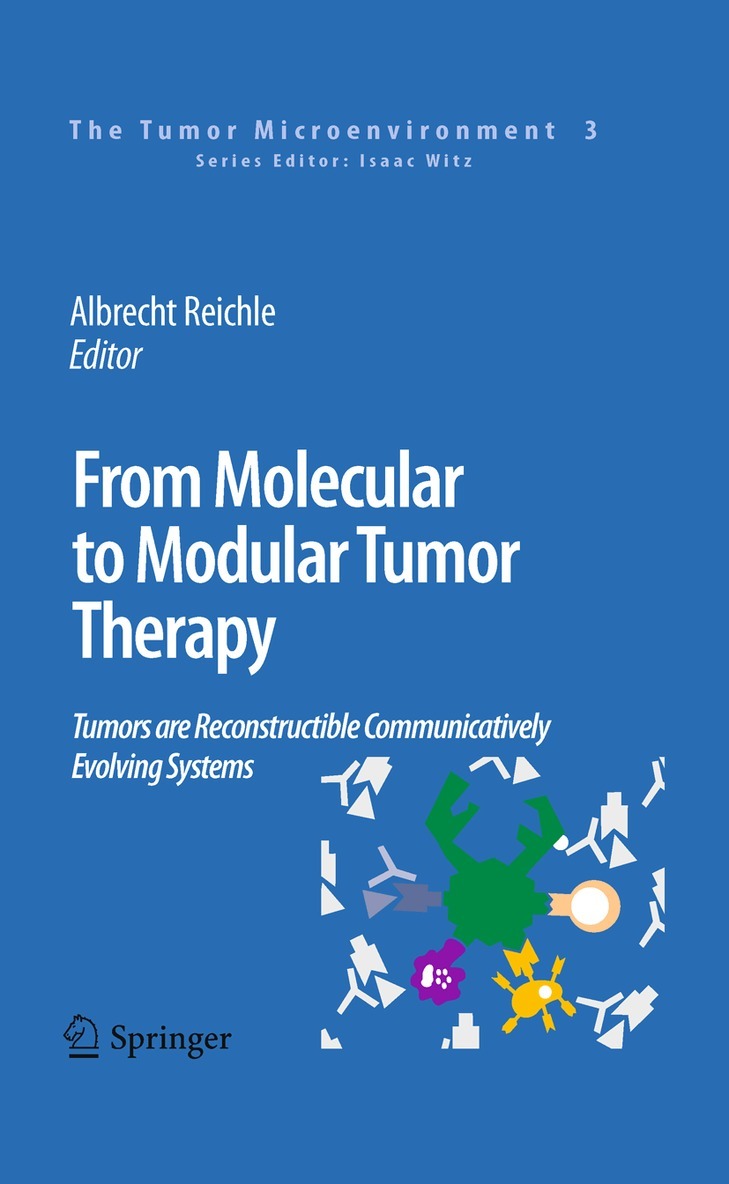
From Molecular to Modular Tumor Therapy:
Tumors are Reconstructible Communicatively Evolving Systems
Inbunden, Engelska, 2010
2 202 kr
Skickas inom 10-15 vardagar
Chronic inflammation is one of the major pathological bases manifesting the development of gastric cancers, hepatitis and hepatocellular carcinoma, cervical cancer, ulcerative colitis and colorectal cancer [1]. Microbial infections, viral infections and autoimmune responses can lead to chronic inflammation-associated cancer formation. Human herpesviruses, such as human cytomegalovirus (HCMV) and Kaposi sarcoma herpesvirus (KSHV) are known to be associated with tumorigenesis and tumor progression. HCMV infection potentiates malignancies of colon cancer and malignant glioma [2,3]. KSHV was initially discovered from Kaposi's sarcoma lesion of an AIDS patient [4]. It was subsequently discovered that KSHV contributed to the pathogenesis of KS, primary effusion lymphoma [5] and lymphoproliferative disorder multicentric Castleman's disease. Emerging evidence shows that herpesvirus infection interferes or inhibits host cell immune defense and maintains a tumor-promoting microenvironment by expressing virulent homologues of host cell proteins that disturb normal cell cycle progression and leads to apoptosis of the host cells.For example, cellular growth and transformation are induced by viral-encoded homologues of cytokines, chemokines or chemokine receptors [6]. The constitutive expression of viral chemokine GPCRs triggers prolonged activation of G protein signaling and eventually becomes the major inputs for chronic leukocyte infiltration and cancer development. GPCRs can serve as proto-oncogenes since overexpression of various wild type GPCRs can transform cells in the presence of their specific ligands. Mutations on GPCRs may result in constitutive signaling and oncogenesis [7]. Naturally occurring mutations in GPCRs have been identified in human tumors [8,9].
Del 4 - Tumor Microenvironment
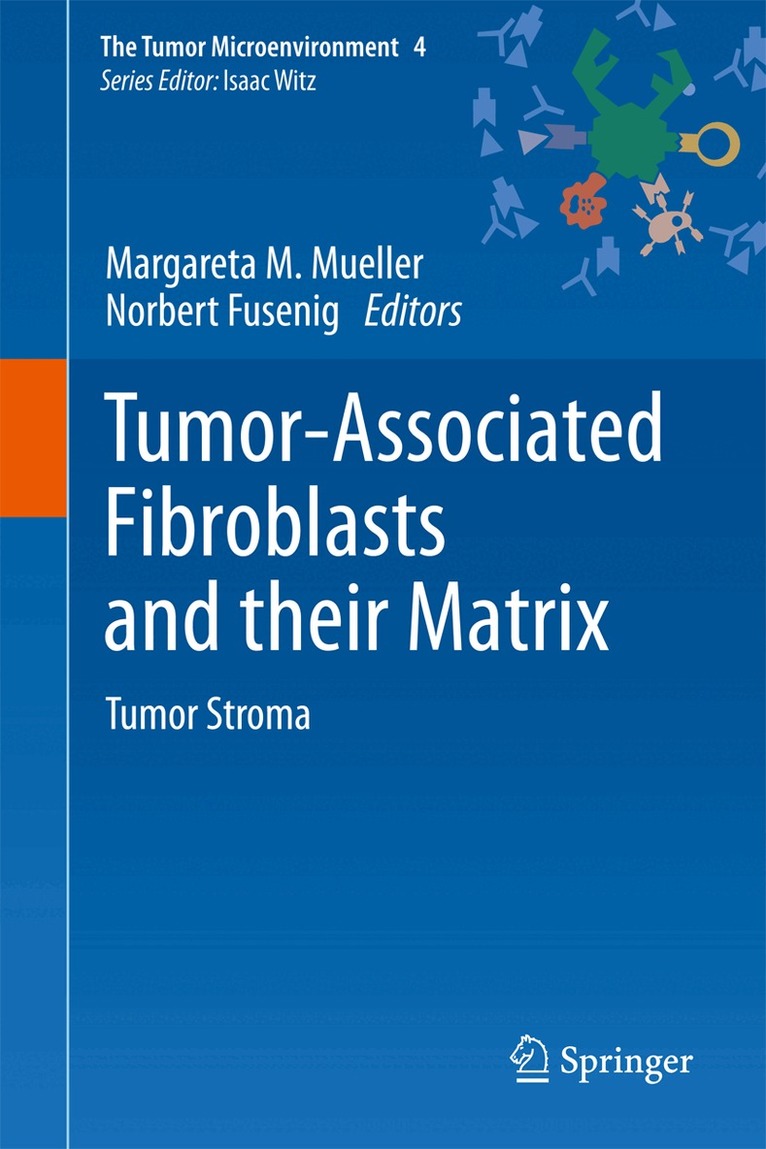
Tumor-Associated Fibroblasts and their Matrix
Inbunden, Engelska, 2011
2 202 kr
Skickas inom 10-15 vardagar
During the last 20 years it has become increasingly clear that the tumor micro-environment, the tumor stroma with its cellular end extracellular components, plays an crucial role in regulating tumor growth and progression. This book on “Tumor-associated fibroblasts and their matrix” as part of the series on “Tumor-Microenvironment” is the first comprehensive discussion of these two main players of the tumor microenvironment. The best experts in this new area of tumor research and therapy review the role of these major components in the tumor stroma in the process of tumor development and progression. They discuss their interaction with other players such as blood vessels and immune cells, and show novel perspectives for tumor therapy. This compilation of excellent contributions of the best known experts in this important field in cancer research and therapy is a must for all scientists engaged in basic and clinical research. Increasing evidence of successful targeting of both cellular and matrix components in tumor therapy renders this book of particular interest for scientists engaged in pharmaceutical industry searching for new components for cancer therapy.
Häftad, Engelska, 2012
2 202 kr
Skickas inom 10-15 vardagar
Chronic inflammation is one of the major pathological bases manifesting the development of gastric cancers, hepatitis and hepatocellular carcinoma, cervical cancer, ulcerative colitis and colorectal cancer [1]. Microbial infections, viral infections and autoimmune responses can lead to chronic inflammation-associated cancer formation. Human herpesviruses, such as human cytomegalovirus (HCMV) and Kaposi sarcoma herpesvirus (KSHV) are known to be associated with tumorigenesis and tumor progression. HCMV infection potentiates malignancies of colon cancer and malignant glioma [2,3]. KSHV was initially discovered from Kaposi's sarcoma lesion of an AIDS patient [4]. It was subsequently discovered that KSHV contributed to the pathogenesis of KS, primary effusion lymphoma [5] and lymphoproliferative disorder multicentric Castleman's disease. Emerging evidence shows that herpesvirus infection interferes or inhibits host cell immune defense and maintains a tumor-promoting microenvironment by expressing virulent homologues of host cell proteins that disturb normal cell cycle progression and leads to apoptosis of the host cells.For example, cellular growth and transformation are induced by viral-encoded homologues of cytokines, chemokines or chemokine receptors [6]. The constitutive expression of viral chemokine GPCRs triggers prolonged activation of G protein signaling and eventually becomes the major inputs for chronic leukocyte infiltration and cancer development. GPCRs can serve as proto-oncogenes since overexpression of various wild type GPCRs can transform cells in the presence of their specific ligands. Mutations on GPCRs may result in constitutive signaling and oncogenesis [7]. Naturally occurring mutations in GPCRs have been identified in human tumors [8,9].
Del 4 - Tumor Microenvironment
Tumor-Associated Fibroblasts and their Matrix
Häftad, Engelska, 2013
2 202 kr
Skickas inom 10-15 vardagar
During the last 20 years it has become increasingly clear that the tumor micro-environment, the tumor stroma with its cellular end extracellular components, plays an crucial role in regulating tumor growth and progression. This book on “Tumor-associated fibroblasts and their matrix” as part of the series on “Tumor-Microenvironment” is the first comprehensive discussion of these two main players of the tumor microenvironment. The best experts in this new area of tumor research and therapy review the role of these major components in the tumor stroma in the process of tumor development and progression. They discuss their interaction with other players such as blood vessels and immune cells, and show novel perspectives for tumor therapy. This compilation of excellent contributions of the best known experts in this important field in cancer research and therapy is a must for all scientists engaged in basic and clinical research. Increasing evidence of successful targeting of both cellular and matrix components in tumor therapy renders this book of particular interest for scientists engaged in pharmaceutical industry searching for new components for cancer therapy.
Del 5 - Tumor Microenvironment
Tumor Ablation
Effects on Systemic and Local Anti-Tumor Immunity and on Other Tumor-Microenvironment Interactions
Inbunden, Engelska, 2012
1 653 kr
Skickas inom 10-15 vardagar
The growing knowledge on tumor-immune response interactions and on the tumor microenvironment did not translate so far into better control of cancer by anti-tumor vaccination. The percentage of patients who benefited from vaccination strategies is still too small to justify their general use. It is the aim of this book to present an alternative to the conventional approach of developing injected tumor vaccines to activate anti-tumor immunity, which will fight cancer. It is argued that in situ tumor ablation (destruction) that involves tumor antigen release; cross presentation and the release of danger associated molecular patterns (DAMPs) can make the tumor its own cellular vaccine. Tumor ablation methods using chemicals, radiation, photodynamic therapy, cryoablation, high-temperature, radiofrequency, high intensity focused ultrasound, and electric-based ablation have been developed for focal tumors. In this book experts will deal with two main topics: I. What are the principles of the various ablation modalities, and II. How each method affects the tumor cells and their microenvironment, and how these effects are responsible for the induction of specific anti-tumor immunity. The aims of this book are thus: 1. Familiarize the readers with various methods of in situ tumor ablation. 2. Review the literature and stimulate comparisons on the efficacy of different ablation methods for the treatment of tumors of different histotypes. 3. Review the literature on the effects of various ablation methods on systemic and local anti tumor immunity and on other manifestations of the interactions of tumors with their microenvironment. 4. Stimulate comparative studies on the immunostimulatory effects of different ablation modalities.
Häftad, Engelska, 2014
1 653 kr
Skickas inom 10-15 vardagar
The growing knowledge on tumor-immune response interactions and on the tumor microenvironment did not translate so far into better control of cancer by anti-tumor vaccination. The percentage of patients who benefited from vaccination strategies is still too small to justify their general use. It is the aim of this book to present an alternative to the conventional approach of developing injected tumor vaccines to activate anti-tumor immunity, which will fight cancer. It is argued that in situ tumor ablation (destruction) that involves tumor antigen release; cross presentation and the release of danger associated molecular patterns (DAMPs) can make the tumor its own cellular vaccine. Tumor ablation methods using chemicals, radiation, photodynamic therapy, cryoablation, high-temperature, radiofrequency, high intensity focused ultrasound, and electric-based ablation have been developed for focal tumors. In this book experts will deal with two main topics: I. What are the principles of the various ablation modalities, and II. How each method affects the tumor cells and their microenvironment, and how these effects are responsible for the induction of specific anti-tumor immunity. The aims of this book are thus: 1. Familiarize the readers with various methods of in situ tumor ablation. 2. Review the literature and stimulate comparisons on the efficacy of different ablation methods for the treatment of tumors of different histotypes. 3. Review the literature on the effects of various ablation methods on systemic and local anti tumor immunity and on other manifestations of the interactions of tumors with their microenvironment. 4. Stimulate comparative studies on the immunostimulatory effects of different ablation modalities.