Yona Keisari - Böcker
Visar alla böcker från författaren Yona Keisari. Handla med fri frakt och snabb leverans.
5 produkter
5 produkter
1 625 kr
Skickas inom 10-15 vardagar
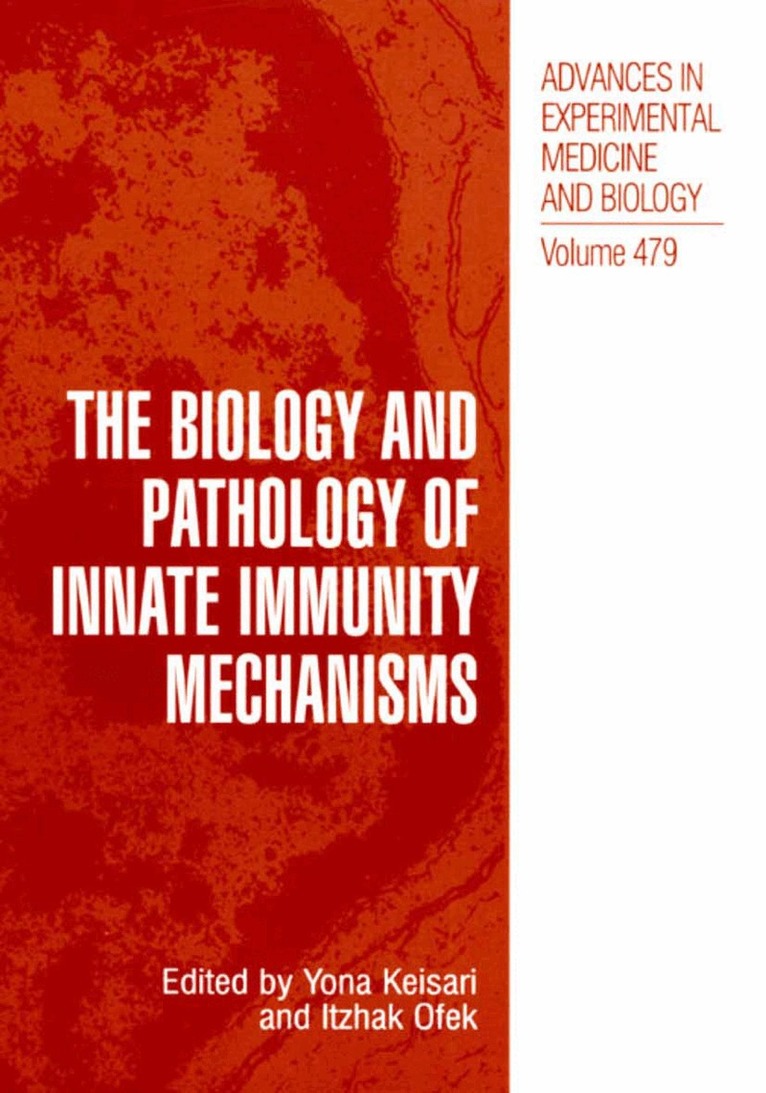
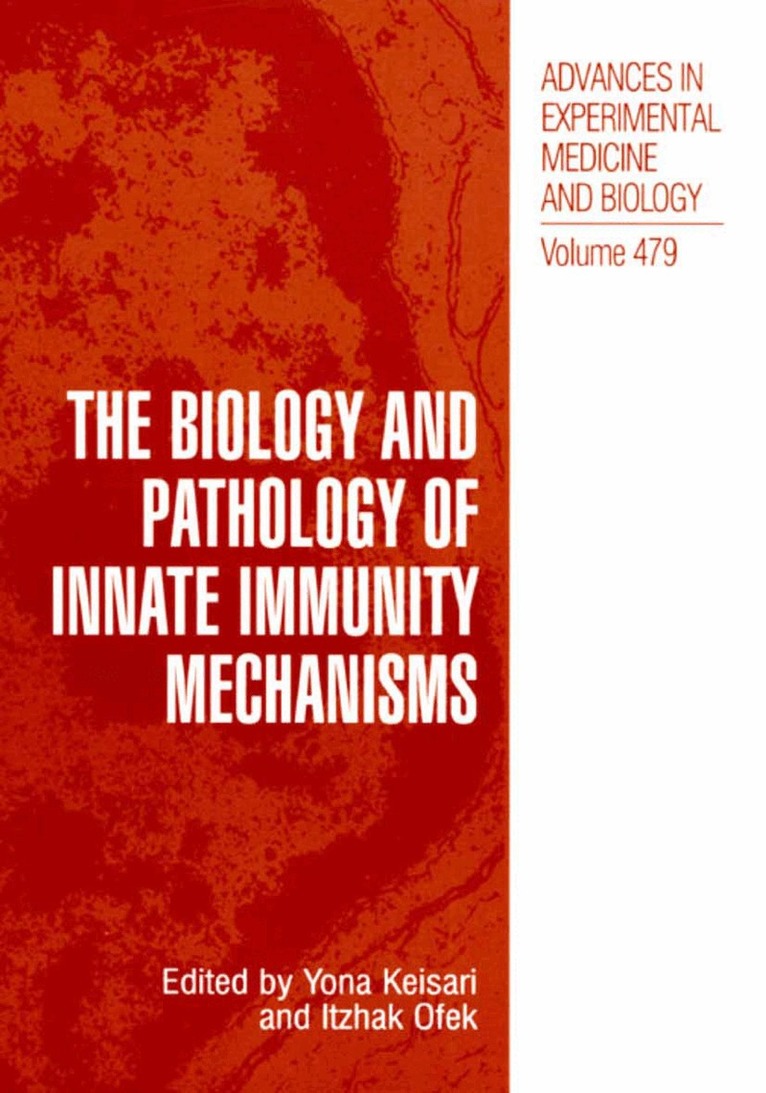
This volume contains the proceedings of the Bathsheva de Rothschild Seminar on Innate Immunity, held on October 10-15, 1999, in Zichron Yaakov, Israel. In recent years, scientific attention has focused increasingly on immediate defense mechanisms based on non-clonal recognition of microbial components. These mechanisms constitute the innate immunity arm of the body's defense. Identification of pathogens by these mechanisms primarily involves receptors recognizing sugar moieties of various micro-organisms. This text describes advances in this field, including the implications of the recognition of specific components of the innate immunity arsenal as the main cause of host susceptibility to particular types of infections, and the development of new agents to combat infections using newly identified anti-microbial peptides.There is also coverage of the major themes, such as the role of innate immune responses as a first-line defense against microbial infection and tumor cells; the cellular and molecular basis of the function of cells and molecules involved in innate immunity; the role of innate immunity in the immunocompromised host; and the interactions between innate immunity components and clonal immune response.
653 kr
Skickas inom 5-8 vardagar
1 625 kr
Skickas inom 10-15 vardagar
In recent years increased scientific attention has been given to immediate defense mechanisms based on non-clonal recognition of microbial components. These mechanisms constitute the innate immunity arm of the body s defense. Identification of pathogens by these mechanisms involves primarily receptors recognizing sugar moieties of various microorganisms. Innate immunity based mechanisms are essential for the existence of multicellular organisms. They are evolutionarily conserved and designed to provide immediate protection against microbial pathogens to eradicate infection. Activation of innate immunity is crucial for transition to specific immunity and for its orientation, and to assist the specific immune response in the recognition of pathogens and their destruction. Innate immunity is regularly involved in the arrest of bacterial, mycotic, viral and parasitic infections, giving the specific immune response time to become effective. It becomes critically essential in immunocompromised patients who fail to mount specific immune responses due to congenital or acquired immunodeficiencies as a result of chemotherapy, dialysis, immunosuppressive drugs, or HIV infection. The Innate Immunity arsenal constitutes polymorphonuclear and mononuclear phagocytes, mast cells, the complement system, Natural Killer cells, antimicrobial peptides, and presumably a subset of T lymphocytes with TCRl receptors.
Del 5 - Tumor Microenvironment
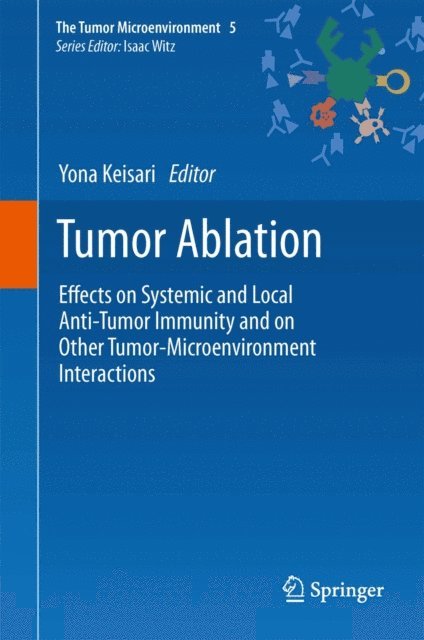
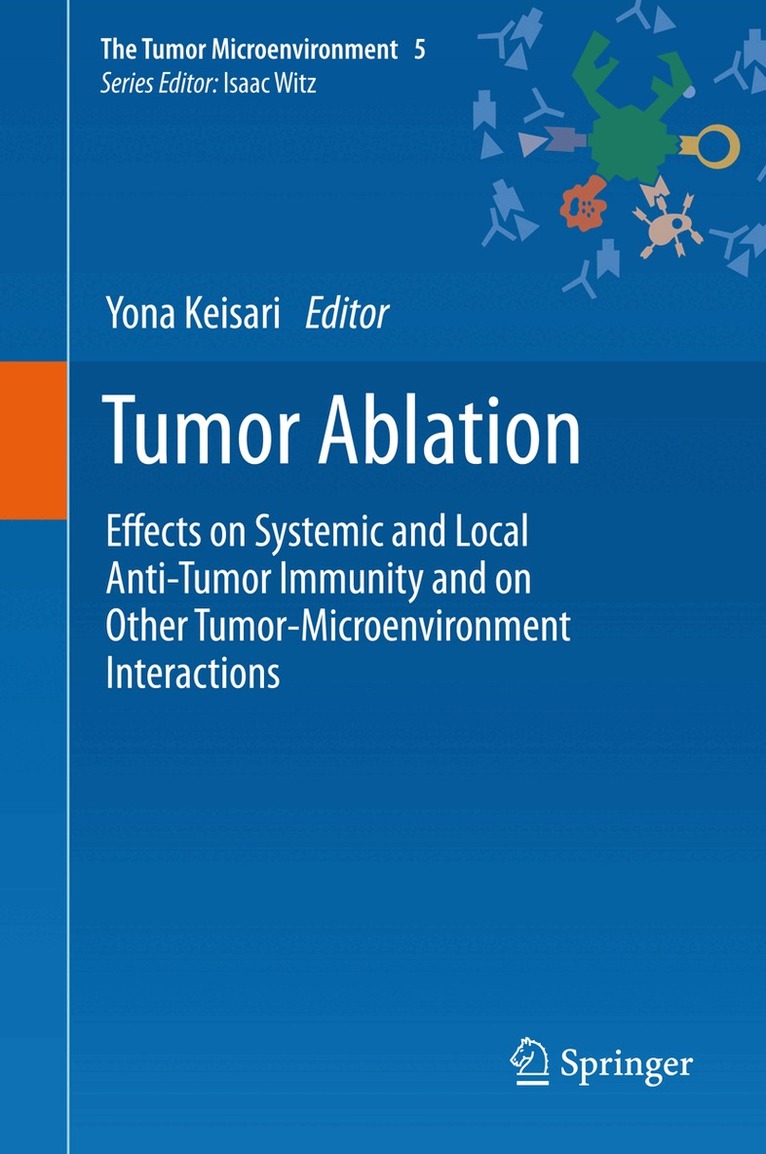
Tumor Ablation
Effects on Systemic and Local Anti-Tumor Immunity and on Other Tumor-Microenvironment Interactions
Inbunden, Engelska, 2012
1 625 kr
Skickas inom 10-15 vardagar
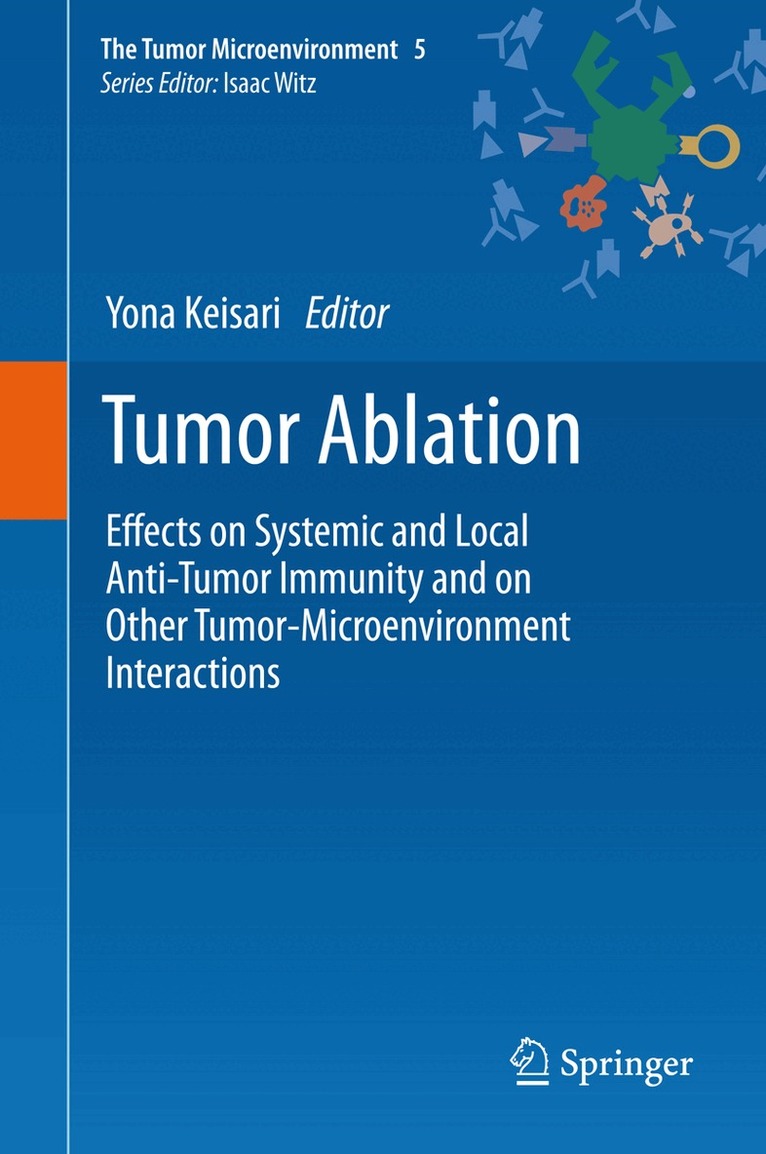
The growing knowledge on tumor-immune response interactions and on the tumor microenvironment did not translate so far into better control of cancer by anti-tumor vaccination. The percentage of patients who benefited from vaccination strategies is still too small to justify their general use. It is the aim of this book to present an alternative to the conventional approach of developing injected tumor vaccines to activate anti-tumor immunity, which will fight cancer. It is argued that in situ tumor ablation (destruction) that involves tumor antigen release; cross presentation and the release of danger associated molecular patterns (DAMPs) can make the tumor its own cellular vaccine. Tumor ablation methods using chemicals, radiation, photodynamic therapy, cryoablation, high-temperature, radiofrequency, high intensity focused ultrasound, and electric-based ablation have been developed for focal tumors. In this book experts will deal with two main topics: I. What are the principles of the various ablation modalities, and II. How each method affects the tumor cells and their microenvironment, and how these effects are responsible for the induction of specific anti-tumor immunity. The aims of this book are thus: 1. Familiarize the readers with various methods of in situ tumor ablation. 2. Review the literature and stimulate comparisons on the efficacy of different ablation methods for the treatment of tumors of different histotypes. 3. Review the literature on the effects of various ablation methods on systemic and local anti tumor immunity and on other manifestations of the interactions of tumors with their microenvironment. 4. Stimulate comparative studies on the immunostimulatory effects of different ablation modalities.
Tumor Ablation
Effects on Systemic and Local Anti-Tumor Immunity and on Other Tumor-Microenvironment Interactions
Häftad, Engelska, 2014
1 625 kr
Skickas inom 10-15 vardagar
The growing knowledge on tumor-immune response interactions and on the tumor microenvironment did not translate so far into better control of cancer by anti-tumor vaccination. The percentage of patients who benefited from vaccination strategies is still too small to justify their general use. It is the aim of this book to present an alternative to the conventional approach of developing injected tumor vaccines to activate anti-tumor immunity, which will fight cancer. It is argued that in situ tumor ablation (destruction) that involves tumor antigen release; cross presentation and the release of danger associated molecular patterns (DAMPs) can make the tumor its own cellular vaccine. Tumor ablation methods using chemicals, radiation, photodynamic therapy, cryoablation, high-temperature, radiofrequency, high intensity focused ultrasound, and electric-based ablation have been developed for focal tumors. In this book experts will deal with two main topics: I. What are the principles of the various ablation modalities, and II. How each method affects the tumor cells and their microenvironment, and how these effects are responsible for the induction of specific anti-tumor immunity. The aims of this book are thus: 1. Familiarize the readers with various methods of in situ tumor ablation. 2. Review the literature and stimulate comparisons on the efficacy of different ablation methods for the treatment of tumors of different histotypes. 3. Review the literature on the effects of various ablation methods on systemic and local anti tumor immunity and on other manifestations of the interactions of tumors with their microenvironment. 4. Stimulate comparative studies on the immunostimulatory effects of different ablation modalities.