University at Buffalo Robert Creeley Lectures in Poetry and Poetics – serie
Visar alla böcker i serien University at Buffalo Robert Creeley Lectures in Poetry and Poetics. Handla med fri frakt och snabb leverans.
4 produkter
4 produkter
480 kr
Skickas inom 5-8 vardagar
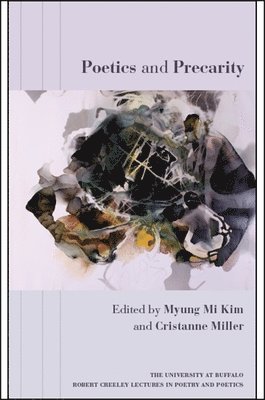
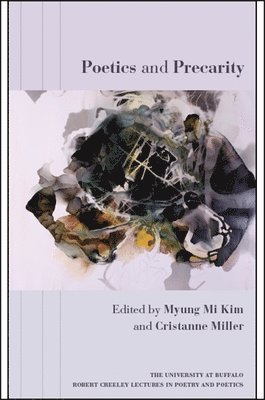
Poets and critics address the potential of language to address the increasing level of discord and precarity in the twenty-first century.At a time when wars, acts of terrorism, and ecological degradation have intensified and isolationism, misogyny, and ethnic divisiveness have been given distinctively more powerful voice in public discourse, language itself often seems to have failed. The poets and critics in this book argue that language has the potential to address this increasing level of discord and precarity, and they negotiate ways to understand poetics, or the role of the poetic, in relation to language, the body politic, the human body, breath, the bodies of the natural environment, and the body of form.Poetry makes urgent issues audible and poetics helps to theorize those issues into critical consciousness. Poetry also functions as a cry to protest late capitalist imperialism, misogyny, racism, climate change, and all the debilitating conditions of everyday life. Hubs of concern merge and diverge; precarity takes differently gendered, historied, embodied, geopolitical manifestations. The contributors articulate a poetics that renders what has not yet been crystallized as discourse into fields of force. They also acknowledge the beauties of sound, poetry, and music, and celebrate the power of community, marking the surge of energy that can occur at a particular place at a particular moment. Ultimately, Poetics and Precarity fosters further conversations that will imagine the concerns of poetics as a continuously emerging field.
1 162 kr
Tillfälligt slut
Poets and critics address the potential of language to address the increasing level of discord and precarity in the twenty-first century.At a time when wars, acts of terrorism, and ecological degradation have intensified and isolationism, misogyny, and ethnic divisiveness have been given distinctively more powerful voice in public discourse, language itself often seems to have failed. The poets and critics in this book argue that language has the potential to address this increasing level of discord and precarity, and they negotiate ways to understand poetics, or the role of the poetic, in relation to language, the body politic, the human body, breath, the bodies of the natural environment, and the body of form.Poetry makes urgent issues audible and poetics helps to theorize those issues into critical consciousness. Poetry also functions as a cry to protest late capitalist imperialism, misogyny, racism, climate change, and all the debilitating conditions of everyday life. Hubs of concern merge and diverge; precarity takes differently gendered, historied, embodied, geopolitical manifestations. The contributors articulate a poetics that renders what has not yet been crystallized as discourse into fields of force. They also acknowledge the beauties of sound, poetry, and music, and celebrate the power of community, marking the surge of energy that can occur at a particular place at a particular moment. Ultimately, Poetics and Precarity fosters further conversations that will imagine the concerns of poetics as a continuously emerging field.
1 674 kr
Skickas inom 3-6 vardagar
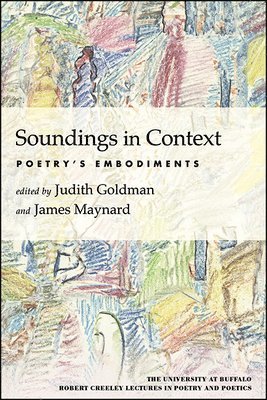
Renowned poets and scholars address the question of how poetry sounds and signifies in different contexts.Soundings in Context brings together the second and third University at Buffalo Robert Creeley Lectures in Poetry and Poetics by the renowned literary and textual scholar Jerome McGann, and the innovative, prolific Canadian poet, essayist, and novelist Lisa Robertson, respectively. The volume's first half presents McGann's "Reading (I Mean Articulating) Poetry, a Multi-Player Game," with responses by Nikolaus Wasmoen and Steve McCaffery; the second presents Lisa Robertson's "Dous Chantar: Refrain for a Nightingale," with responses by Shannon Maguire and Liz Howard. Initially given at different moments and since revised, the pieces considered in the lectures range widely, moving from the Romantics and medieval troubadour poetry to T. S. Eliot, Jackson Mac Low, Jacques Rouboud, and far beyond. Still, they are collectively concerned with questions of voice, recitation, and reception in different contexts; with sonic patterning and its modes of significance; and with foregrounding an embodied experience of oral and written language as opposed to its interpretation. McGann, Robertson, and their interlocutors all propose affective, pragmatic approaches to poetry that allow it to surface as materially formative, alive and lived. Reading their contributions together offers an opportunity to see how these values present themselves in differing cultures of poetic scenography across space and time.
571 kr
Skickas inom 3-6 vardagar
Renowned poets and scholars address the question of how poetry sounds and signifies in different contexts.Soundings in Context brings together the second and third University at Buffalo Robert Creeley Lectures in Poetry and Poetics by the renowned literary and textual scholar Jerome McGann, and the innovative, prolific Canadian poet, essayist, and novelist Lisa Robertson, respectively. The volume's first half presents McGann's "Reading (I Mean Articulating) Poetry, a Multi-Player Game," with responses by Nikolaus Wasmoen and Steve McCaffery; the second presents Lisa Robertson's "Dous Chantar: Refrain for a Nightingale," with responses by Shannon Maguire and Liz Howard. Initially given at different moments and since revised, the pieces considered in the lectures range widely, moving from the Romantics and medieval troubadour poetry to T. S. Eliot, Jackson Mac Low, Jacques Rouboud, and far beyond. Still, they are collectively concerned with questions of voice, recitation, and reception in different contexts; with sonic patterning and its modes of significance; and with foregrounding an embodied experience of oral and written language as opposed to its interpretation. McGann, Robertson, and their interlocutors all propose affective, pragmatic approaches to poetry that allow it to surface as materially formative, alive and lived. Reading their contributions together offers an opportunity to see how these values present themselves in differing cultures of poetic scenography across space and time.