Wormsloe Foundation Publication – serie
Visar alla böcker i serien Wormsloe Foundation Publication. Handla med fri frakt och snabb leverans.
18 produkter
18 produkter
Häftad, Engelska, 2002
529 kr
Skickas inom 5-8 vardagar
"What Nature Suffers to Groe" explores the mutually transforming relationship between environment and human culture on the Georgia coastal plain between 1680 and 1920. Each of the successive communities on the coast—the philanthropic and imperialistic experiment of the Georgia Trustees, the plantation culture of rice and sea island cotton planters and their slaves, and the postbellum society of wage-earning freedmen, lumbermen, vacationing industrialists, truck farmers, river engineers, and New South promoters—developed unique relationships with the environment, which in turn created unique landscapes.The core landscape of this long history was the plantation landscape, which persisted long after its economic foundation had begun to erode. The heart of this study examines the connection between power relations and different perceptions and uses of the environment by masters and slaves on lowcountry plantations—and how these differing habits of land use created different but interlocking landscapes.Nature also has agency in this story; some landscapes worked and some did not. Mart A. Stewart argues that the creation of both individual and collective livelihoods was the consequence not only of economic and social interactions but also of changing environmental ones, and that even the best adaptations required constant negotiation between culture and nature. In response to a question of perennial interest to historians of the South, Stewart also argues that a "sense of place" grew out of these negotiations and that, at least on the coastal plain, the "South" as a place changed in meaning several times.
Häftad, Engelska, 2005
377 kr
Skickas inom 3-6 vardagar
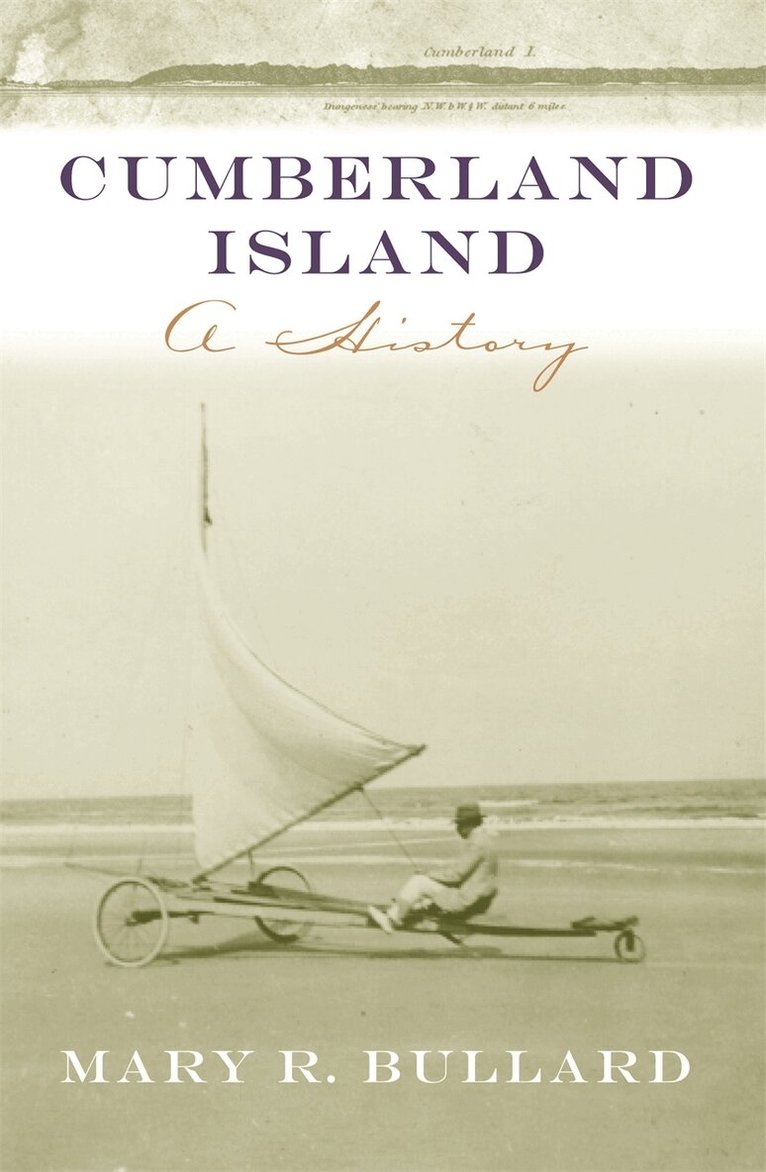
Cumberland Island is a national treasure. The largest of the Sea Islands along the Georgia coast, it is a history-filled place of astounding natural beauty. With a thoroughness unmatched by any previous account, Cumberland Island: A History chronicles five centuries of change to the landscape and its people from the days of the first Native Americans through the late-twentieth-century struggles between developers and conservationists.Author Mary Bullard, widely regarded as the person most knowledgeable about Cumberland Island, is a descendant of the Carnegie family, Cumberland's last owners before it was acquired by the federal government in 1972 and designated a National Seashore. Bullard's discussion of the Carnegie era on Cumberland is notable for its intimate glimpse into how the family's feelings toward the island bore upon Cumberland's destiny.Bullard draws on more than twenty years of research and travels about the island to describe how water, wind, and the cycles of nature continue to shape it and also how humans have imprinted themselves on the face of Cumberland across time—from the Timuca, Guale, and Mocamo Indians to the subsequent appearances of Spanish, French, African, British, and American inhabitants. The result is an engaging narrative in which discussions about tidal marshes, sea turtles, and wild horses are mixed with accounts of how the island functioned as a center for indigo, rice, cotton, fishing, and timber. Even frequent visitors and former residents will learn something new from Bullard's account of Cumberland Island.
Häftad, Engelska, 2006
453 kr
Skickas inom 3-6 vardagar
This abundantly illustrated volume arises out of the painstaking work of the Georgia Quilt Project, the most authoritative survey of quilts and quiltmakers ever undertaken in the state. Georgia Quilts showcases the diversity of quilting materials, methods, and patterns used in the state from the nineteenth century to the present and reveals how quilts serve as conduits of history and culture. From plain bed coverings of fabric scraps to exquisitely wrought pieces made for the "best bed," each of the 120 examples featured in the book tells its own story of abundance or want, peace or war, tradition or novelty.Instead of the usual chronological approach taken by many quilt histories, Georgia Quilts looks at a number of themes through which the common story of the state, its people, and its quilting legacy can be told. Chapters follow various threads of the craft, including Civil War-era quilts, the cotton economy, quilting groups, feed sack quilts, everyday and fine-craft quilts, and special-occasion quilts, including those made as gifts to honor athletes at the 1996 Olympic games. The volume's contributors have a deep knowledge of, and strong personal ties to, quilt history and quiltmaking in Georgia.The Georgia Quilt Project, beginning in 1990, has documented more than 9,000 quilts. Volunteers conducted dozens of Quilt History Days around the state, interviewing quilt owners and examining and photographing their quilts. The 120 quilts included in this book have been chosen from the thousands seen by the Project. Some are notable for their beauty, rarity, or workmanship; others are simple, functional objects that have been cherished for their ties to family history. All have their own stories to tell about family, community, and the desire to leave something tangible behind.
Häftad, Engelska, 2010
427 kr
Skickas inom 5-8 vardagar
Published in 1964, this biography of Joseph Vallence Bevan tells the story of Georgia’s first official historian. Born in Ireland, Bevan moved with his family to Georgia at a young age. He attended the University of Georgia and the College of South Carolina before continuing his education in England. There he met William Godwin, an influential political philosopher, journalist, and novelist, who wrote Letter of Advice To a Young American: On the Course of Studies It Might Be Most Advantageous for Him To Pursue for Bevan.Back in the U.S., Bevan edited the Augusta Chronicle & Georgia Gazette, studied law, served on the Georgia legislature, and became coeditor and owner of the Savannah Georgian. In 1824, by recommendation of Governor George M. Troup, the legislature appointed Bevan as the first official historian of Georgia. His main duties were to arrange the state archives, publish selections from the archives, and to write a history of the state. Bevan was unable to complete a history of Georgia before his death in 1830 at the young age of thirty-two. However, he paved the road for future historians making important acquisitions of transcripts from Great Britain which describe the colonial history of Georgia.
Häftad, Engelska, 2011
512 kr
Skickas inom 5-8 vardagar
This collection of essays grew out of a symposium commemorating the 250th anniversary of the founding of Georgia.The contributors are authorities in their respective fields and their efforts represent not only the fruits of long careers but also the observations and insights of some of the most promising young scholars. Forty Years of Diversity sheds new light on the social, political, religious, and ethnic diversity of colonial Georgia.
Inbunden, Engelska, 2017
1 455 kr
Skickas inom 3-6 vardagar
William Stephens was Secretary of the Province of Georgia from 1737 to 1750 and was President from 1741 for ten years. He was sent to America by the Trustees of Georgia, who resided in London, to keep them informed on conditions in the colony. Besides writing numerous letters to the Trustees, Stephens kept a journal which he sent to them periodically. The journal down to 1741 was printed by the Trustees. Here in this volume (and the volume for 1743–1745) the continuation of the journal is published for the first time.Through his journal Stephens undertook to inform the Trustees of everything which happened in Georgia, from the most trivial to the most important. This close-up view of Georgia, the details of the everyday life of the people, and the record of significant development in the colony all make his journal a valuable document in American colonial history.
Häftad, Engelska, 2017
496 kr
Skickas inom 5-8 vardagar
William Stephens was Secretary of the Province of Georgia from 1737 to 1750 and was President from 1741 for ten years. He was sent to America by the Trustees of Georgia, who resided in London, to keep them informed on conditions in the colony. Besides writing numerous letters to the Trustees, Stephens kept a journal which he sent to them periodically. The journal down to 1741 was printed by the Trustees. Here in this volume (and the volume for 1741–1743) the continuation of the journal is published for the first time.Through his journal Stephens undertook to inform the Trustees of everything which happened in Georgia, from the most trivial to the most important. This close-up view of Georgia, the details of the everyday life of the people, and the record of significant development in the colony all make his journal a valuable document in American colonial history.
Inbunden, Engelska, 2022
449 kr
Skickas inom 3-6 vardagar
Following the Tabby Trail provides a guided tour of some of the most significant tabby structures found along the southeastern coast and includes more than two hundred illustrations that highlight the human and architectural histories of forty-eight specific sites. Jingle Davis explains how tabby—a unique oyster-shell concrete—helps us to understand the complex past of the coast. A tabby structure is, as the author puts it, “a storehouse of history.” Each of the site descriptions includes the intriguing profile of a historic figure associated in some way with the tabby.Though the first documented use of tabby in North America was in 1672 in what is now St. Augustine, Florida, Spanish colonists had used many of its constituent parts a century earlier. In addition to their Spanish-speaking competitors, colonizers from France and the British Isles also enthusiastically adopted the building material for their colonial missions. This meant, of course, that enslaved Africans and Indigenous peoples built with the material. Tabby remained a fashionable, effective, and enduring building material until shortly after the Civil War. This richly photographed work provides readers with a guide to the underexplored string of tabby structures still standing along the stretch of coast between Florida and South Carolina, an approximately 275-mile trail traced by the book from just south of St. Augustine north to the dead town of Dorchester near Summerville. Sites include such varied structures as ancient Late Archaic shell mounds called middens and rings of shells thousands of years old; Fort Matanzas, built in 1742 but named for a sixteenth-century massacre of French colonists by St. Augustine’s Spanish founder Pedro Menéndez de Avilés; Fort Mose, a significant feature of Florida’s Black Heritage Trail; and homes of the enslaved, warehouses, Charleston’s seawall, churches, and cemeteries.
Inbunden, Engelska, 2020
761 kr
Skickas
A Curious Garden of Herbs is a richly illustrated collection of herbal fact and lore that illuminates the "why" rather than the "how" of the historical kitchen garden. Rather than offering a how-to of gardening methods, Kay K. Moss and Suzanne S. Simmons trace herbs and their uses back to earlier times and places. A Curious Garden of Herbs is peppered with reflections and observations from manuscripts and published herbals that detail the historical uses and fascinating stories surrounding plants of documented interest in the early American South and mid-Atlantic.Practicality and necessity were the guiding theses for gardening in eighteenth- and early nineteenth-century rural and frontier settlements in the Southeast. There were plants for food, for seasoning, for medicine, for dye, for insect repellency, and for scent. While many of these plants were also decorative, utility dominated the rationale of backcountry gardeners. Unlike the experimental and exotic collections of Thomas Jefferson and other wealthy gentleman botanists, the gardens detailed in these pages are generally of the "middling sort"—of townspeople and farmers, of "housewives," merchants, and artisans. A Curious Garden of Herbs brings these everyday herbs to life with sixty historical illustrations. In addition to including the well-known varieties such as parsley, lavender, cucumber, and asparagus, this wonderfully illustrated catalog of more than a hundred plants also reveals new ways to enjoy violet, rose, and nasturtium. Moss and Simmons also encourage readers to invite lesser-known plants, such as wild purslane, mullein, and wood sorrel into their gardens and conversations.
Inbunden, Engelska, 2021
2 085 kr
Skickas inom 3-6 vardagar
The Journal of the Earl of Egmont reveals private historical records kept by John Perceval, the first Earl of Egmont and secretary for the Common Council, a council appointed by the Charter of the colony of Georgia. A close friend of James Edward Oglethorpe, Egmont was instrumental in various colonial projects, including obtaining money for the new Carolina charter, serving as the first president of the Trustees, and often serving as the chairman of the Common Council. His careful records and plentiful writing found here offer a historical perspective on Georgia’s early days.The Georgia Open History Library has been made possible in part by a major grant from the National Endowment for the Humanities: Democracy demands wisdom. Any views, findings, conclusions, or recommendations expressed in this collection, do not necessarily represent those of the National Endowment for the Humanities.
Häftad, Engelska, 2021
623 kr
Skickas inom 3-6 vardagar
The Journal of the Earl of Egmont reveals private historical records kept by John Perceval, the first Earl of Egmont and secretary for the Common Council, a council appointed by the Charter of the colony of Georgia. A close friend of James Edward Oglethorpe, Egmont was instrumental in various colonial projects, including obtaining money for the new Carolina charter, serving as the first president of the Trustees, and often serving as the chairman of the Common Council. His careful records and plentiful writing found here offer a historical perspective on Georgia’s early days.The Georgia Open History Library has been made possible in part by a major grant from the National Endowment for the Humanities: Democracy demands wisdom. Any views, findings, conclusions, or recommendations expressed in this collection, do not necessarily represent those of the National Endowment for the Humanities.
Inbunden, Engelska, 2021
2 085 kr
Skickas inom 3-6 vardagar
Henry Newman’s Salzburger Letterbooks contains correspondence between Henry Newman and Samuel Urlsperger, a German Lutheran minister in Ausburg. These two men were heavily involved in the settlement of the Salzburgers in Georgia. Their letters, which contain both inward and outward correspondence, provide a unique journal of the settlement of Salzburg and colonial life in Georgia. The Georgia Open History Library has been made possible in part by a major grant from the National Endowment for the Humanities: Democracy demands wisdom. Any views, findings, conclusions, or recommendations expressed in this collection, do not necessarily represent those of the National Endowment for the Humanities.
Inbunden, Engelska, 2021
2 085 kr
Skickas inom 3-6 vardagar
The eighteen volumes of Detailed Reports on the Salzburger Emigrants Who Settled in America (reproduced in sixteen discrete books) contain the diaries and letters of Lutheran pastors who ministered to the Salzburgers, German-speaking Protestant refugees, in Georgia. Samuel Urlsperger collected and edited these writings into the Urlsperger Reports printed at Orphanage Press, Halle, Germany, from 1735 to 1760. The original German publication, Ausführliche Nachricht von den saltzburgischen Emigranten, is available through the Internet Archive, but this English-language translation has not been available online until now.In the mid-eighteenth century, Samuel Urlsperger of the Lutheran Ministry in Augsburg edited the German edition of the Detailed Reports after having distributed the many reports to the faithful in Germany. He made major deletions for both diplomatic and economic reasons and suppressed proper names. His son, Johann August Urlsperger, succeeded him. He took even greater liberties with the text, deleting large sections and rearranging others. The English version, translated and edited by George Fenwick Jones, a German scholar, restores the deleted sections and the proper names and provides the original sequencing of the material.The Detailed Reports offer insight into daily life in colonial Georgia and provide precious details and vignettes on subjects that receive less attention in other sources, notably African Americans, women, silk production, and the cost of goods in a frontier colony. The Reports are an underutilized resource for the study of this period and an unparalleled source for the evolution of a rural community during the early years of the colony. The Georgia Open History Library has been made possible in part by a major grant from the National Endowment for the Humanities: Democracy demands wisdom. Any views, findings, conclusions, or recommendations expressed in this collection, do not necessarily represent those of the National Endowment for the Humanities.
Häftad, Engelska, 2021
623 kr
Skickas inom 3-6 vardagar
The eighteen volumes of Detailed Reports on the Salzburger Emigrants Who Settled in America (reproduced in sixteen discrete books) contain the diaries and letters of Lutheran pastors who ministered to the Salzburgers, German-speaking Protestant refugees, in Georgia. Samuel Urlsperger collected and edited these writings into the Urlsperger Reports printed at Orphanage Press, Halle, Germany, from 1735 to 1760. The original German publication, Ausführliche Nachricht von den saltzburgischen Emigranten, is available through the Internet Archive, but this English-language translation has not been available online until now.In the mid-eighteenth century, Samuel Urlsperger of the Lutheran Ministry in Augsburg edited the German edition of the Detailed Reports after having distributed the many reports to the faithful in Germany. He made major deletions for both diplomatic and economic reasons and suppressed proper names. His son, Johann August Urlsperger, succeeded him. He took even greater liberties with the text, deleting large sections and rearranging others. The English version, translated and edited by George Fenwick Jones, a German scholar, restores the deleted sections and the proper names and provides the original sequencing of the material.The Detailed Reports offer insight into daily life in colonial Georgia and provide precious details and vignettes on subjects that receive less attention in other sources, notably African Americans, women, silk production, and the cost of goods in a frontier colony. The Reports are an underutilized resource for the study of this period and an unparalleled source for the evolution of a rural community during the early years of the colony. The Georgia Open History Library has been made possible in part by a major grant from the National Endowment for the Humanities: Democracy demands wisdom. Any views, findings, conclusions, or recommendations expressed in this collection, do not necessarily represent those of the National Endowment for the Humanities.
Inbunden, Engelska, 2021
2 085 kr
Skickas inom 3-6 vardagar
The eighteen volumes of Detailed Reports on the Salzburger Emigrants Who Settled in America (reproduced in sixteen discrete books) contain the diaries and letters of Lutheran pastors who ministered to the Salzburgers, German-speaking Protestant refugees, in Georgia. Samuel Urlsperger collected and edited these writings into the Urlsperger Reports printed at Orphanage Press, Halle, Germany, from 1735 to 1760. The original German publication, Ausführliche Nachricht von den saltzburgischen Emigranten, is available through the Internet Archive, but this English-language translation has not been available online until now.In the mid-eighteenth century, Samuel Urlsperger of the Lutheran Ministry in Augsburg edited the German edition of the Detailed Reports after having distributed the many reports to the faithful in Germany. He made major deletions for both diplomatic and economic reasons and suppressed proper names. His son, Johann August Urlsperger, succeeded him. He took even greater liberties with the text, deleting large sections and rearranging others. The English version, translated and edited by George Fenwick Jones, a German scholar, restores the deleted sections and the proper names and provides the original sequencing of the material.The Detailed Reports offer insight into daily life in colonial Georgia and provide precious details and vignettes on subjects that receive less attention in other sources, notably African Americans, women, silk production, and the cost of goods in a frontier colony. The Reports are an underutilized resource for the study of this period and an unparalleled source for the evolution of a rural community during the early years of the colony. The Georgia Open History Library has been made possible in part by a major grant from the National Endowment for the Humanities: Democracy demands wisdom. Any views, findings, conclusions, or recommendations expressed in this collection, do not necessarily represent those of the National Endowment for the Humanities.
Häftad, Engelska, 2021
623 kr
Skickas inom 3-6 vardagar
The eighteen volumes of Detailed Reports on the Salzburger Emigrants Who Settled in America (reproduced in sixteen discrete books) contain the diaries and letters of Lutheran pastors who ministered to the Salzburgers, German-speaking Protestant refugees, in Georgia. Samuel Urlsperger collected and edited these writings into the Urlsperger Reports printed at Orphanage Press, Halle, Germany, from 1735 to 1760. The original German publication, Ausführliche Nachricht von den saltzburgischen Emigranten, is available through the Internet Archive, but this English-language translation has not been available online until now.In the mid-eighteenth century, Samuel Urlsperger of the Lutheran Ministry in Augsburg edited the German edition of the Detailed Reports after having distributed the many reports to the faithful in Germany. He made major deletions for both diplomatic and economic reasons and suppressed proper names. His son, Johann August Urlsperger, succeeded him. He took even greater liberties with the text, deleting large sections and rearranging others. The English version, translated and edited by George Fenwick Jones, a German scholar, restores the deleted sections and the proper names and provides the original sequencing of the material.The Detailed Reports offer insight into daily life in colonial Georgia and provide precious details and vignettes on subjects that receive less attention in other sources, notably African Americans, women, silk production, and the cost of goods in a frontier colony. The Reports are an underutilized resource for the study of this period and an unparalleled source for the evolution of a rural community during the early years of the colony. The Georgia Open History Library has been made possible in part by a major grant from the National Endowment for the Humanities: Democracy demands wisdom. Any views, findings, conclusions, or recommendations expressed in this collection, do not necessarily represent those of the National Endowment for the Humanities.
Häftad, Engelska, 2023
486 kr
Skickas inom 5-8 vardagar
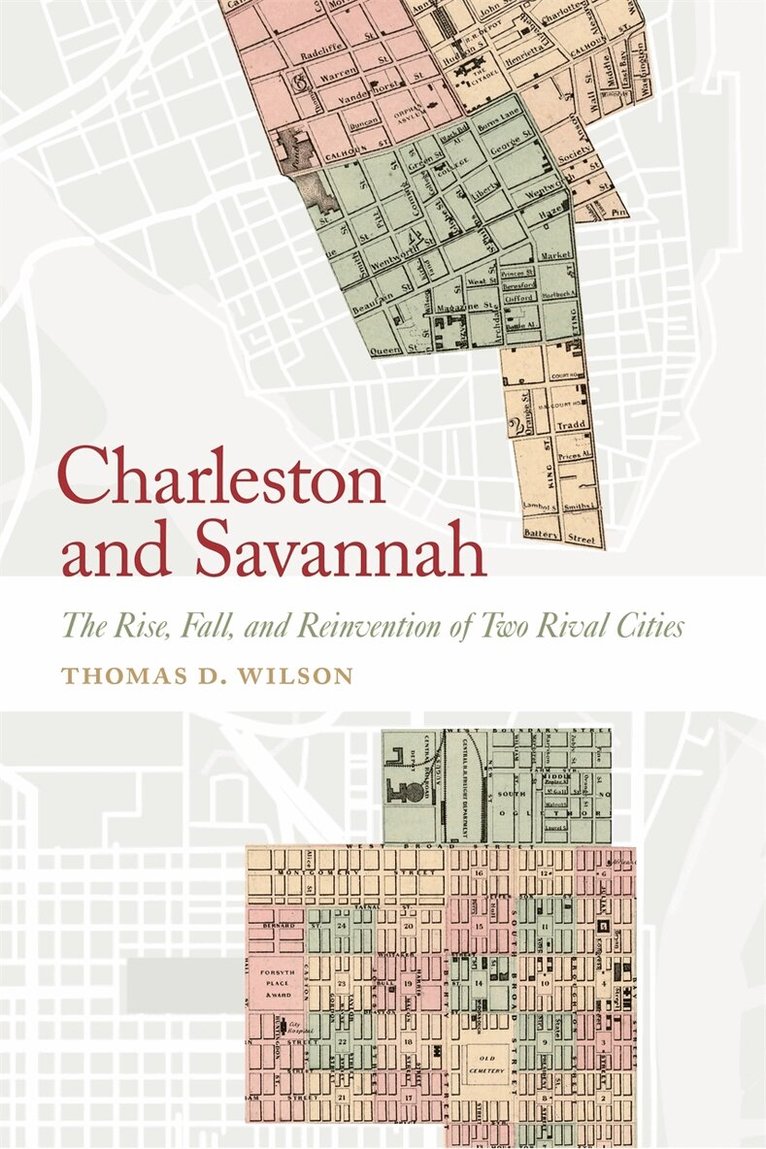
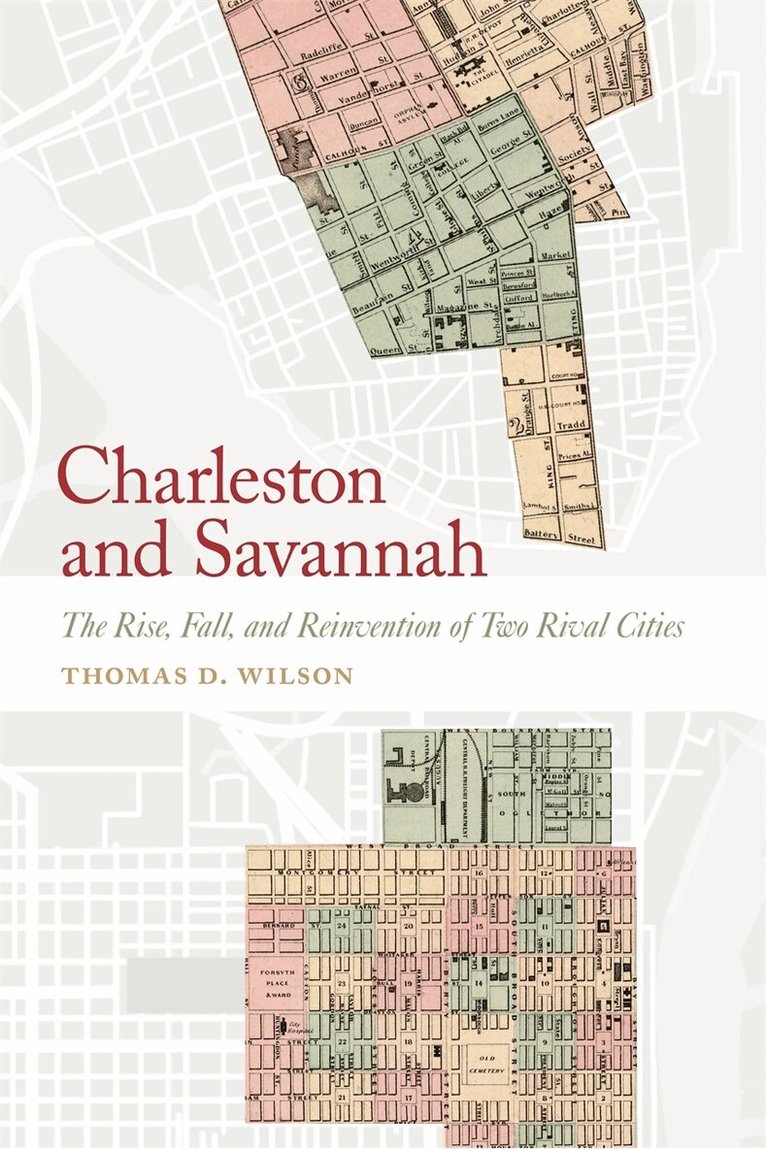
Thomas D. Wilson’s Charleston and Savannah is the first comprehensive history of Charleston and Savannah in a single volume that weaves together the influences and parallels of their intrinsic stories. As two of the earliest English-speaking cities founded in America, Charleston and Savannah are among the nation’s top historic sites. Their historic characters, which attract millions of visitors each year, are each a rich blend of cultural, environmental, and socioeconomic elements. Yet even with this popularity, both cities now face a challenge in preserving their authentic historic character, natural beauty, and environmental quality. Wilson charts the ebb and flow of the progress and development of the cities using various through lines running within each chapter, constructing an overall character assessment of each.Wilson charts the economic rise of these port cities, beginning with their British foundations and transatlantic trade in the colonies through to their twentieth-century economic declines and resurgences. He examines the cultural and economic aspects of their Lowcountry landscapes and their evolution as progress and industrialization made their mark. Employing both quantitative and qualitative methodologies in his comparisons of the two cities, he considers their histories, natural landscapes, weather patterns, economies, demographics, culture, architecture, city planning, and infrastructure. While each has its own civic and cultural strengths and weaknesses, both are positioned as historically significant southern cities, even as they assess aspects of their problematic pasts.
Inbunden, Engelska, 2023
1 756 kr
Skickas inom 5-8 vardagar
Thomas D. Wilson’s Charleston and Savannah is the first comprehensive history of Charleston and Savannah in a single volume that weaves together the influences and parallels of their intrinsic stories. As two of the earliest English-speaking cities founded in America, Charleston and Savannah are among the nation’s top historic sites. Their historic characters, which attract millions of visitors each year, are each a rich blend of cultural, environmental, and socioeconomic elements. Yet even with this popularity, both cities now face a challenge in preserving their authentic historic character, natural beauty, and environmental quality. Wilson charts the ebb and flow of the progress and development of the cities using various through lines running within each chapter, constructing an overall character assessment of each.Wilson charts the economic rise of these port cities, beginning with their British foundations and transatlantic trade in the colonies through to their twentieth-century economic declines and resurgences. He examines the cultural and economic aspects of their Lowcountry landscapes and their evolution as progress and industrialization made their mark. Employing both quantitative and qualitative methodologies in his comparisons of the two cities, he considers their histories, natural landscapes, weather patterns, economies, demographics, culture, architecture, city planning, and infrastructure. While each has its own civic and cultural strengths and weaknesses, both are positioned as historically significant southern cities, even as they assess aspects of their problematic pasts.