Mart A. Stewart - Böcker
Visar alla böcker från författaren Mart A. Stewart. Handla med fri frakt och snabb leverans.
4 produkter
4 produkter
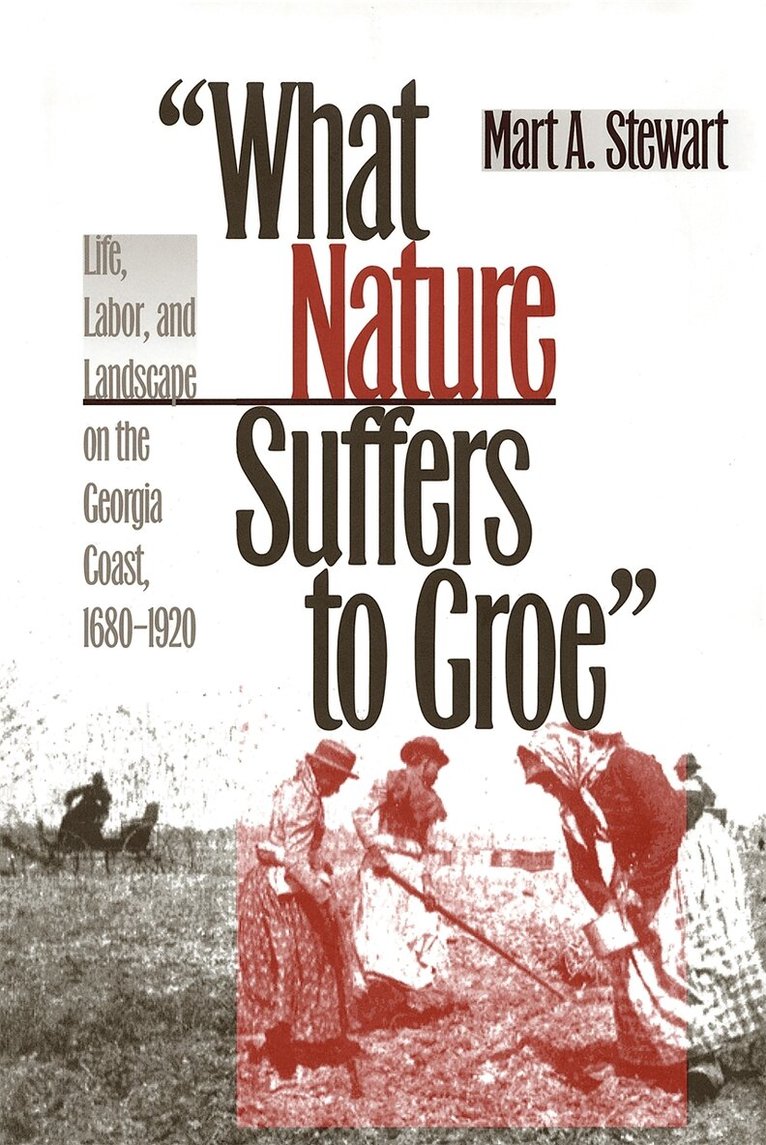
What Nature Suffers to Groe
Life, Labor, and Landscape on the Georgia Coast, 1680-1920
Häftad, Engelska, 2002
518 kr
Skickas inom 5-8 vardagar
"What Nature Suffers to Groe" explores the mutually transforming relationship between environment and human culture on the Georgia coastal plain between 1680 and 1920. Each of the successive communities on the coast—the philanthropic and imperialistic experiment of the Georgia Trustees, the plantation culture of rice and sea island cotton planters and their slaves, and the postbellum society of wage-earning freedmen, lumbermen, vacationing industrialists, truck farmers, river engineers, and New South promoters—developed unique relationships with the environment, which in turn created unique landscapes.The core landscape of this long history was the plantation landscape, which persisted long after its economic foundation had begun to erode. The heart of this study examines the connection between power relations and different perceptions and uses of the environment by masters and slaves on lowcountry plantations—and how these differing habits of land use created different but interlocking landscapes.Nature also has agency in this story; some landscapes worked and some did not. Mart A. Stewart argues that the creation of both individual and collective livelihoods was the consequence not only of economic and social interactions but also of changing environmental ones, and that even the best adaptations required constant negotiation between culture and nature. In response to a question of perennial interest to historians of the South, Stewart also argues that a "sense of place" grew out of these negotiations and that, at least on the coastal plain, the "South" as a place changed in meaning several times.
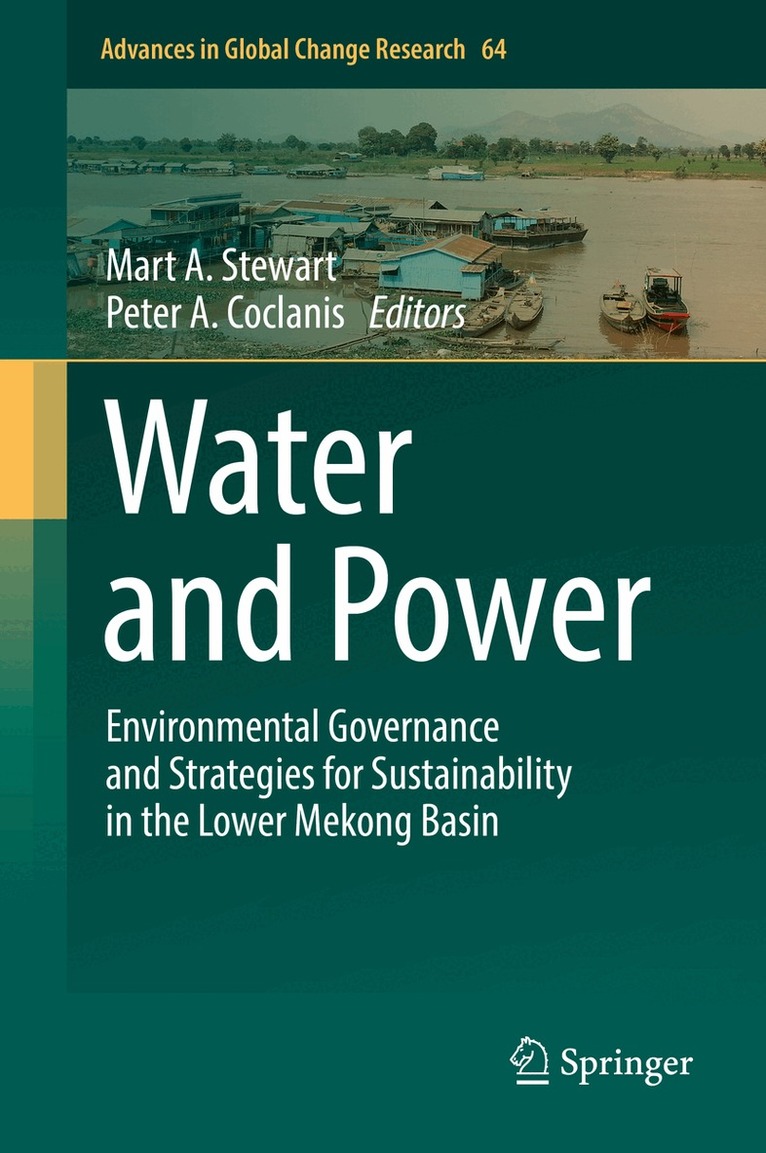
Water and Power
Environmental Governance and Strategies for Sustainability in the Lower Mekong Basin
Inbunden, Engelska, 2019
1 577 kr
Skickas inom 10-15 vardagar
This book brings together a talented international group of scholars, policy practitioners, and NGO professionals that explores a range of issues relating to environmental, developmental, and governing challenges on the Mekong, one of the world’s greatest rivers and, alas, one of the most endangered. The book is divided into three sections devoted in turn to historical perspectives on the Lower Mekong Basin. Issues relate to livelihood strategies, environmental threats, and adaptation strategies; and various aspects of river governance, with individual authors treating questions of governance at different levels of refraction and in different registers. The result is a fresh and innovative collection of essays, which, taken together, provide much-needed new perspectives on some of the most important and seemingly intractable environmental and development issues in contemporary Asia.
1 577 kr
Skickas inom 10-15 vardagar
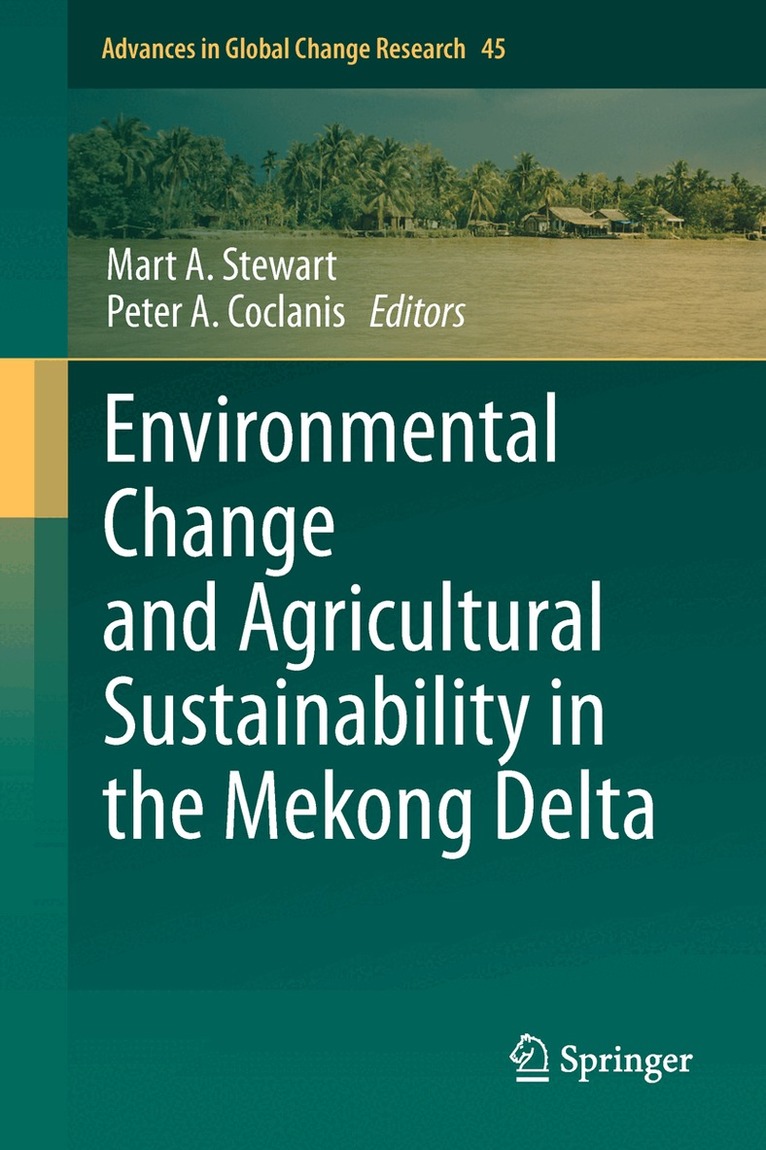
The Mekong Delta of Vietnam is one of the most productive agricultural areas in the world. The Mekong River fans out over an area of about 40,000 sq kilometers and over the course of many millennia has produced a region of fertile alluvial soils and constant flows of energy. Today about a fourth of the Delta is under rice cultivation, making this area one of the premier rice granaries in the world. The Delta has always proven a difficult environment to manipulate, however, and because of population pressures, increasing acidification of soils, and changes in the Mekong’s flow, environmental problems have intensified. The changing way in which the region has been linked to larger flows of commodities and capital over time has also had an impact on the region: For example, its re-emergence in recent decades as a major rice-exporting area has linked it inextricably to global markets and their vicissitudes. And most recently, the potential for sea level increases because of global warming has added a new threat. Because most of the region is on average only a few meters above sea level and because any increase of sea level will change the complex relationship between tides and down-river water flow, the Mekong Delta is one of the areas in the world most vulnerable to the effects of climate change. How governmental policy and resident populations have in the past and will in coming decades adapt to climate change as well as several other emerging or ongoing environmental and economic problems is the focus of this collection.
1 577 kr
Skickas inom 10-15 vardagar
The Mekong Delta of Vietnam is one of the most productive agricultural areas in the world. The Mekong River fans out over an area of about 40,000 sq kilometers and over the course of many millennia has produced a region of fertile alluvial soils and constant flows of energy. Today about a fourth of the Delta is under rice cultivation, making this area one of the premier rice granaries in the world. The Delta has always proven a difficult environment to manipulate, however, and because of population pressures, increasing acidification of soils, and changes in the Mekong’s flow, environmental problems have intensified. The changing way in which the region has been linked to larger flows of commodities and capital over time has also had an impact on the region: For example, its re-emergence in recent decades as a major rice-exporting area has linked it inextricably to global markets and their vicissitudes. And most recently, the potential for sea level increases because of global warming has added a new threat. Because most of the region is on average only a few meters above sea level and because any increase of sea level will change the complex relationship between tides and down-river water flow, the Mekong Delta is one of the areas in the world most vulnerable to the effects of climate change. How governmental policy and resident populations have in the past and will in coming decades adapt to climate change as well as several other emerging or ongoing environmental and economic problems is the focus of this collection.