Zero to Eight - Böcker
2 636 kr
Skickas inom 3-6 vardagar
`Movement and Dance in Early Childhood offers a clear and accessible entry into the world of movement and dance and the possibilities that exist for children, their families and the wider educational community' - Every Child
`Eminently readable and accessible. Whether the reader is versed in movement understanding or a beginner, by the end of the book they should be a much better movement observer, teacher and handler' - Marion North, Principal and Chief Executive, Laban Centre for Movement and Dance
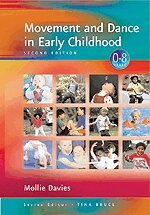
In this unique and innovative book on movement and dance development from birth to eight years, the author draws on her depth of knowledge and practical experience in helping children to become skilled, creative and imaginative in a wide range of movement-oriented activities. The book seeks to help early childhood educators and parents in very practical ways and provides guidance based on a sound theoretical understanding.
Originally published as Helping Children Learn Through a Movement Perspective, this book has been updated in the light of recent research. The author extends her investigation of how young children learn in and through movement. There is an expanded chapter on dance, which suggests strategies for working with young children and examines ways in which young children take on the roles of dance-makers, performers and appreciators. An additional chapter shows ways in which the expressive and artistic aspects of children's movement can be appropriately located and includes exemplars for dance at Key Stage 1 and the early phases of Key Stage 2.
833 kr
Skickas inom 3-6 vardagar
`Movement and Dance in Early Childhood offers a clear and accessible entry into the world of movement and dance and the possibilities that exist for children, their families and the wider educational community' - Every Child
`Eminently readable and accessible. Whether the reader is versed in movement understanding or a beginner, by the end of the book they should be a much better movement observer, teacher and handler' - Marion North, Principal and Chief Executive, Laban Centre for Movement and Dance
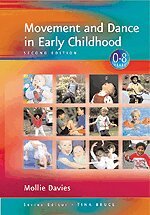
In this unique and innovative book on movement and dance development from birth to eight years, the author draws on her depth of knowledge and practical experience in helping children to become skilled, creative and imaginative in a wide range of movement-oriented activities. The book seeks to help early childhood educators and parents in very practical ways and provides guidance based on a sound theoretical understanding.
Originally published as Helping Children Learn Through a Movement Perspective, this book has been updated in the light of recent research. The author extends her investigation of how young children learn in and through movement. There is an expanded chapter on dance, which suggests strategies for working with young children and examines ways in which young children take on the roles of dance-makers, performers and appreciators. An additional chapter shows ways in which the expressive and artistic aspects of children's movement can be appropriately located and includes exemplars for dance at Key Stage 1 and the early phases of Key Stage 2.
3 616 kr
Skickas inom 3-6 vardagar
`The chapter on young children becoming symbol users make a valuable contribution to the literature, and I shall be inspired and haunted in equal measure by the plea that epitomises this book and its story' - Marian Whitehead, Early Years
`It's an excellent and easy-to-read text to read, blending theory and research with practice. Each chapter format is clear, with the key themes outlined at the beginning the main body, followed by useful and thought-provoking questions for good practice to ponder and relevant further reading at the end' - Nursery World
`
Tina Bruce clearly loves children and delights in their development. She has produced an academic work which is both sensitive and stimulating but decidedly unpreachy' - Kirsty Wark, Broadcaster
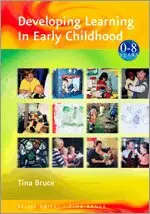
This book shows how adults can support children and actively help them develop their learning in early childhood. Drawing on traditional approaches as well as recent research and theories, Tina Bruce shows the need for balance in early years education and care between the biological and socio-cultural aspects of the development of learning. The book includes a wide range of examples from practitioners, including nursery teachers, health visitors, and community workers.
Features include:
- what does it mean to develop learning ?
- learning by doing real things
- how language helps
- creativity and imagination
- diversity and inclusion.
This book is essential for students, practitioners and tutors of Foundation Degrees and Early Childhood Studies Degrees.
The 0-8 series edited by Tina Bruce, deals with essential themes in early childhood, which concern practitioners, parents and children.
Titles in the 0-8 series
Marian Whitehead: Developing Language and Literacy with Young Children Second Edition
Rosemary Roberts: Self-Esteem and Early Learning Second Edition
Cath Arnold: Child Development and Learning 2-5 - Georgia's Story
Pat Gura: Resources for Early Learning
Chris Pascal and Tony Bertram: Effective Early Learning: Case Studies in Improvement
Mollie Davies: Movement and Dance
Second Edition
John Mathews: Drawing and Painting
Second Edition
959 kr
Skickas inom 3-6 vardagar
`The chapter on young children becoming symbol users make a valuable contribution to the literature, and I shall be inspired and haunted in equal measure by the plea that epitomises this book and its story' - Marian Whitehead, Early Years
`It's an excellent and easy-to-read text to read, blending theory and research with practice. Each chapter format is clear, with the key themes outlined at the beginning the main body, followed by useful and thought-provoking questions for good practice to ponder and relevant further reading at the end' - Nursery World
`
Tina Bruce clearly loves children and delights in their development. She has produced an academic work which is both sensitive and stimulating but decidedly unpreachy' - Kirsty Wark, Broadcaster
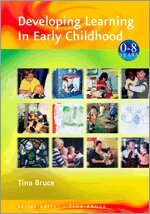
This book shows how adults can support children and actively help them develop their learning in early childhood. Drawing on traditional approaches as well as recent research and theories, Tina Bruce shows the need for balance in early years education and care between the biological and socio-cultural aspects of the development of learning. The book includes a wide range of examples from practitioners, including nursery teachers, health visitors, and community workers.
Features include:
- what does it mean to develop learning ?
- learning by doing real things
- how language helps
- creativity and imagination
- diversity and inclusion.
This book is essential for students, practitioners and tutors of Foundation Degrees and Early Childhood Studies Degrees.
The 0-8 series edited by Tina Bruce, deals with essential themes in early childhood, which concern practitioners, parents and children.
Titles in the 0-8 series
Marian Whitehead: Developing Language and Literacy with Young Children Second Edition
Rosemary Roberts: Self-Esteem and Early Learning Second Edition
Cath Arnold: Child Development and Learning 2-5 - Georgia's Story
Pat Gura: Resources for Early Learning
Chris Pascal and Tony Bertram: Effective Early Learning: Case Studies in Improvement
Mollie Davies: Movement and Dance
Second Edition
John Mathews: Drawing and Painting
Second Edition
2 318 kr
Skickas inom 11-20 vardagar
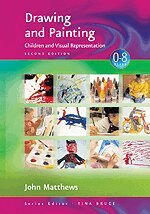
`This book is a welcome update of an informative text describing the process of children's mark making as a visual, physical and interactive process urging us to consider how we as adults perceive and support young children's mark making activities both at home and school. John Matthews demonstrates the cognitive function of this early mark making in relation to general individual development' - Early Years
`A thought-provoking and informative book, this is essential reading for anyone involved in the education of young children' - Times Educational Supplement - Teacher
`Drawing and Painting is a fascinating and delightful read for tutors, practitioners and students and is highly recommended an essential text for early years courses at level 3 and above'- Under Five
This book has been revised to reflect recent developments in early childhood education, in developmental psychology and in our understanding of children's development in the arts. The author shows how this new model of children's development in visual representation has important implications for education.
The author examines children's development in visual expression and suggests how this development might be supported. The book takes issue with the inherited wisdom about children's development in visual representation. The traditional approach describes children's development in terms of supposed deficits in which children progress from `primitive' earlier stages to `superior' ones, until the `defects' in their representational thinking are overcome and they arrive at an endpoint of `visual realism'. This approach is the pervasive influence on curricular planning, in arts education and in early years education.
The author explains recent different models of development in visual expression. Instead of measuring children's efforts against an adult paradigm, the new models identify the modes of representation used by children as consequences of children's own intentions, motivations and priorities.
The writing is accessible and assumes no specialist knowledge of psychological theory, art, its history or interpretation. This book is essential reading for early childhood educators, at nursery and pre-school level, for other professionals who work with very young children and parents, as well as students and tutors on early years courses.
This is a revised edition of Helping Children to Draw and Paint: Children and Visual Representation, originally published in 1994.
935 kr
Skickas inom 3-6 vardagar
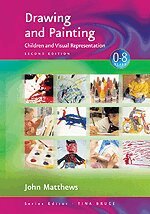
`This book is a welcome update of an informative text describing the process of children's mark making as a visual, physical and interactive process urging us to consider how we as adults perceive and support young children's mark making activities both at home and school. John Matthews demonstrates the cognitive function of this early mark making in relation to general individual development' - Early Years
`A thought-provoking and informative book, this is essential reading for anyone involved in the education of young children' - Times Educational Supplement - Teacher
`Drawing and Painting is a fascinating and delightful read for tutors, practitioners and students and is highly recommended an essential text for early years courses at level 3 and above'- Under Five
This book has been revised to reflect recent developments in early childhood education, in developmental psychology and in our understanding of children's development in the arts. The author shows how this new model of children's development in visual representation has important implications for education.
The author examines children's development in visual expression and suggests how this development might be supported. The book takes issue with the inherited wisdom about children's development in visual representation. The traditional approach describes children's development in terms of supposed deficits in which children progress from `primitive' earlier stages to `superior' ones, until the `defects' in their representational thinking are overcome and they arrive at an endpoint of `visual realism'. This approach is the pervasive influence on curricular planning, in arts education and in early years education.
The author explains recent different models of development in visual expression. Instead of measuring children's efforts against an adult paradigm, the new models identify the modes of representation used by children as consequences of children's own intentions, motivations and priorities.
The writing is accessible and assumes no specialist knowledge of psychological theory, art, its history or interpretation. This book is essential reading for early childhood educators, at nursery and pre-school level, for other professionals who work with very young children and parents, as well as students and tutors on early years courses.
This is a revised edition of Helping Children to Draw and Paint: Children and Visual Representation, originally published in 1994.
948 kr
Skickas inom 3-6 vardagar
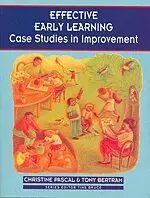
This book draws on the experience of practitioners involved in the Effective Early Learning Research Project, developed to support early learning wherever young children are, whether in education, care, social services, health, voluntary sector, private sector, or state sector, from birth to 7 years.
This book is essential reading for all early years practitioners, students, inspectors and trainers.
1 088 kr
Skickas inom 3-6 vardagar
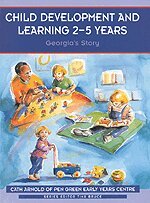
This book grew out of a three-year study of one child, documenting her social, emotional and cognitive development.
It provides a valuable insight for all students and teachers of child development at the individual level. The observations and assessments are presented here as a model for students to use in their own observations aimed at supporting and extending children's learning. The book sets out theories and traditions in early childhood development and care, as well as ways of analyzing observations.
This is an essential book for students and practitioners involved in research and observation in early years settings.
1 025 kr
Skickas inom 3-6 vardagar
`The book is incredibly readable, illustrated with delightful anecdotes and makes useful references to theory' - Emma Hertzberg, Goldsmiths Association for Early Childhood
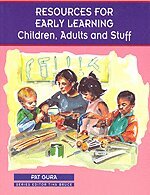
In this book, the Pat Gura explores the use of materials for learning within a social context. Different forms of stuff - blocks beads, climbing frames, dolls and found materials are used to explore the possibilities of materials as tools of all-round development in early childhood.
The author presents a range of strategies to help early years practitioners evaluate their provision, as they strive to create environments for early learning which are culturally, developmentally and personally appropriate. She takes a critical look at the conventional assumptions early years practitioners make about sand, water, paint, and the home area, and encourages practitioners to reflect on their practice.
2 402 kr
Tillfälligt slut
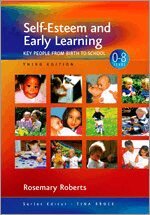
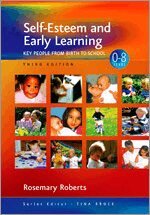
In this third edition, there are new and updated chapters on:
• Young children's transitions, with a particular focus on starting school
• Young children's positive 'learning dispositions'
• Brain research and its possible implications
• Further reading, signposting some enchanting children's books as well as important new texts.
The book explores the basis of the 'key person' relationship, looking at attachment 'in practice', and linking developmental issues with the early development of self esteem.
Written for students on early childhood courses and staff in early childhood care and education settings and integrated Children's Centres, the book will also be of interest to parents and carers.
833 kr
Skickas inom 3-6 vardagar
In this third edition, there are new and updated chapters on:
• Young children's transitions, with a particular focus on starting school
• Young children's positive 'learning dispositions'
• Brain research and its possible implications
• Further reading, signposting some enchanting children's books as well as important new texts.
The book explores the basis of the 'key person' relationship, looking at attachment 'in practice', and linking developmental issues with the early development of self esteem.
Written for students on early childhood courses and staff in early childhood care and education settings and integrated Children's Centres, the book will also be of interest to parents and carers.
2 444 kr
Skickas inom 3-6 vardagar
'Highly readable... Anybody working with babies and young children needs to have the knowledge that Whitehead clearly explains here' - SureStart
'One of the many excellent features of this book is the way it tackles the issue of bilingualism in early childhood' - Early Years Educator (eye)
Praise for previous editions:
`Marian Whitehead forces the reader to attend to the "voice of the child against the encroachment of inappropriate curriculum demands. Her total fascination for children's language development captures the reader in an enthusiastic and informed voyage through "the most exciting and important aspect of human development - language in the early years' - Early Years
`This is an excellent read for all parents and workers with young children. The style of the book is friendly and accessible, with beautifully produced of photographs of children and indeed of their own work. Marian Whitehead is not ashamed to draw on her experiences as a grandparent, as well as highly competent theoretical researcher; she does both with competence and humour. This will prove an excellent source book for those involved in course design from childminders to university lecturers' - Child Language Teaching and Therapy
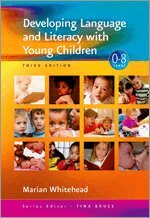
Looking at the most exciting and important aspect of human development - communication and language in the early years - this accessible book gives carers, parents, teachers and other professionals who work and play with young children a confident understanding of children's communication and language development in the years from birth to age eight.
The book examines the wide range of elements that are typical of all our communication and language activities: thinking, feeling, imagining, talking, listening, drawing, writing and reading. The author emphasizes the importance of children's relationships and communications with the people who care about them, spend time with them and share in the excitement of their developing languages and their investigations of literacy. Taking a holistic approach, she covers:
o early communication and language
o the achievements of young bilinguals
o the significance of stories, narrative and language play
o the emergence of literacy in homes, early years settings and classrooms.
'This highly readable guide discusses how to help babies become competent communicators...Anybody working with babies and young children needs to have the knowledge that Whitehead clearly explains here' - SureStart
758 kr
Skickas inom 3-6 vardagar
'Highly readable... Anybody working with babies and young children needs to have the knowledge that Whitehead clearly explains here' - SureStart
'One of the many excellent features of this book is the way it tackles the issue of bilingualism in early childhood' - Early Years Educator (eye)
Praise for previous editions:
`Marian Whitehead forces the reader to attend to the "voice of the child against the encroachment of inappropriate curriculum demands. Her total fascination for children's language development captures the reader in an enthusiastic and informed voyage through "the most exciting and important aspect of human development - language in the early years' - Early Years
`This is an excellent read for all parents and workers with young children. The style of the book is friendly and accessible, with beautifully produced of photographs of children and indeed of their own work. Marian Whitehead is not ashamed to draw on her experiences as a grandparent, as well as highly competent theoretical researcher; she does both with competence and humour. This will prove an excellent source book for those involved in course design from childminders to university lecturers' - Child Language Teaching and Therapy
Looking at the most exciting and important aspect of human development - communication and language in the early years - this accessible book gives carers, parents, teachers and other professionals who work and play with young children a confident understanding of children's communication and language development in the years from birth to age eight.
The book examines the wide range of elements that are typical of all our communication and language activities: thinking, feeling, imagining, talking, listening, drawing, writing and reading. The author emphasizes the importance of children's relationships and communications with the people who care about them, spend time with them and share in the excitement of their developing languages and their investigations of literacy. Taking a holistic approach, she covers:
o early communication and language
o the achievements of young bilinguals
o the significance of stories, narrative and language play
o the emergence of literacy in homes, early years settings and classrooms.
'This highly readable guide discusses how to help babies become competent communicators...Anybody working with babies and young children needs to have the knowledge that Whitehead clearly explains here' - SureStart