• Fri frakt över 249 kr
  • •
  • Snabba leveranser
  • •
  • Billiga böcker
Kundservice

Du är på sajten för privatpersoner.

Företag, bibliotek eller offentlig verksamhet?

Du handlar på classic.bokus.com, där alla dina funktioner finns intakta.
Till classic.bokus.com
Bokus logotyp. Gå till startsidan.
  • Erbjudanden
  • Student
  • Topplistor
  • Barn & ungdom
  • Bokus Play
  • E-böcker
  • Ljudböcker
  • Pocketböcker
  • Spel och pussel

Pocketfynda! Hundratals böcker för 49 kr/st →

Sidfot

Mina sidor

    Hjälp

    • Kundservice
    • Vanliga frågor och svar
    • Frakt och leverans
    • Retur vid ångerrätt
    • Reklamera vara
    • Betalning
    • Köpvillkor
    • Allmänna villkor
    • Information om webbplatsens tillgänglighet

    Om Bokus

    • Om oss
    • Pressrum
    • För studenter
    • För företag
    • För bibliotek och offentlig verksamhet
    • För leverantörer
    • Hållbarhet

    Populärt

    • Aktuella erbjudanden
    • Presentkort
    • Studentlitteratur
    • Nya böcker
    • Topplistor
    • Signerade böcker
    • Engelska böcker

    Inspiration

    • Boktips
    • BookTok
    • Barnbokskaraktärer
    • Populära författare
    Logotyp för Bokus
    Följ oss på Facebook (extern länk)Följ oss på Instagram (extern länk)Följ oss på YouTube (extern länk)Följ oss på TikTok (extern länk)
    bokus @ CookiesAnpassa cookiesIntegritetspolicyKöpvillkor
    Till Citymail hemsida (extern länk)Till Budbee hemsida (extern länk)Till Postnord hemsida (extern länk)Till Schenker hemsida (extern länk)Till Early Bird hemsida (extern länk)Till Walleys hemsida (extern länk)
    1. Data och IT
    2. Systemvetenskap och AI
    3. Artificiell intelligens

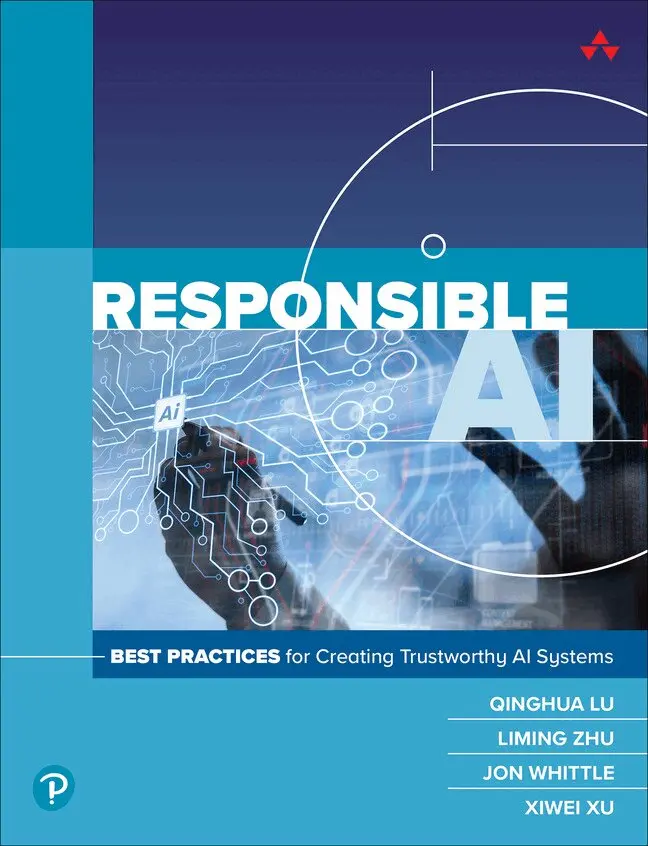
    Responsible AI

    Best Practices for Creating Trustworthy AI Systems

    AvCSIRO,Qinghua Lu

    Häftad, Engelska, 2024

    254 kr

    Beställningsvara. Skickas inom 7-10 vardagar. Fri frakt över 249 kr.

    Beskrivning

    AI systems are solving real-world challenges and transforming industries, but there are serious concerns about how responsibly they operate on behalf of the humans that rely on them. Many ethical principles and guidelines have been proposed for AI systems, but they're often too 'high-level' to be translated into practice. Conversely, AI/ML researchers often focus on algorithmic solutions that are too 'low-level' to adequately address ethics and responsibility. In this timely, practical guide, pioneering AI practitioners bridge these gaps. The authors illuminate issues of AI responsibility across the entire system lifecycle and all system components, offer concrete and actionable guidance for addressing them, and demonstrate these approaches in three detailed case studies.

    Writing for technologists, decision-makers, students, users, and other stake-holders, the topics cover:

    • Governance mechanisms at industry, organisation, and team levels
    • Development process perspectives, including software engineering best practices for AI
    • System perspectives, including quality attributes, architecture styles, and patterns
    • Techniques for connecting code with data and models, including key tradeoffs
    • Principle-specific techniques for fairness, privacy, and explainability
    • A preview of the future of responsible AI

    Produktinformation

    • Utgivningsdatum:2024-01-17
    • Mått:189 x 233 x 16 mm
    • Vikt:570 g
    • Format:Häftad
    • Språk:Engelska
    • Antal sidor:320
    • Upplaga:1
    • Förlag:Pearson Education
    • ISBN:9780138073923

    Utforska kategorier

    • Artificiell intelligens inom Data och IT

    Mer om författaren

    Dr. Qinghua Lu is a principal research scientist and leads the Responsible AI science team at CSIRO’s Data61. She received her PhD from University of New South Wales in 2013. Her current research interests include responsible AI, software engineering for AI/GAI, and software architecture. She has published 150+ papers in premier international journals and conferences. Her recent paper titled “Towards a Roadmap on Software Engineering for Responsible AI” received the ACM Distinguished Paper Award. Dr. Lu is part of the OECD.AI’s trustworthy AI metrics project team. She also serves a member of Australia’s National AI Centre Responsible AI at Scale think tank. She is the winner of the 2023 APAC Women in AI Trailblazer Award.  Dr./Prof. Liming Zhu is a Research Director at CSIRO’s Data61 and a conjoint full professor at the University of New South Wales (UNSW). He is the chairperson of Standards Australia’s blockchain committee and contributes to the AI trustworthiness committee. He is a member of the OECD.AI expert group on AI Risks and Accountability, as well as a member of the Responsible AI at Scale think tank at Australia’s National AI Centre. His research program innovates in the areas of AI/ML systems, responsible/ethical AI, software engineering, blockchain, regulation technology, quantum software, privacy, and cybersecurity. He has published more than 300 papers on software architecture, blockchain, governance and responsible AI. He delivered the keynote “Software Engineering as the Linchpin of Responsible AI” at the International Conference on Software Engineering (ICSE) 2023.  Prof. Jon Whittle is Director at CSIRO’s Data61, Australia’s national centre for R&D in data science and digital technologies. With around 850 staff and affiliates, Data61 is one of the largest collections of R&D expertise in Artificial Intelligence and Data Science in the world. Data61 partners with more than 200 industry and government organisations, more than 30 universities, and works across vertical sectors in manufacturing, health, agriculture, and the environment. Prior to joining Data61, Jon was Dean of the Faculty of Information Technology at Monash University.  Dr. Xiwei Xu is a principal research scientist and the group leader of the software systems research group at Data61, CSIRO. With a specialization in software architecture and system design, she is  at the forefront of research in these fields. Xiwei is identified by the Bibliometric Assessment of Software Engineering Scholars and Institutions as a top scholar and ranked 4th in the world (2013–2020) as the most impactful SE researchers by JSS (Journal of Systems and Software), a well-recognized academic journal in software engineering research.

    Innehållsförteckning

    • Preface.. . . . . . . . . . . . . . . . . xvAbout the Author.. . . . . . . . . . . . . . xixPart I Background and Introduction. . . . . . . . . . . . .11 Introduction to Responsible AI. . . . . . . . . 3What Is Responsible AI?. . . . . . . . . . . . 4What Is AI?. . . . . . . . . . . . . . 6Developing AI Responsibly: Who Is Responsible for Putting the“Responsible” into AI?.. . . . . . . . . . . . 8About This Book.. . . . . . . . . . . . . 9How to Read This Book.. . . . . . . . . . . . 112 Operationalizing Responsible AI: A Thought Experiment—Robbie the Robot.. . . . . . . . 13A Thought Experiment—Robbie the Robot.. . . . . . . . 13Summary. . . . . . . . . . . . . . 22Part II Responsible AI Pattern Catalogue. . . . . . . . . . .  233 Overview of the Responsible AI Pattern Catalogue. . . . . 25The Key Concepts.. . . . . . . . . . . . . 25Why Is Responsible AI Different?. . . . . . . . . . 30A Pattern-Oriented Approach for Responsible AI.. . . . . . . 324 Multi-Level Governance Patterns for Responsible AI.. . . . 39Industry-Level Governance Patterns. . . . . . . . . 42Organization-Level Governance Patterns.. . . . . . . . 56Team-Level Governance Patterns.. . . . . . . . . . 72Summary. . . . . . . . . . . . . . 855 Process Patterns for Trustworthy Development Processes. . . 87Requirements.. . . . . . . . . . . . . 88Design. . . . . . . . . . . . . . . 96Implementation.. . . . . . . . . . . . . 105Testing. . . . . . . . . . . . . . . 110Operations. . . . . . . . . . . . . . 114Summary. . . . . . . . . . . . . . 1206 Product Patterns for Responsible-AI-by-Design.. . . . . 121Product Pattern Collection Overview.. . . . . . . . . 122Supply Chain Patterns. . . . . . . . . . . . 123System Patterns. . . . . . . . . . . . . 134Operation Infrastructure Patterns. . . . . . . . . 141Summary. . . . . . . . . . . . . . 1587 Pattern-Oriented Reference Architecture for Responsible-AI-by-Design. . . . . . . . . 159Architectural Principles for Designing AI Systems. . . . . . 160Pattern-Oriented Reference Architecture.. . . . . . . . 161Summary. . . . . . . . . . . . . . 1658 Principle-Specific Techniques for Responsible AI.. . . . . 167Fairness.. . . . . . . . . . . . . . 167Privacy. . . . . . . . . . . . . . . 172Explainability. . . . . . . . . . . . . 178Summary. . . . . . . . . . . . . . 182Part III Case Studies. . . . . . . . . . . . . . .  1839 Risk-Based AI Governance in Telstra. . . . . . . 185Policy and Awareness.. . . . . . . . . . . . 186Assessing Risk.. . . . . . . . . . . . . 188Learnings from Practice. . . . . . . . . . . 192Future Work. . . . . . . . . . . . . . 19510 Reejig: The World’s First Independently Audited Ethical Talent AI.. . . . . . . . . . . 197How Is AI Being Used in Talent?.. . . . . . . . . . 198What Does Bias in Talent AI Look Like?.. . . . . . . . 200Regulating Talent AI Is a Global Issue.. . . . . . . . . 201Reejig’s Approach to Ethical Talent AI. . . . . . . . . 202How Ethical AI Evaluation Is Done: A Case Study in Reejig’s World-First Independently Audited Ethical Talent AI. . . . . . . . 204Overview.. . . . . . . . . . . . . 204Project Overview. . . . . . . . . . . . . 206The Ethical AI Framework Used for the Audit.. . . . . . . 207The Benefits of Ethical Talent AI.. . . . . . . . . . 210Reejig’s Outlook on the Future of Ethical Talent AI.. . . . . . 21111 Diversity and Inclusion in Artificial Intelligence.. . . . . 213Importance of Diversity and Inclusion in AI.. . . . . . . 215Definition of Diversity and Inclusion in Artificial Intelligence. . . . 216Guidelines for Diversity and Inclusion in Artificial Intelligence. . . . 219Conclusion.. . . . . . . . . . . . . . 234Part IV Looking to the Future. . . . . . . . . . . . . 23712 The Future of Responsible AI.. . . . . . . . . 239Regulation. . . . . . . . . . . . . . 241Education.. . . . . . . . . . . . . . 242Standards.. . . . . . . . . . . . . . 244Tools.. . . . . . . . . . . . . . . 245Public Awareness.. . . . . . . . . . . . 246Final Remarks.. . . . . . . . . . . . . 246Part V Appendix. . . . . . . . . . . . . . . . 249  9780138073923, TOC, 11/7/2023