• Fri frakt över 249 kr
  • •
  • Snabba leveranser
  • •
  • Billiga böcker
Kundservice

Du är på sajten för privatpersoner.

Företag, bibliotek eller offentlig verksamhet?

Du handlar på classic.bokus.com, där alla dina funktioner finns intakta.
Till classic.bokus.com
Bokus logotyp. Gå till startsidan.
  • Erbjudanden
  • Student
  • Topplistor
  • Barn & ungdom
  • Bokus Play
  • E-böcker
  • Ljudböcker
  • Pocketböcker
  • Spel och pussel

Pocketfynda! Hundratals böcker för 49 kr/st →

Sidfot

Mina sidor

    Hjälp

    • Kundservice
    • Vanliga frågor och svar
    • Frakt och leverans
    • Retur vid ångerrätt
    • Reklamera vara
    • Betalning
    • Köpvillkor
    • Allmänna villkor
    • Information om webbplatsens tillgänglighet

    Om Bokus

    • Om oss
    • Pressrum
    • För studenter
    • För företag
    • För bibliotek och offentlig verksamhet
    • För leverantörer
    • Hållbarhet

    Populärt

    • Aktuella erbjudanden
    • Presentkort
    • Studentlitteratur
    • Nya böcker
    • Topplistor
    • Signerade böcker
    • Engelska böcker

    Inspiration

    • Boktips
    • BookTok
    • Barnbokskaraktärer
    • Populära författare
    Logotyp för Bokus
    Följ oss på Facebook (extern länk)Följ oss på Instagram (extern länk)Följ oss på YouTube (extern länk)Följ oss på TikTok (extern länk)
    bokus @ CookiesAnpassa cookiesIntegritetspolicyKöpvillkor
    Till Citymail hemsida (extern länk)Till Budbee hemsida (extern länk)Till Postnord hemsida (extern länk)Till Schenker hemsida (extern länk)Till Early Bird hemsida (extern länk)Till Walleys hemsida (extern länk)
    1. Skönlitteratur
    2. Dramatik

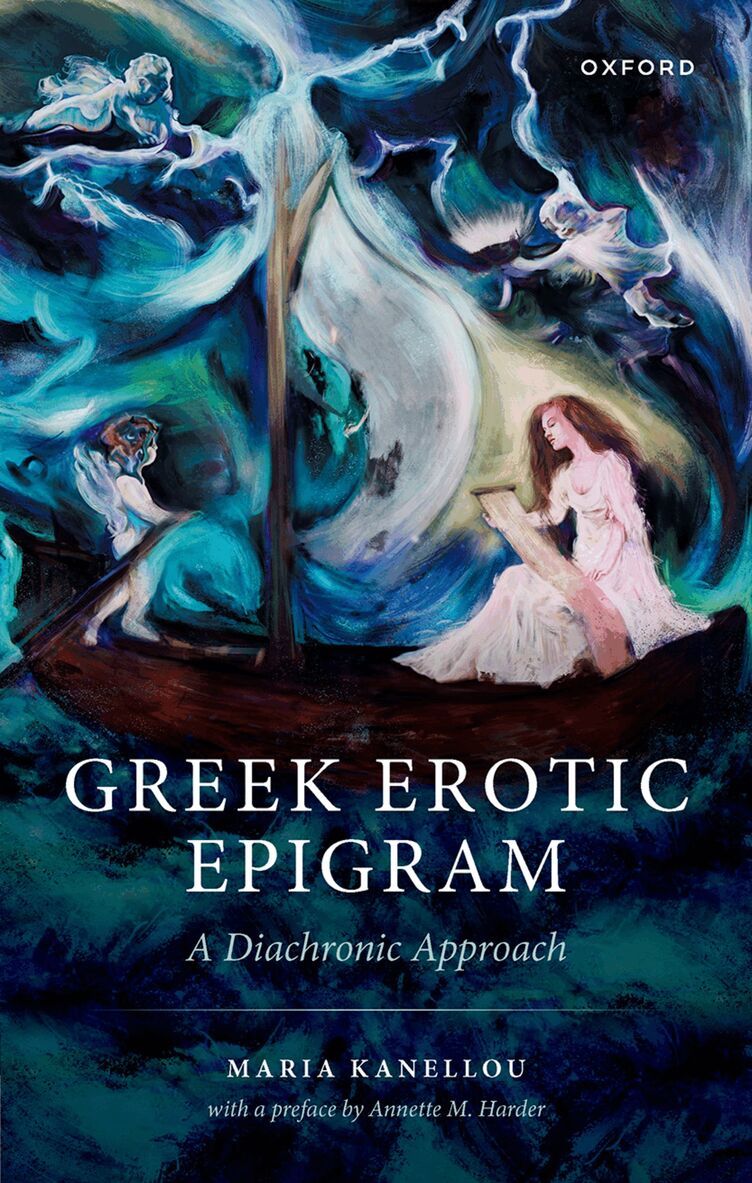
    Greek Erotic Epigram

    A Diachronic Approach

    AvMaria Kanellou

    Inbunden, Engelska, 2025

    1 897 kr

    Beställningsvara. Skickas inom 5-8 vardagar. Fri frakt över 249 kr.

    Fler format och utgåvor

    E-bok

    1 694 kr

    E-bok

    1 409 kr

    Beskrivning

    Despite its small size, epigram attracted some of the best poetic talents of antiquity, exerting a strong influence on Latin literature and continuing to inspire poetic creativity until today. During the last decades research on epigram flourished to an unprecedented degree. Greek Erotic Epigram: A Diachronic Approach draws on and engages with this renewed scholarly interest in the briefest of the ancient Greek genres. By shifting focus away from a particular poet, collection, and the epigrammatic production of a specific historical period, it explores diachronically erotic epigram from various interpretative angles, treating the surviving material as an organic whole. Four motifs drive diachronic research encompassing a wide chronological span from the Hellenistic up until the early Byzantine era: the lamp, sea, and nautical imagery, the beloved's comparison to Aphrodite, and Eros and the Erotes. By analysing how these motifs were shaped and adapted over the centuries, the book illustrates the epigrammatists' changing attitudes towards the material inherited from earlier poetic tradition, and leads to a deeper appreciation of the narrative techniques adopted by them as well as of the inner dynamics of poetic imitation and competition. Moreover, the scrutiny of the motifs within wider literary and historical backgrounds reveals the influence exerted by different cultural and sociopolitical environments on the epigrammatists' work in the course of centuries. The book offers a model for the type of diachronic research that can be applied to other epigrammatic subgenres and other motifs, and to Latin epigram.

    Produktinformation

    • Utgivningsdatum:2025-04-10
    • Mått:145 x 220 x 25 mm
    • Vikt:532 g
    • Format:Inbunden
    • Språk:Engelska
    • Antal sidor:336
    • Förlag:OUP OXFORD
    • ISBN:9780198816140

    Utforska kategorier

    • Dramatik inom Skönlitteratur
    • Litteraturvetenskap inom Skönlitteratur
    • Poesi inom Skönlitteratur

    Mer om författaren

    Maria Kanellou studied at the National and Kapodistrian University of Athens and at UCL. She is currently Research Fellow at the Research Centre for Greek and Latin Literature of the Academy of Athens, and she has previously worked at UCL, KCL, the University of Kent, and OUC. She has co-organized three international conferences on Greek epigram and on Theocritus, and she has co-edited two collective volumes: one on Greek epigram published by OUP, and one on Palladas and the Yale Papyrus Codex (P. CtYBR inv. 4000) published by Brill. Another volume on Theocritus is forthcoming in the series Hellenistica Groningana.

    Recensioner i media

    This book presents a useful panorama of ancient literary sources, and its readings of Greek erotic epigrams offer context which is essential in order to fully understand their literary depths and subtle meanings.

    Innehållsförteckning

    • Preface Acknowledgments List of Abbreviations Introduction 1. Why Write a Book on the Diachronic Study of Erotic Epigram? 2. The Contents of the Book 1: The Lamp as a Vehicle for Exploring the Lover's Emotions 1. First Appearances of the Lamp Motif in Asclepiades 2. The Development of the Motif in the Meleagrian Epigrams 3. Outside the Melegrian Garland: Philodemus and Statyllius Flaccus 4. Marcus Argentarius and the Lamp's Prophetic Abilities 5. The Survival of the Lamp in the Cycle of Agathias 6. Conclusions 2: Unboxing Sea and Nautical Metaphors 1.1 The ShipDLProstitute Epigrams and Their Intertextual Background 1.2 Alcaeus and the ShipDLProstitute 1.3 Theognis and Aristophanes: Ship Imagery and the Ambiguities of Control 2.1 The ShipDLProstitute in Epigram: Hetaerae Described as Ships 2.2 Ships Described in Language Applicable to Hetaerae 3.1 Hellenistic Epigram and the Sea of Love 3.2 The Heterosexual Epigrams 3.3 The Homoerotic Epigrams 4.1 The Survival of Sea and Nautical Metaphors after Meleager's Garland 4.2 Sea Metaphors in Their Sexual Form: The Case Study of Automedon AP 11.29 4.3 Further Examples of Sexual Sea Metaphors: The Anonymous AP 11.220 and Rufinus AP 5.35 4.4 The Sea of Love in Macedonius Consul AP 5.235 5. Conclusions 3: Comparing the Beloved with the Supreme Goddess of Beauty 1. The Beloved's Praise in the Poetic Tradition: The Limitations of Hyperbole 2. Implied Comparison with Aphrodite: Nossis' Dedicatory Epigrams 3. Hellenistic Queens and Aphrodite: Three Posidippean Epigrams and Asclepiades or Posidippus APl (A) 68 4. Asclepiades or Posidippus AP 5.194: Indirect Links Between a Non-Royal Woman and Aphrodite 5.1 Antipater of Sidon: Staying within Limits (AP 9.567 and 7.14) 5.2 Antipater of Sidon: Stretching the Boundaries (AP 7.218) 6. The 'Apotheosis' of the Motif in the Meleagrian Epigrams 7. Comparing the Male Beloved with Eros 8.1 The Motif after Meleager: Marcus Argentarius and Rufinus 8.2 The Motif in the Cycle of Agathias 9. Conclusions 4: Eros and the Erotes: The Tormentors of Humans 1.1 Eros' Disguises: Recollections of Lyric Poetry 1.2 Eros the Crawling Creature 2. Amalgamation of Different Portrayals of Eros in the Same Epigram 3.1 From the Single Eros to the Erotes: The Motif's Literary Roots 3.2 Multiple Erotes for Multiple Effects 4. Conclusions Epilogue Bibliography General Index Index Locorum