E-bok, Engelska, 2025
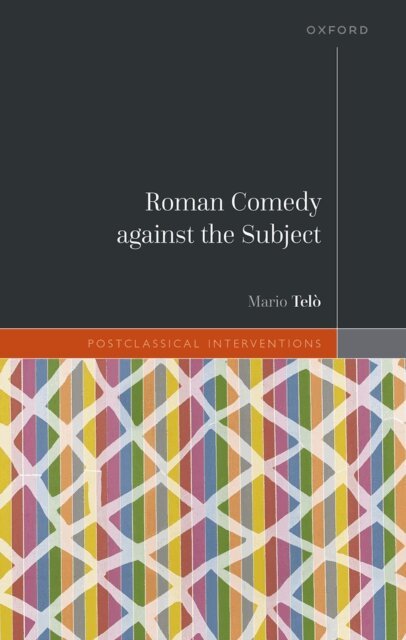
Roman Comedy against the Subject
Av Mario Telo
1244 kr
Läs direkt i Bokus Reader – eller ladda ned till din enhet
Beskrivning
Roman Comedy against the Subject provides an expansive interpretation of four Roman comedies named after objects--Plautus''s Cistellaria, Aulularia, and Rudens, and Terence''s Eunuchus. In this book, the titular object provides an opportunity not to reconceive the relational politics of Roman comedy, but to conceive a different politics of familial and social relations with Roman comedy. Employing object-oriented ontology, psychoanalysis, queer theory, and Black critical theory, the book radically recasts perennial problems of Roman comedy and literature in general: the author, in relation to "mothering" (alternative maternities); character, in relation to neurodiversity; genre, in relation to sibling-like parentality; and the title itself, in relation to gendering and ungendering. Roman Comedy against the Subject explores the aesthetic and political possibilities of becoming object, of embracing "itness." Rather than assimilating objects to subjects or vital agents, the book finds emancipatory potential in renouncing the normative and intrinsically exclusionary subjecthood of "he," "she," and "they," markers of privilege that are burdened by the violence of humanization and often dehumanizing of others. The introduction features nine brief but acute readings of object-oriented modern dramas: Tennessee Williams''s Glass Menagerie, Yukio Mishima''s The Damask Drum, Eugène Ionesco''s Les Chaises, and Alice Childress''s String, among others.
Produktinformation
- Utgivningsdatum: 2025-09-17
- Språk: Engelska
- Filformat: EPUB
- Kopieringsskydd: LCP
- ISBN: 9780198920113
- Förlag: Oxford University Press
Utforska kategorier
Betyg & recensioner
0 recensioner
Inga recensioner tillgängliga.