• Fri frakt över 249 kr
  • •
  • Snabba leveranser
  • •
  • Billiga böcker
Kundservice

Du är på sajten för privatpersoner.

Företag, bibliotek eller offentlig verksamhet?

Du handlar på classic.bokus.com, där alla dina funktioner finns intakta.
Till classic.bokus.com
Bokus logotyp. Gå till startsidan.
  • Erbjudanden
  • Nyheter
  • Student
  • Topplistor
  • Barn & ungdom
  • Bokus Play
  • E-böcker
  • Pocketböcker
  • Spel & pussel

Må bättre, för mindre! Upp till 50% rabatt på hälsoböcker

Sidfot

Mina sidor

    Hjälp

    • Kundservice
    • Vanliga frågor och svar
    • Frakt och leverans
    • Retur vid ångerrätt
    • Reklamera vara
    • Betalning
    • Köpvillkor
    • Allmänna villkor
    • Information om webbplatsens tillgänglighet

    Om Bokus

    • Om oss
    • Pressrum
    • För studenter
    • För företag
    • För bibliotek och offentlig verksamhet
    • För leverantörer
    • Hållbarhet

    Populärt

    • Aktuella erbjudanden
    • Presentkort
    • Studentlitteratur
    • Nya böcker
    • Topplistor
    • Signerade böcker
    • Engelska böcker

    Inspiration

    • Boktips
    • BookTok
    • Populära bokserier
    • Barnbokskaraktärer
    • Populära författare
    Logotyp för Bokus
    Följ oss på Facebook (extern länk)Följ oss på Instagram (extern länk)Följ oss på YouTube (extern länk)Följ oss på TikTok (extern länk)
    bokus @ CookiesAnpassa cookiesIntegritetspolicyKöpvillkor
    Till Citymail hemsida (extern länk)Till Budbee hemsida (extern länk)Till Postnord hemsida (extern länk)Till Schenker hemsida (extern länk)Till Early Bird hemsida (extern länk)Till Walleys hemsida (extern länk)
    1. Historia och arkeologi
    2. Historia
    3. Historia: särskilda händelser och ämnen
    4. Slaveri

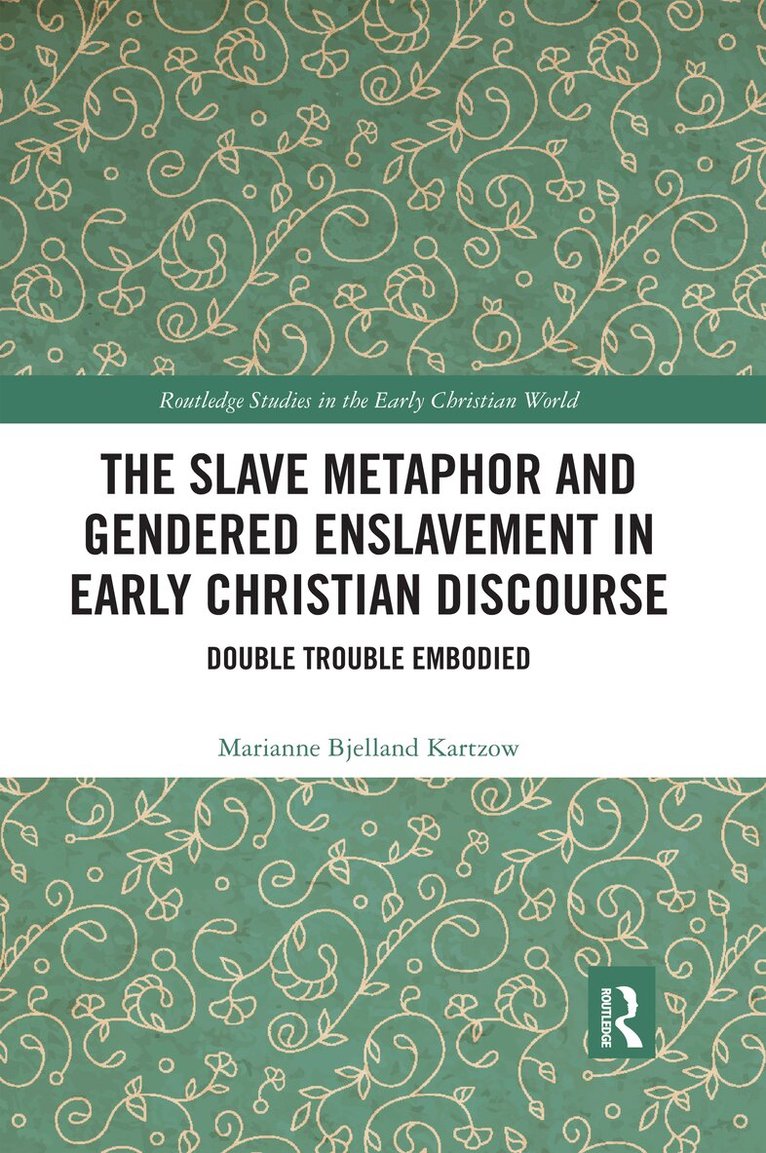
    Slave Metaphor and Gendered Enslavement in Early Christian Discourse

    Double Trouble Embodied

    AvMarianne Bjelland Kartzow

    Häftad, Engelska, 2020

    Del i serien Routledge Studies in the Early Christian World

    681 kr

    Beställningsvara. Skickas inom 10-15 vardagar. Fri frakt över 249 kr.

    Fler format och utgåvor

    Inbunden

    2 421 kr

    E-bok

    805 kr

    E-bok

    807 kr

    Beskrivning

    The Slave Metaphor and Gendered Enslavement in Early Christian Discourse adds new knowledge to the ongoing discussion of slavery in early Christian discourse. Kartzow argues that the complex tension between metaphor and social reality in early Christian discourse is undertheorized. A metaphor can be so much more than an innocent thought figure; it involves bodies, relationships, life stories, and memory in complex ways. The slavery metaphor is troubling since it makes theology of a social institution that is profoundly troubling. This study rethinks the potential meaning of the slavery metaphor in early Christian discourse by use of a variety of texts, read with a whole set of theoretical tools taken from metaphor theory and intersectional gender studies, in particular. It also takes seriously the contemporary context of modern slavery, where slavery has re-appeared as a term to name trafficking, gendered violence, and inhuman power systems.

    Produktinformation

    • Utgivningsdatum:2020-08-14
    • Mått:150 x 231 x 13 mm
    • Vikt:236 g
    • Format:Häftad
    • Språk:Engelska
    • Serie:Routledge Studies in the Early Christian World
    • Antal sidor:168
    • Förlag:Taylor & Francis Ltd
    • ISBN:9780367591533

    Utforska kategorier

    • Slaveri inom Historia och arkeologi
    • Religion: allmänt inom Filosofi och religion
    • Kristendom inom Filosofi och religion

    Mer om författaren

    Marianne Bjelland Kartzow is Professor of New Testament Studies at the Faculty of Theology, University of Oslo, Norway

    Recensioner i media

    Kartzow’s The Slave Metaphor and Gendered Enslavement in Early Christian Discourse fundamentally reconfigures the way that scholars approach slavery, its attendant metaphors, and its production of gender in early Christian studies. Kartzow takes the very nature of metaphor—its ability to produce multivalent meanings—and situates this multiplicity into intersectional historical analysis of early Christian discourses. The result is a powerful re-working of early Christian history that foregrounds the centrality of enslavement in the creation of theologies, literature, and histories. - Katherine A. Shaner, Wake Forest University School of Divinity, USA"Kartzow’s book is a well writ-ten and important contribution to the study of Early Christianity. Kartzow doubtlessly succeeds in the aims of her book: not only has she underlined the importance of gender in the analysis of slavery in Early Christianity, but she also has successfully problematized the distinction between real and metaphorical slavery." - Martijn Stoutjesdijk, Tilburg University, NTT Journal for Theology and the Study of Religion"This book is especially thought-provokingand important for anyone working on slavery in the ancient world, especially as it is described in early Christian texts. The book throughout raises important questions about how slavery as a metaphor (e.g. “slave of the Lord”) related to the actual lived experience of slavery as a social, cultural, and economic system... This book is a must read for anyone interested in slavery as it is depicted in ancient narratives and as it was (and is experienced) in the lived experience of real people." - Eric Stewart, Augustana College, USA, Biblical Theology Bulletin

    Innehållsförteckning

    • Introduction; Chapter 1: Thinking with Saleable Bodies: An Intersectional Approach to the Slavery Metaphor; Chapter 2: Embodying the Slavery Metaphor: Female Characters and Slavery Language; Chapter 3: Metaphor and Masculinity: The "no longer slave" Formulations (John 15:15 and Gal 4:7); Chapter 4: The Paradox of Slavery: All Believers Are Slaves of the Lord, but Some Are More Slaves Than Others; Chapter 5: From Slave of a Female Owner to Slave of God: Negotiating Gender, Sexuality and Status in The Shepherd of Hermas; Chapter 6: Jesus, the Slave Trader: Metaphor made real in The Act of Thomas; Conclusion; Index