• Fri frakt över 249 kr
  • •
  • Snabba leveranser
  • •
  • Billiga böcker
Kundservice

Du är på sajten för privatpersoner.

Företag, bibliotek eller offentlig verksamhet?

Du handlar på classic.bokus.com, där alla dina funktioner finns intakta.
Till classic.bokus.com
Bokus logotyp. Gå till startsidan.
  • Erbjudanden
  • Student
  • Topplistor
  • Barn & ungdom
  • Bokus Play
  • E-böcker
  • Ljudböcker
  • Pocketböcker
  • Spel och pussel

Pocketfynda! Hundratals böcker för 49 kr/st →

Sidfot

Mina sidor

    Hjälp

    • Kundservice
    • Vanliga frågor och svar
    • Frakt och leverans
    • Retur vid ångerrätt
    • Reklamera vara
    • Betalning
    • Köpvillkor
    • Allmänna villkor
    • Information om webbplatsens tillgänglighet

    Om Bokus

    • Om oss
    • Pressrum
    • För studenter
    • För företag
    • För bibliotek och offentlig verksamhet
    • För leverantörer
    • Hållbarhet

    Populärt

    • Aktuella erbjudanden
    • Presentkort
    • Studentlitteratur
    • Nya böcker
    • Topplistor
    • Signerade böcker
    • Engelska böcker

    Inspiration

    • Boktips
    • BookTok
    • Barnbokskaraktärer
    • Populära författare
    Logotyp för Bokus
    Följ oss på Facebook (extern länk)Följ oss på Instagram (extern länk)Följ oss på YouTube (extern länk)Följ oss på TikTok (extern länk)
    bokus @ CookiesAnpassa cookiesIntegritetspolicyKöpvillkor
    Till Citymail hemsida (extern länk)Till Budbee hemsida (extern länk)Till Postnord hemsida (extern länk)Till Schenker hemsida (extern länk)Till Early Bird hemsida (extern länk)Till Walleys hemsida (extern länk)
    1. Samhälle och politik
    2. Samhälle och kultur
    3. Kultur och medier
    4. Medievetenskap

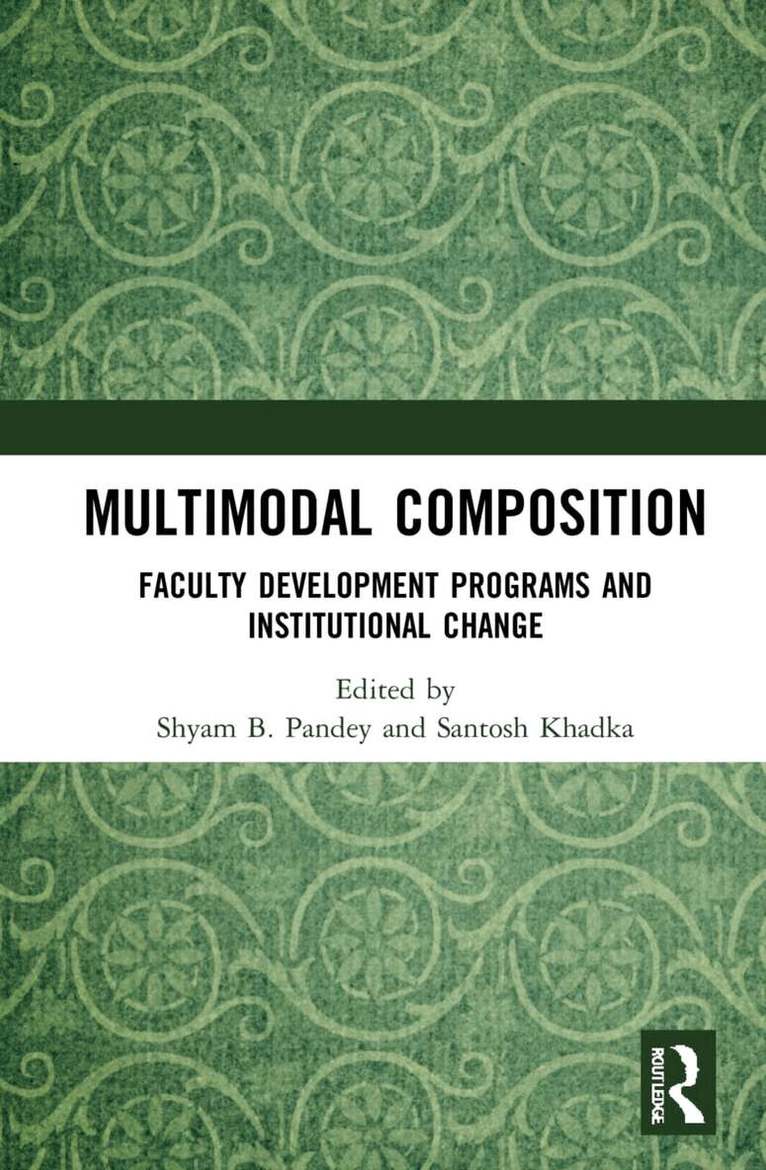
    Multimodal Composition

    Faculty Development Programs and Institutional Change

    AvShyam B. Pandey,Santosh Khadka

    Inbunden, Engelska, 2021

    2 410 kr

    Beställningsvara. Skickas inom 10-15 vardagar. Fri frakt över 249 kr.

    Beskrivning

    This collection explores the role of individual faculty initiatives and institutional faculty development programs in supporting programmatic adoption of multimodal composition across diverse institutional contexts. The volume speaks to the growing interest in multimodal composition in university classrooms as the digital media and technology landscape has evolved to showcase the power and value of employing multiple modes in educational contexts. Drawing on case studies from a range of institutions, the book is divided into four parts, each addressing the needs of different stakeholders, including scholars, instructors, department chairs, curriculum designers, administrators, and program directors: faculty initiatives; curricular design and pedagogies; faculty development programs; and writing across disciplines. Taken together, the 16 chapters make the case for an integrated approach bringing together insights from unique faculty initiatives with institutional faculty development programs in order to effectively execute, support, and expand programmatic adoption of multimodal composition. This book will be of interest to scholars in multimodal composition, rhetoric, communication studies, education technology, media studies, and instructional design, as well as administrators supporting program design and faculty development.

    Produktinformation

    • Utgivningsdatum:2021-09-30
    • Mått:152 x 229 x 22 mm
    • Vikt:548 g
    • Format:Inbunden
    • Språk:Engelska
    • Antal sidor:304
    • Förlag:Taylor & Francis Ltd
    • ISBN:9780367756208

    Utforska kategorier

    • Medievetenskap inom Samhälle och politik
    • Referensverk och tvärvetenskap inom Samhälle och politik
    • Språkundervisning och språkinlärning inom Språk och ordböcker

    Mer om författaren

    Shyam B. Pandey is a PhD Candidate in the Department of English at Purdue University, where he is also working as a professional writing instructor. He has published several articles in journals and co-edited two creative writing books sponsored by the US Embassy in Nepal. Shyam recently co-edited a special issue of Journal of Global Literacies, Technologies, and Emerging Pedagogies on "Multimodal Composition in Multilingual Contexts." His research interests include multimodal composition, technical and professional communication, multilingual writing, social and environmental justice, and anti-racist pedagogies.Santosh Khadka is an Associate Professor of English at the California State University, Northridge. He is an author of a monograph and co-editor of three books. His monograph, Multiliteracies, Emerging Media, and College Writing Instruction, was published by Routledge in 2019. His two co-edited volumes—Bridging the Multimodal Gap: From Theory to Practice (2019), and Designing and Implementing Multimodal Curricula and Programs (Routledge, 2018)—centered on multimodality. He also published his third co-edited book, Narratives of Marginalized Identities in Higher Education: Inside and Outside the Academy, with Routledge in 2018. Khadka now teaches graduate and undergraduate courses in writing, rhetoric, digital media, and business communication.

    Innehållsförteckning

    • Introduction: Multimodal Composition: From Faculty Development Programs to Institutional Change Shyam B. Pandey and Santosh KhadkaPart I: Faculty InitiativesChapter 1: How to Multimodal: An Institutional–Infrastructural ExplorationChristina Boyles, Andy Boyles Petersen, and Dànielle Nicole DeVossChapter 2: Lacking Time to Experiment: English Faculty and Graduate Students Identify Pragmatic Barriers to Multimodal Pedagogy in the COVID-19 SpringElizabeth F. Chamberlain and James A. Ottoson Chapter 3: Writing Across Media: Graduate Students as Multimodal Composition Instructors and AdministratorsNicole Turnipseed and Logan MiddletonChapter 4: A Technology-Focused Sharing Space for Faculty: The Digital Pedagogy Collective at BGSUEthan T. Jordan and Heather L.H. JordanChapter 5: Implementing Faculty Development in Multimodal Composition: A Case StudyTawnya AzarChapter 6: Making Professional Development Matter: Instructor and Coordinator Experiences of the WAT Institute for Multimodal CompositionGabriel MorrisonPart II: Curricular Design and PedagogiesChapter 7: Learning to "Speak Data": Data Literacy and Multimodal Composition Pedagogy Angela LaflenChapter 8: "Is This Even Writing?": Assessing Multimodal Projects through Group Portfolio GradingCraig Hulst, Dauvan Mulally, and Amy Ferdinandt StolleyChapter 9: Multimodality and Writing for International Multilingual Students: Connecting Theory and PracticeSu Yin Khor and Cristina Sánchez-MartínChapter 10: Professional Development and Online Course Development as Drivers of Multimodal Curriculum Change: Subverting Managing Living and Working Within CrisisAlexander WulffChapter 11: Possibilities and Pathways: Connecting Multimodality and Educational Equity in the FYC ProgramLisa Tremain, Kimberly Stelter, and Jonathan AbidariPart III: Faculty Development ProgramsChapter 12: Much to Learn: Professionalizing Digital Writing Among Dual Credit Faculty Brad Jacobson, José M. Avila, Rebeca D’Antoni, Kimberlee Henry, and Jennifer WilhiteChapter 13: Not Going it Alone: Multi-Something Frameworks for Collaborative Faculty Development in Multimodal CompositionFawn Canady and Ed NagelhoutChapter 14: Cultivating a Grassroots Approach to Digital Literacies Via Domain of One’s OwnKim Haimes-Korn, Jeff Greene, and Pete RorabaughPart IV: Writing Across the Disciplines Chapter 15: Multimodal Writing to Learn Across DisciplinesDan MartinChapter 16: Investigating the Design of Multimodal Writing Assignments across the DisciplinesMeg Mikovits, Crystal N. Fodrey, and Erica Yozell