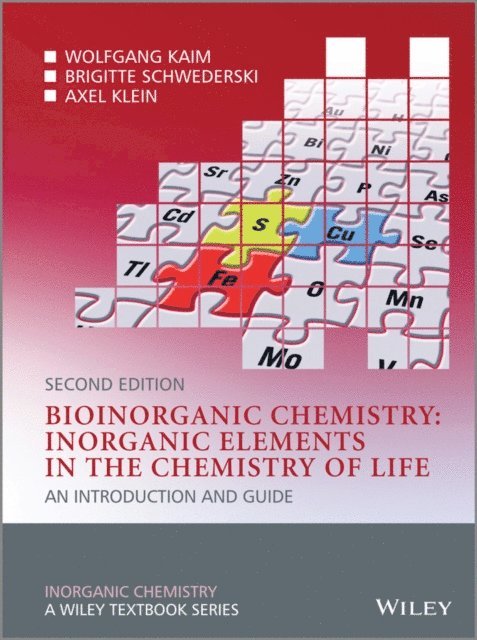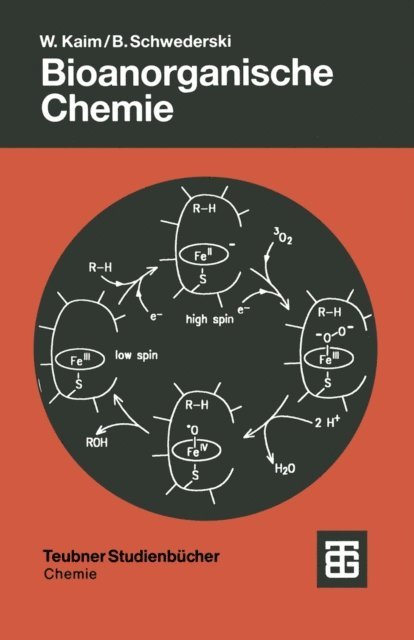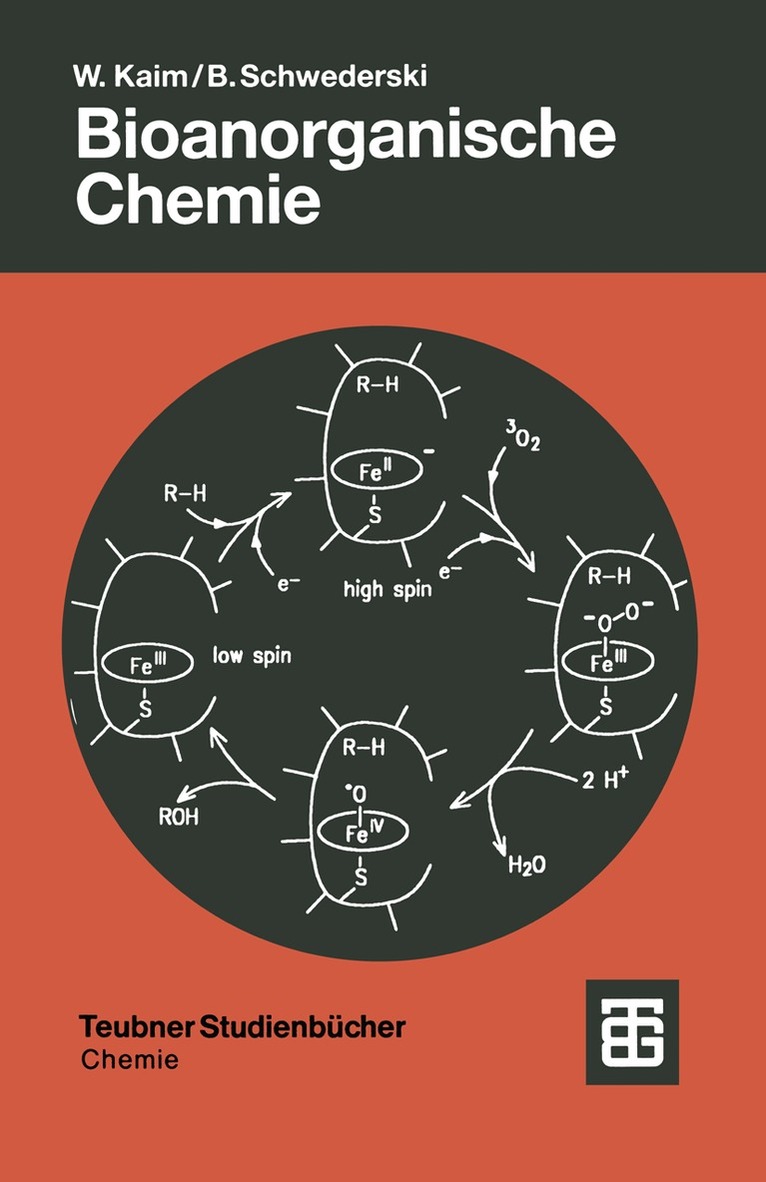
Bioinorganic Chemistry -- Inorganic Elements in the Chemistry of Life
An Introduction and Guide
AvWolfgang Kaim,Brigitte Schwederski
Del i serien Inorganic Chemistry: A Textbook Series
1 512 kr
Tillfälligt slut
Fler format och utgåvor
Beskrivning
Produktinformation
- Utgivningsdatum:2013-10-04
- Mått:196 x 254 x 25 mm
- Vikt:1 093 g
- Format:Inbunden
- Språk:Engelska
- Serie:Inorganic Chemistry: A Textbook Series
- Antal sidor:432
- Upplaga:2
- Förlag:John Wiley & Sons Inc
- ISBN:9780470975244
Utforska kategorier
Mer om författaren
Professor Dr Wolfgang Kaim, Institute of Inorganic Chemistry, University of Stuttgart, GermanyWolfgang Kaim was born in 1951 near Frankfurt am Main, Germany, and studied chemistry at the universities of Frankfurt and Konstanz. After obtaining his PhD with H. Bock in 1978 he spent a postdoctoral year with F.A. Cotton at the University of Texas A&M University. In 1987 he moved from the University of Frankfurt to a Full Professorship at the University of Stuttgart. His main research interests focus on the charge and electron transfer reactivity of molecular compounds and various aspects of coordination chemistry. Dr Brigitte Schwederski, Institute of Inorganic Chemistry, University of Stuttgart, GermanyBrigitte Schwederski was born in 1959 in Recklinghausen, Germany. From 1977 to 1983 she studied chemistry and biology at the University of Bochum and in 1988 completed her PhD in the research group of Dale W. Margerum at Purdue University, Indiana. Since 1988 she has been a Research Assistant at the University of Stuttgart. Her main research interests include inorganic model complexes of bioinorganic systems, their characteristics and reactivity. Professor Dr. Axel Klein, Universitaet zu Koeln, Institut fuer Anorganische Chemie, GermanyAxel Klein is a Professor of Inorganic Chemistry at the University of Cologne, Germany. His research interests lie in the preparation and investigation of novel coordination compounds including organometallic derivatives, aiming at the rational design, preparation and use of coordination units with specific properties in mononuclear or oligonuclear complexes or as part of materials.
Innehållsförteckning
- Preface to the Second Edition xiPreface to the First Edition xiii1 Historical Background, Current Relevance and Perspectives 1References 62 Some General Principles 72.1 Occurrence and Availability of Inorganic Elements in Organisms 7Insertion: The Chelate Effect 14Insertion: “Hard” and “Soft” Coordination Centers 142.2 Biological Functions of Inorganic Elements 142.3 Biological Ligands for Metal Ions 162.3.1 Coordination by Proteins-Comments on Enzymatic Catalysis 17Insertion: The “Entatic State” in Enzymatic Catalysis 202.3.2 Tetrapyrrole Ligands and Other Macrocycles 22Insertion: Electron Spin States in Transition Metal Ions 282.3.3 Nucleobases, Nucleotides and Nucleic Acids (RNA, DNA) as Ligands 31Insertion: Secondary Bonding 322.4 Relevance of Model Compounds 34References 343 Cobalamins, Including Vitamin and Coenzyme B 12 373.1 History and Structural Characterization 37Insertion: Bioorganometallics I 383.2 General Reactions of Alkylcobalamins 413.2.1 One-electron Reduction and Oxidation 413.2.2 Co–C Bond Cleavage 42Insertion: Electron Paramagnetic Resonance I 433.3 Enzyme Functions of Cobalamins 453.3.1 Adenosylcobalamin (AdoCbl)-dependent Isomerases 45Insertion: Organic Redox Coenzymes 483.3.2 Alkylation Reactions of Methylcobalamin (MeCbl)-dependent Alkyl Transferases 513.4 Model Systems and the Enzymatic Activation of the Co–C Bond 52References 534 Metals at the Center of Photosynthesis: Magnesium and Manganese 574.1 Volume and Efficiency of Photosynthesis 574.2 Primary Processes in Photosynthesis 594.2.1 Light Absorption (Energy Acquisition) 594.2.2 Exciton Transport (Directed Energy Transfer) 594.2.3 Charge Separation and Electron Transport 62Insertion: Structure Determination by X-ray Diffraction 654.3 Manganese-catalyzed Oxidation of Water to O2 67Insertion: Spin–Spin Coupling 73References 745 The Dioxygen Molecule, O 2 : Uptake, Transport and Storage of an Inorganic Natural Product 775.1 Molecular and Chemical Properties of Dioxygen, O2 775.2 Oxygen Transport and Storage through Hemoglobin and Myoglobin 825.3 Alternative Oxygen Transport in Some Lower Animals: Hemerythrin and Hemocyanin 925.3.1 Magnetism 925.3.2 Light Absorption 935.3.3 Vibrational Spectroscopy 93Insertion: Resonance Raman Spectroscopy 935.3.4 Mössbauer Spectroscopy 94Insertion: Mössbauer Spectroscopy 945.3.5 Structure 955.4 Conclusion 96References 966 Catalysis through Hemoproteins: Electron Transfer, Oxygen Activation and Metabolism of Inorganic Intermediates 996.1 Cytochromes 1016.2 Cytochrome P-450: Oxygen Transfer from O 2 to Nonactivated Substrates 1036.3 Peroxidases: Detoxification and Utilization of Doubly Reduced Dioxygen 1086.4 Controlling the Reaction Mechanism of the Oxyheme Group: Generation and Function of Organic Free Radicals 1106.5 Hemoproteins in the Catalytic Transformation of Partially Reduced Nitrogen and Sulfur Compounds 112Insertion: Gasotransmitters 113References 1147 Iron–Sulfur and Other Non-heme Iron Proteins 1177.1 Biological Relevance of the Element Combination Iron–Sulfur 117Insertion: Extremophiles and Bioinorganic Chemistry 1187.2 Rubredoxins 1227.3 [2Fe-2S] Centers 1227.4 Polynuclear Fe/S Clusters: Relevance of the Protein Environment and Catalytic Activity 1237.5 Model Systems for Fe/S Proteins 1287.6 Iron-containing Enzymes without Porphyrin or Sulfide Ligands 1307.6.1 Iron-containing Ribonucleotide Reductase 1307.6.2 Soluble Methane Monooxygenase 1327.6.3 Purple Acid Phosphatases (Fe/Fe and Fe/Zn) 1337.6.4 Mononuclear Non-heme Iron Enzymes 133References 1358 Uptake, Transport and Storage of an Essential Element, as Exemplified by Iron 139Insertion: Metallome 1398.1 The Problem of Iron Mobilization: Oxidation States, Solubility and Medical Relevance 1408.2 Siderophores: Iron Uptake by Microorganisms 141Insertion: Optical Isomerism in Octahedral Complexes 1448.3 Phytosiderophores: Iron Uptake by Plants 1498.4 Transport and Storage of Iron 1508.4.1 Transferrin 1528.4.2 Ferritin 1558.4.3 Hemosiderin 159References 1609 Nickel-containing Enzymes: The Remarkable Career of a Long-overlooked Biometal 1639.1 Overview 1639.2 Urease 1649.3 Hydrogenases 1669.4 CO Dehydrogenase = CO Oxidoreductase = Acetyl-CoA Synthase 1699.5 Methyl-coenzyme M Reductase (Including the F 430 Cofactor) 172Insertion: Natural and Artificial (Industrial) C 1 Chemistry 174Insertion: Bioorganometallics II: The Organometallic Chemistry of Cobalt and Nickel 1769.6 Superoxide Dismutase 1779.7 Model Compounds 178Further Reading 178References 17910 Copper-containing Proteins: An Alternative to Biological Iron 18310.1 Type 1: “Blue” Copper Proteins 186Insertion: Electron Paramagnetic Resonance II 18710.2 Type 2 and Type 3 Copper Centers in O2 -activating Proteins: Oxygen Transport and Oxygenation 19110.3 Copper Proteins as Oxidases/Reductases 19510.4 Cytochrome c Oxidase 20010.5 Cu,Zn- and Other Superoxide Dismutases: Substrate-specific Antioxidants 203References 20711 Biological Functions of the “Early” Transition Metals: Molybdenum, Tungsten, Vanadium and Chromium 21111.1 Oxygen Transfer through Tungsten- and Molybdenum-containing Enzymes 21111.1.1 Overview 21111.1.2 Oxotransferase Enzymes Containing the Molybdopterin or Tungstopterin Cofactor 213Insertion: “Oxidation” 21411.2 Metalloenzymes in the Biological Nitrogen Cycle: Molybdenum-dependent Nitrogen Fixation 21911.3 Alternative Nitrogenases 22611.4 Biological Vanadium Outside of Nitrogenases 22911.5 Chromium(III) in the Metabolism? 231References 23212 Zinc: Structural and Gene-regulatory Functions and the Enzymatic Catalysis of Hydrolysis and Condensation Reactions 23512.1 Overview 23512.2 Carboanhydrase 23812.3 Carboxypeptidase A and Other Hydrolases 24312.4 Catalysis of Condensation Reactions by Zinc-containing Enzymes 24812.5 Alcohol Dehydrogenase and Related Enzymes 24912.6 The “Zinc Finger” and Other Gene-regulatory Zinc Proteins 25112.7 Insulin, hGH, Metallothionein and DNA Repair Systems as Zinc-containing Proteins 253References 25413 Unequally Distributed Electrolytes: Function and Transport of Alkali and Alkaline Earth Metal Cations 25713.1 Characterization and Biological Roles of K + ,Na + ,Ca 2+ and Mg 2+ 257Insertion: Heteroatom Nuclear Magnetic Resonance 26213.2 Complexes of Alkali and Alkaline Earth Metal Ions with Macrocycles 26413.3 Ion Channels 26713.4 Ion Pumps 270Further Reading 273References 27314 Catalysis and Regulation of Bioenergetic Processes by the Alkaline Earth Metal Ions Mg 2+ and Ca 2+ 27714.1 Magnesium: Catalysis of Phosphate Transfer by Divalent Ions 27714.2 The Ubiquitous Regulatory Role of Ca 2+ 283Further Reading 291References 29115 Biomineralization: The Controlled Assembly of “Advanced Materials” in Biology 29515.1 Overview 29515.2 Nucleation and Crystal Growth 299Insertion: Dimensions 30015.3 Examples of Biominerals 30115.3.1 Calcium Phosphate in the Bones of Vertebrates and the Global P Cycle 301Insertion: The Global P Cycle 30515.3.2 Calcium Carbonate and the Global Inorganic C Cycle 306Insertion: The Global C Cycle and the Marine Inorganic C Cycle 30715.3.3 Amorphous Silica 30815.3.4 Iron Biominerals 30915.3.5 Strontium and Barium Sulfates 31015.4 Biomimetic Materials 310Further Reading 311References 31116 Biological Functions of the Nonmetallic Inorganic Elements 31516.1 Overview 31516.2 Boron 31516.3 Silicon 31516.4 Arsenic and Trivalent Phosphorus 31616.5 Bromine 31716.6 Fluorine 31716.7 Iodine 31816.8 Selenium 320References 32517 The Bioinorganic Chemistry of the Quintessentially Toxic Metals 32717.1 Overview 32717.2 Lead 32917.3 Cadmium 33217.4 Thallium 33417.5 Mercury 33517.6 Aluminum 34017.7 Beryllium 34217.8 Chromium and Tungsten 34317.9 Toxicity of Nanomaterials 344Further Reading 345References 34518 Biochemical Behavior of Radionuclides and Medical Imaging Using Inorganic Compounds 34918.1 Radiation Risks and Medical Benefits from Natural and Synthetic Radionuclides 34918.1.1 The Biochemical Impact of Ionizing Radiation from Radioactive Isotopes 34918.1.2 Natural and Synthetic Radioisotopes 35018.1.3 Bioinorganic Chemistry of Radionuclides 351Insertion: Fukushima Daiichi, Chernobyl, Hiroshima and Nuclear Weapons Testing 35318.1.4 Radiopharmaceuticals 35618.1.5 Technetium: A “Synthetic Bioinorganic Element” 35918.1.6 Radiotracers for the Investigation of the Metallome 36318.2 Medical Imaging Based on Nonradioactive Inorganic Compounds 36318.2.1 Magnetic Resonance Imaging 36318.2.2 X-ray Contrast Agents 364Further Reading 365References 36519 Chemotherapy Involving Nonessential Elements 36919.1 Overview 36919.2 Platinum Complexes in Cancer Therapy 36919.2.1 Discovery, Application and Structure–Effect Relationships 36919.2.2 Cisplatin: Mode of Action 37219.3 New Anticancer Drugs Based on Transition Metal Complexes 37819.3.1 Overview and Aims for Drug Development 37819.3.2 Nonplatinum Anticancer Drugs 37919.4 Further Inorganic Compounds in (Noncancer) Chemotherapy 38319.4.1 Gold-containing Drugs Used in the Therapy of Rheumatoid Arthritis 38319.4.2 Lithium in Psychopharmacologic Drugs 38419.4.3 Bismuth Compounds against Ulcers 38519.4.4 Vanadium-containing Insulin Mimetics and V-containing Anti-HIV Drugs 38619.4.5 Sodium Nitroprusside 38619.5 Bioorganometallic Chemistry of Nonessential Elements 387Further Reading 389References 389Index 393
Mer från samma serie
Chirality in Transition Metal Chemistry
Hani Amouri, Michel Gruselle, J Derek Woollins, David A Atwood, Robert H Crabtree, Gerd Mayer
1 849 kr
Chirality in Transition Metal Chemistry
Hani Amouri, Michel Gruselle, J Derek Woollins, David A Atwood, Robert H Crabtree, Gerd Mayer
797 kr
Mass Spectrometry of Inorganic and Organometallic Compounds
William Henderson, J. Scott McIndoe
1 765 kr
Mass Spectrometry of Inorganic and Organometallic Compounds
William Henderson, J. Scott McIndoe
793 kr
Structural Methods in Molecular Inorganic Chemistry
D. W. H. Rankin, Norbert Mitzel, Carole Morrison
663 kr
Du kanske också är intresserad av
Mass Spectrometry of Inorganic and Organometallic Compounds
William Henderson, J. Scott McIndoe
1 765 kr
Chirality in Transition Metal Chemistry
Hani Amouri, Michel Gruselle, J Derek Woollins, David A Atwood, Robert H Crabtree, Gerd Mayer
1 849 kr
Chirality in Transition Metal Chemistry
Hani Amouri, Michel Gruselle, J Derek Woollins, David A Atwood, Robert H Crabtree, Gerd Mayer
797 kr