• Fri frakt över 249 kr
  • •
  • Snabba leveranser
  • •
  • Billiga böcker
Kundservice

Du är på sajten för privatpersoner.

Företag, bibliotek eller offentlig verksamhet?

Du handlar på classic.bokus.com, där alla dina funktioner finns intakta.
Till classic.bokus.com
Bokus logotyp. Gå till startsidan.
  • Erbjudanden
  • Student
  • Topplistor
  • Barn & ungdom
  • Bokus Play
  • E-böcker
  • Ljudböcker
  • Pocketböcker
  • Spel & pussel

Upp till 25% på utvalda nyheter →

Sidfot

Mina sidor

    Hjälp

    • Kundservice
    • Vanliga frågor och svar
    • Frakt och leverans
    • Retur vid ångerrätt
    • Reklamera vara
    • Betalning
    • Köpvillkor
    • Allmänna villkor
    • Information om webbplatsens tillgänglighet

    Om Bokus

    • Om oss
    • Pressrum
    • För studenter
    • För företag
    • För bibliotek och offentlig verksamhet
    • För leverantörer
    • Hållbarhet

    Populärt

    • Aktuella erbjudanden
    • Presentkort
    • Studentlitteratur
    • Nya böcker
    • Topplistor
    • Signerade böcker
    • Engelska böcker

    Inspiration

    • Boktips
    • BookTok
    • Populära bokserier
    • Barnbokskaraktärer
    • Populära författare
    Logotyp för Bokus
    Följ oss på Facebook (extern länk)Följ oss på Instagram (extern länk)Följ oss på YouTube (extern länk)Följ oss på TikTok (extern länk)
    bokus @ CookiesAnpassa cookiesIntegritetspolicyKöpvillkor
    Till Citymail hemsida (extern länk)Till Budbee hemsida (extern länk)Till Postnord hemsida (extern länk)Till Schenker hemsida (extern länk)Till Early Bird hemsida (extern länk)Till Walleys hemsida (extern länk)
    1. Barn och ungdom
    2. Faktaböcker
    3. Religion och filosofi

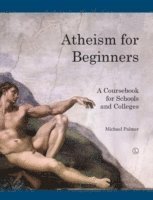
    Atheism for Beginners

    A course book for schools and colleges

    AvMichael Palmer

    Häftad, Engelska, 2013

    Del i serien The Lutterworth Press

    286 kr

    Beställningsvara. Skickas inom 5-8 vardagar. Fri frakt över 249 kr.

    Beskrivning

    A comprehensive coursebook introducing students and teachers to the non-theistic side of the debate over God's existence and its rich philosophical pedigree.Hurray for Michael Palmer!' is how Michael Martin, the distinguished American philosopher, greeted Palmer's The Atheist's Primer (Lutterworth, 2012). Atheism for Beginners, by providing a 'coursebook for schools and colleges,' differs from its predecessor in being designed specifically for teachers and their students. Yet, although different in focus and format, the intention remains the same: to reinstate the importance of philosophy within the debate about God's existence and to act as a corrective to the largely Darwinian criticisms levelled against religious belief by Richard Dawkins and the so-called 'new atheists'. So, in Palmer's lively history of atheism, extending from the ancient Greeks to the present day, we meet the enduring philosophical arguments against God and the great literature in which they are expressed. Atheism for Beginners is user-friendly and presumes no special grounding in philosophy. Throughout assistance is given by numerous aids to learning: there are exercises, marginal notes, essay questions, bibliographies and a glossary. Also provided are fourteen short biographies of famous atheists. In these respects Palmer follows the format first presented in his widely-read Moral Problems of 1991, long established as a core text in the teaching of philosophy.In Atheism for Beginners, Palmer covers the main atheistic arguments, discussing issues such as creation, morality, evil, miracles and the motivations of belief. Particular attention is paid to the work of Hume, Marx, Nietzsche and Freud, with a special chapter devoted to the development of 'disproof atheism'. Atheism is often criticized for being unduly pessimistic: that without God there is nothing to look forward to, no life after death, no final righting of wrongs and no hope of salvation. But this, Palmer argues, is 'a slander against the atheistic outlook'. He concludes, therefore, on a positive note, explaining that happiness and personal fulfilment are to be found in the very materialism that religious belief rejects.

    Produktinformation

    • Utgivningsdatum:2013-02-28
    • Mått:188 x 246 x 13 mm
    • Vikt:471 g
    • Format:Häftad
    • Språk:Engelska
    • Serie:The Lutterworth Press
    • Antal sidor:238
    • Förlag:Boydell & Brewer Ltd
    • ISBN:9780718892913

    Utforska kategorier

    • Religion och filosofi inom Barn och ungdom
    • Alternativa trosföreställningar inom Filosofi och religion

    Mer om författaren

    A former Teaching Fellow at McMaster University and Humboldt Fellow at Marburg University, Dr Palmer has taught at Marlborough College and Bristol University. For many years Founding Head of the Department of Religion and Philosophy at the Manchester Grammar School, Dr Palmer is also the author of the best-selling textbook Moral Problems as well as of the two-volume textbook The Philosophy of Religion. More recently he has written The Atheist's Creed (2010) and The Atheist's Primer (2012). His work has been translated into many languages.

    Recensioner i media

    The style is clear and approachable, and the reading doesn't require specific knowledge of the philosophical field. [...] The aim is to teach students how to think logically in order to make them able to critically judge various theistic/creationist/fatalistic arguments that religions advance in their support and don't let them be deceived by logically incoherent and slanted reasoning. [...] The last chapter is particularly interesting as it deals with recent developments of disproof Atheism ... by contemporary philosophers as Alfred j. Ayer, John N. Findlay, Michael Martin, Nicholas Everitt, etc.

    Innehållsförteckning

    • 1. The Meaning of Atheismi. Definition of Atheismii. The Variety of Gods and the Many-Gods Objectioniii. Study Questionsiv. Guide to Further Reading2. Creationi. The Beginnings of Atheism: Its Rise and Fallii. The Christian Theory of Creationiii. The Re-emergence of Atheismiv. Hume on the Argument from Causev. An Infinite or Finite Universe?vi. Study Questionsvii. Guide to Further Reading3. The Design of the Worldi. Introducing Monkeys and Darwinii. The Argument from Designiii. Hume's Criticisms of the Design Argumentiv. Darwin's Criticisms of the Design Argumentv. Post-Darwinian Criticisms of the Design Argumentvi. Study Questionsvii. Guide to Further Reading4. The Argument from Evili. Moral and Non-Moral Evilii. Evolution as Non-Moral Eviliii. The Problem of Evil: A Logical or Evidential Problem?iv. The Problem of Evil: The Logical Argumentv. The Problem of Evil: The Evidential Argumentvi. Study Questionsvii. Guide to Further Reading5. The Moral Argumenti. Introduction: Moral Relativism and Religionii. Criticisms of the Moral Argumentiii. Nietzsche's Critique of Religious Moralityiv. Study Questionsv. Guide to Further Reading6. Miraclesi. Some Miraclesii. Definition of a Miracle (1)iii. Definition of a Miracle (2)iv. Hume's Critique of Miracles: Are Miracles Impossible?v. Hume's Critique of Miracles: Are Miracles Improbable?vi. Conclusionvi. Study Questionsvii. Guide to Further Reading7. The Impulse to Believe.i. Introduction: The Experiences of Faithii. Projection Theory: Ludwig Feuerbachiii. Marx's Projection Theory: Religion as the Opium of the Peopleiv. Freud's Projection Theory: Religion as a Universal Obsessional Neurosisv. Conclusion: Is Atheism Pessimistic?vi. Study Questionsvii. Guide to Further Reading8. Disproving Godi. Introduction: The Logic of God's Attributesii. Arguments from Incoherenceiii. Two Theistic Defencesiv. Some conclusionsv. Study Questionsvi. Guide to Further ReadingAppendix