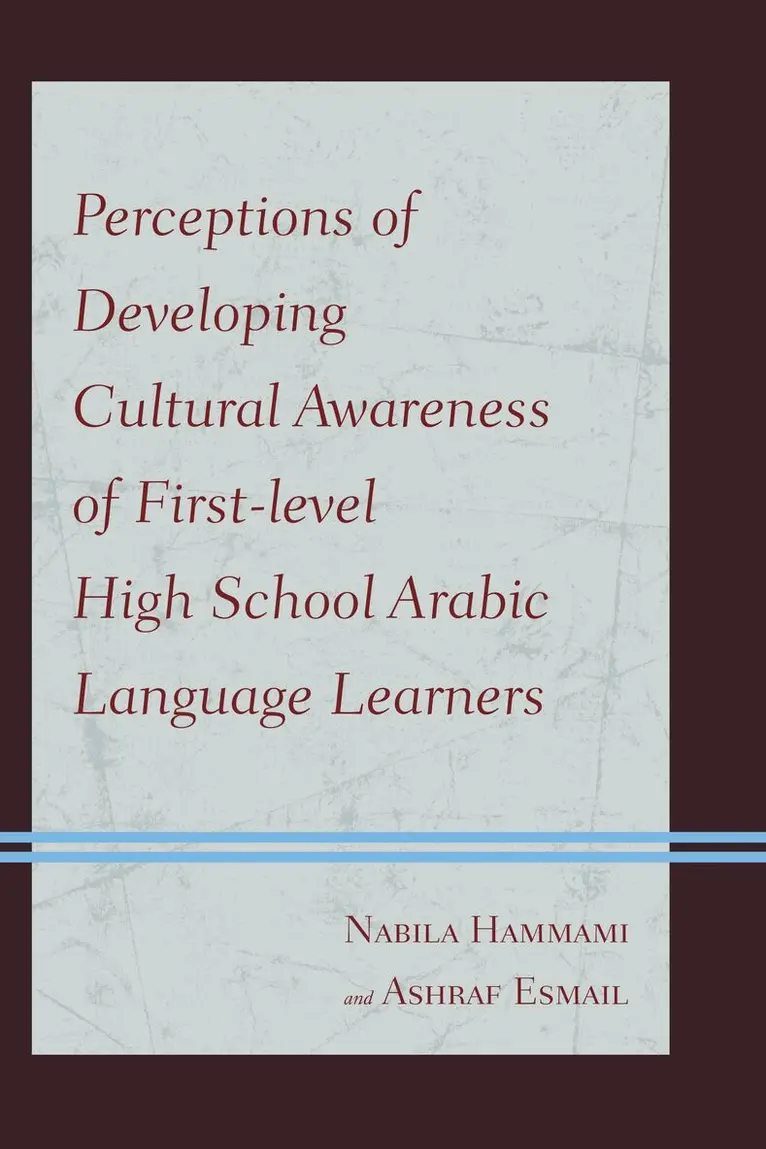
Häftad, Engelska, 2013
Perceptions of Developing Cultural Awareness of First-level High School Arabic Language Learners
Av Nabila Hammami, Ashraf Esmail
502 kr
Beställningsvara. Skickas inom 10-15 vardagar. Fri frakt över 249 kr.
Beskrivning
This book analyzes how Arabic teachers develop the cultural awareness of their high school students. Featuring face-to-face conversations with educators about integrating Arabic culture into the language classroom, this study highlights the complexities that characterize Arabic cultural awareness in a post-9/11 world. This book proves that increasing cultural awareness in the classroom facilitates the Arab language learning process.
Produktinformation
- Utgivningsdatum: 2013-12-06
- Mått: 154 x 230 x 10 mm
- Vikt: 172 g
- Format: Häftad
- Språk: Engelska
- Antal sidor: 108
- Förlag: University Press of America
- ISBN: 9780761862475
Utforska kategorier
Betyg & recensioner
0 recensioner
Inga recensioner tillgängliga.