
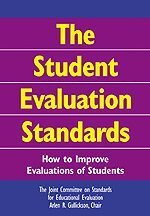
Student Evaluation Standards
How to Improve Evaluations of Students
AvArlen R. Gullickson,Arlen R. Gullickson
Inbunden, Engelska, 2002
1 313 kr
Beställningsvara. Skickas inom 3-6 vardagar. Fri frakt över 249 kr.
Fler format och utgåvor
Beskrivning
"Teachers make judgments about students every day, based on such formal and informal appraisals of their work as classroom observation, homework assignments, and teacher-made quizzes. Soon, they′ll have the first set of professional standards to help guide them in making such decisions."—Education Week—Education Week A practical guide to designing and assessing student evaluation.Student evaluation and assessment are central to every school and classroom. Evaluation and assessment are how we find out what students are learning, how they are progressing, and how we can make improvements for their future development. With requirements for testing and standards-based instruction at an all-time high, effective student evaluation is more essential today than ever before. But where in the instructional process should assessments occur? What kinds of questions should be asked? How is the information used to direct student learning? Who has the right to access and use this information?The Joint Committee presents 28 certified standards for assessing evaluation practices in elementary and secondary classrooms. These standards are broken down into four essential attributes of sound evaluation, each providing definitions, guidelines, common errors, supportive documentation, and illustrative case studies:Propriety standards, which protect individual rights Utility standards, which ensure that evaluations are timely, informative, and influential Feasibility standards, which recognize "real-world" dynamics and environmental influences Accuracy standards, which determine whether an evaluation has produced sound informationThese standards provide teachers and administrators with the tools they need to master every "nuance" of student evaluation, including validity, political viability, teacher biases, conflicts of interest, a student′s right to privacy, and much more. But most important, they will help ensure that student evaluation practices are on track, so we can properly serve and improve student learning.These standards have been approved by the American National Standards Institute (ANSI), and were developed with assistance from members of 16 professional societies:American Association of School AdministratorsAmerican Counseling AssociationAmerican Educational Research AssociationAmerican Evaluation AssociationAmerican Psychological AssociationAssociation for Supervision and Curriculum DevelopmentCanadian Evaluation SocietyCanadian Society for the Study of EducationConsortium for Research on Educational Accountability and Teacher EvaluationCouncil of Chief State School OfficersNational Association of Elementary School PrincipalsNational Association of Secondary School PrincipalsNational Council on Measurement in EducationNational Education AssociationNational Legislative Program Evaluation SocietyNational School Boards Association
Produktinformation
Utforska kategorier
Mer om författaren
Recensioner i media
Innehållsförteckning
Hoppa över listan
Mer från samma författare
Del 9
Evaluating the Upgrading of Technical Courses at Two-Year Colleges
Arlen R. Gullickson, Frances Lawrenz, Nanette Keiser
Inbunden, 2004
1 701 kr
Improving Formative Assessment Practice to Empower Student Learning
E. Caroline Wylie, Arlen R. Gullickson
Häftad, 2012
593 kr
Hoppa över listan



Du kanske också är intresserad av
- 10% rabatt på allt
Student Evaluation Standards
The Joint Committee on Standards for Edu, Chair Arlen R. Gullickson, Arlen R. Gullickson
Häftad, 2002
644 kr
Del 9
Evaluating the Upgrading of Technical Courses at Two-Year Colleges
Arlen R. Gullickson, Frances Lawrenz, Nanette Keiser
Inbunden, 2004
1 701 kr
Improving Formative Assessment Practice to Empower Student Learning
E. Caroline Wylie, Arlen R. Gullickson
Häftad, 2012
593 kr
- 10% rabatt på allt
Del 11
- 10% rabatt på allt
- -30%
- 10% rabatt på allt
Del 4