• Fri frakt över 249 kr
  • •
  • Snabba leveranser
  • •
  • Billiga böcker
Kundservice

Du är på sajten för privatpersoner.

Företag, bibliotek eller offentlig verksamhet?

Du handlar på classic.bokus.com, där alla dina funktioner finns intakta.
Till classic.bokus.com
Bokus logotyp. Gå till startsidan.
  • Erbjudanden
  • Nyheter
  • Student
  • Topplistor
  • Barn & ungdom
  • Bokus Play
  • E-böcker
  • Pocketböcker
  • Spel & pussel

10% rabatt på allt med kod: NYSTART10 →

Sidfot

Mina sidor

    Hjälp

    • Kundservice
    • Vanliga frågor och svar
    • Frakt och leverans
    • Retur vid ångerrätt
    • Reklamera vara
    • Betalning
    • Köpvillkor
    • Allmänna villkor
    • Information om webbplatsens tillgänglighet

    Om Bokus

    • Om oss
    • Pressrum
    • För studenter
    • För företag
    • För bibliotek och offentlig verksamhet
    • För leverantörer
    • Hållbarhet

    Populärt

    • Aktuella erbjudanden
    • Presentkort
    • Studentlitteratur
    • Nya böcker
    • Topplistor
    • Signerade böcker
    • Engelska böcker

    Inspiration

    • Boktips
    • BookTok
    • Populära bokserier
    • Barnbokskaraktärer
    • Populära författare
    Logotyp för Bokus
    Följ oss på Facebook (extern länk)Följ oss på Instagram (extern länk)Följ oss på YouTube (extern länk)Följ oss på TikTok (extern länk)
    bokus @ CookiesAnpassa cookiesIntegritetspolicyKöpvillkor
    Till Citymail hemsida (extern länk)Till Budbee hemsida (extern länk)Till Postnord hemsida (extern länk)Till Schenker hemsida (extern länk)Till Early Bird hemsida (extern länk)Till Walleys hemsida (extern länk)
    1. Historia och arkeologi
    2. Historia
    3. Historia: särskilda händelser och ämnen
    4. Socialhistoria och kulturhistoria

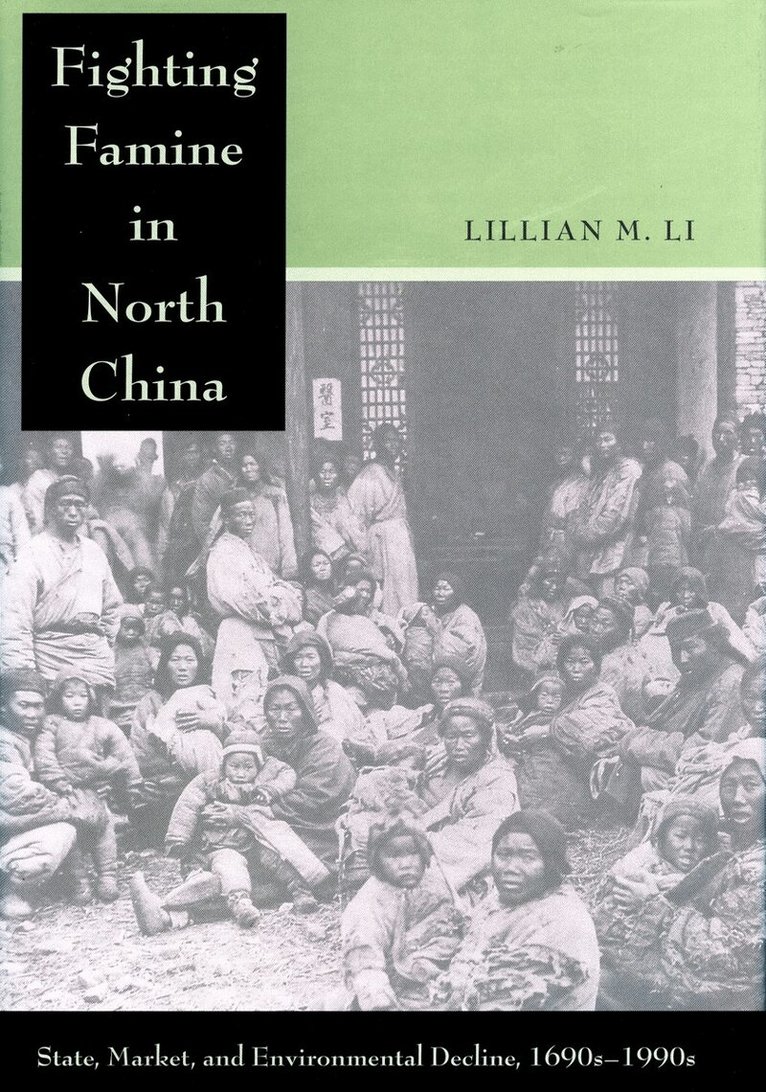
    Fighting Famine in North China

    State, Market, and Environmental Decline, 1690s-1990s

    AvLillian M. Li

    Häftad, Engelska, 2010

    608 kr

    Beställningsvara. Skickas inom 10-15 vardagar. Fri frakt över 249 kr.

    Beskrivning

    This monumental work provides a new perspective on the historical significance of famines in China over the past three hundred years. It examines the relationship between the interventionist state policies of the eighteenth-century Qing emperors ("the golden age of famine relief"), the environmental and political crises of the nineteenth and early twentieth centuries (when China was called "the Land of Famine"), and the ambitions of the Mao era (which tragically led to the greatest famine in human history). In addition to a wide array of documentary sources, the book employs quantitative analysis to measure the economic impact of natural crises, state policies, and markets. In this way, the theories of Qing statesmen that have received much attention in recent scholarship are linked to actual practices and outcomes. Using the Zhili-Hebei region as its focus, the book also reveals the unusual role played by the institutions and policies designed to ensure food security for the capital, Beijing.

    Produktinformation

    • Utgivningsdatum:2010-02-25
    • Mått:178 x 254 x 29 mm
    • Vikt:939 g
    • Format:Häftad
    • Språk:Engelska
    • Antal sidor:544
    • Förlag:Stanford University Press
    • ISBN:9780804771818

    Utforska kategorier

    • Socialhistoria och kulturhistoria inom Historia och arkeologi
    • Asiens historia inom Historia och arkeologi

    Mer om författaren

    Lillian M. Li is Professor of History at Swarthmore College. She has previously published China's Silk Trade: Traditional Industry in the Modern World, 1842-1937 (1981) and coedited Chinese History in Economic Perspective (1992).

    Recensioner i media

    "Li's book makes an important contribution to the study of famine and Chinese economic history . . . Li's work is truly monumental for the study of China's famine and famine fighting."—Yixin Chen, Chinese Historical Review "Li's work deserves the serious attention of those who are interested in understanding how emperors, leaders, and civil societies in China, especially in North China, have dealt with natural catastrophes and famines in the last three hundred years . . . [T]he book provides a comprehensive examination on factors that might have contributed to food shortage or famine during the long period from the 1690s ti the 1990s."—Guanzhong James Wen, China Review International "This is an extraordinary monograph, one that will long remain the definitive account of a most challenging issue—the long-term problem of human sustenance on the northeast China plain."—CHOICE "In this long-awaited book Lillian Li offers us a masterful account of three centuries of environmental and socio-economic history in one of the core regions of China Li's achievement is especially noteworthy when we consider the multiplicity of variables she addresses with equal thoroughness and clarity and combines into a convincing narrative of ever-mounting problems and tensions. Certainly Li's monumental work is a must-read for present-day planners and decision-makers."—EH.NET "People have been looking forward to this book for a long time; the wait was worth it. Lillian Li's Fighting Famine in North China: State, Market, and Environmental Decline, 1690s-1990s is as close to a definitive account of efforts to prevent and relieve famine in North China as we are likely to get for quite some time It goes well beyond the mid-Qing to consider both the century of North China's worst famines and the efforts of the last few decades that seem, for now, to have banished famine from China."—Harvard Journal of Asiatic Studies "Li's new study goes beyond both, drawing on far more archival sources; this time especially significant in her examination and use of price data. She also demonstrates greater attentiveness to local, regional and empire-wide grain markets, climate and environmental history, and the local economy The book is too comprehensive to do it justice in a review."—Christopher M. Isett, University of Minnesota "Li's examination of the economic and political history of famines in North China exemplifies the possibilities for quantitative and economic histories of China's last dynasty . . . Li's findings provide an important addition to the debate over the development of the market economy in China during the last dynasty."—American Historical Review

    Innehållsförteckning

    • @fmct:Contents @toc4:List of Tablesiii List of Illustrationsiii Acknowledgmentsiii @toc2:Introduction1 Chapter 1: "Heaven, Earth, and Man" in North China000 @toc3:History of the Hai River System000 The Hai River Basin of North China000 Climate of the Hai River Basin000 Historical Climate000 Floods, Droughts, and Disasters000 Local Records and Social Consequences000 Conclusion000 @toc2:Chapter 2. Managing the Rivers: Emperors as Engineers 000 @toc3:Kangxi and the Yongding River000 Yongzheng, Prince Yi, and a Comprehensive Plan000 Qianlong and Routinization000 Jiaqing: Heroic Hydraulics000 Daoguang: Earnest Efforts000 Fin-de-siecle Floods000 Local Initiatives000 Emperors, Bureaucrats, and Ecology000 @toc2:Chapter 3. Population, Agriculture, and Food000 @toc3:Population and Land000 Land and Agriculture Under Manchu Rule000 Agriculture: Grains and Other Crops000 Cropping Patterns and Yields000 Diet and Standard of Living000 Not Quite a Malthusian Tale000 @toc2:Chapter 4. Food and Prices000 @toc3:Long-Term Price Trends000 Multicropping and Seasonality000 Natural Crises and Harvests000 The Copper Coin-Silver Exchange Rate000 Conclusion000 @toc2:Chapter 5. Provisioning Beijing000 @toc3:Beijing and Grain Tribute000 Grain Stipends: Distribution, Timing, and Sales000 Pingtiao and the Beijing Market000 Social Unrest, Pingtiao, and Soup Kitchens000 Markets, Merchants, and Gendarmerie000 Conclusion000 @toc2: Chapter 6. Storing Grain: Granaries as Solution and Problem000 @toc3:Granaries in Chinese History000 Kangxi-Yongzheng Origins000 Ever-Normal Granaries in the Qianlong Period000 Ever-Normal Granaries in the Jiaqing and Daoguang Periods000 Community and Charity Granaries000 External Grain Supplies000 Conclusion000 @toc2:Chapter 7. Markets and Prices000 @toc3:Market Integration Within Zhili000 Price Integration with Other Regions000 Conclusion000 @toc2:Chapter 8. Famine Relief: The High Qing Model000 @toc3:Famine Investigation000 General Relief000 Grain Versus Cash/Millet Versus Sorghum000 Soup Kitchens000 Pingtiao000 Tax Remissions000 Shelters and Famine Refugees000 17431744: Famine Relief Model000 1759: Disaster Without Relief000 17611763 and Later: Relief With and Without Disaster000 Overall Evaluation000 @toc2:Chapter 9. Famine Relief: Nineteenth-Century Devolution000 @toc3:The 1801 Flood000 The 18131814 Crisis000 Daoguang Crises and Corruption000 Midcentury Political Crisis000 The 18711872 Floods and the Li Hongzhang Era000 The 18761879 North China Famine000 The 18901895 Floods000 Conclusion000 @toc2:Chapter 10. The "Land of Famine," 19001949000 @toc3:1917 and Later Floods000 The 19201921 Drought and International Aid000 The 19281930 North China Drought and National Crisis000 Conclusion000 @toc2:Chapter 11. Rural Crisis and Economic Change, 1900<- >1949000 @toc3:Famine and Poverty000 Changes in the Economy000 Local Experiences000 Economic Trends000 Japanese Aggression, Communist Insurgency, and Rural Poverty000 Conclusion000 @toc2:Chapter 12. Food and Famine Under Socialist Rule, 19491990s000 @toc3:Population, Agriculture, and Grain in Hebei000 Socialism and Subsistence in Hebei, 19491958 and Beyond000 The Great Leap Famine, 19581961000 Controlling Nature000 Unleashing the Market000 Regulating the Grain Market000 Conclusion000 @toc2:Conclusion000 @toc4:Reign Periods of the Qing Dynasty (16441911) and Use of Dates000 Weights and Measures000 Glossary (Chinese Characters)000 @toc4:Appendices000 @toc3:Appendix 1: Prefectures and Counties in Zhili Province in Qing Period000 Appendix 2: Data000 Appendix 3: Quantitative Methods000 @toc4:Abbreviations Used in Notes000 Notes000 Bibliography000 Gazetteers List000 Index000