• Fri frakt över 249 kr
  • •
  • Snabba leveranser
  • •
  • Billiga böcker
Kundservice

Du är på sajten för privatpersoner.

Företag, bibliotek eller offentlig verksamhet?

Du handlar på classic.bokus.com, där alla dina funktioner finns intakta.
Till classic.bokus.com
Bokus logotyp. Gå till startsidan.
  • Erbjudanden
  • Student
  • Topplistor
  • Barn & ungdom
  • Bokus Play
  • E-böcker
  • Ljudböcker
  • Pocketböcker
  • Spel och pussel

5% studentrabatt – använd koden KURSBOK27 →

Sidfot

Mina sidor

    Hjälp

    • Kundservice
    • Vanliga frågor och svar
    • Frakt och leverans
    • Retur vid ångerrätt
    • Reklamera vara
    • Betalning
    • Köpvillkor
    • Allmänna villkor
    • Information om webbplatsens tillgänglighet

    Om Bokus

    • Om oss
    • Pressrum
    • För studenter
    • För företag
    • För bibliotek och offentlig verksamhet
    • För leverantörer
    • Hållbarhet

    Populärt

    • Aktuella erbjudanden
    • Presentkort
    • Studentlitteratur
    • Nya böcker
    • Topplistor
    • Signerade böcker
    • Engelska böcker

    Inspiration

    • Boktips
    • BookTok
    • Barnbokskaraktärer
    • Populära författare
    Logotyp för Bokus
    Följ oss på Facebook (extern länk)Följ oss på Instagram (extern länk)Följ oss på YouTube (extern länk)Följ oss på TikTok (extern länk)
    bokus @ CookiesAnpassa cookiesIntegritetspolicyKöpvillkor
    Till Citymail hemsida (extern länk)Till Budbee hemsida (extern länk)Till Postnord hemsida (extern länk)Till Schenker hemsida (extern länk)Till Early Bird hemsida (extern länk)Till Walleys hemsida (extern länk)
    1. Samhälle och politik
    2. Politik och statsskick
    3. Politisk aktivism

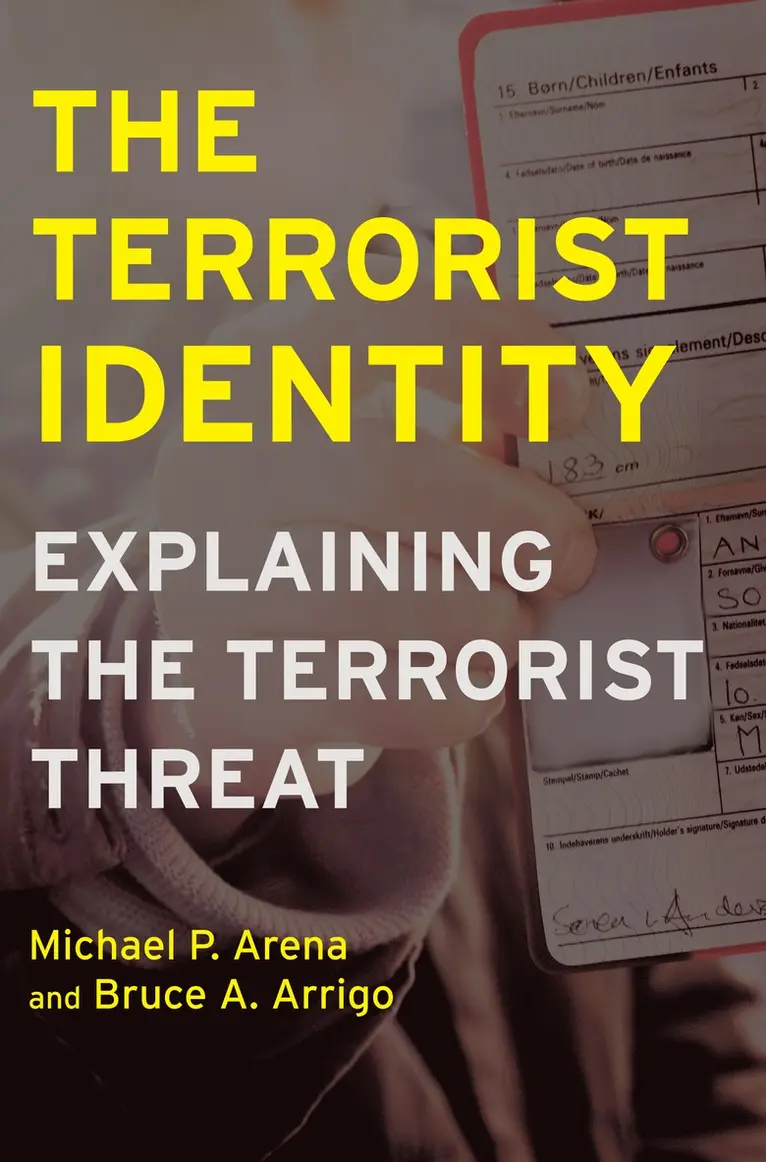
    Terrorist Identity

    Explaining the Terrorist Threat

    AvMichael P. Arena,Bruce A. Arrigo

    Inbunden, Engelska, 2006

    Del i serien Alternative Criminology

    946 kr

    Beställningsvara. Skickas inom 10-15 vardagar. Fri frakt över 249 kr.

    Fler format och utgåvor

    Häftad

    415 kr

    Beskrivning

    Who would strap a bomb to his chest, walk into a crowded subway station and blow himself up? Only by examining how a terrorist understands his own identity and actions can this question be answered. The authors of The Terrorist Identity explore how the notion of self-concept combined with membership in terrorist and extremist groups, can shape and sustain the identity of a terrorist as well as their subsequent justification for violence and the legitimacy of their actions.The book provides an understanding of identity that draws on concepts from psychology, criminology, and sociology. Notably, the book examines several case studies of various terrorist groups, including: the Provisional Irish Republican Army, Hamas, the Shining Path, the Liberation Tigers of Tamil Eelam, and racist Skinheads. By making the construct of identity central to this analysis The Terrorist Identity explains how violent and extremist collective behavior emerges culturally, how it informs the identity of group members socially, and how participants assume their place in these groups completely even at the expense of life-threatening harm to others or to themselves.

    Produktinformation

    • Utgivningsdatum:2006-11-01
    • Mått:153 x 229 x 21 mm
    • Vikt:597 g
    • Format:Inbunden
    • Språk:Engelska
    • Serie:Alternative Criminology
    • Antal sidor:301
    • Förlag:New York University Press
    • ISBN:9780814707159

    Utforska kategorier

    • Politisk aktivism inom Samhälle och politik

    Mer om författaren

    Michael P. Arena is employed by a large state law enforcement agency where he works as an analyst and trainer.Bruce A. Arrigo is Professor of Crime, Law, and Society at the University of North Carolina at Charlotte. He is the author or editor of numerous books, most recently, Criminal Behavior: A Systems Approach and Philosophy, Crime, and Criminology.

    Recensioner i media

    "Arena and Arrigo give us a brilliant glimpse into the 'terrorist' psyche as they detail the creation and maintenance of identity in various terrorist organizations. Their conceptual framework has important implications for law enforcement, public policy makers, and academic researchers engaged in the study of terrorism." - Lynne Snowden,co-author of Collective Violence "The authors argue that terrorists can be better understood using the 'growing body of research known as the sociology of terrorism and, in particular, through the lens of 'structural symbolic interactionism, which explains aggression by focusing on how group identity is formed at the individual level." - Brian Forst (Theoretical Criminology) "The overall quality of this book is astonishing, the ease of reading and the depth of theoretical knowledge, equally impressive. It is a valuable contribution to the terrorism literature and of such quality that it will be quoted, used, debated, and confronted by researchers for years to come. This book represents a vanguard of sociological thought on this subject and is a much needed voice in the debates on terrorism." - James David Ballard,author of Terrorism, Media, And Public Policy: The Oklahoma City Bombing "The interpretive framework presented offers students of political violence a highly accessible template from which to study the sociopsychological reasons individuals are drawn into terrorist groups, and how the groups themselves act to reinforce the identities of their members. . . . The authors are to be commended for producing a model with such tremendous analytical clarity and pedagogical utility." (Choice, Highly Recommended)

    Innehållsförteckning

    • Acknowledgments Part I1 Introduction 2 The Psychology of Terrorism 3 The Sociology of Identity Part II4 An Overview of Five Extremist Organizations 5 The Provisional Irish Republican Army 6 The Islamic Resistance Movement (Hamas) 7 The Peruvian Shining Path8 The Liberation Tigers of Tamil Eelam9 Racist Skinheads Part III10 Conclusion NotesReferences IndexAbout the Author