• Fri frakt över 249 kr
  • •
  • Snabba leveranser
  • •
  • Billiga böcker
Kundservice

Du är på sajten för privatpersoner.

Företag, bibliotek eller offentlig verksamhet?

Du handlar på classic.bokus.com, där alla dina funktioner finns intakta.
Till classic.bokus.com
Bokus logotyp. Gå till startsidan.
  • Erbjudanden
  • Student
  • Topplistor
  • Barn & ungdom
  • Bokus Play
  • E-böcker
  • Ljudböcker
  • Pocketböcker
  • Spel och pussel

Pocketfynda! Hundratals böcker för 49 kr/st →

Sidfot

Mina sidor

    Hjälp

    • Kundservice
    • Vanliga frågor och svar
    • Frakt och leverans
    • Retur vid ångerrätt
    • Reklamera vara
    • Betalning
    • Köpvillkor
    • Allmänna villkor
    • Information om webbplatsens tillgänglighet

    Om Bokus

    • Om oss
    • Pressrum
    • För studenter
    • För företag
    • För bibliotek och offentlig verksamhet
    • För leverantörer
    • Hållbarhet

    Populärt

    • Aktuella erbjudanden
    • Presentkort
    • Studentlitteratur
    • Nya böcker
    • Topplistor
    • Signerade böcker
    • Engelska böcker

    Inspiration

    • Boktips
    • BookTok
    • Barnbokskaraktärer
    • Populära författare
    Logotyp för Bokus
    Följ oss på Facebook (extern länk)Följ oss på Instagram (extern länk)Följ oss på YouTube (extern länk)Följ oss på TikTok (extern länk)
    bokus @ CookiesAnpassa cookiesIntegritetspolicyKöpvillkor
    Till Citymail hemsida (extern länk)Till Budbee hemsida (extern länk)Till Postnord hemsida (extern länk)Till Schenker hemsida (extern länk)Till Early Bird hemsida (extern länk)Till Walleys hemsida (extern länk)
    1. Samhälle och politik
    2. Social välfärd och brottslighet
    3. Socialt arbete och välfärd

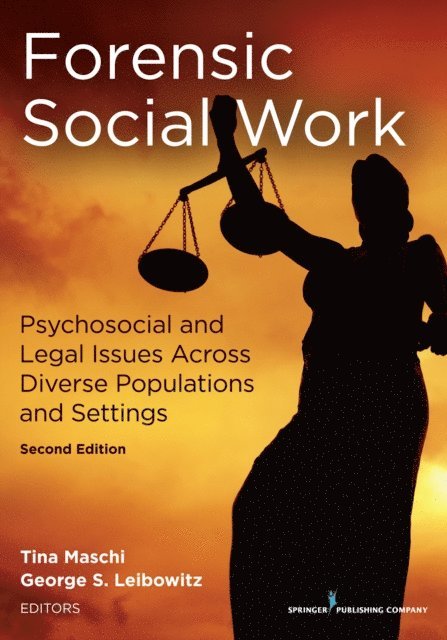
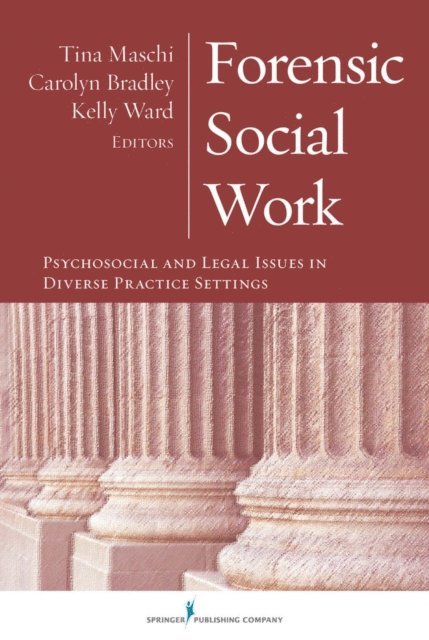
    Forensic Social Work

    Psychosocial and Legal Issues Across Diverse Populations and Settings

    AvTina Maschi,George Stuart Leibowitz

    Häftad, Engelska, 2017

    1 245 kr

    Beställningsvara. Skickas inom 5-8 vardagar. Fri frakt över 249 kr.

    Beskrivning

    This extensively revised edition reviews the latest research and practices in forensic social work. Readers learn to integrate socio-legal knowledge when working with diverse populations in a variety of settings. Noted interdisciplinary contributors review the most common forensic issues encountered in the field to better prepare readers to deal with the resulting financial, psychological, emotional, and legal ramifications. Using a human rights and social justice approach, the book demonstrates the use of a forensic lens when working with individuals, families, organizations, and communities who struggle with human rights and social justice issues. Each chapter features objectives, competencies, Voices from the Field, a summary, exercises, and additional resources.Features:Highlights working with various populations such as minorities, immigrants, veterans, the elderly, LGBTQ persons, persons with disabilities, substance abusers, trauma survivors, and more.Reviews the field’s conceptual and historical foundation and pertinent laws to better prepare readers for professional practice (Part 1).Introduces the most common forensic issues encountered when working in various settings including health care, social and protective services, the child welfare system, the criminal justice system, school systems, immigration services, addiction treatment facilities, and more (Part 2).Provides a wealth of practical guidance via case studies and interviewing, assessment, and intervention tips.Voices from the Field written by seasoned practitioners introduce common situations readers are likely to encounter.New to this Edition:Highlights the 2015 Council on Social Work Education’s (CSWE) Policies and Accreditation Standards throughout the text.Greatly expanded coverage from 26 to 32 chapters with more on healthcare, housing, employment, the juvenile and criminal justice system, adult protective services, and the dynamics of oppression.New Part dedicated to the core skills that must be mastered by forensic social workers including evidence-based assessments and interventions, forensic interviewing, expert testimonies, case and policy advocacy, program development, and research and evaluation (Part 3).Highlights the latest interventions including trauma informed and restorative justice practices.Updated content related to the DSM-5 and healthcare reform.Reflects the latest immigration policies, criminal justice reform, the Violence Against Women Act, and the Older Americans Act.More instructor resources including sample syllabi, Power Points, interviewing, evaluation, and assessment forms and checklists.Ideal for MSW and BSW courses in forensic social work as well as forensic/legal courses taught in criminal justice and psychology, practitioners working in a variety of settings who must have a working knowledge of forensic social work will appreciate this book’s comprehensive overview of the field.

    Produktinformation

    • Utgivningsdatum:2017-07-27
    • Mått:178 x 254 x 33 mm
    • Vikt:1 036 g
    • Format:Häftad
    • Språk:Engelska
    • Antal sidor:560
    • Upplaga:2
    • Förlag:Springer Publishing Co Inc
    • ISBN:9780826120663

    Utforska kategorier

    • Socialt arbete och välfärd inom Samhälle och politik

    Mer om författaren

    Tina Maschi, PhD, LCSW, ACSW, is an associate professor at the Fordham University Graduate School of Social Service where she teaches research, practice, and human rights and social justice.George Stuart Leibowitz, Ph.D., LICSW, is Professor at Stony Brook University, School of Social Welfare in New York.

    Innehållsförteckning

    • PART I: A HUMAN RIGHTS AND SOCIAL JUSTICE APPROACH TO FORENSIC PRACTICEChapter 1: Conceptual and Historical Overview of Forensic Social WorkTina Maschi, George S. Leibowitz, Mary Lou KillianChapter 2: Life Course Systems Power Analysis: Understanding Health and Justice Disparities for Forensic Assessment and InterventionTina Maschi, George S. LeibowitzChapter 3A: Human Rights: Some Implications for Social WorkRosemary BarberaChapter 3B: Social Work and the Law: An Overview of Ethics, Social Work, & Civil and Criminal LawDavid McLeodPART II: SYSTEMS OF CARE AND FORENSIC PRACTICEChapter 4: Education, Social Work and the LawCarolyn Bradley, Karen DunnChapter 5: Thinking Outside the Box: Tackling Health Inequities throughForensic Social Work PracticeKaren Bullock, Jodi Hall, David FitzpatrickChapter 6: HousingTam Perry, Vanessa Rorai, Claudia SanfordChapter 7: Employment at the Intersection of the Juvenile Justice SystemRebecca Linn-WaltonChapter 8: Families as a System in Forensic PracticeNancy Mezey, Tina Maschi, George LeibowitzChapter 9: Family and Social Services: Meeting Basic Human Needs of Income, Food, and ShelterAnne SparksChapter 10: Child WelfareGeorge Leibowitz, R. Anna Hayward-Everson, Carl MazzaChapter 11: Domestic ViolenceJoan PennellChapter 12: Substance Use & Co-Occurring Psychiatric Disorders Treatment: Systemsand Issues for Those in Jail, Prison, and on ParoleKeith Morgen, Kelsey Denison-Vesel, Abigail Voelkner,Carolyn Brouard, Jaclyn Smith, Alissa NowakChapter 13: Critical Issues, Trends, and Interventions in Juvenile JusticeWesley Church, George S. Leibowitz, Tina MaschiChapter 14: The Criminal Justice System: A History of Mass Incarceration withImplications for Forensic Social WorkKirk JamesChapter 15: Adult Protective Services at the Intersection of Aging and DisabilityJoy Swanson Ernst, Patricia Brownell, Tina MaschiChapter 16: Justice Involved Veterans: Programs and ServicesKelli Canada, Clark Peters, Danielle EasterChapter 17: The Immigrant Justice SystemCarol CleavelandChapter 18: Intersectoral Collaboration: Mental Health, Substance Abuse andHomelessness Among Vulnerable PopulationsDavid Fitzpatrick, Jodi Hall, Karen BullockPART III: CORE SKILLS: PRACTICE, RESEARCH AND EVALUATION, POLICY, AND ADVOCACYChapter 19: Empirically Informed Forensic Social Work PracticeMelissa Grady, Jill Levenson, David PrescottChapter 20: Motivational InterviewingDavid Prescott, George S. LeibowitzChapter 21: Forensic InterviewingSusan RobbinsChapter 22: Expert Witness Testimony in Forensic Practice and Justice SystemsShreya MandalChapter 23: Restorative Justice and Community Well Being: Visualizing Theories, Practices, and Research – Part 1Johannes WheeldonKatherine van WormerChapter 25: Empowerment and Feminist Practice with Forensic PopulationsSandra TurnerChapter 26: Family Engagement and Social Work in Statutory SettingsGale BurfordChapter 27: Collaboration and Care CoordinationIda Dickie, Tina MaschiChapter 28: Human Rights Issues and Research with Prisoners and Other VulnerablePopulations: Where Does Evidence-Based Practice Go From Here?Sandy GibsonChapter 29: Forensic Research and Evaluation: Program and Policy Interventions thatPromote Human Rights and Social JusticeTina Maschi, George S. Leibowitz, Joanne ReesChapter 30: Case Level and Policy AdvocacyEileen KleinChapter 31: Victim AdvocacyMarie MeleChapter 32: Family Televisiting: An Innovative Psychologist-Directed Program toIncrease Resilience & Reduce Trauma Among Children with IncarceratedParentsFrank Corigliano