Hired! The Job Hunting and Career Planning Guide
Michael Stebleton Ph. D., Michael Henle
1 385 kr
Du är på sajten för privatpersoner.
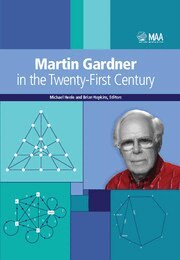
Michael Henle is a professor of mathematics at Oberlin College. He is the author of several books including "Which Numbers are Real?" published by the MAA in 2012. Trained as a functional analysis, he also writes on combinatorial subjects and geometry. He is serving as editor of The College Mathematics Journal through to 2013. Brian Hopkins is a professor of mathematics at Saint Peter's University in Jersey City, New Jersey. He won, with Robin Wilson, the 2005 George Polya Award, edited the 2008 MAA Notes volume Resources for Teaching Discrete Mathematics, and was given the 2011 MAA New Jersey Section Award for Distinguished College or University Teaching of Mathematics. Much of his research stems from Bulgarian Solitaire, a topic popularized by Martin Gardner. Hopkins will be the editor of the College Mathematics Journal from 2014 to 2018.
"This is the second of two books on errors that have been made in mathematics. Some of them were made by students where they made major errors that somehow led to the correct answers (referred to as howlers) and others are errors in proofs that are at times deep and difficult to spot even though the conclusion is obviously false. The howlers are generally for entertainment purposes while the others can and should be used to provide deeper insight into the structure of a theorem as well as the extent of the conclusion. Some of the examples point out common flaws in proof techniques such as induction, my favorites are in the first chapter that contains mathematical flaws, some of which have appeared in mass media. One of the examples is a questioning of the effectiveness of Proposition 8 in California that there be heavier sentences for repeat offenders. The issue examined is whether the change in sentencing had the desired deterrent effect. The problems are split into categories: arithmetic, school algebra, geometry, limits, sequences, and series, differential calculus, integral calculus, combinatorics, probability and statistics, complex analysis, linear and modern algebra, and miscellaneous. It is a fact of human existence that we learn more from our mistakes than we do from our successes. When applied to mathematics this principle allows us to gain insight from the mistakes of others. Some of these examples are amusing but most are educational, worthy of being used in math classes to explain potential pitfalls." - Charles Ashbacher, Journal of Recreational Mathematics"For many years E.J. Barbeau has curated a feature in the College Mathematics Journal entitled ""Fallacies, Flaws, and Flimflam."" He published one collection of these [Spectrum Series, Washington, DC: The Mathematical Association of America; the book under review is the sequel. Over the years, it is my impression that the column has drifted somewhat away from accidental innumeracies in popular media (also ably collected by the British Mathematical Gazette) and towards deliberately obfuscated arguments of some sophistication; the book reflects this. However, the shift is quantitative, not absolute; there are still some fine media gleanings here. Most of the examples are simple enough to be followed by an undergraduate mathematics student; most are interesting enough to engage a professor's interest. This book should be in all university and high school libraries, and is priced to make an affordable prize or gift. One stylistic feature distinguishes this book from other collections of its type. Usually the editor takes the role of a sober Virgil guiding the reader through the bizarreries to be found there. Barbeau, however, occasionally adopts the persona of a teller of tall tales, a trickster, who will, wearing his best poker face, assist the reader right into the depths of the swamp! Personally I find this delightful; those with a more straitlaced sense of humor have been warned." - Robert Dawson, Zentrallblatt MATH"More Fallacies, Flaws, and Flimflam presents thought provoking aspects of a variety of concepts in mathematics, ranging from arithmetic to complex analysis. the author shows incorrect methods used by students to obtain correct solutions. Some of the errors seem ridiculously entertaining to a mathematician; others require thought to uncover and provide readers with interesting challenges. The book includes discussion of mathematical topics that are misused and misunderstood by the general population. For example, the author addresses confusion between the terms exponential growth and logarithmic growth. Just reading the contents of this book is a quick way for teachers of mathematics to be made aware of some fallacies and flaws in logic that they may encounter with their students. More Fallacies, Flaws, and Flimflam includes something for teachers of mathematics at all levels. Elementary school teachers will find topics in arithmetic and algebra. the topics extend to the high school level and include advanced algebra, geometry, trigonometry, and calculus. Mathematics educators at the college level will enjoy topics in complex analysis and linear algebra. Elementary school topics appear in the beginning of the book and progress to high school topics and then to college level mathematics. The book is entertaining and challenging, and the logical progression of topics makes it even more appealing. More Fallacies, Flaws, and Flimflam is a great addition to the library of any teacher of mathematics." - Tamara DuBois, West Plains High School
Michael Stebleton Ph. D., Michael Henle
1 385 kr
Brian Hopkins, Elena Geangu, Sally Linkenauger
2 145 kr
Ronald G. Barr, Brian Hopkins, Ronald G. Barr, Brian Hopkins, James A. Green
675 kr
Alex Fedde Kalverboer, Brian Hopkins, Reint Geuze
2 198 kr
Brian Hopkins, Elena Geangu, Sally Linkenauger
4 115 kr
Brian Hopkins, Scott P. Johnson, Brian Hopkins, PH.D. Johnson, Scott P., Scott P. Johnson
1 050 kr