• Fri frakt över 249 kr
  • •
  • Snabba leveranser
  • •
  • Billiga böcker
Kundservice

Du är på sajten för privatpersoner.

Företag, bibliotek eller offentlig verksamhet?

Du handlar på classic.bokus.com, där alla dina funktioner finns intakta.
Till classic.bokus.com
Bokus logotyp. Gå till startsidan.
  • Erbjudanden
  • Student
  • Topplistor
  • Barn & ungdom
  • Bokus Play
  • E-böcker
  • Ljudböcker
  • Pocketböcker
  • Spel och pussel

Pocketfynda! Hundratals böcker för 49 kr/st →

Sidfot

Mina sidor

    Hjälp

    • Kundservice
    • Vanliga frågor och svar
    • Frakt och leverans
    • Retur vid ångerrätt
    • Reklamera vara
    • Betalning
    • Köpvillkor
    • Allmänna villkor
    • Information om webbplatsens tillgänglighet

    Om Bokus

    • Om oss
    • Pressrum
    • För studenter
    • För företag
    • För bibliotek och offentlig verksamhet
    • För leverantörer
    • Hållbarhet

    Populärt

    • Aktuella erbjudanden
    • Presentkort
    • Studentlitteratur
    • Nya böcker
    • Topplistor
    • Signerade böcker
    • Engelska böcker

    Inspiration

    • Boktips
    • BookTok
    • Barnbokskaraktärer
    • Populära författare
    Logotyp för Bokus
    Följ oss på Facebook (extern länk)Följ oss på Instagram (extern länk)Följ oss på YouTube (extern länk)Följ oss på TikTok (extern länk)
    bokus @ CookiesAnpassa cookiesIntegritetspolicyKöpvillkor
    Till Citymail hemsida (extern länk)Till Budbee hemsida (extern länk)Till Postnord hemsida (extern länk)Till Schenker hemsida (extern länk)Till Early Bird hemsida (extern länk)Till Walleys hemsida (extern länk)
    1. Naturvetenskap och teknik
    2. Teknik och industri
    3. Agronomi och lantbruk

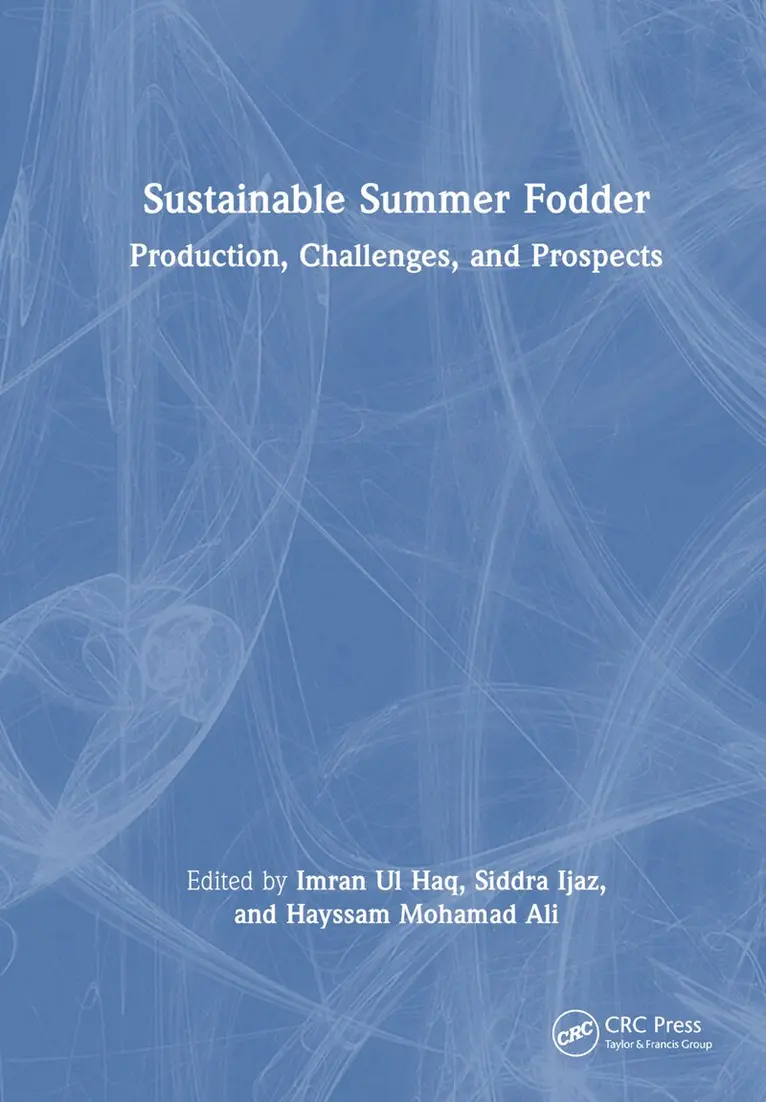
    Sustainable Summer Fodder

    Production, Challenges, and Prospects

    AvImran ul Haq,Siddra Ijaz

    Inbunden, Engelska, 2023

    2 634 kr

    Beställningsvara. Skickas inom 10-15 vardagar. Fri frakt över 249 kr.

    Beskrivning

    Increasing human population pressure, especially in developing countries, indicates a massive increase in the consumption of livestock products. Fodder crops are the primary and cheapest source of feed for livestock, but feed shortages or poor-quality fodder are particular constraints to the world's livestock sector. These shortages affect milk production, adult and calf health, calving rates, and livestock numbers. Summer crops including cereal, legume, grass, and tree fodder, provide an economical source of nutrients suitable for animal health as well as improve their breeding efficiency.Sustainable Summer Fodder: Production, Challenges, and Prospects presents the unique opportunities and difficulties of supportable cultivation and growth of summer fodder crops and the various methods for enabling crop preservation. It details conventional modern approaches to sustainable production and advanced molecular approaches to develop high-yielding fodder crops.FEATURESContains information on cultivation, growth, productivity, and protection from pests and diseases of various summer fodder cropsPresents approaches to sustainable production, summarizes fodder preservation methods; and details molecular approaches to develop high-yielding fodder cropsProvides insights into agronomic aspects of cereal, legume, grass, and tree species cultivated as summer fodder worldwideDiscusses the trends in insect pests and diseases, their field identification, and various control methodsThis book is an essential resource for agronomists, horticulturalists, livestock farmers and practitioners, and students working in the field.

    Produktinformation

    • Utgivningsdatum:2023-11-01
    • Mått:174 x 246 x 19 mm
    • Vikt:453 g
    • Format:Inbunden
    • Språk:Engelska
    • Antal sidor:258
    • Förlag:Taylor & Francis Ltd
    • ISBN:9781032208336

    Utforska kategorier

    • Agronomi och lantbruk inom Naturvetenskap och teknik
    • Lantbruksteknik inom Naturvetenskap och teknik
    • Djurhållning inom Naturvetenskap och teknik

    Mer om författaren

    Dr. Imran Ul Haq, with a bright career in agriculture, plant pathology, and fungal molecular biology, has a postdoc from the University of California Davis, USA. He is currently serving as Associate Professor in the Department of Plant Pathology, University of Agriculture Faisalabad, Pakistan. He has supervised more than 40 graduate students and established the Fungal Molecular Biology Laboratory Culture Collection (FMB-CC-UAF) and is an affiliated member of the World Federation for Culture Collections (WFCC). He has published more than 60 articles, seven books, four laboratory manuals, and several book chapters. He has made colossal contributions in fungal taxonomy by reporting novel species of fungal pathogen in plants. His research interests are fungal molecular taxonomy and nanotechnology integration with other control strategies for sustainable plant disease management.Dr. Siddra Ijaz, with a vibrant career in agriculture and biotechnology, has a postdoc from the Plant Reproductive Biology Laboratory, University of California Davis, USA. She is currently serving as Assistant Professor in the Center of Agricultural Biochemistry and Biotechnology, University of Agriculture, Faisalabad, Pakistan. She has supervised more than 50 M.Phil and PhD students. She has published more than 60 articles, eight books, and several book chapters. Her research focus includes plant genome engineering using transgenic technologies, genome editing through CRISPR/Cas systems, nanobiotechnology, and exploration of genetic pathways in plant-fungus interactions.Dr. Hayssam Mohamad Ali, is working at the Botany and Microbiology Department, College of Science, King Saud University. Dr. Hayssam Mohamad Ali has a “World Ranking of Top 2% Scientists” according to the Stanford Scientists’ Ranking released by Stanford University in 2021 and 2022. He has more than 300 published papers, 10 published books, and he has reviewed more than 1000 papers in highly impacted journals. He is interested in studying plant physiology, biotic and abiotic stress, sustainability, molecular biology, environmental stresses, plant biotechnology, crop improvement, plant breeding, forestry, and plant biology.

    Innehållsförteckning

    • Chapter 1 - Conventional and Biotechnological Interventions in Summer FoddersSiddra Ijaz, Imran Ul Haq, Ghalia Nadeem, Riffat Malik, Tuba Amjad, and Nasir Ahmad KhanChapter 2 - Nutritional Profiling of Summer Fodder CropsSaima, Usman Ali, Muhammad Abdullah, Usama Ahmad, Jamshaid Ahmad, and Manzoom AkhtarChapter 3 - Aflatoxins of Summer Fodders: Causes and ManagementFaiza Hassan, Maheera Khaliq, Muhammad Rehan Sajid, Misbah Ijaz, Muhammad Tahir Mohy-ud-din, and Asad ManzoorChapter 4 - An Insight into Infectious and Noninfectious Diseases of Sorghum SpeciesHafiz Muhammad Usman Aslam, Nick T. Peters, Nabil Killiny, Hasan Riaz, Akhtar Hameed, Saba Aslam, and Qaiser ShakeelChapter 5 - Infectious and Noninfectious Diseases of the Alfalfa CropAqleem Abbas, Mustansar Mubeen, Qaiser Shakeel, Yasir Iftikhar, Amjad Ali, and Azhar HussainChapter 6 - Physiological Effects of Thermal, Mineral, and Water Stresses on Summer FoddersRabia Tahir Bajwa, Qaiser Shakeel, Muhammad Shahid Rizwan, Sajjad Ali, Muhammad Anjum Aqueel, Mustansar Mubeen, Yasir Iftikhar, and Ifrah RashidChapter 7 - Weeds of Summer Fodders and Their ControlSafdar Ali, Asif Iqbal, Muhammad Aamir Iqbal, Muhammad Abdullah Saleem, and Imran AliChapter 8 - Insect Pests of Fodder Grains of Summer SeasonRashad Rasool Khan, Muhammad Umair Sial, Muhammad Arshad, Aqsa Riaz, Umm E. Ummara, Ayesha Parveen, and Tehrim LiaqatChapter 9 - Insect Pests of Summer Fodder Crops: Field Identification and ControlMuhammad Dildar Gogi, Muhammad Jalal Arif, Rabia Ramzan, Ahmad Nawaz, Muhammad Hamid Bashir, Abid Ali, Muhammad Sufian, Oscar Emanuel Liburd, and Ashfaq A. SialChapter 10 - Current Status of Fall Armyworm and Maize Fodder Decline ForeseenRashad Rasool Khan, Muhammad Umair Sial, and Muhammad ArshadChapter 11 - Etiology and Integrated Disease Management of Zea maysAhmad Nisar, Nabeeha Aslam Khan, Anjum Faraz, Muhammad Kaleem Sarwar, Shahid Majeed, Hayssam Mohamad Ali, Tahir Hussain Awan, and Amer Habib