• Fri frakt över 249 kr
  • •
  • Snabba leveranser
  • •
  • Billiga böcker
Kundservice

Du är på sajten för privatpersoner.

Företag, bibliotek eller offentlig verksamhet?

Du handlar på classic.bokus.com, där alla dina funktioner finns intakta.
Till classic.bokus.com
Bokus logotyp. Gå till startsidan.
  • Erbjudanden
  • Nyheter
  • Student
  • Topplistor
  • Barn & ungdom
  • Bokus Play
  • E-böcker
  • Pocketböcker
  • Spel & pussel

10% rabatt på allt med kod: NYSTART10 →

Sidfot

Mina sidor

    Hjälp

    • Kundservice
    • Vanliga frågor och svar
    • Frakt och leverans
    • Retur vid ångerrätt
    • Reklamera vara
    • Betalning
    • Köpvillkor
    • Allmänna villkor
    • Information om webbplatsens tillgänglighet

    Om Bokus

    • Om oss
    • Pressrum
    • För studenter
    • För företag
    • För bibliotek och offentlig verksamhet
    • För leverantörer
    • Hållbarhet

    Populärt

    • Aktuella erbjudanden
    • Presentkort
    • Studentlitteratur
    • Nya böcker
    • Topplistor
    • Signerade böcker
    • Engelska böcker

    Inspiration

    • Boktips
    • BookTok
    • Populära bokserier
    • Barnbokskaraktärer
    • Populära författare
    Logotyp för Bokus
    Följ oss på Facebook (extern länk)Följ oss på Instagram (extern länk)Följ oss på YouTube (extern länk)Följ oss på TikTok (extern länk)
    bokus @ CookiesAnpassa cookiesIntegritetspolicyKöpvillkor
    Till Citymail hemsida (extern länk)Till Budbee hemsida (extern länk)Till Postnord hemsida (extern länk)Till Schenker hemsida (extern länk)Till Early Bird hemsida (extern länk)Till Walleys hemsida (extern länk)
    1. Historia och arkeologi
    2. Historia
    3. Asiens historia

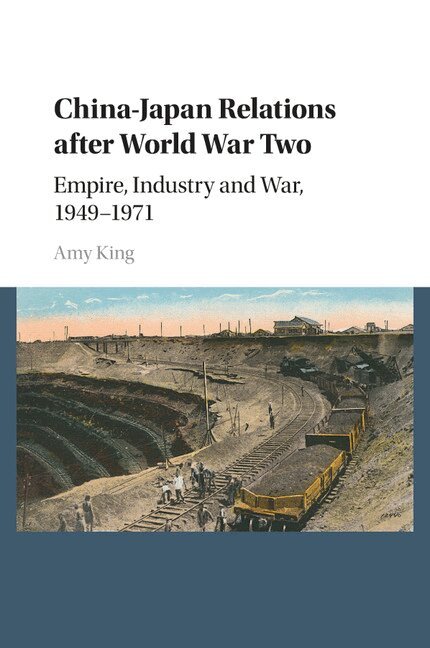
    China-Japan Relations after World War Two

    Empire, Industry and War, 1949-1971

    AvAmy King

    Häftad, Engelska, 2017

    477 kr

    Beställningsvara. Skickas inom 10-15 vardagar. Fri frakt över 249 kr.

    Fler format och utgåvor

    Inbunden

    1 375 kr

    Beskrivning

    A rich empirical account of China's foreign economic policy towards Japan after World War Two, drawing on hundreds of recently declassified Chinese sources. Amy King offers an innovative conceptual framework for the role of ideas in shaping foreign policy, and examines how China's Communist leaders conceived of Japan after the war. The book shows how Japan became China's most important economic partner in 1971, despite the recent history of war and the ongoing Cold War divide between the two countries. It explains that China's Communist leaders saw Japan as a symbol of a modern, industrialised nation, and Japanese goods, technology and expertise as crucial in strengthening China's economy and military. For China and Japan, the years between 1949 and 1971 were not simply a moment disrupted by the Cold War, but rather an important moment of non-Western modernisation stemming from the legacy of Japanese empire, industry and war in China.

    Produktinformation

    • Utgivningsdatum:2017-12-21
    • Mått:153 x 230 x 15 mm
    • Vikt:420 g
    • Format:Häftad
    • Språk:Engelska
    • Antal sidor:278
    • Förlag:Cambridge University Press
    • ISBN:9781107579569

    Utforska kategorier

    • Asiens historia inom Historia och arkeologi

    Mer om författaren

    Amy King is a Senior Lecturer at the Australian National University, an Australian Research Council DECRA Fellow, and a Westpac Research Fellow. Her research focuses on Chinese foreign and security policy, China-Japan relations, and the international relations of the Asia-Pacific region. She is currently engaged in a three-year research project examining China's role in shaping the international economic order. A graduate of the University of Oxford, Amy has also undertaken intensive language study and fieldwork in China, Japan, and Taiwan over the past fifteen years.

    Recensioner i media

    'With the support of pioneering multi-archival research, Amy King's pathbreaking book has made a major contribution to our knowledge and understanding of the complicated dynamics and many previously little studied dimensions of Chinese-Japanese relations in the Cold War.' Chen Jian, Hu Shih Professor of History and China-US Relations, Cornell University, New York

    Innehållsförteckning

    • 1. Introduction; 2. Empire, industry and war in the China-Japan relationship; 3. Trading with the enemy, 1949–52; 4. Revolution through industrialisation, 1953–7; 5. When ideas collide, 1958–July 1960; 6. Comparing ourselves with Japan, August 1960–5; Conclusion: on the eve of diplomatic normalisation, 1966–71; Appendix; Note on sources; Bibliography; Index.