• Fri frakt över 249 kr
  • •
  • Snabba leveranser
  • •
  • Billiga böcker
Kundservice

Du är på sajten för privatpersoner.

Företag, bibliotek eller offentlig verksamhet?

Du handlar på classic.bokus.com, där alla dina funktioner finns intakta.
Till classic.bokus.com
Bokus logotyp. Gå till startsidan.
  • Erbjudanden
  • Nyheter
  • Student
  • Topplistor
  • Barn & ungdom
  • Bokus Play
  • E-böcker
  • Pocketböcker
  • Spel & pussel

10% rabatt på allt med kod: NYSTART10 →

Sidfot

Mina sidor

    Hjälp

    • Kundservice
    • Vanliga frågor och svar
    • Frakt och leverans
    • Retur vid ångerrätt
    • Reklamera vara
    • Betalning
    • Köpvillkor
    • Allmänna villkor
    • Information om webbplatsens tillgänglighet

    Om Bokus

    • Om oss
    • Pressrum
    • För studenter
    • För företag
    • För bibliotek och offentlig verksamhet
    • För leverantörer
    • Hållbarhet

    Populärt

    • Aktuella erbjudanden
    • Presentkort
    • Studentlitteratur
    • Nya böcker
    • Topplistor
    • Signerade böcker
    • Engelska böcker

    Inspiration

    • Boktips
    • BookTok
    • Populära bokserier
    • Barnbokskaraktärer
    • Populära författare
    Logotyp för Bokus
    Följ oss på Facebook (extern länk)Följ oss på Instagram (extern länk)Följ oss på YouTube (extern länk)Följ oss på TikTok (extern länk)
    bokus @ CookiesAnpassa cookiesIntegritetspolicyKöpvillkor
    Till Citymail hemsida (extern länk)Till Budbee hemsida (extern länk)Till Postnord hemsida (extern länk)Till Schenker hemsida (extern länk)Till Early Bird hemsida (extern länk)Till Walleys hemsida (extern länk)
    1. Juridik
    2. Internationell rätt
    3. Folkrätt

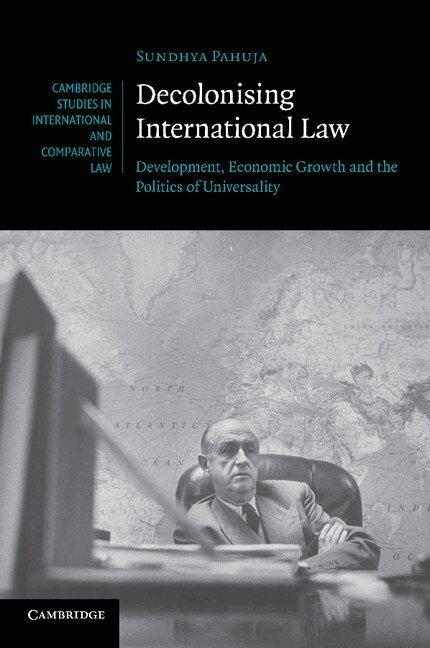
    Decolonising International Law

    Development, Economic Growth and the Politics of Universality

    AvSundhya Pahuja

    Häftad, Engelska, 2013

    Del 86 i serien Cambridge Studies in International and Comparative Law

    426 kr

    Beställningsvara. Skickas inom 10-15 vardagar. Fri frakt över 249 kr.

    Fler format och utgåvor

    Inbunden

    1 290 kr

    Beskrivning

    The universal promise of contemporary international law has long inspired countries of the Global South to use it as an important field of contestation over global inequality. Taking three central examples, Sundhya Pahuja argues that this promise has been subsumed within a universal claim for a particular way of life by the idea of 'development'. As the horizon of the promised transformation and concomitant equality has receded ever further, international law has legitimised an ever-increasing sphere of intervention in the Third World. The post-war wave of decolonisation ended in the creation of the developmental nation-state, the claim to permanent sovereignty over natural resources in the 1950s and 1960s was transformed into the protection of foreign investors, and the promotion of the rule of international law in the early 1990s has brought about the rise of the rule of law as a development strategy in the present day.

    Produktinformation

    • Utgivningsdatum:2013-10-10
    • Mått:152 x 229 x 17 mm
    • Vikt:430 g
    • Format:Häftad
    • Språk:Engelska
    • Serie:Cambridge Studies in International and Comparative Law
    • Antal sidor:320
    • Förlag:Cambridge University Press
    • ISBN:9781107657472

    Utforska kategorier

    • Folkrätt inom Juridik

    Mer om författaren

    Sundhya Pahuja is the Director of the Law and Development Research Programme at the Institute for International Law and the Humanities at the University of Melbourne and Visiting Fellow at Birkbeck, University of London.

    Recensioner i media

    'This important and timely book is thoroughly researched, methodically written, and both instructive and convincing.' Muin Boase and Mansur Boase, European Journal of International Law

    Innehållsförteckning

    • 1. Introduction; 2. Inaugurating a new rationality; 3. From decolonisation to developmental nation state; 4. From permanent sovereignty to investor protection; 5. From the rule of international law to the internationalisation of the rule of law; 6. Conclusion.