Sundhya Pahuja - Böcker
Visar alla böcker från författaren Sundhya Pahuja. Handla med fri frakt och snabb leverans.
12 produkter
12 produkter
2 930 kr
Skickas inom 10-15 vardagar
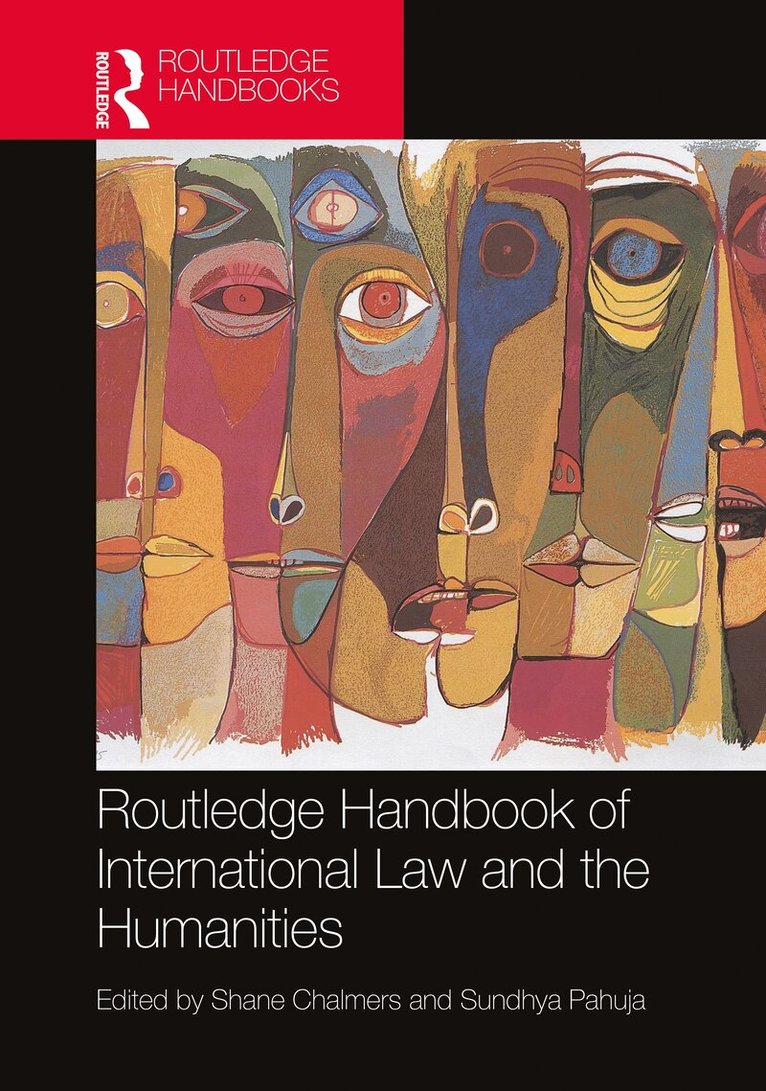
This Handbook brings together 40 of the world’s leading scholars and rising stars who study international law from disciplines in the humanities – from history to literature, philosophy to the visual arts – to showcase the distinctive contributions that this field has made to the study of international law over the past two decades.Including authors from Australia, Canada, Europe, India, South Africa, the UK and the USA, all the contributors engage the question of what is distinctive, and critical, about the work that has been done and that continues to be done in the field of ‘international law and the humanities’. For many of these authors, answering this question involves reflecting on the work they themselves have been contributing to this path-breaking field since its inception at the end of the twentieth century. For others, it involves offering models of the new work they are carrying out, or else reflecting on the future directions of a field that has now taken its place as one of the most important sites for the study of international legal practice and theory. Each of the book’s six parts foregrounds a different element, or cluster of elements, of international law and the humanities, from an attention to the office, conduct and training of the jurist and jurisprudent (Part 1); to scholarly craft and technique (Part 2); to questions of authority and responsibility (Part 3); history and historiography (Part 4); plurality and community (Part 5); as well as the challenge of thinking, and rethinking, international legal concepts for our times (Part 6).Outlining new ways of imagining, and doing, international law at a moment in time when original, critical thought and practice is more necessary than ever, this Handbook will be essential for scholars, students and practitioners in international law, international relations, as well as in law and the humanities more generally.
597 kr
Skickas inom 10-15 vardagar
This Handbook brings together 40 of the world’s leading scholars and rising stars who study international law from disciplines in the humanities – from history to literature, philosophy to the visual arts – to showcase the distinctive contributions that this field has made to the study of international law over the past two decades.Including authors from Australia, Canada, Europe, India, South Africa, the UK and the USA, all the contributors engage the question of what is distinctive, and critical, about the work that has been done and that continues to be done in the field of ‘international law and the humanities’. For many of these authors, answering this question involves reflecting on the work they themselves have been contributing to this path-breaking field since its inception at the end of the twentieth century. For others, it involves offering models of the new work they are carrying out, or else reflecting on the future directions of a field that has now taken its place as one of the most important sites for the study of international legal practice and theory. Each of the book’s six parts foregrounds a different element, or cluster of elements, of international law and the humanities, from an attention to the office, conduct and training of the jurist and jurisprudent (Part 1); to scholarly craft and technique (Part 2); to questions of authority and responsibility (Part 3); history and historiography (Part 4); plurality and community (Part 5); as well as the challenge of thinking, and rethinking, international legal concepts for our times (Part 6).Outlining new ways of imagining, and doing, international law at a moment in time when original, critical thought and practice is more necessary than ever, this Handbook will be essential for scholars, students and practitioners in international law, international relations, as well as in law and the humanities more generally.
697 kr
Skickas inom 10-15 vardagar
Reading Modern Law identifies and elaborates upon key critical methodologies for reading and writing about law in modernity. The force of law rests on determinate and localizable authorizations, as well as an expansive capacity to encompass what has not been pre-figured by an order of rules. The key question this dynamic of law raises is how legal forms might be deployed to confront and disrupt injustice. The urgency of this question must not eclipse the care its complexity demands. This book offers a critical methodology for addressing the many challenges thrown up by that question, whilst testifying to its complexity. The essays in this volume - engagements direct or oblique, with the work of Peter Fitzpatrick - chart a mode of resisting the proliferation of social scientific methods, as much as geo-political empire. The authors elaborate a critical and interdisciplinary treatment of law and modernity, and outline the pivotal role of sovereignty in contemporary formations of power, both national and international. From various overlapping vantage points, therefore, Reading Modern Law interrogates law's relationship to power, as well as its relationship to the critical work of reading and writing about law in modernity.
2 121 kr
Skickas inom 10-15 vardagar
Events: The Force of International Law presents an analysis of international law, centred upon those historical and recent events in which international law has exerted, or acquired, its force. From Spanish colonization and the Peace of Westphalia, through the release of Nelson Mandela and the Rwandan genocide, and to recent international trade negotiations and the 'torture memos', each chapter in this book focuses on a specific international legal event. Short and accessible to the non-specialist reader, these chapters consider what forces are put into play when international law is invoked, as it is so frequently today, by lawyers, laypeople, or leaders. At the same time, they also reflect on what is entailed in naming these ‘events’ of international law and how international law grapples with their disruptive potential. Engaging economic, military, cultural, political, philosophical and technical fields, Events: The Force of International Law will be of interest to international lawyers and scholars of international relations, legal history, diplomatic history, war and/or peace studies, and legal theory. It is also intended to be read and appreciated by anyone familiar with appeals to international law from the general media, and curious about the limits and possibilities occasioned, or the forces mobilised, by that appeal.
1 997 kr
Skickas inom 10-15 vardagar
Reading Modern Law identifies and elaborates upon key critical methodologies for reading and writing about law in modernity. The force of law rests on determinate and localizable authorizations, as well as an expansive capacity to encompass what has not been pre-figured by an order of rules. The key question this dynamic of law raises is how legal forms might be deployed to confront and disrupt injustice. The urgency of this question must not eclipse the care its complexity demands. This book offers a critical methodology for addressing the many challenges thrown up by that question, whilst testifying to its complexity. The essays in this volume - engagements direct or oblique, with the work of Peter Fitzpatrick - chart a mode of resisting the proliferation of social scientific methods, as much as geo-political empire. The authors elaborate a critical and interdisciplinary treatment of law and modernity, and outline the pivotal role of sovereignty in contemporary formations of power, both national and international. From various overlapping vantage points, therefore, Reading Modern Law interrogates law's relationship to power, as well as its relationship to the critical work of reading and writing about law in modernity.
622 kr
Skickas inom 10-15 vardagar
Events: The Force of International Law presents an analysis of international law, centred upon those historical and recent events in which international law has exerted, or acquired, its force. From Spanish colonization and the Peace of Westphalia, through the release of Nelson Mandela and the Rwandan genocide, and to recent international trade negotiations and the 'torture memos', each chapter in this book focuses on a specific international legal event. Short and accessible to the non-specialist reader, these chapters consider what forces are put into play when international law is invoked, as it is so frequently today, by lawyers, laypeople, or leaders. At the same time, they also reflect on what is entailed in naming these ‘events’ of international law and how international law grapples with their disruptive potential. Engaging economic, military, cultural, political, philosophical and technical fields, Events: The Force of International Law will be of interest to international lawyers and scholars of international relations, legal history, diplomatic history, war and/or peace studies, and legal theory. It is also intended to be read and appreciated by anyone familiar with appeals to international law from the general media, and curious about the limits and possibilities occasioned, or the forces mobilised, by that appeal.
Del 86 - Cambridge Studies in International and Comparative Law
Decolonising International Law
Development, Economic Growth and the Politics of Universality
Inbunden, Engelska, 2011
1 266 kr
Skickas inom 7-10 vardagar
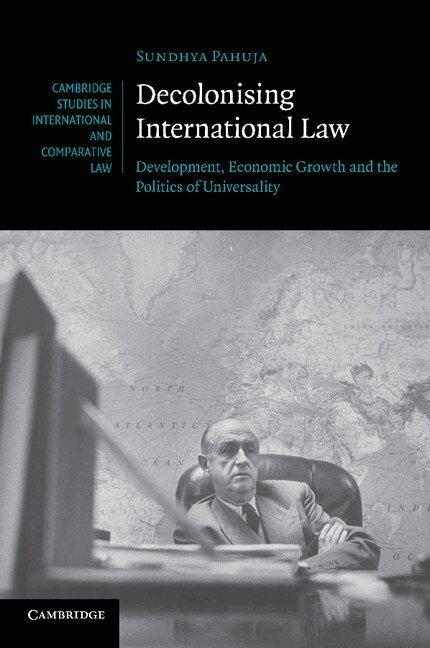
The universal promise of contemporary international law has long inspired countries of the Global South to use it as an important field of contestation over global inequality. Taking three central examples, Sundhya Pahuja argues that this promise has been subsumed within a universal claim for a particular way of life by the idea of 'development'. As the horizon of the promised transformation and concomitant equality has receded ever further, international law has legitimised an ever-increasing sphere of intervention in the Third World. The post-war wave of decolonisation ended in the creation of the developmental nation-state, the claim to permanent sovereignty over natural resources in the 1950s and 1960s was transformed into the protection of foreign investors, and the promotion of the rule of international law in the early 1990s has brought about the rise of the rule of law as a development strategy in the present day.
Del 86 - Cambridge Studies in International and Comparative Law
Decolonising International Law
Development, Economic Growth and the Politics of Universality
Häftad, Engelska, 2013
394 kr
Skickas inom 7-10 vardagar
The universal promise of contemporary international law has long inspired countries of the Global South to use it as an important field of contestation over global inequality. Taking three central examples, Sundhya Pahuja argues that this promise has been subsumed within a universal claim for a particular way of life by the idea of 'development'. As the horizon of the promised transformation and concomitant equality has receded ever further, international law has legitimised an ever-increasing sphere of intervention in the Third World. The post-war wave of decolonisation ended in the creation of the developmental nation-state, the claim to permanent sovereignty over natural resources in the 1950s and 1960s was transformed into the protection of foreign investors, and the promotion of the rule of international law in the early 1990s has brought about the rise of the rule of law as a development strategy in the present day.
2 000 kr
Skickas inom 7-10 vardagar
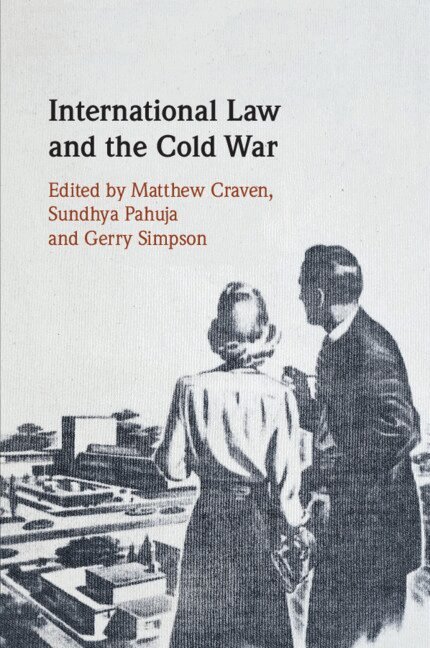
International Law and the Cold War is the first book dedicated to examining the relationship between the Cold War and International Law. The authors adopt a variety of creative approaches - in relation to events and fields such as nuclear war, environmental protection, the Suez crisis and the Lumumba assassination - in order to demonstrate the many ways in which international law acted upon the Cold War and in turn show how contemporary international law is an inheritance of the Cold War. Their innovative research traces the connections between the Cold War and contemporary legal constructions of the nation-state, the environment, the third world, and the refugee; and between law, technology, science, history, literature, art, and politics.
672 kr
Skickas inom 7-10 vardagar
International Law and the Cold War is the first book dedicated to examining the relationship between the Cold War and International Law. The authors adopt a variety of creative approaches - in relation to events and fields such as nuclear war, environmental protection, the Suez crisis and the Lumumba assassination - in order to demonstrate the many ways in which international law acted upon the Cold War and in turn show how contemporary international law is an inheritance of the Cold War. Their innovative research traces the connections between the Cold War and contemporary legal constructions of the nation-state, the environment, the third world, and the refugee; and between law, technology, science, history, literature, art, and politics.
Del 200 - Cambridge Studies in International and Comparative Law
Rival Legalities
International Laws of the Cold War
Häftad, Engelska, 2026
594 kr
Kommande
This book offers a wholly new way of thinking about the ideas, struggles and practices that constituted the "historical" Cold War. It challenges dominant myths about the history of the Cold War, arguing that far from being consumed by their ideological rivalry, the US and the Soviet Union were engaged in a conjoint project of world ordering. This idea of a unified Amero-Soviet project brings into view the many ways in which the Cold War was continuous with the imperialisms it displaced. Against this unity though, a rich plurality of law and legal forms emerged, and practices of South-South and South-North solidarity were forged which have since been obscured. The book makes visible the patterns drawn by the aftermath of this 'Cold War' legal order and seeks to both recuperate the imaginative resources that were made available at the time, and provide a corrective to contemporary prognostications that the 'rule-based order' may be nearing its end.
Del 200 - Cambridge Studies in International and Comparative Law
Rival Legalities
International Laws of the Cold War
Inbunden, Engelska, 2026
1 612 kr
Kommande
This book offers a wholly new way of thinking about the ideas, struggles and practices that constituted the "historical" Cold War. It challenges dominant myths about the history of the Cold War, arguing that far from being consumed by their ideological rivalry, the US and the Soviet Union were engaged in a conjoint project of world ordering. This idea of a unified Amero-Soviet project brings into view the many ways in which the Cold War was continuous with the imperialisms it displaced. Against this unity though, a rich plurality of law and legal forms emerged, and practices of South-South and South-North solidarity were forged which have since been obscured. The book makes visible the patterns drawn by the aftermath of this 'Cold War' legal order and seeks to both recuperate the imaginative resources that were made available at the time, and provide a corrective to contemporary prognostications that the 'rule-based order' may be nearing its end.