• Fri frakt över 249 kr
  • •
  • Snabba leveranser
  • •
  • Billiga böcker
Kundservice

Du är på sajten för privatpersoner.

Företag, bibliotek eller offentlig verksamhet?

Du handlar på classic.bokus.com, där alla dina funktioner finns intakta.
Till classic.bokus.com
Bokus logotyp. Gå till startsidan.
  • Erbjudanden
  • Student
  • Topplistor
  • Barn & ungdom
  • Bokus Play
  • E-böcker
  • Ljudböcker
  • Pocketböcker
  • Spel och pussel

Pocketfynda! Hundratals böcker för 49 kr/st →

Sidfot

Mina sidor

    Hjälp

    • Kundservice
    • Vanliga frågor och svar
    • Frakt och leverans
    • Retur vid ångerrätt
    • Reklamera vara
    • Betalning
    • Köpvillkor
    • Allmänna villkor
    • Information om webbplatsens tillgänglighet

    Om Bokus

    • Om oss
    • Pressrum
    • För studenter
    • För företag
    • För bibliotek och offentlig verksamhet
    • För leverantörer
    • Hållbarhet

    Populärt

    • Aktuella erbjudanden
    • Presentkort
    • Studentlitteratur
    • Nya böcker
    • Topplistor
    • Signerade böcker
    • Engelska böcker

    Inspiration

    • Boktips
    • BookTok
    • Barnbokskaraktärer
    • Populära författare
    Logotyp för Bokus
    Följ oss på Facebook (extern länk)Följ oss på Instagram (extern länk)Följ oss på YouTube (extern länk)Följ oss på TikTok (extern länk)
    bokus @ CookiesAnpassa cookiesIntegritetspolicyKöpvillkor
    Till Citymail hemsida (extern länk)Till Budbee hemsida (extern länk)Till Postnord hemsida (extern länk)Till Schenker hemsida (extern länk)Till Early Bird hemsida (extern länk)Till Walleys hemsida (extern länk)
    1. Naturvetenskap och teknik
    2. Teknik och industri
    3. Maskinteknik och material

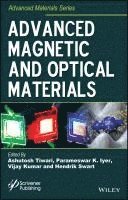
    Advanced Magnetic and Optical Materials

    AvAshutosh Tiwari,Parameswar K. Iyer

    Inbunden, Engelska, 2016

    Del i serien Advanced Material Series

    2 712 kr

    Beställningsvara. Skickas inom 11-20 vardagar. Fri frakt över 249 kr.

    Beskrivning

    Advanced Magnetic and OpticalMaterials offers detailed up-to-date chapters on the functional optical and magnetic materials, engineering of quantum structures, high-tech magnets, characterization and new applications.  It brings together innovative methodologies and strategies adopted in the research and development of the subject and all the contributors are established specialists in the research area. The 14 chapters are organized in two parts:Part 1: Magnetic Materials Magnetic Heterostructures and superconducting orderMagnetic Antiresonance in nanocompositesMagnetic bioactive glass-ceramics for bone healing and hyperthermic treatment of solid tumorsMagnetic iron oxide nanoparticlesMagnetic nanomaterial-based anticancer therapyTheoretical study of strained carbon-based nanobelts: Structural, energetical, electronic, and magnetic propertiesRoom temperature molecular magnets – Modeling and applicationsPart 2: Optical Materials Advances and future of white LED phosphors for solid-state lightingDesign of luminescent materials with “Turn-on/off” response for anions and cationsRecent advancements in luminescent materials and their potential applicationsStrongly confined quantum dots: Emission limiting, photonic doping, and magneto-optical effectsMicrostructure characterization of some quantum dots synthesized by mechanical alloyingAdvances in functional luminescent materials and phosphorsDevelopment in organic light emitting materials and their potential applications

    Produktinformation

    • Utgivningsdatum:2016-12-27
    • Mått:150 x 231 x 33 mm
    • Vikt:794 g
    • Format:Inbunden
    • Språk:Engelska
    • Serie:Advanced Material Series
    • Antal sidor:560
    • Förlag:John Wiley & Sons Inc
    • ISBN:9781119241911

    Utforska kategorier

    • Maskinteknik och material inom Naturvetenskap och teknik

    Mer om författaren

    Ashutosh Tiwari is Secretary General, International Association of Advanced Materials; Chairman and Managing Director of Tekidag AB (Innotech); Associate Professor and Group Leader, Smart Materials and Biodevices at the world premier Biosensors and Bioelectronics Centre, IFM-Linköping University; Editor-in-Chief, Advanced Materials Letters; a materials chemist and docent in the Applied Physics with the specialization of Biosensors and Bioelectronics from Linköping University, Sweden. He has more than 100 peer-reviewed primary research publications in the field of materials science and nanotechnology and has edited/authored more than 35 books on advanced materials and technology. He is the founder member and chair of American, Asian, European and Advanced Materials World Congress, Smart Materials and Surfaces, Global & European Graphene Forum, International Conference on Smart Energy Technologies, International Conference on Material Science and Technology and World Technology Forum.Vijay Kumar is currently an Assistant Professor at Chandigarh University, Gharuan, Mohali, India. He received his PhD (Physics/Material Science) from Sant Longowal Institute of Engineering and Technology, Longowal (Deemed to be University) and in Collaboration with Inter University Accelerator Center (Formerly known as Nuclear Science Center), New Delhi. He has published more than 60 research papers in reputed international journals and his  research involves synthesis and spectroscopic investigations of rare earth/transitional metal ions doped nanomaterials, nanocomposites, and hybrid materials to achieve color tunable emission in solid-state lighting and white light LEDs. He has received the Young Scientist Award from the Ministry of Science and Technology, Government of India, New Delhi.Hendrik C Swart is a senior professor in the Department of Physics at the University of the Free State, South Africa. He received his PhD in Physics at the end of 1992 from the University of the Free State. Over the past 20 years he has led research in the area of the degradation of phosphors for field emission displays, as well as developing materials for nano solid state lighting. He has more than 420 publications in international peer reviewed journals, 100 peer reviewed conference proceedings and 7 book chapters and books with more than 2900 cited author references and more than 480 national and international conference contributions. He received honorary membership of the Golden Key Association (2012). He has supervised 60 PhD and MSc students successfully in the past with another 17 in progress and has established a National Nano Surface Characterization Facility (NNSCF) containing state-of- the- art surface characterization equipment. A research chair in Solid State Luminescent and Advanced Materials was awarded to him from the South African Research Chairs Initiative (SARChI) at the end of 2012.

    Innehållsförteckning

    • Preface xixPart 1 Magnetic Materials1 Superconducting Order in Magnetic Heterostructures 3Sol H. Jacobsen, Jabir Ali Ouassou and Jacob Linder1.1 Introduction 31.2 Fundamental Physics 61.3 Theoretical Framework 151.4 Experimental Status 231.5 Novel Predictions 331.6 Outlook 37Acknowledgements 38References 392 Magnetic Antiresonance in Nanocomposite Materials 47Anatoly B. Rinkevich, Dmitry V. Perov and Olga V. Nemytova2.1 Introduction: Phenomenon of Magnetic Antiresonance 472.2 Magnetic Antiresonance Review 492.3 Phase Composition and Structure of Nanocomposites Based on Artificial Opals 542.4 Experimental Methods of the Antiresonance Investigation 562.5 Nanocomposites Where the Antiresonance Is Observed in 602.6 Conditions of Magnetic Antiresonance Observation in Non-conducting Nanocomposite Plate 632.7 Magnetic Field Dependence of Transmission and Reflection Coefficients 702.8 Frequency Dependence of Resonance Amplitude 722.9 Magnetic Resonance and Antiresonance upon Parallel and Perpendicular Orientation of Microwave and a Permanent Magnetic Field 742.10 Conclusion 76Acknowledgement 77References 773 Magnetic Bioactive Glass Ceramics for Bone Healing and Hyperthermic Treatment of Solid Tumors 81Andrea Cochis, Marta Miola, Oana Bretcanu, Lia Rimondini and Enrica Vernè3.1 Bone and Cancer: A Hazardous Attraction 823.2 Hyperthermia Therapy for Cancer Treatment 863.3 Evidences of Hyperthermia Efficacy 943.4 Magnetic Composites for Hyperthermia Treatment 953.5 Conclusions 103References 1034 Magnetic Iron Oxide Nanoparticles: Advances on Controlled Synthesis, Multifunctionalization, and Biomedical Applications 113Dung The Nguyen and Kyo-Seon Kim4.1 Introduction 1144.2 Controlled Synthesis of Fe3O4 Nanoparticles 1154.3 Surface Modification of Fe3O4 Nanoparticles for Biomedical Applications 1224.4 Magnetism and Magnetically Induced Heating of Fe3O4 Nanoparticles 1264.5 Applications of Fe3O4 Nanoparticles to Magnetic Hyperthermia 1304.6 Applications of Fe3O4 Nanoparticles to Hyperthermia-based Controlled Drug Delivery 1324.7 Conclusions 134Acknowledgment 135References 1355 Magnetic Nanomaterial-based Anticancer Therapy 141Catalano Enrico5.1 Introduction 1425.2 Magnetic Nanomaterials 1445.3 Biomedical Applications of Magnetic Nanomaterials 1455.4 Magnetic Nanomaterials for Cancer Therapies 1465.5 Relevance of Nanotechnology to Cancer Therapy 1475.6 Cancer Therapy with Magnetic Nanoparticle Drug Delivery 1485.7 Drug Delivery in the Cancer Therapy 1495.8 Magnetic Hyperthermia 1515.9 Role of Theranostic Nanomedicine in Cancer Treatment 1545.10 Magnetic Nanomaterials for Chemotherapy 1555.11 Magnetic Nanomaterials as Carrier for Cancer Gene Therapeutics 1565.12 Conclusions 1565.13 Future Prospects 158References 1596 Theoretical Study of Strained Carbon-based Nanobelts: Structural, Energetic, Electronic, and Magnetic properties of [n]Cyclacenes 165E. San-Fabián, A. Pérez-Guardiola, M. Moral, A. J. Pérez-Jiménez and J. C. Sancho-García6.1 Introduction 1666.2 Computational Strategy and Associated Details 1686.3 Results and Discussion 1716.4 Conclusions 181Acknowledgments 182References 1827 Room Temperature Molecular Magnets: Modeling and Applications 185Mihai A. Gîrţu and Corneliu I. Oprea7.1 Introduction 1867.2 Experimental Background 1877.3 Ideal Structure and Sources of Structural Disorder 1937.4 Exchange Coupling Constants and Ferrimagnetic Ordering 2007.5 Magnetic Anisotropy 2247.6 Applications of V[TCNE]x 2337.7 Conclusions 241Acknowledgments 243References 2438 Advances and Future of White LED Phosphors for Solid-State Lighting 251Xianwen Zhang and Xin Zhang8.1 Light Generation Mechanisms and History of LEDs Chips 2518.2 Fabrication of WLEDs 2548.3 Evaluation Criteria of WLEDs 2578.4 Phosphors for WLEDs 2618.5 Conclusions 271References 272Part 2 Optical Materials 2779 Design of Luminescent Materials with “Turn-On/Off” Response for Anions and Cations 279Serkan Erdemir and Sait Malkondu9.1 Introduction 2809.2 Luminescent Materials for Sensing of Cations 2839.3 Luminescent Materials for Sensing of Anions 3029.4 Conclusion 307Acknowledgments 308References 30810 Recent Advancements in Luminescent Materials and Their Potential Applications 317Devender Singh, Vijeta Tanwar, Shri Bhagwan and Ishwar Singh10.1 Phosphor 31710.2 An Overview on the Past Research on Phosphor 31810.3 Luminescence 31910.4 Mechanism of Emission of Light in Phosphor Particles 32010.5 How Luminescence Occur in Luminescent Materials? 32110.6 Luminescence Is Broadly Classified within the Following Categories 32610.7 Inorganic phosphors 33210.8 Organic Phosphors 33210.9 Optical Properties of Inorganic Phosphors 33310.10 Role of Activator and Coactivator 33310.11 Role of Rare Earth as Activator and Coactivator in Phosphors 33410.12 There Are Different Classes of Phosphors, Which May Be Classified According to the Host Lattice 34210.13 Applications of Phosphors 34510.14 Future Prospects of Phosphors 34810.15 Conclusions 349References 34911 Strongly Confined PbS Quantum Dots: Emission Limiting, Photonic Doping, and Magneto-optical Effects 353P. Barik, A. K. Singh, E. V. García-Ramírez, J. A. Reyes-Esqueda, J. S. Wang, H. Xi and B. Ullrich11.1 Introduction 35411.2 QDs Used and Sample Preparation 35611.3 Basic Properties of PbS Quantum Dots 35611.4 Measuring Techniques and Equipment Employed 35811.5 Photoluminescence Limiting of Colloidal PbS Quantum Dots 36111.6 Photonic Doping of Soft Matter 36411.7 Magneto-optical Properties 37011.8 Conclusions 380Acknowledgment 380References 38012 Microstructure Characterization of Some Quantum Dots Synthesized by Mechanical Alloying 385S. Sain and S.K. Pradhan12.1 Introduction 38612.2 Brief History of QDs 38712.3 Theory of QDs 38812.4 Different Processes of Synthesis of QDs 39112.5 Structure of QDs 39212.6 Applications of QDs 39312.7 Mechanical Alloying 39512.8 The Rietveld Refinement Method 39812.9 Some Previous Work on Metal Chalcogenide QDs Prepared by Mechanical Alloying from Other Groups 40212.11 Conclusions 419References 41913 Advances in Functional Luminescent Materials and Phosphors 425Radhaballabh Debnath13.1 Introduction 42513.2 Some Theoretical Aspects of the Processes of Light Absorption/Emission by Matter 42713.3 Sensitization/Energy Transfer Phenomenon in Luminescence Process 43313.4 Functional Phosphors 43513.5 Classifications of Functional Phosphors 43813.6 Solid-state Luminescent Materials for Laser 460Acknowledgments 467References 46714 Development in Organic Light-emitting Materials and Their Potential Applications 473Devender Singh, Shri Bhagwan, Raman Kumar Saini, Vandna Nishal and Ishwar Singh14.1 Luminescence in Organic Molecules 47314.2 Types of Luminescence 47514.3 Mechanism of Luminescence 47914.4 Organic Compounds as Luminescent Material 48014.5 Possible Transitions in Organic Molecules 49414.6 OLED’s Structure and Composition 49514.7 Basic Principle of OLEDs 50214.8 Working of OLEDs 50214.9 Light Emission in OLEDs 50414.10 Types of OLED Displays 50514.11 Techniques of Fabrication of OLEDs Devices 50614.12 Advantages of OLEDs 50714.13 Potential Applications of OLEDs 51114.14 Future Prospects of OLEDs 51214.15 Conclusions 512References 513