• Fri frakt över 249 kr
  • •
  • Snabba leveranser
  • •
  • Billiga böcker
Kundservice

Du är på sajten för privatpersoner.

Företag, bibliotek eller offentlig verksamhet?

Du handlar på classic.bokus.com, där alla dina funktioner finns intakta.
Till classic.bokus.com
Bokus logotyp. Gå till startsidan.
  • Erbjudanden
  • Student
  • Topplistor
  • Barn & ungdom
  • Bokus Play
  • E-böcker
  • Ljudböcker
  • Pocketböcker
  • Spel och pussel

Pocketfynda! Hundratals böcker för 49 kr/st →

Sidfot

Mina sidor

    Hjälp

    • Kundservice
    • Vanliga frågor och svar
    • Frakt och leverans
    • Retur vid ångerrätt
    • Reklamera vara
    • Betalning
    • Köpvillkor
    • Allmänna villkor
    • Information om webbplatsens tillgänglighet

    Om Bokus

    • Om oss
    • Pressrum
    • För studenter
    • För företag
    • För bibliotek och offentlig verksamhet
    • För leverantörer
    • Hållbarhet

    Populärt

    • Aktuella erbjudanden
    • Presentkort
    • Studentlitteratur
    • Nya böcker
    • Topplistor
    • Signerade böcker
    • Engelska böcker

    Inspiration

    • Boktips
    • BookTok
    • Barnbokskaraktärer
    • Populära författare
    Logotyp för Bokus
    Följ oss på Facebook (extern länk)Följ oss på Instagram (extern länk)Följ oss på YouTube (extern länk)Följ oss på TikTok (extern länk)
    bokus @ CookiesAnpassa cookiesIntegritetspolicyKöpvillkor
    Till Citymail hemsida (extern länk)Till Budbee hemsida (extern länk)Till Postnord hemsida (extern länk)Till Schenker hemsida (extern länk)Till Early Bird hemsida (extern länk)Till Walleys hemsida (extern länk)
    1. Medicin
    2. Andra medicinska specialiteter
    3. Farmakologi

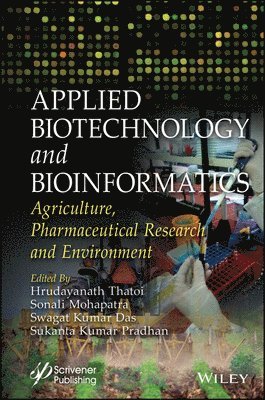
    Applied Biotechnology and Bioinformatics

    Agriculture, Pharmaceutical Research and Environment

    AvHrudayanath Thatoi,Sonali Mohapatra

    Inbunden, Engelska, 2024

    2 460 kr

    Beställningsvara. Skickas inom 5-8 vardagar. Fri frakt över 249 kr.

    Beskrivning

    This comprehensive reference book discusses the convergent and next-generation technologies for product-derived applications relevant to agriculture, pharmaceuticals, nutraceuticals, and the environment. The field of modern biotechnology is a multidisciplinary and groundbreaking area of biology that includes several cutting-edge methods due to developments in forensics and molecular modeling. Bioinformatics is a full-fledged multidisciplinary field that combines advances in computer and information technology. Numerous applications of bioinformatics—primarily in the areas of gene and protein identification, structural and functional prediction, drug development and design, folding of genes and proteins and their complexity, vaccine design, and organism identification—have contributed to the advancement of biotechnology. Biotechnology is also essential to crop improvement in agriculture because it allows genes to transfer across plants to increase traits such as disease resistance and yield. It also plays a broad role in healthcare, including genetic testing, gene therapy, pharmacogenomics, and drug development. Bioremediation and biodegradation, using microbial technologies to clean up environmental contamination, waste management technologies, and the conversion of organic waste to biofuels. Bioinformatics plays a critical role in analyzing different types of data created by high-throughput research methods—such as genomic, transcriptomic, and proteomic datasets—that are useful in addressing various problems related to disease management, clean environment, alternative energy sources, agricultural productivity, and more. Audience The book will interest biotechnology researchers and bioinformatics professionals working in the areas of applied biotechnology, bioengineering, biomedical sciences, microbiology, agriculture and environmental sciences.

    Produktinformation

    • Utgivningsdatum:2024-11-08
    • Vikt:857 g
    • Format:Inbunden
    • Språk:Engelska
    • Antal sidor:464
    • Förlag:John Wiley & Sons Inc
    • ISBN:9781119896401

    Utforska kategorier

    • Farmakologi inom Medicin
    • Agronomi och lantbruk inom Naturvetenskap och teknik
    • Biokemisk teknik inom Naturvetenskap och teknik

    Mer om författaren

    Hrudayanath Thatoi, PhD, is the Research Director at the Center for Industrial Biotechnology, Siksha ‘O’ Anusandhan (SOA) University, Odisha, India. He obtained his doctorate in botany from Utkal University, Odisha, India. His research interests include sustainable production of renewable energy, mushroom diversity and bioactivity, bioremediation, etc. He has published 25 books and more than 300 research papers in national and international journals. He is the recipient of the Samanta Chandrasekhar Award by DST, Govt. of Odisha. Sonali Mohapatra, PhD, is a post-doc research associate in the Department of Biological Systems Engineering, University of Wisconsin, Madison, USA after obtaining her doctorate in biotechnology engineering. Her research focuses on bioprocessing technologies. Apart from her publications and edited books, she has also been part of successful scale-up projects in the synthesis of prebiotics from dairy waste streams. Swagat Kumar Das, PhD, is an assistant professor in the Department of Biotechnology, Odisha University of Technology and Research, Bhubaneswar, Odisha, India. He obtained his doctorate from Ravenshaw University, Odisha, India. He is a fellow recipient of the Eurasian Academy of Environmental Sciences (FEAES) and the Society of Innovative Educationalists, Scientific Research Professionals (FSIESRP). He has published more than 30 publications in various national and international journals and 12 book chapters. Sukanta Kumar Pradhan, PhD, serves as HOD in the Department of Bioinformatics, Odisha University of Agriculture and Technology, Odisha, India. He obtained his doctorate in biotechnology from Ravenshaw University, Odisha, India. His research interests include genomics, metagenomics, transcriptomics, and bioinformatics. He has published more than 60 research papers in reputed national and international journals and 8 book chapters.

    Innehållsförteckning

    • Preface xviiPart I: Agriculture 11 Next-Generation Sequencing in Vegetable Crops 3Meenu Kumari, Tanya Barpanda, Meghana Devireddy, Ankit Kumar Sinha, R. S. Pan and A. K. Singh1.1 Introduction 41.2 Next-Generation Sequencing Approach in Genomics 51.3 NGS Approach in Single-Nucleotide Polymorphic Markers Development 131.4 Next-Generation Sequencing Approach in Trait-Specific Breeding 151.5 Next-Generation Sequencing Approach in Metagenomics 181.6 Next-Generation Sequencing Approach in Transcriptomics 191.7 Next-Generation Sequencing Approach in Exome and Captured Sequencing 221.8 Applications of Exome and Captured Sequencing in Crop Research 231.9 Conclusion and Future Prospects 24References 252 Application of Bioinformatics Tools in Rice Genomics Research 37Dhanawantari L. Singha, Debajit Das and Jitendra Maharana2.1 Introduction 382.2 Role of Genomics in Rice Research 382.3 Model Plant for Genomic Research: Rice 392.4 High-Throughput Sequencing 412.5 Genome-Wide Association Study (GWAS) 452.6 Bioinformatics Approach to Study Stress Conditions in Rice 462.7 Application of Bioinformatics Tools in Advanced Rice Genomics Research 512.8 Current Challenges of Bioinformatics Tools for Rice Genomics Research 572.9 Conclusion 60Conflict of Interest 60References 613 Computer-Aided Vaccine Design: Applications in Agriculture 73Tanmaya Kumar Sahu and Atmakuri Ramakrishna Rao3.1 Introduction 743.2 Agriculturally Important Animals 753.3 Diseases Affecting Animal Health in Agriculture 753.4 Vaccination in Agriculture 773.5 Vaccine 773.6 Intervention of Computer in Vaccine Designing 813.7 In Silico Vaccine Designing: Agricultural Applications 903.8 Conclusion and Future Prospects 91References 924 Genomics to Phenomics: A Paradigm Shift in Crop Science Research 97Biswajit Lenka, Manasi Dash and Lakesh Muduli4.1 Introduction 984.2 Genomics in Crop Improvement 984.3 Advances in Genomics-Assisted Breeding 984.4 Phenotyping 1034.5 Phenomics 1034.6 Phenomics Approaches in Crop Improvement 1044.7 Conclusion 105References 105Part II: Pharmaceutical Research 1095 Molecular Modeling and Drug Development 111Howida A. Elseedy, Caroline Kiriacos and Triveena M. Ramsis5.1 Introduction 1115.2 Structure-Based Drug Design 1125.3 Docking 1155.4 Ligand-Based Drug Design 1175.5 Pharmacophore 1185.6 QSAR 1195.7 Virtual Screening 1225.8 Pharmacophore-Based VS 1245.9 Similarity-Based VS 1255.10 Homology Modeling and Protein Folding 1255.11 In Silico Pharmacokinetics 1285.12 Conclusion 131References 1326 Comparative Study on Tannase Sequence and Structure of Lactiplantibacillus: An In Silico Protein Variability Analysis and Its Impact on Microbial Speciation 139Ishita Biswas, Debanjan Mitra and Pradeep K. Das Mohapatra6.1 Introduction 1406.2 Materials and Methods 1416.3 Results and Discussion 1436.4 Conclusion 153References 1537 Probiotics: A Novel Natural Therapy for Oral Health 157Preeti Pallavi, Vikas Kumar, Sangeeta Prakash and Sangeeta Raut7.1 Introduction 1587.2 Background 1607.3 Mechanism in Oral Diseases Prevention by Probiotics 1667.4 Probiotic Formulation 1697.5 Prevention and Oral Health Management 1727.6 Concluding Remarks 1737.7 Future Aspects 174References 1768 The Preventative and Curative Functions of Probiotics: A Paradigm of Food as Drug Revolution 181Mohammad Zaki Shamim, Jibanjyoti Panda, Gargee Mohanty, Bhaswati Gogoi, Kaustuvmani Patowary, Bishwambhar Mishra and Yugal Kishore Mohanta8.1 Introduction 1828.2 Criteria for Choosing Probiotics and the Bare Minimum Needed 1838.3 Action Mechanism of Probiotics 1848.4 Probiotics in the Clinical Practice: A Growing Trend 1858.5 Potential Preventative Roles of Probiotics 1868.6 Therapeutic Use of Probiotics 1958.7 Recent Advancement in Probiotics 2028.8 Conclusion and Recommendation 208Acknowledgments 208References 2099 Probiotics in the Prevention and Treatment of Psoriasis 217Prativa Biswasroy, Deepak Pradhan, Dilip Kumar Pradhan, Goutam Rath and Goutam Ghosh9.1 Introduction 2189.2 Interruption of the Microbiome: A Pathogenic Effect in Psoriasis 2199.3 Therapeutic Effect of Probiotics for Psoriasis 2239.4 Conclusion 229References 23010 A Gateway to Multi-Omics‐Based Clinical Research 235Ashutosh Sahoo, Deepanshu Verma and Prajnadipta Panda10.1 Introduction 23610.2 Importance of Multi-Omics 23710.3 Genomics and Relevant Clinical Studies Along with Its Tools and Methods 23910.4 Proteomics and Relevant Clinical Studies Along with Its Tools and Methods 24210.5 Sample Type and Acquisition 24210.6 Various Data Acquisition Methods for Proteomics Data Include the Following 24210.7 Techniques Used in Clinical Proteomics 24410.8 Analysis Tools in Clinical Proteomics 24410.9 Metabolomics and Relevant Clinical Studies Along with Its Tools and Methods 24510.10 Different Types of Metabolomics 24510.11 Techniques and Tools Used in Metabolomics 24610.12 Metabolite Databases 24810.13 Data Analysis Tools and Software 24910.14 Application of Metabolomics in Clinical Studies 24910.15 Conclusion 250References 25111 Inherent Observation of Mucosal Non-Specific Immune Parameters in Indian Major Carps 257Supriya Dash and Swagat Kumar Das11.1 Introduction 25811.2 Materials and Methods 25811.3 Results and Discussion 25911.4 Conclusion 266References 266Part III: Environment 26912 Eco-Friendly Approaches for Converting Organic Waste to Bioenergy for Sustainable Development 271Krishna Kumar Jaiswal, Chandrama Roy Chowdhury, Deepti Yadav, Swapnamoy Dutta, Ishita Banerjee, Km Smriti Jaiswal, Arun Prasath Ramaswamy, Mrinal, Sangmesh B., Amit K. Jaiswal, Vinod Kumar and Krishnan Kanny12.1 Introduction 27212.2 Organic Waste in the Bioenergy Generation 27412.3 Categories and Characteristics of Organic Waste 27512.4 Organic Waste Based on Origin 27612.5 Organic Waste Based on the State of Matter 27712.6 Organic Waste Based on the Level of Production 27812.7 Characteristics of Organic Waste 27812.8 Greenhouse Gases (GHGs) 27912.9 Benefits of Organic Waste 28012.10 Current and Prospective Use of Organic Waste 28112.11 Sustainable Bioenergy and Biofuels from Organic Waste 28212.12 Conversion of Organic Waste into Bioenergy and High-Valued Products 28612.13 Biofuels from Organic Waste: Biochemical and Thermochemical Processes 28612.14 Fermentation 28612.15 Anaerobic Digestion 28912.16 Combustion 29012.17 Pyrolysis 29012.18 Gasification 29112.19 Biorefinery Concept Based on Organic Waste for Clean Energy Management 29212.20 Success and Challenges of Organic Waste for Bioenergy 29312.21 Conclusion and Recommendations 294References 29513 Utilization of Food Waste for Bioenergy Production 303Srutee Rout, Rakesh Kumar Gupta, Sangeetha Karunanithi, Gnana Moorthy Eswaran U., Proshanta Guha and Prem Prakash Srivastav13.1 Introduction 30413.2 Potential of Food Waste for Bioenergy Production 30613.3 Bioenergy from Food Waste 30813.4 Conclusion 323References 32414 Photosynthetic Microalgal Microbial Fuel Cell (PMMFC): A Novel Strategy for Wastewater Treatment and Bioenergy Generation 331Jagdeep Kumar Nayak, Rahul Gautam, Kundan Samal and Uttam Kumar Ghosh14.1 Introduction 33214.2 Microbial Fuel Cell 33314.3 Types of PMFC 33614.4 Role of Algae in PMFC 33814.5 Conclusion 341References 34215 Self-Cleaning Aquarium: The Microbial Biofilm Approach for Ammonia Bioremediation 347Shaon Ray Chaudhuri, Tethi Biswas and Indranil Mukherjee15.1 Current Scenario of Fresh Water Scarcity and Impact of Aquaculture 34815.2 Existing Technologies for Aquaculture Effluent Treatment for Environmental Sustenance 34915.3 The Novel Rapid Biofilm Reactor-Based Ammonia Removing System 35215.4 The Case Study of the Self-Cleaning Aquarium 35815.5 Conclusion and Future Application 362Acknowledgments 363References 36416 Metagenomics Unveiled: Deciphering Microbial Responses to Climate Change 369Megha Kaviraj, Manojit Singh, Soumendranath Chatterjee and Upendra Kumar16.1 Introduction 37016.2 Climate Change and Its Impact on the Environment and Microbiome 37216.3 Metagenomics as a Tool for Climate Change Research 37416.4 Microbial Adaptation to Climate Change 37616.5 Feedback Loops and Climate Change 37716.6 Metagenomics in Climate Change Mitigation 37916.7 Case Studies and Research Findings 38016.8 Metagenomic Climate Model Frame 38416.9 Challenges and Future Directions 38616.10 Conclusion 387Acknowledgments 387Author Contributions 387Conflict of Interest 388References 38817 Biosensor: A Tool for Assessment of Soil Pollutants 395Saheed Garnaik and Jagamohan Nayak17.1 Introduction 39617.2 Working Principles 39717.3 Types of Biosensors 39817.4 Application of Biosensors 40017.5 Advantages, Disadvantages, and Adoption of Biosensors 40217.6 Ethical Considerations and Future Challenges 40317.7 Conclusion 404References 40518 Transcriptome-Guided Characterization of Molecular Resources in Mussels 407Snigdha Baliarsingh, Mariadoss Selvanayagam, Hrudayanath Thatoi, Shailesh Saurabh, Yong Seok Lee and Bharat Bhusan Patnaik18.1 Introduction 40818.2 Species of Mussels Sequenced at the Transcriptome Level 41418.3 Transcriptome Pipeline for Mussel Molecular Resources 41718.4 Mussel Transcriptome Assembly and Annotation 42518.5 Conclusions and Future Perspectives 430Acknowledgments 430References 430Index 437