• Fri frakt över 249 kr
  • •
  • Snabba leveranser
  • •
  • Billiga böcker
Kundservice

Du är på sajten för privatpersoner.

Företag, bibliotek eller offentlig verksamhet?

Du handlar på classic.bokus.com, där alla dina funktioner finns intakta.
Till classic.bokus.com
Bokus logotyp. Gå till startsidan.
  • Erbjudanden
  • Student
  • Topplistor
  • Barn & ungdom
  • Bokus Play
  • E-böcker
  • Ljudböcker
  • Pocketböcker
  • Spel och pussel

Pocketfynda! Hundratals böcker för 49 kr/st →

Sidfot

Mina sidor

    Hjälp

    • Kundservice
    • Vanliga frågor och svar
    • Frakt och leverans
    • Retur vid ångerrätt
    • Reklamera vara
    • Betalning
    • Köpvillkor
    • Allmänna villkor
    • Information om webbplatsens tillgänglighet

    Om Bokus

    • Om oss
    • Pressrum
    • För studenter
    • För företag
    • För bibliotek och offentlig verksamhet
    • För leverantörer
    • Hållbarhet

    Populärt

    • Aktuella erbjudanden
    • Presentkort
    • Studentlitteratur
    • Nya böcker
    • Topplistor
    • Signerade böcker
    • Engelska böcker

    Inspiration

    • Boktips
    • BookTok
    • Barnbokskaraktärer
    • Populära författare
    Logotyp för Bokus
    Följ oss på Facebook (extern länk)Följ oss på Instagram (extern länk)Följ oss på YouTube (extern länk)Följ oss på TikTok (extern länk)
    bokus @ CookiesAnpassa cookiesIntegritetspolicyKöpvillkor
    Till Citymail hemsida (extern länk)Till Budbee hemsida (extern länk)Till Postnord hemsida (extern länk)Till Schenker hemsida (extern länk)Till Early Bird hemsida (extern länk)Till Walleys hemsida (extern länk)
    1. Historia och arkeologi
    2. Historia
    3. Historia: särskilda händelser och ämnen
    4. Kolonialism och imperialism

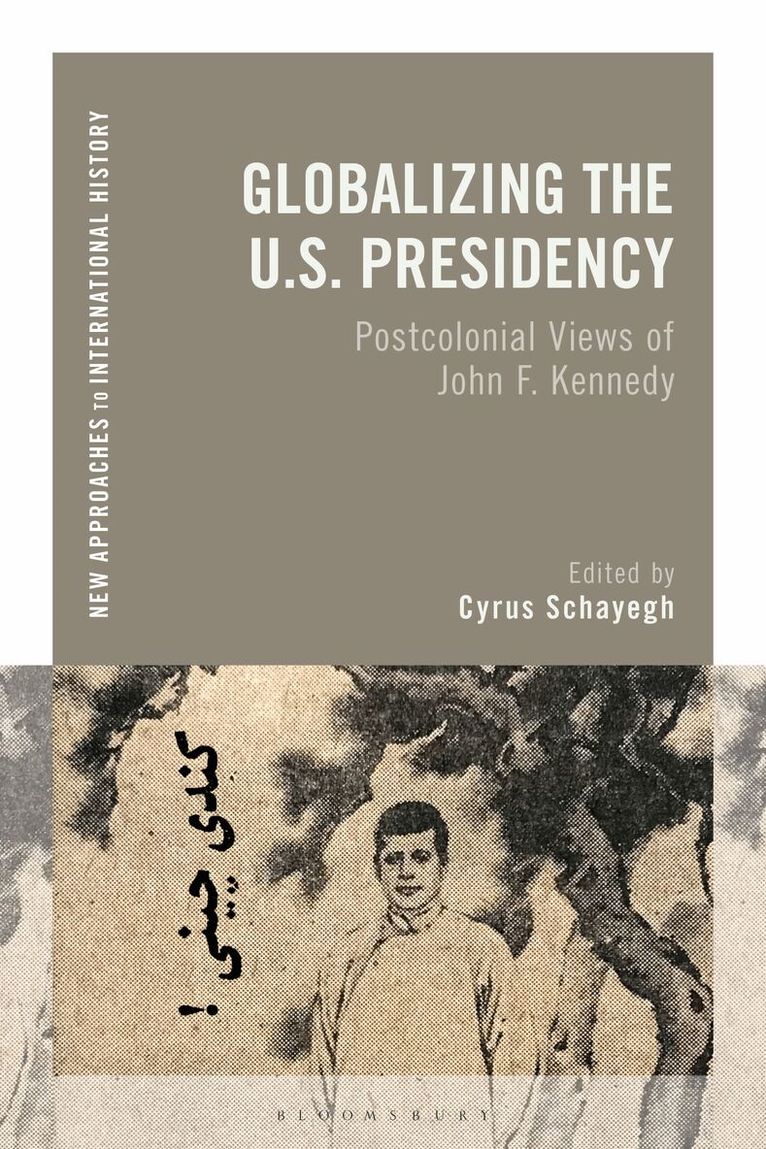
    Globalizing the U.S. Presidency

    Postcolonial Views of John F. Kennedy

    AvCyrus Schayegh

    Inbunden, Engelska, 2020

    Del i serien New Approaches to International History

    1 572 kr

    Beställningsvara. Skickas inom 10-15 vardagar. Fri frakt över 249 kr.

    Beskrivning

    Using John F. Kennedy as a central figure and reference point, this volume explores how postcolonial citizens viewed the US president when peak decolonization met the Cold War. Exploring how their appropriations blended with their own domestic and regional realities, the chapters span sources, cases and languages from Latin America, Africa, Asia and Europe to explore the history of US and third world relations in a way that pushes beyond US-centric themes.Examining a range of actors, Globalizing the U.S. Presidency studies various political, sociocultural and economic domestic and regional contexts during the Cold War era, and explores themes such as appropriation, antagonism and contestation within decolonisation. Attempting to both de-americanize and globalize John F. Kennedy and the US Presidency, the chapters examine how the perceptions of the president were fed by everyday experiences of national and international postcolonial lives. The many examples of worldwide interest in the US president at this time illustrate that this time was a historical turning point for the role of the US on the global stage. The hopes and fears of peaking decolonization, the resulting pressure on Washington, Moscow and other powers, and a new mediascape together ushered in a more comprehensive globalization of international politics, and a new meaning to ‘the United States in the world’.

    Produktinformation

    • Utgivningsdatum:2020-01-09
    • Mått:156 x 234 x 15 mm
    • Vikt:608 g
    • Format:Inbunden
    • Språk:Engelska
    • Serie:New Approaches to International History
    • Antal sidor:304
    • Förlag:Bloomsbury Publishing PLC
    • ISBN:9781350118508

    Utforska kategorier

    • Kolonialism och imperialism inom Historia och arkeologi
    • Allmän historia och världshistoria inom Historia och arkeologi
    • Internationella relationer inom Samhälle och politik

    Mer om författaren

    Cyrus Schayegh is Professor of International History at the Graduate Institute of Geneva, Switzerland. He was previously Associate Professor at Princeton University, USA, and in 2005-2008, Assistant Professor at the American University of Beirut, Lebanon. His current research focuses mainly on the interplay between post-war globalisation and decolonisation, Arab views of Afro-Asian decolonisation, interwar European inter-imperial cooperation, and historiography.

    Recensioner i media

    This wide-ranging and important collection sheds light on the global significance of John F. Kennedy’s presidency. A remarkable variety of essays, expertly curated, capture the power and complexity of the Kennedy brand by considering the ways in which it was interpreted, repackaged and re-purposed throughout the postcolonial world. Highly recommended.

    Innehållsförteckning

    • List of FiguresList of TablesList of ContributorsAcknowledgmentsList of AbbreviationsIntroduction, and a Note on the US Imperial-Postcolonial Field, Cyrus SchayeghPart I: Actors1. First New Nation or Internal Colony? Modernization Theorists, Black Intellectuals, and the Politics of Colonial Comparison in the Kennedy Years, Sam Klug2. John F. Kennedy as Viewed by Africans, Philip E. Muehlenbeck3. “I Named My Son Kennedy”: Rural Kenyan Perceptions of John F. Kennedy during Decolonization, Kara Moskowitz4. Brazilian Public Opinion of John F. Kennedy and the Alliance for Progress in Cold War Brazil (1961-3), Felipe LoureiroPart II: Appropriation: Domestic Contexts5. “An Example for Other Small Nations to Follow”: John F.Kennedy, Ireland and Decolonization, David P. Kilroy6. Global Media, Emotions, and the ‘Kennedy Narrative’: John F. Kennedy as Seen from the ‘Global South’, Sönke Kunkel7. From Hope to Disillusionment: Moroccan Perceptions of the Kennedy Presidency, David Stenner8. Foreign Gifts and US Imperial Ambiguities: the Kennedy Years, Cyrus SchayeghPart III: Appropriation, Cont’d: Antagonisms and Contestations9. Watching, Countering, and Emulating Peaceful Evolution: PRC Responses to Kennedy Administration Cultural Diplomacy and Global Strategy, Matthew D. Johnson10. Whose Revolution? López Mateos, John F. Kennedy’s Mexican Visit, and the Alliance for Progress, Vanni Pettinà11. Camelot in Korea: The Paradox of John F. Kennedy in Authoritarian South Korea, 1961-3, Inga Kim Diederich12. John F. Kennedy through the Lens of a Divided Vietnam, Aaron Lillie and Diu-Huong NguyenPart IV: Intermediaries and Afterlives13. The President’s Messenger: American Visions, Indian Citizens, and National Development in the Kennedy Years, Benjamin Siegel14. Mediating the Kennedy Presidency: James Baldwin’s Decade in Turkey, Begüm Adalet15. “The Kennedys Know Something about That, Too”: Law, Lineage, and Martyrdom in US-South Africa relations, Myra Ann Houser16. Conclusion: “Someone Talking the Same Language with All of Us”, Robert B. RakoveBibliographyIndex