• Fri frakt över 249 kr
  • •
  • Snabba leveranser
  • •
  • Billiga böcker
Kundservice

Du är på sajten för privatpersoner.

Företag, bibliotek eller offentlig verksamhet?

Du handlar på classic.bokus.com, där alla dina funktioner finns intakta.
Till classic.bokus.com
Bokus logotyp. Gå till startsidan.
  • Erbjudanden
  • Nyheter
  • Student
  • Topplistor
  • Barn & ungdom
  • Bokus Play
  • E-böcker
  • Pocketböcker
  • Spel & pussel

10% rabatt på allt med kod NYSTART10 →

Sidfot

Mina sidor

    Hjälp

    • Kundservice
    • Vanliga frågor och svar
    • Frakt och leverans
    • Retur vid ångerrätt
    • Reklamera vara
    • Betalning
    • Köpvillkor
    • Allmänna villkor
    • Information om webbplatsens tillgänglighet

    Om Bokus

    • Om oss
    • Pressrum
    • För studenter
    • För företag
    • För bibliotek och offentlig verksamhet
    • För leverantörer
    • Hållbarhet

    Populärt

    • Aktuella erbjudanden
    • Presentkort
    • Studentlitteratur
    • Nya böcker
    • Topplistor
    • Signerade böcker
    • Engelska böcker

    Inspiration

    • Boktips
    • BookTok
    • Populära bokserier
    • Barnbokskaraktärer
    • Populära författare
    Logotyp för Bokus
    Följ oss på Facebook (extern länk)Följ oss på Instagram (extern länk)Följ oss på YouTube (extern länk)Följ oss på TikTok (extern länk)
    bokus @ CookiesAnpassa cookiesIntegritetspolicyKöpvillkor
    Till Citymail hemsida (extern länk)Till Budbee hemsida (extern länk)Till Postnord hemsida (extern länk)Till Schenker hemsida (extern länk)Till Early Bird hemsida (extern länk)Till Walleys hemsida (extern länk)
    1. Historia och arkeologi
    2. Historia
    3. Mellanösterns historia

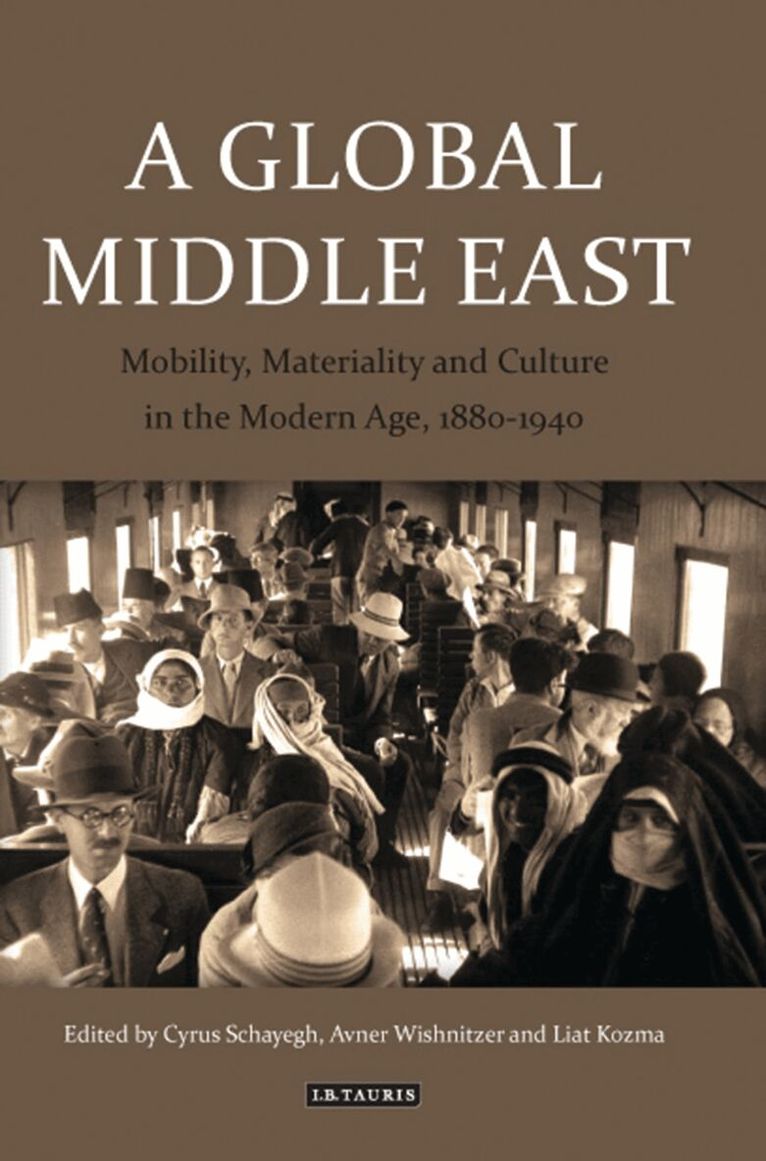
    Global Middle East

    Mobility, Materiality and Culture in the Modern Age, 1880-1940

    AvLiat Kozma,Cyrus Schayegh

    Inbunden, Engelska, 2014

    Del i serien Bloomsbury 3PL

    2 010 kr

    Beställningsvara. Skickas inom 10-15 vardagar. Fri frakt över 249 kr.

    Beskrivning

    The start of the twentieth century ushered in a period of unprecedented change in the Middle East. These transformations, brought about by the emergence of the modern state system and an increasing interaction with a more globalized economy, irrevocably altered the political and social structures of the Middle East, even as the region itself left its mark on the processes of globalization themselves. As a result of these changes, there was an intensification in the movement of people, commodities and ideas across the globe: commercial activity, urban space, intellectual life, leisure culture, immigration patterns and education - nothing was left untouched. It shows how even as the Middle East was responding to increased economic interactions with the rest of the world by restructuring not only local economies, but also cultural, political and social institutions, the region's engagement with these trends altered the nature of globalization itself. This period has been seen as one in which the modern state system and its oftentimes artificial boundaries emerged in the Middle East. But this book highlights how, despite this, it was also one of tremendous interconnection.Approaching the first period of modern globalization by investigating the movement of people, objects and ideas into, around and out of the Middle East, the authors demonstrate how the Middle East in this period was not simply subject or reactive to the West, but rather an active participant in the transnational flows that transformed both the region and the world. A Global Middle East offers an examination of a variety of intellectual and more material exchanges, such as nascent feminist movements and Islamist ideologies as well as the movement of sex workers across the Mediterranean and Jewish migration into Palestine. A Global Middle East emphasises this by examining the multi-directional nature of movement across borders, as well as this movement's intensity, volume and speed. By focusing on the theme of mobility as the defining feature of 'modern globalization' in the Middle East, it provides an essential examination of the formative years of the region.

    Produktinformation

    • Utgivningsdatum:2014-12-03
    • Mått:148 x 220 x 28 mm
    • Vikt:620 g
    • Format:Inbunden
    • Språk:Engelska
    • Serie:Bloomsbury 3PL
    • Antal sidor:392
    • Förlag:Bloomsbury Publishing PLC
    • ISBN:9781780769424

    Utforska kategorier

    • Mellanösterns historia inom Historia och arkeologi
    • Migration inom Samhälle och politik

    Mer om författaren

    Liat Kozma is Lecturer in the Deparment of Islamic and Middle Eastern Studies at The Hebrew University of Jerusalem. She is the author of Policing Egyptian Women: Sex, Law and Medicine in Khedival Egypt (2011).Cyrus Schayegh is Assistant Professor at Princeton University, where he teaches Middle East history. He is the author of Who is Knowledgeable is Strong: Science, Class and the Formation of Modern Iranian Society, 1900-1950 (2009), and holds a PhD from Columbia University.Avner Wishnitzer is Post-Doctoral Fellow at Ben Gurion University and teaches at the Department of Islamic and Middle East Studies at The Hebrew University of Jerusalem. He is the author of Reading Clocks, Alla Turca: Ottoman Temporality and its Transformation in the Long Nineteenth Century (forthcoming).

    Recensioner i media

    '[T]his fine volume show[s] that the early wave of globalization between the 1870s and the 1940s affected the people in the Middle East in profound ways. The basic questions such as where people lived and moved, what they thought, what they liked and consumed and how they communicated were all shaped and reshaped by the forces of globalization during these decades - we learn that it was not only in the realm of politics but also in culture and society that this period was formative of the modern Middle East; and that far from being external or marginal to global processes, the region was centrally involved in them.' Professor Reshat Kasaba, Stanley D. Golub Chair and Director of the Jackson School of International Studies, University of Washington 'A Global Middle East offers the first examination of how people, objects and ideas as diverse as bees and Islamic theology, and hailing from various Middle Eastern locales, were caught up in the flux of the first wave of globalization while at once putting it in motion. It - make[s] a compelling case about how the regional is anchored in the global and vice versa, never losing sight of how these scales are themselves moving targets. Focusing on movement rather than state, on becoming rather than being, this important volume gives a sensitive and multi-angled account of the dynamics of what its editors see as "globalization from below".' Dr On Barak, Senior Lecturer, Department of Middle Eastern and African History, Tel Aviv University

    Innehållsförteckning

    • Introduction.Liat Kozma, Cyrus Schayegh and Avner WishnitzerPart I: Global Networks, Local Networking1. Reading Gottlieb Schumacher’s The Jaulan (1888). Cyrus Schayegh2. The Emir and the Sea: The Rise and Fall of ‘Abdullahi Muhammad b. ‘Ali Abdashakur, Harär’s Last Emir. Avishai Ben DrorPart II: People on the Move3. Educational Mobility and Globalization: Universities in Cairo between Competition and Standardisation 1900-1950. Valeska Huber4. Urban change, migration and sex work in early nineteenth century Cairo. Francesca Biancani5. Jews on the Move during the Late Ottoman Period. Yaron Ben Naeh6. Global Migration into Late Ottoman Jaffa as reflected in the Arab-Palestinian newspaper Filastin (1911-13). Evi DierauffObjects and Related Practices on the Move7. Papers for Going, Papers for Staying: Identification and Documentation in the East Mediterranean. Will Hanley8. Travelling Substances, Travelling Meanings: Hashish-Related Activities and Attitudes in Mandatory Palestine. Haggai Ram9. On the Diffusion of ‘Small’ Western Technologies in the Middle East During the Era of the First Modern Globalization. Uri Kupferschmidt10. Bees on Camels: Technologies of Movement in Late Ottoman Palestine. Tamar NovickIdeas on the Move11. Muhammad ‘Abduh and His World: Re-imagining Islam in the Period of the First Modern Globalization. Johann Busseow12. Arab Printing, Publishing and Mass Reading: The Dawn of New Practices. Ami Ayalon13. The Movement of Feminist Ideas: The Case of Kad?nlar Dünyas?. Elife Bicher-Deveci14. Globalization and the Creation of Imagined Communities of Islam. Joachim Langer