• Fri frakt över 249 kr
  • •
  • Snabba leveranser
  • •
  • Billiga böcker
Kundservice

Du är på sajten för privatpersoner.

Företag, bibliotek eller offentlig verksamhet?

Du handlar på classic.bokus.com, där alla dina funktioner finns intakta.
Till classic.bokus.com
Bokus logotyp. Gå till startsidan.
  • Erbjudanden
  • Student
  • Topplistor
  • Barn & ungdom
  • Bokus Play
  • E-böcker
  • Ljudböcker
  • Pocketböcker
  • Spel och pussel

Pocketfynda! Hundratals böcker för 49 kr/st →

Sidfot

Mina sidor

    Hjälp

    • Kundservice
    • Vanliga frågor och svar
    • Frakt och leverans
    • Retur vid ångerrätt
    • Reklamera vara
    • Betalning
    • Köpvillkor
    • Allmänna villkor
    • Information om webbplatsens tillgänglighet

    Om Bokus

    • Om oss
    • Pressrum
    • För studenter
    • För företag
    • För bibliotek och offentlig verksamhet
    • För leverantörer
    • Hållbarhet

    Populärt

    • Aktuella erbjudanden
    • Presentkort
    • Studentlitteratur
    • Nya böcker
    • Topplistor
    • Signerade böcker
    • Engelska böcker

    Inspiration

    • Boktips
    • BookTok
    • Barnbokskaraktärer
    • Populära författare
    Logotyp för Bokus
    Följ oss på Facebook (extern länk)Följ oss på Instagram (extern länk)Följ oss på YouTube (extern länk)Följ oss på TikTok (extern länk)
    bokus @ CookiesAnpassa cookiesIntegritetspolicyKöpvillkor
    Till Citymail hemsida (extern länk)Till Budbee hemsida (extern länk)Till Postnord hemsida (extern länk)Till Schenker hemsida (extern länk)Till Early Bird hemsida (extern länk)Till Walleys hemsida (extern länk)
    1. Historia och arkeologi
    2. Historia
    3. Europas historia

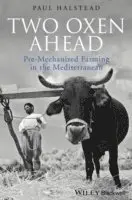
    Two Oxen Ahead

    Pre-Mechanized Farming in the Mediterranean

    AvPaul Halstead

    Inbunden, Engelska, 2014

    1 038 kr

    Beställningsvara. Skickas inom 5-8 vardagar. Fri frakt över 249 kr.

    Fler format och utgåvor

    E-bok

    1 202 kr

    E-bok

    1 202 kr

    Beskrivning

    TWO OXEN AHEAD This revealing study of farming practices in societies around the Mediterranean draws out the valuable contribution that knowledge of recent practices can make to our understanding of husbandry in prehistoric and Greco-Roman times. It reflects increased academic interest in the formative influence of farming regimes on the societies they were designed to feed. The author’s intensive research took him to farming communities around the Mediterranean, where he recorded observational and interview data on differing farming strategies and practices, many of which can be traced back to classical antiquity or earlier. The book documents these variables, through the annual chaîne opératoire (from ploughing and sowing to harvesting and threshing), interannual schemes of crop rotation and husbandry, and the generational cycle of household development. It traces the interdependence of these successive stages and explores how cultural tradition, ecological conditions, and access to resources shape variability in husbandry practice. Each chapter identifies ways in which heuristic use of data on recent farming can shed light on ancient practices and societies.

    Produktinformation

    • Utgivningsdatum:2014-03-28
    • Mått:160 x 226 x 25 mm
    • Vikt:635 g
    • Format:Inbunden
    • Språk:Engelska
    • Antal sidor:384
    • Förlag:John Wiley and Sons Ltd
    • ISBN:9781405192835

    Utforska kategorier

    • Europas historia inom Historia och arkeologi
    • Agronomi och lantbruk inom Naturvetenskap och teknik
    • Forntidens historia inom Historia och arkeologi

    Mer om författaren

    Paul Halstead is Professor of Archaeology at the University of Sheffield, UK. He has edited and contributed to numerous publications, including Food, Cuisine and Society in Prehistoric Greece (with John Barrett, 2004), Neolithic Society in Greece (1999), and Bad Year Economics (with John O’Shea, 1989).

    Recensioner i media

    Review copy sent on 06.10.14 to Historia Agraria Review copy sent on 07.08.14 to Environmental ArchaeologyReview copy sent on 30.04.14 to Near Eastern ArchaeologyReview copy sent on 26.03.14 to Tijdschrift voor Mediterrane ArcheologieB = Standard Review ListNA review list: (COPIES SENT 23.10.14)1. American Journal of Archaeology2. Bryn Mawr Classical Review3. Classical Journal4. Classical Bulletin5. Classical WorldUK review list: (COPIES SENT 23.10.14)1. Antiquity2. Journal of Hellenic Studies 3. Journal of Roman Studies4. Environmental Archaeology 5. Rural History6. Agricultural History Review(NOT SENT, no unsolicted reviews)Journal of Anthropological ArchaeologyReference Reviews

    Innehållsförteckning

    • Preface viiiAcknowledgments x1 Introduction: Mediterranean Farming between Longue Durée and Contingency 11.1 Fieldwork 31.2 Scales of Analysis 82 Working the Earth: Tillage and Sowing 112.1 Two-Oxen Households in Paliambela 142.2 Scratching a Living in the Hills of Messenia 192.3 Tillage Time and Sowing Season from Assiros to Asturias 212.4 Juggling with Seedcorn 282.5 Flexible Farmers 312.6 Ard, Hoe, and Scale of Cultivation 332.6.1 Ard versus hoe: Benefits 332.6.2 Ard versus hoe: Costs 472.6.3 On balance: Hoe or ard, cows or oxen? 552.7 Tillage and Sowing in the Past 573 Harvest Time 673.1 Amorgos: From Field to Threshing Floor 683.2 When to Reap 713.3 What and How to Reap 773.4 After Reaping: Binding, Drying, and Transporting the Harvest 893.5 Who and How Many to Reap 1023.6 Harvest Ceremonies 1123.7 Reaping in the Past 1134 Sorting the Wheat from the Chaff 1274.1 Amorgos: On and After the Threshing Floor 1274.2 Ways of Threshing 1364.3 Ways of Winnowing and Coarse Sieving 1514.4 Cleaning for Storage and Consumption 1544.5 Storage 1574.6 Consumption 1634.7 Questions of Scale: Labor and Time Stress 1664.8 Threshing Floor Customs 1734.9 Crop Processing in the Past 1745 Managing the Land: Coping with Failure and Planning for Success 1915.1 Watching the Corn Grow 1915.2 Planning for Success: Fallowing and Rotation 1995.2.1 Fallowing 1995.2.2 Crop rotation 2015.2.3 Fallowing and rotation in space 2065.2.4 Hedging bets: Mixed cropping 2105.3 Planning for Success: Manuring 2125.3.1 Stall manure 2135.3.2 Manuring by folded livestock 2265.3.3 Manuring by grazing livestock 2295.4 Planning for Success, Mitigating Failure: Irrigation 2305.5 Averting Failure: Weeding 2335.6 Crop Husbandry and Crop Yields 2385.7 Crop Husbandry and Yields in the Past 2446 Family Planning: Land, Labor and Livestock 2596.1 Clearance 2606.1.1 Uprooting deciduous woodland in lowland northern Greece 2606.1.2 Opening up the maquis in southern Greece 2646.1.3 Shifting cultivation: From Crete to Asturias 2676.1.4 Slashing, burning, and shifting 2696.2 Long-Term Improvement: Deep Tillage, Terracing, and Enclosure 2716.3 Extending and Improving Cultivable Land: Drainage and Irrigation 2776.4 Counting the Cost of Extension and Improvement 2816.5 Subsistence and Cash Crops 2836.6 Mixed Farming: Livestock 2896.7 Labor, Land, and Livestock: The Domestic Cycle 2956.8 Household and Community 3046.9 Land, Labor, and Livestock in the Past 3117 Homo agronomicus? Mediterranean Farming, Present and Past 3297.1 Analogies for the Past: “Matters of Fact” and “Matters of Interest” 3307.2 Cultural Reason 3327.3 Environmental and Technological Constraints 3367.4 Practical Reason: Costs, Benefits, and Knowledgeable Farmers 3387.5 Ancient Farmers: Knowledgeable and Rational? 3467.6 Farming in the Mediterranean: Analogy and Change 347Glossary 360Index 362