• Fri frakt över 249 kr
  • •
  • Snabba leveranser
  • •
  • Billiga böcker
Kundservice

Du är på sajten för privatpersoner.

Företag, bibliotek eller offentlig verksamhet?

Du handlar på classic.bokus.com, där alla dina funktioner finns intakta.
Till classic.bokus.com
Bokus logotyp. Gå till startsidan.
  • Erbjudanden
  • Student
  • Topplistor
  • Barn & ungdom
  • Bokus Play
  • E-böcker
  • Ljudböcker
  • Pocketböcker
  • Spel och pussel

5% studentrabatt – använd koden KURSBOK27 →

Sidfot

Mina sidor

    Hjälp

    • Kundservice
    • Vanliga frågor och svar
    • Frakt och leverans
    • Retur vid ångerrätt
    • Reklamera vara
    • Betalning
    • Köpvillkor
    • Allmänna villkor
    • Information om webbplatsens tillgänglighet

    Om Bokus

    • Om oss
    • Pressrum
    • För studenter
    • För företag
    • För bibliotek och offentlig verksamhet
    • För leverantörer
    • Hållbarhet

    Populärt

    • Aktuella erbjudanden
    • Presentkort
    • Studentlitteratur
    • Nya böcker
    • Topplistor
    • Signerade böcker
    • Engelska böcker

    Inspiration

    • Boktips
    • BookTok
    • Barnbokskaraktärer
    • Populära författare
    Logotyp för Bokus
    Följ oss på Facebook (extern länk)Följ oss på Instagram (extern länk)Följ oss på YouTube (extern länk)Följ oss på TikTok (extern länk)
    bokus @ CookiesAnpassa cookiesIntegritetspolicyKöpvillkor
    Till Citymail hemsida (extern länk)Till Budbee hemsida (extern länk)Till Postnord hemsida (extern länk)Till Schenker hemsida (extern länk)Till Early Bird hemsida (extern länk)Till Walleys hemsida (extern länk)
    1. Samhälle och politik
    2. Sociologi och antropologi
    3. Sociologi

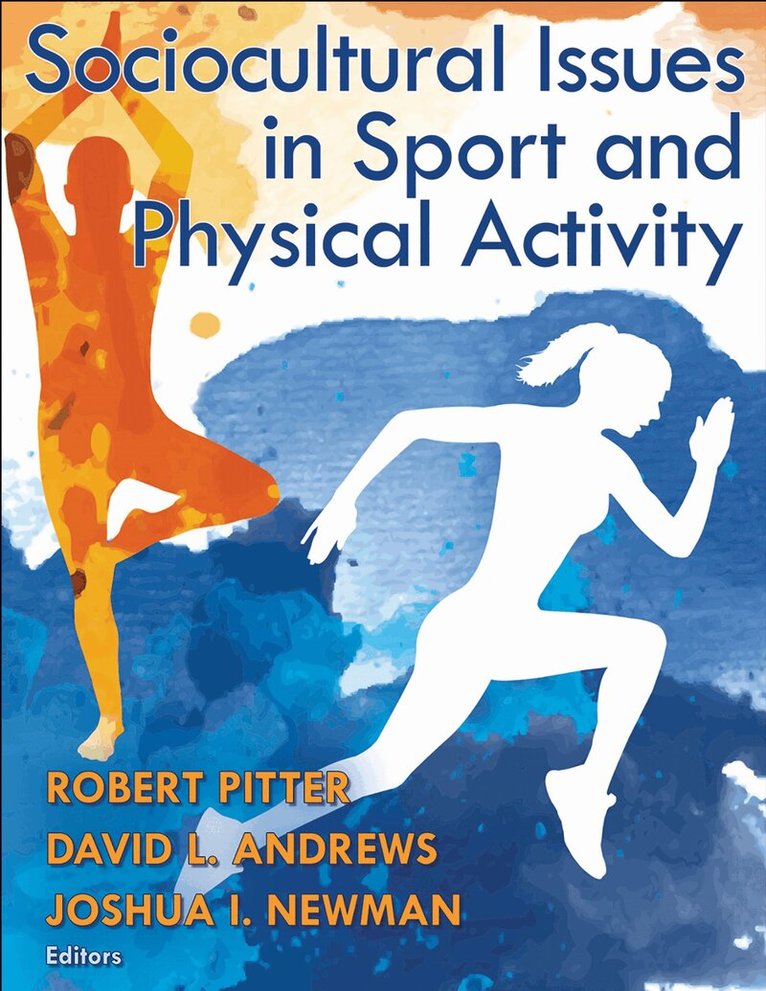
    Sociocultural Issues in Sport and Physical Activity

    AvRobert Pitter,David L. Andrews

    Häftad, Engelska, 2022

    933 kr

    Beställningsvara. Skickas inom 5-8 vardagar. Fri frakt över 249 kr.

    Beskrivning

    Sociocultural Issues in Sport and Physical Activity explores the intersections between modern physical activity and society. The text surpasses the scope of sociological texts that focus solely on sports, covering a broad range of physical activities such as fitness, dance, weightlifting, and others. The authors emphasize the promotion of healthy individuals and a healthy body in the many movement settings where the body is active.Sociocultural Issues in Sport and Physical Activity explores contemporary topics such as reducing disparities in education and income, increasing socioeconomic diversity in communities, the medicalization of fitness, the rise of cosmetic fitness, the promotion of physical activity as a requirement for health, and the globalization of the fitness industry. The text includes the following features to enhance student engagement: Chapter objectives help students achieve their learning goalsKey points and terms to highlight important information throughout the textActive Bodies sidebars that offer context for concepts presented in the chapter and provide examples and applicationsDiscussion questions that provide opportunities to reflect on chapter topicsPart I of Sociocultural Issues in Sport and Physical Activity examines political, educational, media, and economic institutions that influence the relationship between society and physical activity. Part II explores how an individual’s race, gender, social class, and ability are interpreted through a social lens. Part III of the text discusses the process of developing healthy populations as well as promoting public health and body positivity.Sociocultural Issues in Sport and Physical Activity offers a cross-cultural perspective of society, health, and the body in motion. Readers will finish the text with a greater understanding of social theory applications in physical culture.

    Produktinformation

    • Utgivningsdatum:2022-05-18
    • Mått:216 x 279 x 15 mm
    • Vikt:930 g
    • Format:Häftad
    • Språk:Engelska
    • Antal sidor:320
    • Förlag:Human Kinetics Publishers
    • ISBN:9781450468657

    Utforska kategorier

    • Sociologi inom Samhälle och politik

    Mer om författaren

    Robert Pitter, PhD, is a professor at Acadia University. His publications have examined sport, physical activity, and society as well as environmental education and organizational theory. He has been published in such journals as Research in Sport and Exercise Quarterly, Quest, Sociology of Sport Journal, International Review for Sociology of Sport, and Journal of Sport and Social Issues.David L. Andrews is a professor of physical cultural studies in the department of kinesiology at the University of Maryland. He is also an affiliate faculty member in the department of American studies and the department of sociology.Dr. Andrews' research interests center on contextualizing sport and physical culture in relation to the intersecting cultural, political, economic, and technological forces shaping contemporary society. His latest book is titled Making Sport Great Again? The Uber-Sport Assemblage, Neoliberalism, and the Trump Conjuncture (published by Palgrave). Previous books include Sport-Commerce-Culture: Essays on Sport in Late Capitalist America (published by Peter Lang), Sport and Neoliberalism: Politics, Consumption, and Culture (edited with Michael Silk and published by Temple University Press), The Routledge Handbook of Physical Cultural Studies (edited with Michael Silk and Holly Thorpe and published by Routledge), and Sport, Physical Culture, and the Moving Body: Materialisms, Technologies, Ecologies (edited with Joshua Newman and Holly Thorpe and published by Rutgers University Press). His current book project is titled The Great Moving Right Show: Sport, Political Assemblages, and the Trump Awakening (to be published by Rutgers University Press).Joshua I. Newman, PhD, is director of the Center for Sport, Health, and Equitable Development and a professor of sport, media, and cultural studies at Florida State University. He is also the doctorate program coordinator and associate chair in the department of sport management. Previously, Newman was a lecturer of sport studies at the University of Otago in New Zealand. In 2017, he served as president and research fellow of the North American Society for the Sociology of Sport (NASSS). He currently serves on the editorial boards of Communication & Sport, International Review for the Sociology of Sport, and Sociology of Sport Journal. Newman’s work has featured in The Society Pages, the Somatic Podcast, and the Global Sport Matters Podcast, and he has done interviews for the Washington Post, Time magazine, BuzzFeed, and the Associated Press.

    Innehållsförteckning

    • Part I. Body Institutions: Foundations and ConsiderationsChapter 1. IntroductionRobert Pitter, David L. Andrews, and Brandon WallaceDefining Physical CulturePhysical Culture and the Sociological ImaginationThe Importance of a Critical and Theoretical ApproachCase Study: Fitness and SocietyConclusionChapter 2. Politics of the Active BodyAndrew Grainger, Brandon Wallace, and David L. AndrewsPolitics as PowerAntonio Gramsci and HegemonyHegemony, Sport, and the Active BodyDominant, Residual, and Emergent Forms of Physical CultureConclusionChapter 3. Critical Pedagogy and the Active BodyRyan King-White and Matthew HawzenThe Focus of Physical EducationCritical PedagogyUnderstanding and Applying Critical PedagogyCritical Pedagogy in KinesiologyConclusionChapter 4. Medicine, Technology, and the Active BodyKatelyn EsmondePhysical Activity and EpidemiologyPhysical TechnoculturesSociocultural Issues and Possibilities for Technologies of Physical CultureConclusionChapter 5. The Corporeal Sport EconomyAdam Beissel, Chris McLeod, and David L. AndrewsThe Economic Base and Sporting SuperstructureSport and CapitalismThe Late Capitalist (Cultural) EconomySport and Late CapitalismWhat Is a Corporeal Economy?The Material and Social Relations of Late Capitalist ProductionThe Active Body as Instrument in Sport ProductionThe Active Body as Object of Sport ProductionConclusionPart II. Body Stratification: Meanings and Social IdentitiesChapter 6. Gender, Sex, and Physical CultureShannon Jette, David L. Andrews, and Robert PitterSocial Construction of Gendered IdentitiesPerformances of Exercise CulturePerformances of Sport CultureExpanding the Range of Gender Identity Through Physical CultureConclusionChapter 7. Racialized Bodies and Black and Indigenous Physical CulturesBrandon Wallace, Robert Pitter, and David L. AndrewsDisrupting the Myth of RaceRace or Ethnicity?African Americans and Black Physical CultureNative Americans and Indigenous Physical CulturesConclusionChapter 8. Social Class, Habitus, and Physical CultureRobert Pitter, David L. Andrews, and Brandon WallaceHow Social Class MattersSocial Class Distribution of Physical ActivityClass Habitus, Hexis, and Embodied Lifestyle CulturesConclusionChapter 9. Disability, Sport, Activity, and Public HealthMollie Greenberg and Stephanie J. CorkWhat Is Disability? A Note on LanguageEarly History of Disability in SocietyCurrent Models of DisabilityActivism and Civil Rights LegislationConfronting Health, Illness and DisabilityDiscrimination Against People With DisabilitiesAdapted Physical Activity and SportNeurodiversityThe Special OlympicsConclusionPart III. Body Movements: Scales and SpacesChapter 10. Popular Culture and the Active BodyMichael D. Giardina and A. Lamont WilliamsA Note About Popular CultureThe Active Body in Early Popular CultureThe Active Body in Contemporary Popular CultureConclusionChapter 11. Physical Activity and CommunityRobert Pitter, Brandon Wallace, and David L. AndrewsConceptualizing CommunityCreating Community via Physical CultureCommunity Development via Physical ActivityConclusionChapter 12. The Active Body in CitiesOliver J.C. Rick, Jacob J. Bustad, and Bryan C. CliftThe Rise of the Neoliberal CityModels of Urban Physical Activity ProvisionCreative Sport and Recreation: Designing Physical Activity AttractionsConclusionChapter 13. Globalization and Physical ActivityJoshua Newman, David L. Andrews, and Robert PitterLocal and Global MovementsWhat Is Globalization?Debates on GlobalizationGlobal Physical CultureGlobal Media SpectaclesThe Globalization of Culture and EconomyEconomic Globalization at WorkThe Problem of Global Sporting Goods ProductionGlobal Migration: People on the MoveConclusionChapter 14. The Environment and the Active BodyMartin Barrett and Kyle S. BundsThe Body as the EnvironmentThe Body in the EnvironmentThe Body for the EnvironmentConclusion