• Fri frakt över 249 kr
  • •
  • Snabba leveranser
  • •
  • Billiga böcker
Kundservice

Du är på sajten för privatpersoner.

Företag, bibliotek eller offentlig verksamhet?

Du handlar på classic.bokus.com, där alla dina funktioner finns intakta.
Till classic.bokus.com
Bokus logotyp. Gå till startsidan.
  • Erbjudanden
  • Student
  • Topplistor
  • Barn & ungdom
  • Bokus Play
  • E-böcker
  • Ljudböcker
  • Pocketböcker
  • Spel och pussel

Pocketfynda! Hundratals böcker för 49 kr/st →

Sidfot

Mina sidor

    Hjälp

    • Kundservice
    • Vanliga frågor och svar
    • Frakt och leverans
    • Retur vid ångerrätt
    • Reklamera vara
    • Betalning
    • Köpvillkor
    • Allmänna villkor
    • Information om webbplatsens tillgänglighet

    Om Bokus

    • Om oss
    • Pressrum
    • För studenter
    • För företag
    • För bibliotek och offentlig verksamhet
    • För leverantörer
    • Hållbarhet

    Populärt

    • Aktuella erbjudanden
    • Presentkort
    • Studentlitteratur
    • Nya böcker
    • Topplistor
    • Signerade böcker
    • Engelska böcker

    Inspiration

    • Boktips
    • BookTok
    • Barnbokskaraktärer
    • Populära författare
    Logotyp för Bokus
    Följ oss på Facebook (extern länk)Följ oss på Instagram (extern länk)Följ oss på YouTube (extern länk)Följ oss på TikTok (extern länk)
    bokus @ CookiesAnpassa cookiesIntegritetspolicyKöpvillkor
    Till Citymail hemsida (extern länk)Till Budbee hemsida (extern länk)Till Postnord hemsida (extern länk)Till Schenker hemsida (extern länk)Till Early Bird hemsida (extern länk)Till Walleys hemsida (extern länk)
    1. Filosofi och religion
    2. Filosofi
    3. Filosofiska discipliner

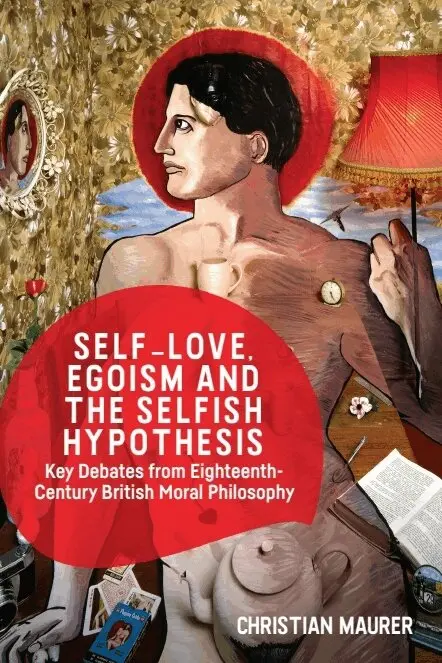
    Self-love, Egoism and the Selfish Hypothesis

    Key Debates from Eighteenth-Century British Moral Philosophy

    AvChristian Maurer

    Häftad, Engelska, 2020

    291 kr

    Skickas . Fri frakt över 249 kr.

    Fler format och utgåvor

    Inbunden

    1 895 kr

    Beskrivning

    The dawn of the Enlightenment saw heated debates on self-love. Do people only act out of self-interest? Or is there a less pessimistic explanation for human behaviour? Maurer delves into the contributions to these debates from both famous and lesser known authors, including Lord Shaftesbury, Bernard Mandeville, Francis Hutcheson, Joseph Butler, Archibald Campbell, David Hume and Adam Smith, and puts them in their philosophical, theological and economic context. Maurer identifies five distinct conceptions of self-love and looks at their role within theories of human psychology and morality while drawing attention to the heuristic limits of our contemporary notion of egoism. He compares the central arguments and the different strategies intended to morally rehabilitate human nature and self-love before and during the Enlightenment.

    Produktinformation

    • Utgivningsdatum:2020-11-10
    • Mått:156 x 234 x 17 mm
    • Vikt:370 g
    • Format:Häftad
    • Språk:Engelska
    • Antal sidor:240
    • Förlag:Edinburgh University Press
    • ISBN:9781474477970

    Utforska kategorier

    • Filosofiska discipliner inom Filosofi och religion

    Mer om författaren

    Christian Maurer is SNSF Professor in Philosophy at the University of Lausanne, Switzerland. He has studied, taught and held research fellowships in various Universities across Switzerland, Scotland, France and Germany. Maurer’s main research areas are in moral and political philosophy. He has worked extensively on the history of British moral philosophy and theology, on pre-Enlightenment Scottish moral philosophy, on the reception of Stoicism, on tolerance and on love.

    Recensioner i media

    A great virtue of Christian Maurer’s Self-Love, Egoism, and the Selfish Hypothesis is to disambiguate five senses of self-love in eighteenth-century discussions. ‘Self-love’ and its synonyms variously refer to (1) egoistic desire, (2) love of praise, (3) self-esteem, (4) amour propre and (5) self-respect. Maurer uses these ideal types forensically to provide a better understanding of what is being debated by whom and why … All scholars of early modern moral philosophy will benefit from reading this book and will think about the debates over self-love differently after having read it.

    Innehållsförteckning

    • 1. Introduction 1.1. The questions of self-love1.2. Five conceptions of self-love1.3. Contexts and historiographies – old ones and new ones2. Shaftesbury on the self-affections and the selfish hypothesis 2.1. ‘Hobbesian egoism’ and the right love for oneself2.2. Shaftesbury on the self-affections in the Inquiry2.3. A side-note on pride in Pathologia and Miscellanies2.4. Concluding thoughts3. Mandeville: Self-love, self-liking and Augustinian themes 3.1. Mandeville on the passion of self-liking3.2. Self-liking and the civilising process: Politeness and honour3.3. Mandeville on the social virtues (plural) and on moral virtue (singular)3.4. Concluding thoughts4. Hutcheson on self-love, benevolence, and self-cultivation 4.1. Hutcheson on self-love and the selfish hypothesis4.2. The moral value of self-love4.3. Self-love and self-cultivation4.4. A side-note on Alexander Forbes’ Essay on Self-Love (1734)4.5. Concluding thoughts5. Butler on self-love as respect of self 5.1. The ‘inward frame of man’: Butler’s moral psychology5.2. Butler on self-love as respect of self5.3. A comparison between Butler and Hutcheson on self-love 5.4. The influence of Butler’s conception of self-love as respect of self5.5. Concluding thoughts6. Campbell on true self-love and virtue 6.1. Campbell on self-love, the selfish hypothesis and sociability6.2. Campbell on morality and moral motivation6.3. Campbell’s attacks on Mandeville: Vice, Luxury, Fashionable Clothing and Virtue6.4. Campbell and the Committee for Purity of Doctrine on self-love6.5. Concluding thoughts7. Hume, Smith and beyond 7.1. Hume on self-love, pride and vanity7.2. Smith and the rehabilitation of self-love7.3. The selfish hypothesis in Gay and Associationist psychology7.4. Towards the end of the eighteenth century7.5. Concluding thoughts8. Conclusions Bibliography