• Fri frakt över 249 kr
  • •
  • Snabba leveranser
  • •
  • Billiga böcker
Kundservice

Du är på sajten för privatpersoner.

Företag, bibliotek eller offentlig verksamhet?

Du handlar på classic.bokus.com, där alla dina funktioner finns intakta.
Till classic.bokus.com
Bokus logotyp. Gå till startsidan.
  • Erbjudanden
  • Student
  • Topplistor
  • Barn & ungdom
  • Bokus Play
  • E-böcker
  • Ljudböcker
  • Pocketböcker
  • Spel och pussel

5% studentrabatt – använd koden KURSBOK27 →

Sidfot

Mina sidor

    Hjälp

    • Kundservice
    • Vanliga frågor och svar
    • Frakt och leverans
    • Retur vid ångerrätt
    • Reklamera vara
    • Betalning
    • Köpvillkor
    • Allmänna villkor
    • Information om webbplatsens tillgänglighet

    Om Bokus

    • Om oss
    • Pressrum
    • För studenter
    • För företag
    • För bibliotek och offentlig verksamhet
    • För leverantörer
    • Hållbarhet

    Populärt

    • Aktuella erbjudanden
    • Presentkort
    • Studentlitteratur
    • Nya böcker
    • Topplistor
    • Signerade böcker
    • Engelska böcker

    Inspiration

    • Boktips
    • BookTok
    • Barnbokskaraktärer
    • Populära författare
    Logotyp för Bokus
    Följ oss på Facebook (extern länk)Följ oss på Instagram (extern länk)Följ oss på YouTube (extern länk)Följ oss på TikTok (extern länk)
    bokus @ CookiesAnpassa cookiesIntegritetspolicyKöpvillkor
    Till Citymail hemsida (extern länk)Till Budbee hemsida (extern länk)Till Postnord hemsida (extern länk)Till Schenker hemsida (extern länk)Till Early Bird hemsida (extern länk)Till Walleys hemsida (extern länk)
    1. Kultur
    2. Scenkonst och film
    3. Film

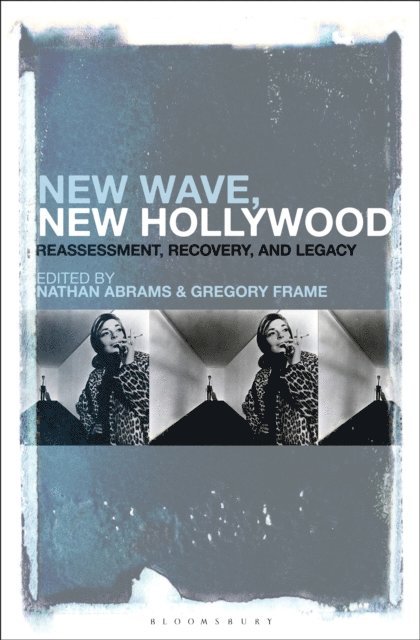
    New Wave, New Hollywood

    Reassessment, Recovery, and Legacy

    AvNathan Abrams,Gregory Frame

    E-bok
    Engelska, 2021

    466 kr

    Läs direkt i Bokus Reader – eller ladda ned till din enhet

    Beskrivning

    As a period of film history, The American New Wave (ordinarily understood as beginning in 1967 and ending in 1980) remains a preoccupation for scholars and audiences alike. In traditional accounts, it is considered to be bookended by two periods of conservatism, and viewed as a (brief) period of explosive creativity within the Hollywood system. From Bonnie and Clyde to Heaven's Gate, it produced films that continue to be watched, discussed, analysed and poured over.It has, however, also become rigidly defined as a cinema of director-auteurs who made a number of aesthetically and politically significant films. This has led to marginalization and exclusion of many important artists and filmmakers, as well as a temporal rigidity about what and who is considered part of the 'New Wave proper'. This collection seeks to reinvigorate debate around this area of film history. It also looks in part to demonstrate the legacy of aesthetic experimentation and political radicalism after 1980 as part of the 'legacy' of the New Wave. Thanks to important new work that questions received scholarly wisdom, reveals previously marginalised filmmakers (and the films they made), considers new genres, personnel, and films under the banner of 'New Wave, New Hollywood', and reevaluates the traditional approaches and perspectives on the films that have enjoyed most critical attention, New Wave, New Hollywood: Reassessment, Recovery, Legacy looks to begin a new discussion about Hollywood cinema after 1967.

    Produktinformation

    • Utgivningsdatum:2021-09-23
    • Språk:Engelska
    • Antal sidor:272
    • Filformat:EPUB
    • Kopieringsskydd:LCP
    • ISBN:9781501360398
    • Förlag:Bloomsbury Publishing PLC (Digital)

    Utforska kategorier

    • Film inom Kultur
    • Media och underhållning inom Ekonomi och Ledarskap

    Mer om författaren

    Nathan Abrams is Professor in Film at Bangor University in Wales. He is founding co-editor of Jewish Film and New Media: An International Journal, as well as the author of The New Jew in Film: Exploring Jewishness and Judaism in Contemporary Cinema, Stanley Kubrick: New York Jewish Intellectual, Eyes Wide Shut: Stanley Kubrick and the Making of His Final Film (with Robert Kolker) and The Bloomsbury Companion to Stanley Kubrick (with IQ Hunter).Gregory Frame is Teaching Associate in Film and Television Studies at the University of Nottingham. He is the author of The American President in Film and Television: Myth, Politics and Representation (2014). He has published articles about the politics of American film and television in Journal of American Studies, New Review of Film and Television Studies, and Journal of Popular Film and Television.

    Recensioner i media

    New Wave, New Hollywood is an engaging and fresh approach to the preexisting scholarship that opens a myriad of critical potential. Its emphasis on diversity and the questioning of the parameters of how we define the New Wave will hopefully generate new conversations that look first to the more neglected film artists.

    Innehållsförteckning

    • List of illustrations Notes on contributors Acknowledgments 1. IntroductionNathan Abrams and Gregory Frame 2. The Great Shift in Hollywood Cinema: Men, Women, and Genre Revisionismof the American New WaveFjoralba Miraka 3. Formal Radicalism vs. Radical Representation: Reassessing The French Connection (William Friedkin, 1971) and Dirty Harry (Don Siegel, 1971) Cary Edwards 4. A Wave of Their Own: How Jewish Filmmakers Invented the New HollywoodVincent Brook 5. New Hollywood's “Zany Godards”: A “Shirley” Serious Assessment of Zucker-Abrahams-ZuckerEmilio Audissino 6. Design as Authorship: Polly Platt's New Hollywood AestheticAaron Hunter 7. “The Ultimate Fusion of Commerce and Art”: Waldo Salt and Screenwriting in the 1970sOliver Gruner 8. Expanding the Past: Julie Dash and Zora Neale Hurston, African American Women filmmakers of New Hollywood and Early CinemaAimee Dixon Anthony 9. Lost in the Landscape: The Legacy of Barbara Loden's Wanda (1970) on the Contemporary American Independent Female Road MovieAimee Mollaghan 10. The New Wave in the New Millennium: Joker, Taxi Driver, Nostalgia, and Trumpian PoliticsKaren Ritzenhoff and Hannah D'Orso 11. Indie Courtship: Pursuing the American New WaveKim Wilkins 12. Afterword: New Wave, New Hollywood, New ResearchPeter Krämer Index